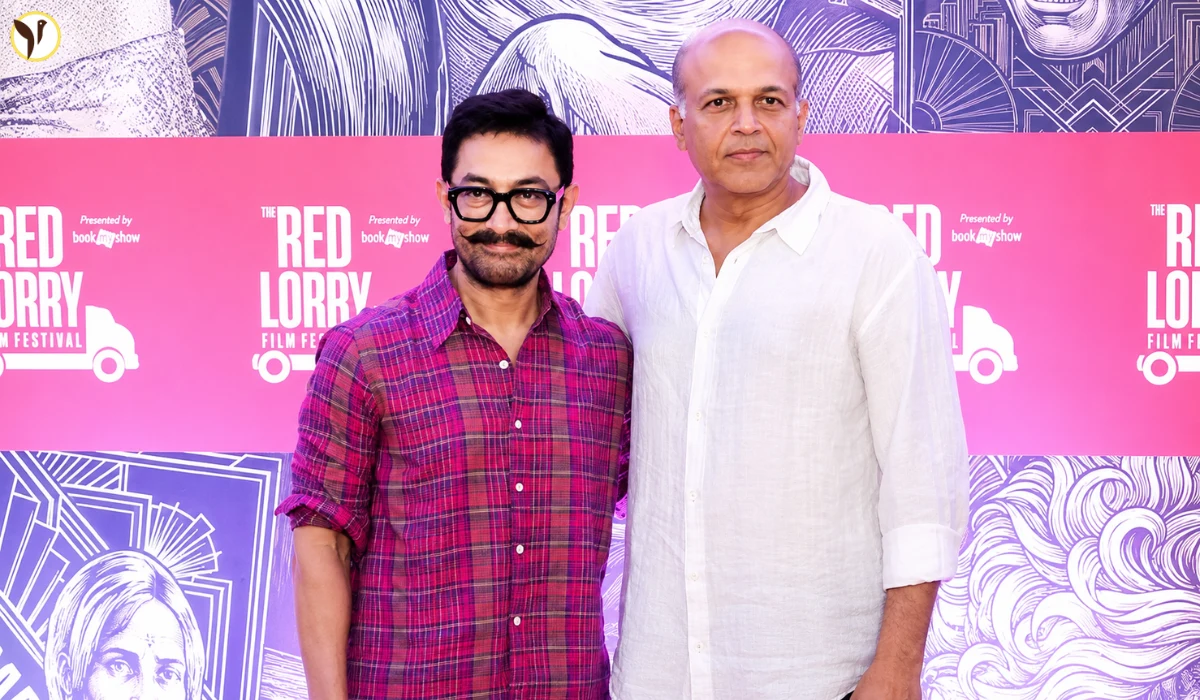


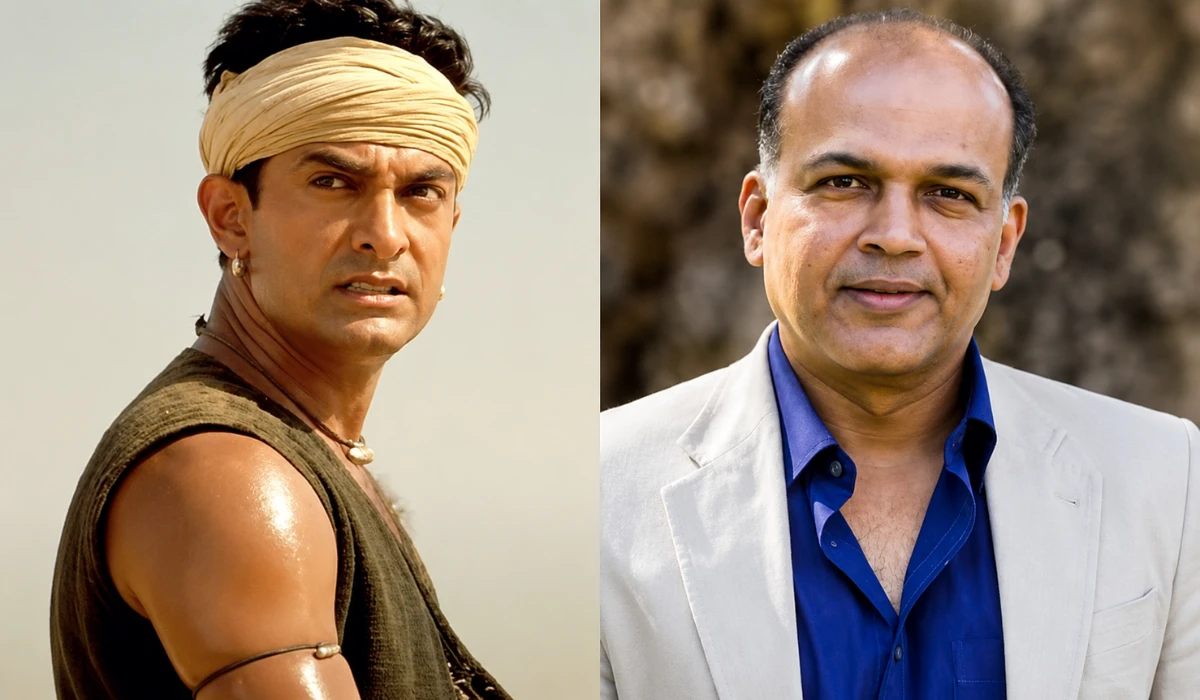
It has been a quarter century since Bhuvan rallied the farmers of Champaner against their British tormentors in one of the most beloved cricket matches ever committed to celluloid. Now, the pair responsible for that cinematic landmark — actor-producer Aamir Khan and director Ashutosh Gowariker — are joining forces again. Their next project: a sweeping biographical drama on Lala Amarnath, the man widely regarded as the father of Indian cricket.
What's Happening: The Reunion Everyone Didn't Know They Were Waiting For
According to exclusive reports from Pinkvilla, Aamir Khan and Ashutosh Gowariker are in advanced pre-production for a film based on the life of Nanak Amarnath Bhardwaj, better known as Lala Amarnath. Script reading sessions have reportedly already been completed, and the team is targeting a September 2026 shoot start — exactly 25 years after Lagaan rewrote the rules of Indian cinema.
What makes this development particularly compelling is the creative pedigree being assembled around it. The final draft of the script has reportedly received contributions from Rajkumar Hirani and Abhijat Joshi — the writing duo behind 3 Idiots, PK, and Munna Bhai M.B.B.S. — lending the project an emotional intelligence that goes well beyond a typical sports biopic.
Who Was Lala Amarnath? The Man Who Made Cricket History
To understand why this film matters, you first need to know the man at its centre.
Lala Amarnath was no ordinary cricketer. Born on September 11, 1911, in Kapurthala and raised in Lahore, he rose from a humble background to become one of the most consequential figures in Indian sporting history. In December 1933, batting at the Bombay Gymkhana ground against England, he scored 118 runs — India's first-ever Test century — and did it on debut, no less. Women in the stands reportedly tore off their jewellery to throw at him in celebration. Maharajahs gifted him money. A nation had found its first batting hero.
But statistics alone do not capture Lala Amarnath's legacy. His career was riddled with controversy, politics, and the turbulence of a country in transition.
|
|
|
|
|
|
|
|
|
|
|
|
|
|
|
|
|
|
|
|
|
He was controversially sent home from India's 1936 England tour — a 12-year gap between his third and fourth Test followed. He survived Partition, fleeing Lahore with his family in 1947. He led India to their historic first Test series win against Pakistan in 1952. He later became chairman of the BCCI selection committee and was the driving force behind selecting off-spinner Jasu Patel for the famous 1959 Kanpur Test against Australia — a decision that led to one of India's most celebrated early victories.
His three sons — Mohinder, Surinder, and Rajinder — all played first-class cricket. Mohinder (Jimmy) went on to play 69 Tests for India.
In short, Lala Amarnath's life is a feature film that has been waiting to be made.
The Lagaan Legacy: Why This Reunion Carries So Much Weight
To fully appreciate why the Aamir-Gowariker pairing matters, one must revisit what they built together in 2001.
Lagaan: Once Upon a Time in India was released on June 15, 2001, at a time when Bollywood had no template for what it attempted. Set in 1893 during the British Raj, the film followed villagers who challenge their colonial oppressors to a cricket match to avoid paying crushing taxes. Produced on a budget of ₹25 crore, it earned over ₹65.97 crore worldwide — making it the third-highest-grossing Hindi film of that year.
But the numbers only tell part of the story:
|
|
|
|
|
|
|
|
|
|
|
|
|
|
|
|
|
|
|
|
|
The film was screened at the Locarno Film Festival (where organisers had to print cricket rules for the audience), the Sundance Film Festival, and across China — the first Indian film ever to receive a nationwide China theatrical release. American filmmaker James Gunn later named it his favourite Indian movie. It remains, as of 2025, one of only three Indian films ever nominated for an Oscar in the foreign language category, alongside Mother India (1957) and Salaam Bombay! (1988).
In March 2026, Aamir Khan and Ashutosh Gowariker appeared together at the Red Lorry Film Festival in Mumbai to celebrate the film's 25th anniversary — and the reunion clearly sparked something bigger.
What We Know About the Film: Plot, Tone, and Creative Team
The Lala Amarnath biopic is being described as an emotional, inspiring sports drama set against the backdrop of the Indo-Pak Partition of 1947. This is a rich and complex canvas: Amarnath himself had to flee Lahore during Partition, and he later captained India in their first Test series win against Pakistan — a politically and emotionally loaded series in newly independent nations still bleeding from division.
The project has several notable elements already confirmed:
Script: Ashutosh Gowariker is directing. The final draft incorporates creative input from Rajkumar Hirani and Abhijat Joshi.
Production Timeline: Pre-production is underway. Filming is set to begin in September 2026.
Aamir's Slate: This will reportedly be the first of three back-to-back films Aamir shoots from September 2026 onward. It will be followed by a startup-based drama with Shraddha Kapoor (directed by Rahul Mody), and then the much-anticipated 3 Idiots sequel — which will feature Vicky Kaushal, R. Madhavan, and Sharman Joshi alongside Aamir, targeting a 2027 shoot start.
For Aamir, this marks his first return to cricket on the big screen since Lagaan — and by all accounts, he is reportedly excited about revisiting the genre.
Why This Film Could Matter: The Bigger Picture
India's relationship with its pre-Independence sporting history is woefully underexplored in cinema. While biopics have covered military heroes (Uri, Sam Bahadur), wrestlers (Dangal), and more recent cricket legends (MS Dhoni: The Untold Story, 83), the era of early Test cricket — with all its class politics, colonial contradictions, and nationalist undertones — has barely been touched.
Lala Amarnath's story offers all of that and more:
- A commoner who rose to challenge India's princely cricket establishment
- An athlete whose career was derailed by court politics, not talent
- A man who survived Partition and then captained India against the country that emerged from that tragedy
- A cricketing patriarch whose influence stretched across three generations of his own family
The Partition angle in particular gives this film a weight that separates it from a conventional sports biopic. It situates cricket not as entertainment but as a thread connecting a fractured subcontinent — which, in today's political climate, is both historically important and deeply relevant.
The involvement of Hirani and Joshi — architects of some of Hindi cinema's most emotionally resonant screenplays — suggests the makers are not interested in a hagiography. They want a human story.
What Happens Next: The Road to Screens
The September 2026 shoot start means a film of this scale — period drama, cricket sequences, Partition backdrop — is unlikely to arrive in cinemas before late 2027 or 2028. Gowariker's epics have historically demanded long production timelines: Lagaan took years to develop, Jodhaa Akbar was similarly ambitious, and the Lala Amarnath biopic will almost certainly require extensive location work, period set construction, and cricket choreography.
For audiences, the wait will likely be worth it — if the creative chemistry of 2001 has survived 25 years intact. Early signals suggest it has.
#Exclusive: 25 years after Lagaan, #AamirKhan & #AshutoshGowariker reunite for a new period sports drama! 🔥https://t.co/raPVwLBlzc
— Pinkvilla (@pinkvilla) May 8, 2026
The Aamir Khan-Ashutosh Gowariker Filmography
|
|
|
|
|
|
|
|
|
|
|
|
|
|
|
|
|
|
|
|
|
|
|
|
What You Need to Remember
- Aamir Khan and Ashutosh Gowariker are reuniting for the first time since Lagaan (2001).
- The film is a biopic on Lala Amarnath — India's first Test centurion and post-Independence captain.
- The narrative is set against the Partition of 1947, giving it both historical and emotional scope.
- Rajkumar Hirani and Abhijat Joshi have contributed to the script.
- Filming begins September 2026; release expected 2027–28.
Other Articles to Read:
- Kriti Sanon Reveals The Harsh Reality Female Actors Face In Bollywood
- Rohit Sharma’s Entertainment Debut May Be SonyLIV’s Biggest Surprise Yet
- No Politics for Diljit Dosanjh? Singer Gives a Straight Answer
- Tara Sutaria Copies Elizabeth Taylor’s Look For Cannes 2026 Debut?
- Aashka Goradia Welcomes Baby Boy, Shares Name of Newborn Son
- Kris Jenner Says Ozempic Made Her Sick And Reveals What Helped Instead