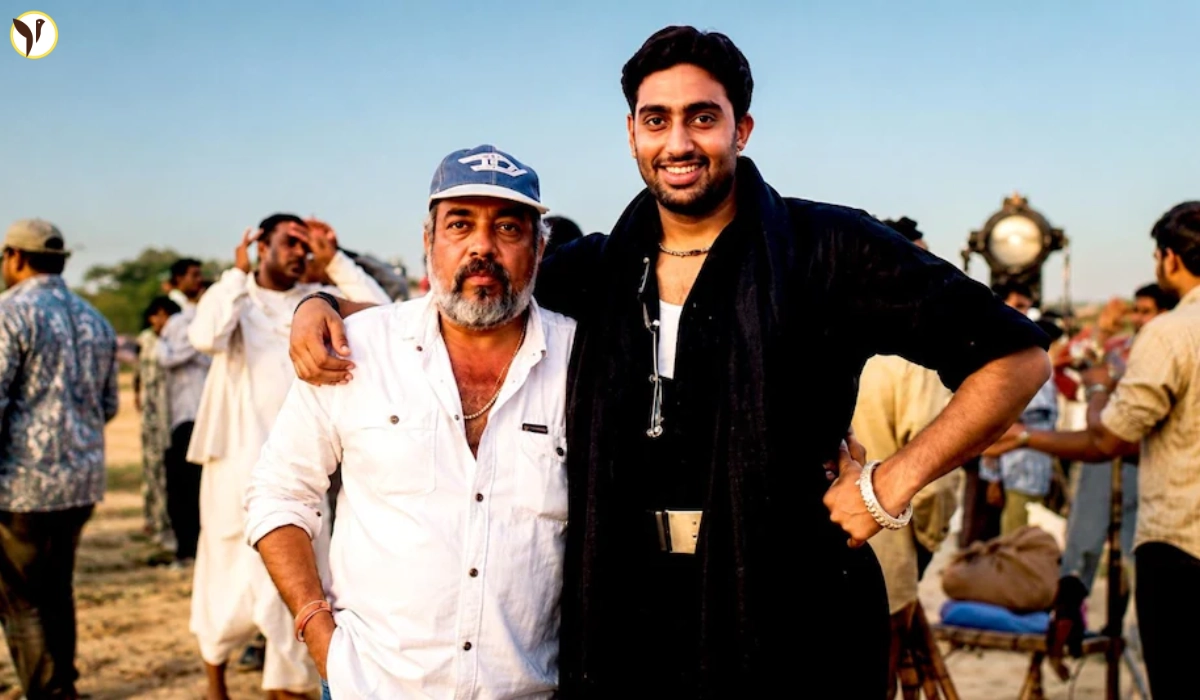


Twenty-six years after his debut, Abhishek Bachchan has finally spoken in detail about the day his first-ever film scene turned into a personal ordeal — one that took 17 retakes, a director who refused to give up on him, and the invisible pressure of being Amitabh Bachchan's son.
Abhishek Bachchan recently revealed a previously untold account of shooting his debut sequence in the 2000 film Refugee, directed by J.P. Dutta. In a candid conversation with The Hollywood Reporter India, the actor described how a scene he expected to be a single spoken line turned into a three-page monologue — and how nerves, a watching crowd, and the shadow of his father's legacy pushed the shot to 17 retakes before the director finally called it. The story, resurfacing as Refugee marks its 26th anniversary this year, offers a rare, unfiltered look at what it actually felt like to step into Hindi cinema carrying the Bachchan surname.
What Happened: Inside the 17-Take Ordeal
Abhishek Bachchan was cast opposite Kareena Kapoor in Refugee, a film about an unnamed man who smuggles displaced people across the India-Pakistan border in the Great Rann of Kutch. Both actors were making their screen debuts, and expectations — fuelled largely by Abhishek's lineage as Amitabh and Jaya Bachchan's son — were unusually high before a single frame had been shot.
According to the actor's own account, he walked onto set believing his first dialogue scene would require memorising just one line. Instead, he discovered it was a three-page monologue delivered against the backdrop of the Rann of Kutch, with several thousand onlookers from nearby villages gathered to catch a glimpse of the star kid's first shot. Estimates of the crowd size vary across reports — from roughly 3,000 to 10,000 people — but the consistent detail is that the sheer scale of public attention rattled him badly.
By the 16th attempt, director J.P. Dutta noticed something was visibly wrong and pulled Abhishek aside to ask what the problem was. The actor admitted that being watched by so many people was breaking his concentration. Dutta's response was decisive: he cleared the set of onlookers and told his young lead that he would get the performance he needed, however long it took. It took one more take — the 17th — before the scene was finally in the can.
Adding to the pressure, Abhishek has said his acting coach Anupam Kher and family friend Reena Roy were also present on set, watching every attempt. He recalled fumbling more with each retake and even breaking a few clay water pots meant to be props as his anxiety mounted, half-expecting a reprimand every time Dutta called "cut."
Why It Matters: More Than a Bollywood Anecdote
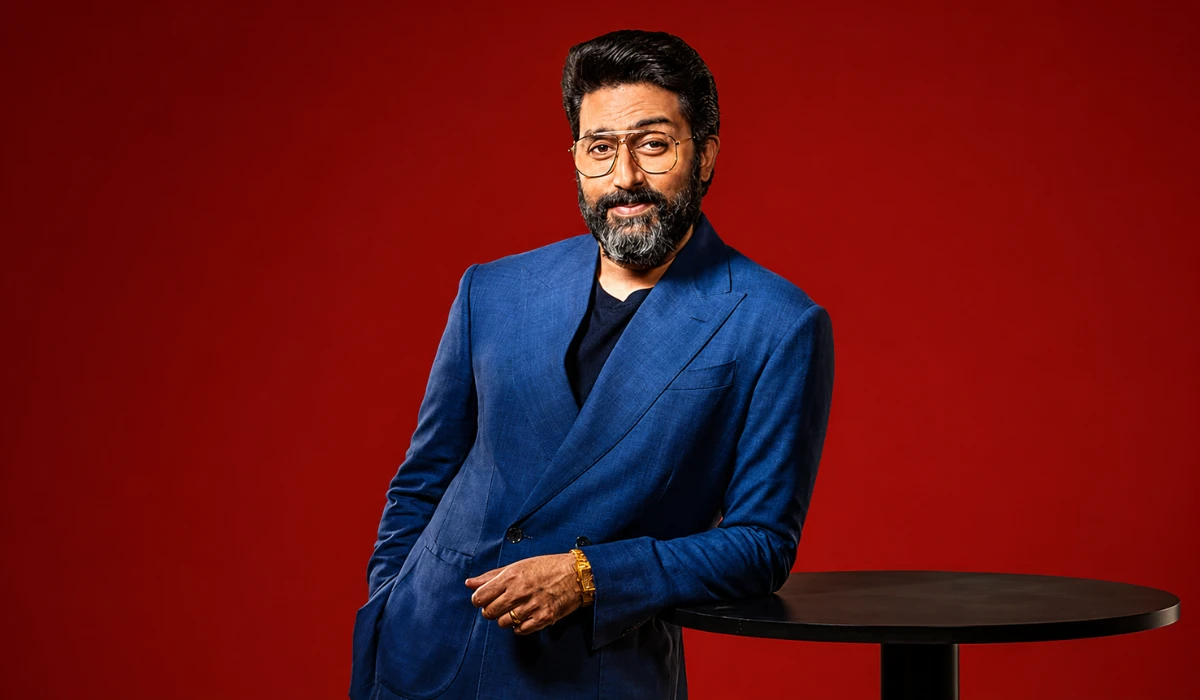
On the surface, this is a nostalgic film-industry story. But it says something broader about how debut actors — particularly those from famous families — are scrutinised differently from day one. Abhishek wasn't being judged purely on performance; he was being watched to see whether he could live up to a surname that already meant something to Indian cinema.
It also reframes how audiences remember Refugee itself. The film is often recalled today mainly as Kareena Kapoor's launchpad — critics at the time were far more generous toward her natural screen presence than toward Abhishek's early nerves. This new account humanises that gap: it wasn't a lack of effort or seriousness, but a very specific, very public form of stage fright that the actor has carried as a formative memory for over two decades.
For J.P. Dutta, known for large-scale, socially conscious dramas like Border (1997), the anecdote also underlines a directing style built on patience rather than pressure — a notable contrast to industry stereotypes of directors losing patience with debutants.
|
|
|
|
|
|
|
|
|
|
|
|
|
|
|
|
|
|
|
|
|
|
|
|
|
|
|
|
|
|
|
|
|
How Refugee Almost Never Happened
Refugee wasn't J.P. Dutta's original plan for launching Abhishek Bachchan. The director had first envisioned a film called Aakhri Mughal, with Bipasha Basu — reportedly cast at Jaya Bachchan's suggestion — playing opposite him. That project was shelved, and Dutta reworked the script into Refugee, this time opposite Kareena Kapoor.
Kapoor's casting had its own twist: she had already begun shooting scenes for Kaho Naa... Pyaar Hai, the film that eventually launched Hrithik Roshan, before deciding it wasn't the right project for her and switching to Refugee instead. Actor Tabu was briefly attached to a supporting role that was later dropped, and Akshaye Khanna was considered for a part that ultimately went to Shadaab Khan.
Filming took place largely in and around Bhuj, in Gujarat's Kutch district, including sections of the Rann controlled by the Border Security Force — a genuinely remote, high-visibility shoot that explains why local crowds could gather so easily to watch a scene being filmed.
#AbhishekBachchan reflects on completing 26 years in #Bollywood, admits he has 'never been an insecure actor'https://t.co/WEHT8TyWYf
— Pinkvilla (@pinkvilla) July 1, 2026
What Happens Next: A Debut That Aged Into a Career
The immediate aftermath of Refugee was rocky. Commercially, the film is widely described as underperforming relative to its budget, and Abhishek went on to appear in a string of box-office disappointments through the early 2000s. It wasn't until 2004's Dhoom that his career found sustained commercial footing, followed by acclaimed, award-winning performances in Yuva (2004), Sarkar (2005), and Kabhi Alvida Naa Kehna (2006).
Seen in that light, the 17-take story isn't just an amusing debut anecdote — it's an early data point in a career built on visible, public struggle followed by gradual, hard-won improvement. It also explains why Abhishek has increasingly used interviews in recent years to revisit his early insecurities candidly, rather than glossing over them, as he continues to work steadily in films like Housefull 5 (2025) and Be Happy (2025).
Abhishek Bachchan: Career Timeline at a Glance
|
|
|
|
|
|
|
|
|
|
|
|
|
|
|
|
|
|
|
|
|
|
|
|
Why It Matters: The Weight of the Amitabh Bachchan Name
What makes this anecdote more than a fun trivia nugget is what it reveals about the specific burden of debuting under a legendary surname. In a separate, related interview, Bachchan described being additionally unsettled by the presence on set of his acting coach, Anupam Kher, and family friend Reena Roy — not because they were unsupportive, but because he was convinced they would report back to Amitabh Bachchan that his son "couldn't act" and should be called home.
That fear — of being watched not just as an actor but as evidence of whether nepotism had worked — is a dynamic star-kid debutants rarely articulate this specifically. Bachchan wasn't just performing a scene; he was performing under audit, with thousands of eyes standing in for the scrutiny he expected to follow him for the rest of his career. It's a detail that recontextualizes his early run of box-office misses after Refugee: the industry conversation around him for much of the 2000s was explicitly about whether he'd earn his place, and this set is where that conversation began.
Other Articles to Read: