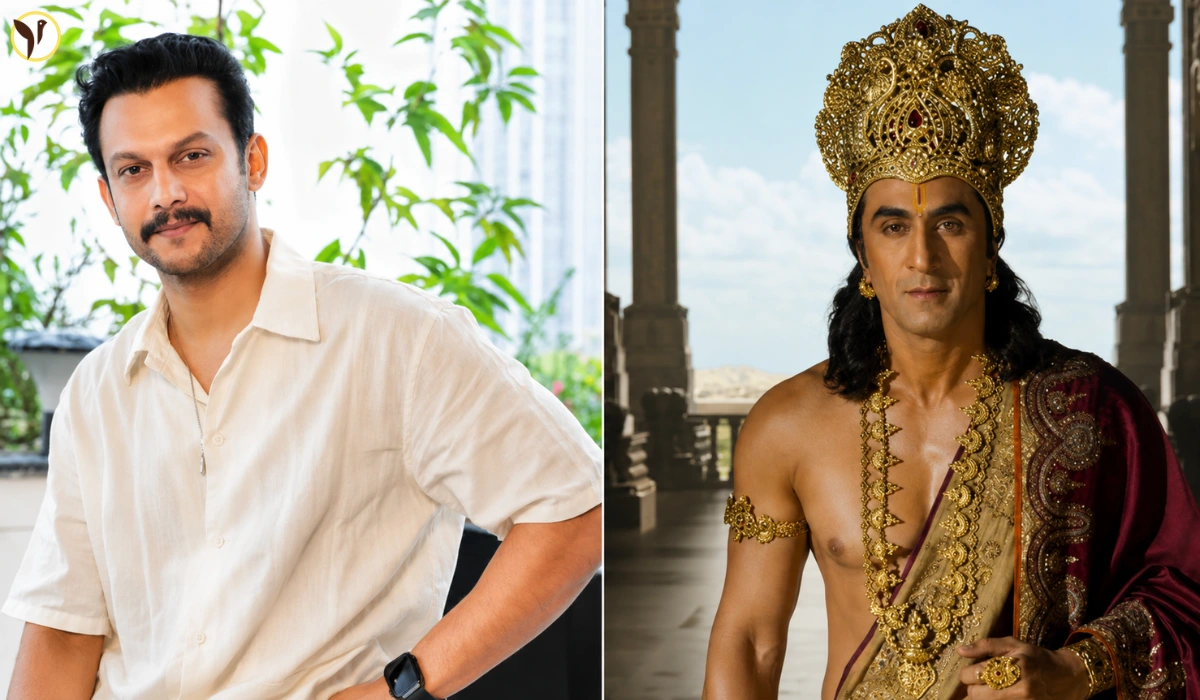


When a National Award-winning filmmaker says a script "blew him away" — and calls it one of the finest he has ever read — that is not promotional noise. That is a peer verdict. And when that filmmaker is Adinath Kothare, confirmed to play Bharat in Nitesh Tiwari's Ramayana, his words carry the weight of someone who has lived on both sides of the camera.
In a rare, candid interview with Bollywood Hungama published on July 23, 2025, Adinath Kothare did something most cast members in mega-productions rarely do: he spoke with restraint, precision, and unmistakable sincerity. He didn't oversell. He didn't give the expected platitudes. He gave a filmmaker's answer — and that makes all the difference.
So the question worth asking is not just "What did Kothare say?" but "What does it actually tell us about whether Ranbir Kapoor's Ramayana is true cinematic art — or simply the most expensive gamble ever mounted on Indian soil?"
What Adinath Kothare Actually Said — And Why It Matters
"It's a blessing yaar. It's the biggest film made on Indian soil. It's also one of the biggest films made globally today. To be a part of it, I am truly indebted to Mukesh Chhabra... I was blown away when I heard the screenplay. It is one of the finest scripts I have read, to be honest."— Adinath Kothare, speaking to Bollywood Hungama, July 23, 2025
Kothare confirmed his role as Bharat in an exclusive conversation with Bollywood Hungama, expressing how fortunate he feels to be part of the production — but what separated his interview from the typical Bollywood cast statement was the specificity of his praise. He did not just call the film "big." He called the script exceptional. He praised its production value and VFX. And he called out the decade-long planning as a defining quality.
Kothare stated that director Nitesh Tiwari and producer Namit Malhotra have spent nearly ten years in pre-production, noting that they are "clear about what they are planning to offer." For anyone who has watched how Indian tentpoles are typically rushed into production — think Adipurush's infamous VFX debacle — this is a genuinely reassuring signal, not a marketing line.
Kothare is not an outsider to quality. As a National Award-winning filmmaker, his notable works include Paani (2024), which won the National Award for Best Film on Environmental Protection — a film that required rigorous technical and narrative precision. When this man reads a script and says he was "blown away," it is a calibrated statement from someone who knows what a strong screenplay looks like from the inside out.
The Valmiki Ramayana, the ancient source text behind Nitesh Tiwari's cinematic adaptation. Source: Wikimedia Commons / Public Domain
The Film Behind the Conversation: What Makes This Ramayana Different
To understand the stakes of Kothare's endorsement, you need to understand what Ramayana (2026) actually is — and why it is unlike anything Indian cinema has attempted before.
- ₹1,600CrReported Budget (Both Parts)
- 10+Years in Pre-Production
- 2Parts (Diwali 2026 & 2027)
- 600Days of Post-Production
Directed by Nitesh Tiwari and written by Shridhar Raghavan, the film features Ranbir Kapoor as Ram, Sai Pallavi as Sita, Yash as Ravana, Sunny Deol as Hanuman, and Ravi Dubey as Lakshman — a cast that spans Bollywood, South Indian cinema, and seasoned character veterans, making it genuinely pan-Indian in its ambition.
The combined budget across both parts is estimated at around ₹4,000 crore, placing it among the most expensive film franchises ever made globally. The film relies heavily on advanced VFX, with elaborate sets built in Mumbai studios and additional shoots in London.
But scale alone has never guaranteed artistry. Adipurush (2023), another modern mythological retelling, was reportedly made at over ₹500 crore — and was widely panned for its substandard visual effects and narrative missteps. The question that haunts every viewer as they watch the Ramayana teaser is: will this be different?
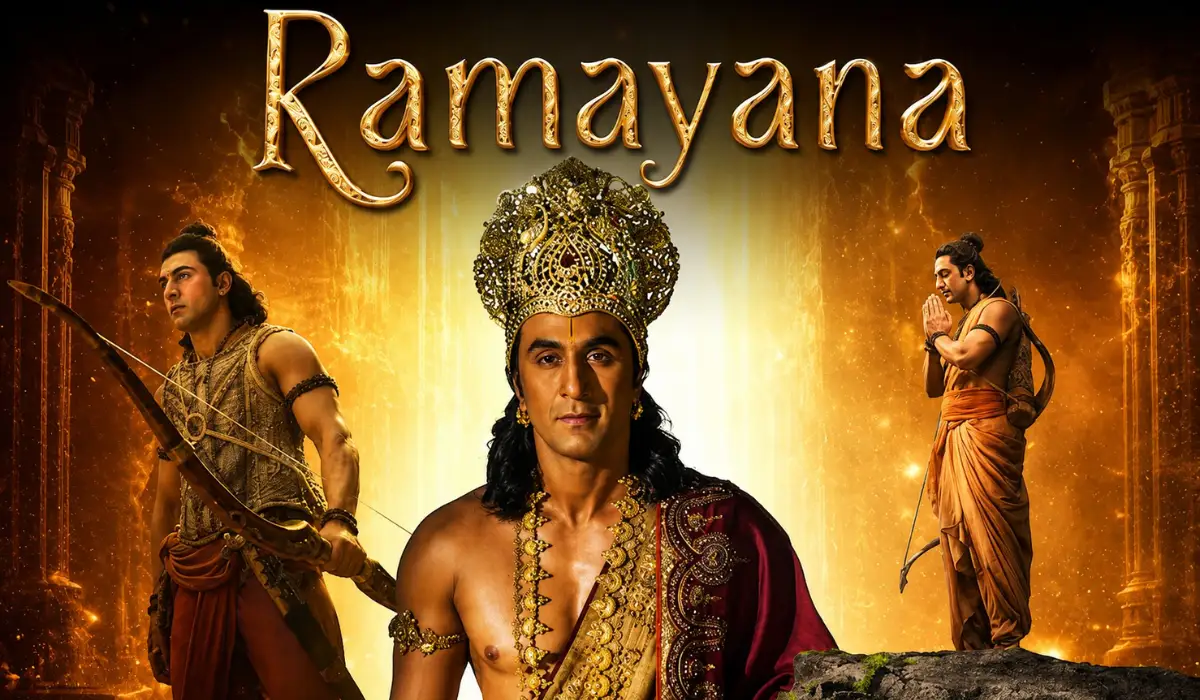
The Technical Ambition Is Genuinely Unprecedented
The VFX is being handled by DNEG Studios, the Oscar-winning team behind Dune, Inception, and the Avengers franchise. Action choreography is by Guy Norris, the legend behind Mad Max: Fury Road. These are not Bollywood-adjacent hires. These are the best technical minds working in global cinema today.
In a remarkable musical collaboration, the film will feature Hans Zimmer — known for The Lion King and Inception — working alongside A.R. Rahman. This is their first joint project, and the convergence of Zimmer's global orchestral power with Rahman's distinctly Indian musical soul could produce a soundtrack that becomes culturally historic in its own right.
Who Is Adinath Kothare — And Why His Opinion Carries Weight
To dismiss Kothare's words as another cast member doing promotional rounds would be to misread who he is. He is a prominent figure in Marathi cinema and a National Award-winning filmmaker whose notable works include Avatarachi Gosht, Paani, Neelkanth Master, and Chandramukhi.
He is not an outsider dropped into a Hollywood-style tentpole for star power. He has built films. He has written scripts, fought for budgets, and lived through the entire arc of production — from the desperate optimism of a first draft to the brutal reality of post-production. When a person with that biography reads a script and calls it one of the finest he has encountered, it deserves to be taken seriously as creative testimony.
Kothare described the time when he read the script, saying that he was "blown away" — while also describing it as one of the "finest scripts" he has ever read. He noted that director Nitesh Tiwari and producer Namit Malhotra are clear about their vision and have spent almost ten years in pre-production.
Full Confirmed Cast — Ramayana (2026)
|
|
|
|
|
|
|
|
|
|
|
|
|
|
|
|
|
|
|
|
|
|
|
|
|
|
|
|
|
|
|
|
|
|
|
|
|
|
|
|
|
|
|
|
|
|
|
|
|
|
|
|
|
|
|
|
The Symbolic Brilliance of Casting Arun Govil as King Dashrath
One detail in the casting that deserves deeper attention: the casting of Arun Govil — who played Rama in the classic 1987 TV series — as King Dashrath has been noted by fans as a symbolic passing of the torch. This is not just a piece of nostalgia. It is a thoughtful narrative gesture — positioning the man who defined a generation's image of Ram as the father of the new Ram. It signals that the filmmakers are not dismissing India's Ramayana history but consciously building on it.
Analyst's Corner: Five Signals That This Could Be Different
1. A decade of pre-production. Nitesh Tiwari and Namit Malhotra spent ~10 years developing this — a rarity in an industry that often rushes mythological epics.
2. Script-first approach. A National Award-winning filmmaker calling the screenplay "one of the finest I have read" is the most credible endorsement a script can receive.
3. World-class technical team. DNEG (Dune, Inception) for VFX; Guy Norris (Mad Max) for action; Hans Zimmer + A.R. Rahman for music — this is India hiring globally, not locally.
4. Pan-Indian casting with purpose. Every role feels considered — from the symbolism of Arun Govil as Dashrath to Yash's menacing Ravana and Sai Pallavi's emotionally complex Sita.
5. Warner Bros. for global distribution. International ambition backed by international infrastructure. This is not a domestic-only play.
The Honest Questions That Remain Unanswered
Great expectations are a burden as much as a blessing. The last time Indian cinema made such sweeping promises about a mythological epic — Adipurush in 2023 — the result was a cultural and commercial embarrassment that cost its makers both credibility and money. The ghost of that failure lingers over every Ramayana press release.
The screenplay has been written by Shridhar Raghavan, whose work as a screenwriter has historically received a mixed critical response. Questions have been raised about whether Raghavan has remained faithful to the source material of Valmiki's Ramayana, given that his previous work has been divisive. Kothare's praise of the script is encouraging — but the true test will come when the film is seen in full.
There is also the question of tone. The Ramayana exists in multiple regional and literary traditions — the Valmiki Ramayana, the Ramcharitmanas, the Kamba Ramayanam — and any cinematic adaptation inevitably takes a position. Whether Tiwari's version is reverent or revisionist, devotional or dramatic, will determine how the film is received across India's deeply varied religious and regional sensibilities.
In an exclusive interview with us, Addinath Kothare spoke about working on Ramayana and defended Ranbir Kapoor’s casting as Lord Rama. The actor called Ramayana one of the biggest and most daring projects made in India and praised Ranbir for his dedication and performance.… pic.twitter.com/qjrCxja4bl
— @zoomtv (@ZoomTV) May 14, 2026
What Happens Next: A Timeline to Watch
|
|
|
|
|
|
|
|
|
|
|
|
|
|
|
|
|
|
|
|
|
|
|
|
|
|
|
The next major milestone to watch for is the official trailer, which has not yet been announced. The teaser has already generated enormous buzz — and reportedly sparked a ₹1,000 crore surge in the market capitalisation of Prime Focus, the production company behind the film. When the full trailer lands, it will either validate or complicate everything that Kothare — and a dozen other cast members — have been saying.
The Verdict: Art, Ambition, or Both?
Based on what we know today — the decade of development, the world-class technical team, the thoughtful casting, the script praised by a filmmaker who knows what a great script looks like, and the sheer institutional seriousness with which this production has been approached — Ramayana has stronger indicators of genuine artistic ambition than any Indian mythological epic that has come before it.
That does not guarantee it will be great. Cinema is not made of guarantees. But it does suggest that the people behind this film are not treating the Ramayana as IP to be strip-mined. They are treating it as a responsibility.
Adinath Kothare's words, measured and specific as they are, matter precisely because they come from someone with no incentive to lie about a script's quality — someone who has staked his credibility as a filmmaker on that assessment. The question of whether Ranbir Kapoor's Ramayana is true art will ultimately be answered in November 2026. But if a National Award-winning filmmaker says the script is extraordinary, the least we can do is believe him — and wait.