


When reality television stars step into the fractious arena of political commentary, the boundary between entertainment and civic engagement inevitably blurs. Recently, the internet witnessed a rare convergence of digital influence and grassroots reality when Elvish Yadav and Munawar Faruqui condemned the lathi-charge on protesters. Their statements did not merely trend on social media; they signaled a subtle, yet distinct, shift in how India’s youth consume and validate political discourse.
For a demographic that often feels alienated by traditional political rhetoric, the validation of their frustrations by cultural icons carries an outsized weight. But to understand why the interventions by Yadav and Faruqui matter, we must look beyond the headlines, examining the incident itself, the legal framework surrounding crowd control, and the evolving responsibility of the digital creator.
The Incident: What Prompted the Outcry?
In recent weeks, various parts of India have witnessed youth-led protests, primarily driven by demands for employment, transparency in recruitment processes, and accountability in public administration. During one such demonstration, which aimed to be a peaceful sit-in, the situation escalated rapidly, resulting in law enforcement deploying a lathi-charge (baton charge) to disperse the crowd.
Visuals from the ground—widely circulated on social media platforms—showed heavy deployment of police personnel, the use of water cannons, and batons being used against individuals who appeared to be retreating. Several protesters sustained injuries, and a wave of public outrage followed the circulation of these videos.
It was against this backdrop that Elvish Yadav and Munawar Faruqui broke their respective silences.
The Voices of Dissent
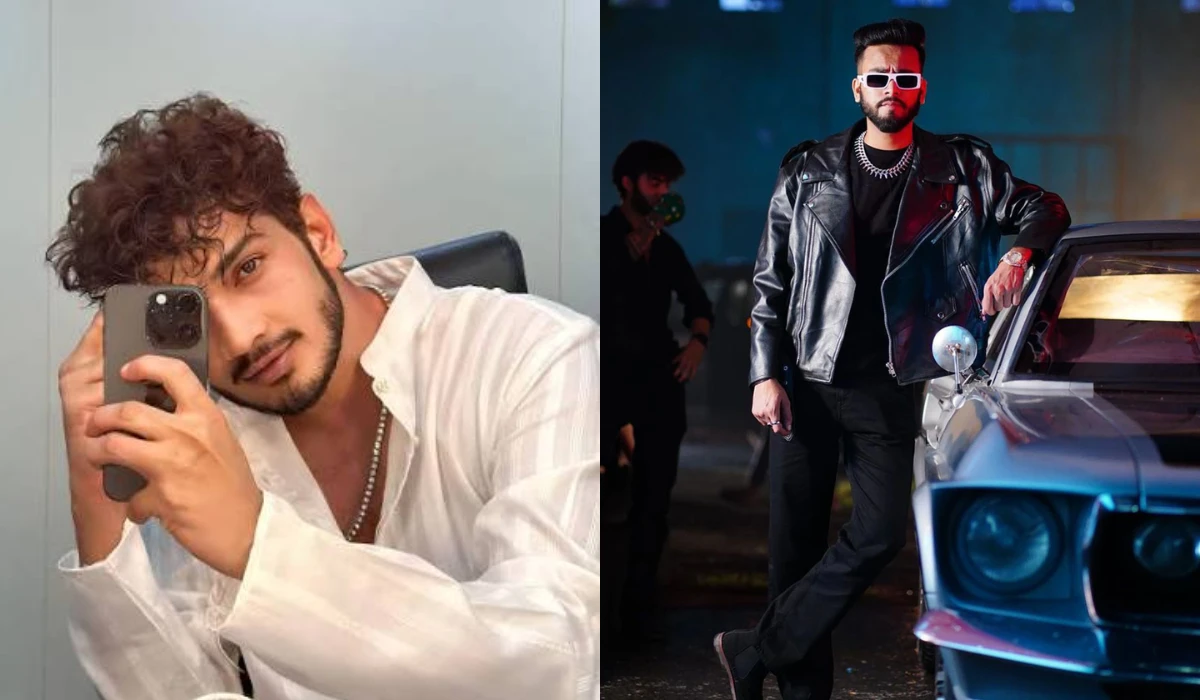
Elvish Yadav, the Bigg Boss OTT 2 winner who commands a massive following in the Hindi heartland—particularly Uttar Pradesh and Haryana—took to his social media platforms to question the disproportionate use of force. Yadav, who has historically cultivated a "youth icon" persona rooted in street-smart realism, stated that while law and order must be maintained, the state’s machinery cannot be weaponized against its own young citizens who are merely demanding their constitutional rights.
Munawar Faruqui, the Bigg Boss 17 winner and stand-up comedian whose career has been defined by his battles against institutional overreach, echoed similar sentiments. Faruqui framed the lathi-charge not just as a law-and-order issue, but as a human rights concern. Having faced his own highly publicized legal battles, Faruqui’s condemnation carried a nuanced understanding of how quickly state power can escalate against dissenting voices.
The Demographics of Dissent: Why Their Voices Carry Weight
To dismiss Yadav and Faruqui as mere "entertainers" is to misunderstand the modern media ecosystem. Their follower bases overlap heavily with the demographic most affected by the issues driving these protests: young, aspirational Indians aged 18 to 30.
Below is an original analysis comparing the primary demographic profiles of these influencers with the typical profiles of the protesters involved in recent state-level job and recruitment agitations.
|
|
|
|
|
|
|
|
|
|
|
|
|
|
|
|
|
|
|
|
|
|
|
|
|
|
|
|
|
|
The Legal and Constitutional Context of a Lathi-Charge
The condemnation by public figures often focuses on the emotional and visual impact of a lathi-charge. However, a complete understanding requires examining the legal parameters governing such actions.
In India, the right to peaceful assembly is a fundamental right under Article 19(1)(b) of the Constitution. However, this right is subject to "reasonable restrictions" under Article 19(2), which allows the state to impose restrictions in the interest of sovereignty, public order, and security.
The Supreme Court of India has historically issued strict guidelines regarding crowd control:
- Proportionality: Force used must be strictly proportional to the threat posed.
- Lethal to Non-Lethal: Lathi-charges are considered non-lethal force, but must cease the moment the crowd begins to disperse.
- Prior Warnings: Law enforcement is typically required to issue clear warnings (often multiple times) before initiating a physical baton charge.
- Targeting: Batons should ideally be aimed at the lower body to minimize permanent injury, and under no circumstances should unarmed, retreating individuals be beaten.
When Elvish Yadav and Munawar Faruqui condemned the recent lathi-charge, they were implicitly, and sometimes explicitly, pointing out the breach of these very guidelines. The viral videos rarely show the requisite warnings, and the injuries documented often suggest a punitive rather than dispersal approach by the police.
The Socio-Political Shift: Influencers as the New Civic Intermediaries
Why does it matter when two reality stars comment on a police action? Wouldn't a statement from a mainstream politician carry more institutional weight?
Not necessarily, not anymore. India is experiencing a profound crisis of trust regarding traditional institutions. Mainstream political narratives are often viewed through a hyper-partisan lens. When a traditional opposition leader condemns a lathi-charge, it is frequently dismissed by the ruling dispensation's supporters as "opposition politics."
However, when a non-partisan cultural figure—especially one who has faced public scrutiny or legal troubles themselves—speaks out, it disrupts the traditional political binary.
- Parasocial Trust: Audiences develop one-sided psychological relationships with digital creators. They feel they "know" Elvish's raw, unfiltered personality or Munawar's vulnerable, honest demeanor. This parasocial trust translates into high-credibility margins when they speak on non-entertainment topics.
- Bypassing the Gatekeepers: By using platforms like Instagram, X (formerly Twitter), and YouTube, these creators bypass traditional media editors. Their message reaches millions directly, unedited and unfiltered.
- Safety in Numbers: When both Yadav and Faruqui—creators with vastly different audience base sensitivities—agree on an issue, it signals a consensus that transcends religious or regional fault lines. It becomes a unified "youth" issue rather than a sectional grievance.
What Happens Next: The Ripple Effects of Digital Condemnation
The immediate aftermath of a viral condemnation by top-tier influencers usually follows a predictable digital trajectory: trending hashtags, a brief flurry of mainstream media coverage quoting the tweets, and eventual digital oblivion as the algorithm moves to the next topic.
However, the structural impact of this new dynamic is more enduring.
Increased Scrutiny on Law Enforcement
Police departments across India are increasingly aware of the "optics" of their actions. A lathi-charge that might have been quietly managed a decade ago now instantly becomes a national crisis because everyone holds a high-definition camera in their pocket, and influential digital voices are waiting to amplify it. The condemnations by Yadav and Faruqui add pressure on local administrations to conduct internal reviews of the incident, if only to stave off further digital backlash.
The Radicalization of the "Apolitical" Middle Ground
Both Elvish Yadav and Munawar Faruqui have built their brands largely on apolitical or loosely political content. Stepping into the fray of civil rights and police brutality risks alienating certain segments of their audience or inviting scrutiny from state machinery. By taking this risk, they inadvertently push their massive, previously apolitical follower base toward engaging with hard civic realities.
A Blueprint for Future Creator Activism
This moment serves as a blueprint for the next generation of digital creators. It proves that audiences will reward authenticity and civic awareness, provided it is not perceived as performative or opportunistic. The success of their statements (measured by positive engagement metrics) will likely encourage other creators to speak up on local governance issues, effectively creating a decentralized, digital civil society.
मैं कांग्रेस-भाजपा का सपोर्टर नहीं...' CJP प्रोटेस्ट पर खुलकर बोले Elvish Yadav
— Times Now Navbharat (@TNNavbharat) July 21, 2026
पूरी खबर🔸https://t.co/OcUCpkZI1L#CJP @ElvishYadav #ElvishYadav #Elvish #CJPProtest pic.twitter.com/gmTpr4HPiW
Performative Allyship vs. Genuine Solidarity
Any objective analysis of this event must also address the counter-narrative. Critics are quick to point out that digital condemnations are easy, cost-free, and often amount to "slacktivism."
It is a valid critique. A tweet or an Instagram story does not provide legal aid to those injured in the lathi-charge. It does not file a Public Interest Litigation (PIL) in the high court.
Yet, in an era where the ruling class often controls the traditional narrative, the mere act of naming and shaming state violence on a platform of 10 million followers is a form of power exercise. The true measure of Elvish Yadav and Munawar Faruqui’s commitment will be seen in the coming months. Will they leverage their influence to connect affected protesters with legal aid NGOs? Will they use their platforms to consistently highlight administrative failures, or was this a momentary reaction to a viral video?
For now, their interventions have successfully centered the conversation around the disproportionate use of state force, forcing a broader segment of society to confront an uncomfortable reality.
Conclusion
The incident where Elvish Yadav and Munawar Faruqui condemned the lathi-charge on protesters is more than a fleeting entertainment-news crossover. It is a case study in the evolving architecture of Indian public discourse.
When young people take to the streets to demand jobs and accountability, and the state responds with batons, the resulting friction requires a mediator. Traditionally, that mediator was the press or the political opposition. Today, that role is increasingly being filled by digital creators who possess the cultural fluency and algorithmic reach to make the establishment pause.
While digital activism cannot replace on-ground legal and political action, the convergence of these specific voices against state overreach demonstrates that India’s youth are no longer waiting for traditional politicians to validate their struggles. They are building their own micro-institutions of influence—and those institutions are starting to talk back.
Other Articles to Read: