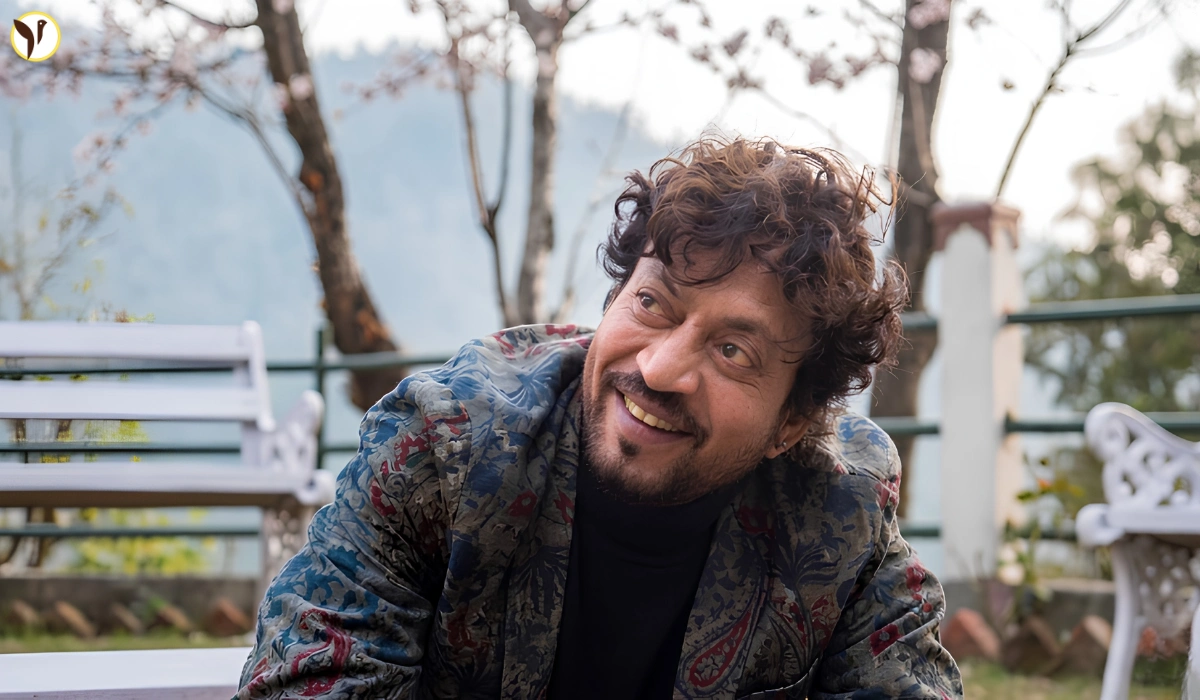


Irrfan Khan's raw letter from 2018 captures the actor's brutal confrontation with neuroendocrine cancer, revealing a vulnerability that still pierces hearts six years after his death. Shared via the Times of India, these words—"I am in the grip of pain"—offer an unflinching look at mortality from one of Bollywood's most introspective talents.
A Letter That Was Never Meant to Be Famous — But Became Unforgettable
He had played spies, detectives, poets, and philosophers on screen. But when Irrfan Khan sat down in a London hospital room in 2018 to write about his illness, there was no script — only truth. And that truth, raw and unsparing, broke through the noise of celebrity culture in a way none of his films ever could.
The letter Irrfan published in the Times of India in June 2018, while undergoing treatment for a rare high-grade neuroendocrine cancer, is arguably the most honest document an Indian actor has ever produced in public. Five years after his death on April 29, 2020, it continues to circulate on social media — read, re-read, and wept over by strangers who feel they lost someone they knew.
The Diagnosis That Changed Everything
In March 2018, Irrfan Khan disclosed via social media that he had been diagnosed with a rare neuroendocrine tumor (NET) — a form of cancer that originates in the body's neuroendocrine cells, which regulate hormonal processes. The disease is notoriously difficult to diagnose because its symptoms mimic those of more common, less serious conditions.
He was at the peak of his global career. Hindi Medium (2017) had just become a massive hit. His Hollywood résumé — Slumdog Millionaire, Life of Pi, Jurassic World, Inferno — had made him one of the few Indian actors with genuine international recognition. Then, without warning, came the tap on the shoulder.
|
|
|
|
|
|
|
|
|
|
|
|
|
|
|
|
|
|
|
|
|
|
|
|
|
|
|
The Letter: What Irrfan Actually Wrote
The letter was not polished or PR-managed. It was confessional — the kind of writing that only comes when a person has moved beyond fear of judgment.
Irrfan described the moment of diagnosis as being on a speedy train, full of dreams, plans, and goals — and suddenly having someone tap on his shoulder to say: "Your destination is about to come. Please get down."
He wrote of standing in the chaos, shocked and afraid, whispering to his son during a hospital visit: "The only thing I expect from ME is not to face this crisis in this present state. Fear and panic should not overrule me and make me miserable."
Then came the line that cuts deepest — the one that gave this article its title:
"AND THEN PAIN HIT. As if all this while, you were just getting to know pain, and now you know his nature and his intensity. Nothing was working; NO consolation, no motivation. The entire cosmos becomes one at that moment — just PAIN, and pain felt more enormous than GOD."
This is not the language of a press release. This is a man staring into the void and choosing to describe it honestly, because he believed his audience deserved honesty.
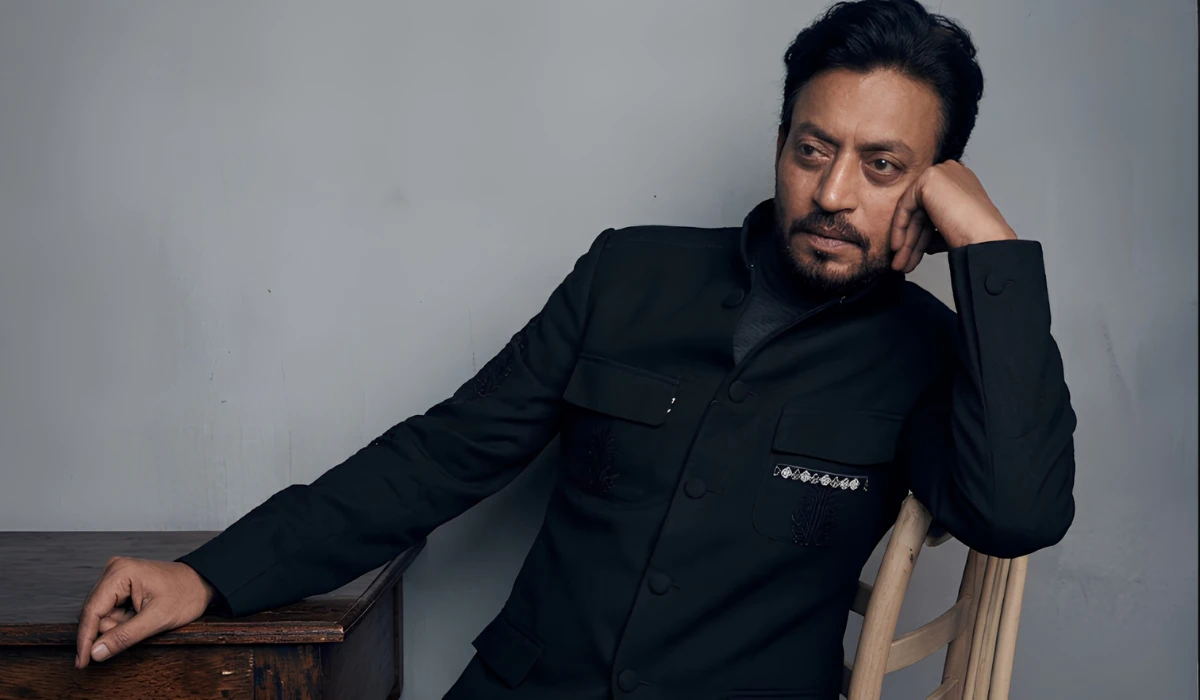
The View from the Hospital Balcony — A Moment of Unexpected Clarity
Perhaps the most haunting passage involves Irrfan's hospital in London, which happened to be located across the road from Lord's Cricket Ground — the so-called Mecca of cricket, and the childhood dream of a boy who grew up in Jaipur.
He describes entering the hospital, drained and exhausted, barely noticing where he was. Then he sees a smiling poster of Vivian Richards — and feels nothing. As if that world no longer belonged to him.
But standing on the hospital balcony one day, something shifted:
"Between the game of life and death, there is just a road. On one side, a hospital, on the other, a stadium — as if one isn't part of anything which might claim certainty."
It was this observation — one of the most quietly profound things written by any public figure in recent memory — that led Irrfan to a kind of surrender. Not defeat, but release. He wrote that he began to trust the uncertainty, to submit to whatever outcome lay ahead — whether two months or two years away.
Why This Letter Keeps Going Viral — Even After His Death
Irrfan Khan passed away on April 29, 2020, at Kokilaben Dhirubhai Ambani Hospital in Mumbai, from a colon infection — a complication of his neuroendocrine cancer. He was 53. His mother had died just days before, and the nationwide Covid-19 lockdown prevented him from attending her last rites.
His family released a statement that echoed the letter's final sentiment: "I trust, I have surrendered."
The letter has since been shared across languages, continents, and generations — translated into Hindi, Gujarati, Kannada, Tamil, and beyond. A tribute video by Gujarati actor Nischay Rana reignited its circulation years after Irrfan's death. His son Babil Khan continues to share memories of his father — including unseen photographs from the treatment period — that reinforce the portrait of a man who faced his illness with extraordinary grace.
What makes the letter endure is not tragedy, but recognition. Readers see in it something universal: the terror of the unexpected, the inadequacy of consolation, and — eventually — the possibility of peace.
The Legacy: What Indian Cinema Lost
Irrfan Khan was not just a great actor. He was a different kind of actor — one who worked against the grain of Bollywood's maximalism, finding entire emotional worlds in a glance or a pause. From Paan Singh Tomar to The Lunchbox, from Maqbool to Life of Pi, his performances carried a philosophical weight that rarely surfaces in mainstream cinema anywhere in the world.
His cancer diagnosis also had an unintended public health consequence: it drew global attention to neuroendocrine tumors, a category of cancer that receives comparatively little awareness. Several cancer advocacy organizations have credited Irrfan's openness with prompting early diagnosis conversations that may have saved lives.
His final film, Angrezi Medium — which he completed between treatment sessions — was released in March 2020, just weeks before his death and days before India's Covid lockdown shuttered cinemas. It stands as a bittersweet farewell: a performance full of warmth, humor, and a father's love — qualities he embodied in life as much as on screen.
Understanding Neuroendocrine Tumors: What Irrfan's Diagnosis Revealed
|
|
|
|
|
|
|
|
|
|
|
|
|
|
|
|
|
|
|
|
|
Remembering Irrfan Khan on his death anniversary a storyteller who made every role unforgettable. Gone but never forgotten 🕊️🥹
— India Forums (@indiaforums) April 29, 2026
.
.
.#IrrfanKhan #RememberingIrrfanKhan #IrrfanKhanLegacy #Legend #GoneTooSoon #IndianCinema #BollywoodLegend #ForeverInOurHearts #IndiaForums pic.twitter.com/NekA3dXyl8
Five Years Later: What This Letter Teaches Us
Today — on the fifth anniversary of Irrfan's passing — the letter reads less like a document of illness and more like a document of living. It is a reminder that pain is not a metaphor. That fear is not weakness. That surrender is not the same as giving up.
The actor who once said "Life is under no obligation to give us what we expect" lived that philosophy out loud, in public, with grace. That is a rarer performance than anything captured on film.
The letter will make you cry. It is supposed to. What remains after the tears, however, is something steadier — the kind of quiet strength that Irrfan Khan carried with him across every role, and into every room.
Other Articles to Read:
- Kareena Kapoor Turns Forever Fan Girl For Diljit Dosanjh After Fallon Show
- MoEFCC Internship 2026 Opens: ₹10,000 Stipend, Direct Govt Exposure for Students
- Shocking: Claude AI Deletes Company’s Entire Database in 9 Seconds!
- Ariana Grande Announces New Album ‘Petal’ After Weeks Of Teasing
- Kangana Ranaut Drops First Look as Gangster in ‘Clocks 20 Years’
- Virat Kohli Joins Childhood Coach Rajkumar Sharma For Delhi Cricket Academy Launch