

Prime Video’s Mirzapur has officially progressed from our living rooms to movie theatres across India with the long-awaited release of Mirzapur: The Movie (to be released on September 4, 2026). This release is not only a milestone for the Mirzapur franchise but also signifies how successful OTT titles are ready to take on and challenge traditional theatrical economics.
Starring Pankaj Tripathi, Ali Fazal and Divyenndu, the film will tell the next chapter in the ongoing blood-thirsty struggle for control of Purvanchal. Filming wrapped on 1st February and they are currently in post-production, creating the largest chapter in the entire Mirzapur universe so far.
A franchise built on regional grit and national obsession
When Mirzapur debuted in 2018, it arrived during the early wave of Indian streaming originals, alongside titles that proved audiences were ready for darker, more regionally rooted storytelling. Set against the underworld of eastern Uttar Pradesh, the series explored illegal gun factories, opium routes, and fragile political alliances through characters that felt disturbingly real.
At the centre was Kaleen Bhaiya, the soft-spoken carpet exporter who ruled Mirzapur’s crime economy with quiet authority. Opposing him were the Pandit brothers, Guddu and Bablu, whose entry into this violent ecosystem turned personal grief into a generational feud.
Over three seasons and nearly 30 episodes, Mirzapur evolved from a cult favourite into a mainstream phenomenon, clocking an estimated 200 million views globally. Its dialogues entered pop culture, its characters became shorthand for power and chaos, and its setting put Purvanchal firmly on India’s entertainment map.
Why the story is moving to theatres now
The decision to make Mirzapur a theatrical film comes at a time when Hindi cinema is rediscovering footfalls after a prolonged slump. Big-ticket releases like Pathaan have shown that audiences are willing to return to cinemas when the scale feels justified.
For Mirzapur, the shift is strategic. The film is positioned not as a spin-off, but as a narrative bridge that revisits events around the end of Season 1 and reframes the emotional and political stakes that shaped everything that followed.
By choosing a theatrical-first release, the makers are signalling confidence in the franchise’s draw beyond OTT subscribers, particularly in North India’s heartland, where the series enjoys intense loyalty.
Plot timeline and narrative focus
One of the most discussed aspects of the film is its placement within the Mirzapur timeline. Despite events in later seasons, the movie is set before the death of Munna Tripathi, allowing Divyenndu to return as the volatile heir whose presence defined the show’s early tension.
This narrative choice also brings back characters like Sweety Gupta, played by Harshita Gaur, anchoring the film emotionally in the same period that first hooked audiences.
A notable casting update sees Jeetendra Kumar stepping into the role of Bablu Pandit for the film, replacing Vikrant Massey. The change reflects the story’s specific timeline and tonal shift, rather than a long-term recast across formats.
Rather than retelling familiar beats, the film is expected to recontextualise the power struggle between the Tripathis and the Pandits, offering a more focused and visually expansive confrontation.
Returning cast and creative team
The core ensemble remains the franchise’s strongest asset.
Pankaj Tripathi returns as Kaleen Bhaiya, a character whose restrained menace has become iconic. Ali Fazal reprises Guddu Pandit, continuing the physical and psychological transformation that has defined his arc. Shweta Tripathi is back as Golu Gupta, while Rasika Dugal’s Beena Tripathi continues to navigate survival through strategy rather than brute force.
The extended cast includes familiar faces such as Sheeba Chadha, Rajesh Tailang, Kulbhushan Kharbanda, Ravi Kishan, Abhishek Banerjee, Sonal Chauhan, and Sushant Singh, reinforcing continuity with the series’ layered political ecosystem.
Director Gurmmeet Singh, who helmed the first two seasons, returns to the franchise, with Puneet Krishna once again handling writing duties. Their understanding of Purvanchal’s social codes and linguistic texture has been central to Mirzapur’s authenticity. Farhan Akhtar and Ritesh Sidhwani continue as producers under the Excel Entertainment banner.
Visual scale and setting
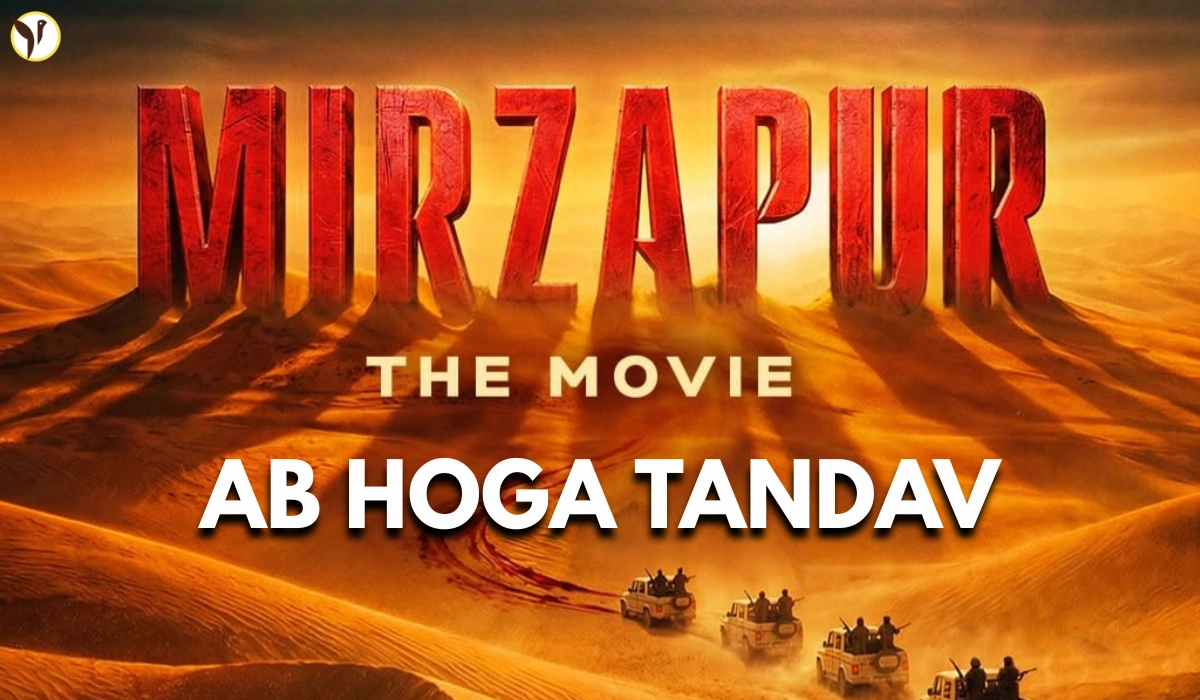
Early promotional material hints at a visual upgrade tailored for cinemas. A poster released by Excel Entertainment shows armed convoys cutting through arid landscapes, with a cracked red title suggesting both bloodshed and legacy.
Much of the film has been shot in and around Bhadohi and nearby regions, using local extras and licensed props to maintain realism. The use of Bhojpuri-inflected Hindi remains intact, preserving the show’s regional identity even as it scales up technically.
Action sequences are expected to be more elaborate than anything previously seen in the series, with sound design and IMAX-ready visuals aimed squarely at theatrical immersion.
Audience response and industry impact
For fans, the film offers something the episodic format could not. Narrative concentration. Years of cliffhangers and parallel arcs now funnel into a single cinematic experience designed to be consumed collectively.
Theatre chains across Uttar Pradesh and Bihar are already viewing the release as a potential draw for single screens and multiplexes alike. Premium formats, including IMAX, are expected to be part of the rollout, with advance bookings likely to open by July 2026.
From an industry perspective, Mirzapur: The Movie tests whether OTT-born franchises can sustain box office momentum without diluting their identity. Its success or failure will influence how other streaming giants approach long-running properties.
What lies ahead for the Mirzapur universe
Prime Video has confirmed that Mirzapur Season 4 is in development and will arrive after the film. This dual-format strategy allows the franchise to expand without forcing every major narrative beat into episodic television.
Rather than signalling an ending, the movie appears to function as a consolidation point. A chance to reset stakes, deepen motivations, and prepare the ground for what comes next.
For a series that has thrived on patience and payoff, the move to cinema feels less like a gamble and more like an evolution.