

As of March 18, 2026, Bollywood actress Sara Ali Khan has once again found herself at the center of a heated public debate. The issue revolves around whether public figures should be asked to “prove” their faith — a question that has triggered discussions across social media, legal circles, and the film industry.This controversy is not just about one celebrity. It touches on deeper issues like personal freedom, identity, religion, and fairness in modern India.
What Exactly Happened With Sara Ali Khan and the Affidavit Rule?
The controversy started after the Badri-Kedar Temple Committee (BKTC), which manages the Badrinath and Kedarnath shrines, announced a new rule for non-Hindu visitors.
- Any non-Hindu who wants to offer prayers inside the Kedarnath or Badrinath temples must now submit an affidavit.
- In this affidavit, they must declare their belief in Hinduism / Sanatan Dharma and confirm that they respect the temple’s traditions.malayalam.
- Officials have said this rule will apply to all non-Hindu devotees, and they specifically mentioned Sara Ali Khan because she visits Kedarnath very frequently.
The temple committee chairperson Hemant Dwivedi said that if Sara Ali Khan expresses her devotion to Sanatan Dharma in an affidavit, she will be allowed to continue offering prayers at Kedarnath and Badrinath like before.
This is why headlines are saying: “Sara Ali Khan asked to prove faith.”
Who Made This Rule and Why Was It Introduced?
The rule has been made by the Badri-Kedar Temple Committee (BKTC), a statutory body that manages the administration of the Badrinath and Kedarnath temples in Uttarakhand.
According to committee officials:
- The decision was taken to ensure that only genuine devotees enter the inner sanctum and to avoid misuse of the temple space.malayalam.
- They claim they are not banning non-Hindus, but asking them to formally declare their faith and intent before entering.malayalam.
- The committee also pointed to recent debates about religious conversions and “religious tourism” as a background for tightening entry norms.
In simple words, the committee is saying: “You are welcome if you truly believe, but we want it in writing.”
Why Is Sara Ali Khan’s Name Being Highlighted?
Sara Ali Khan’s name has come up strongly in this debate for several reasons:
- She is the daughter of Saif Ali Khan (a Muslim by birth) and Amrita Singh (a Sikh-born actor who follows Hindu practices), and she has always been seen as someone who embraces multiple cultures and faith traditions.
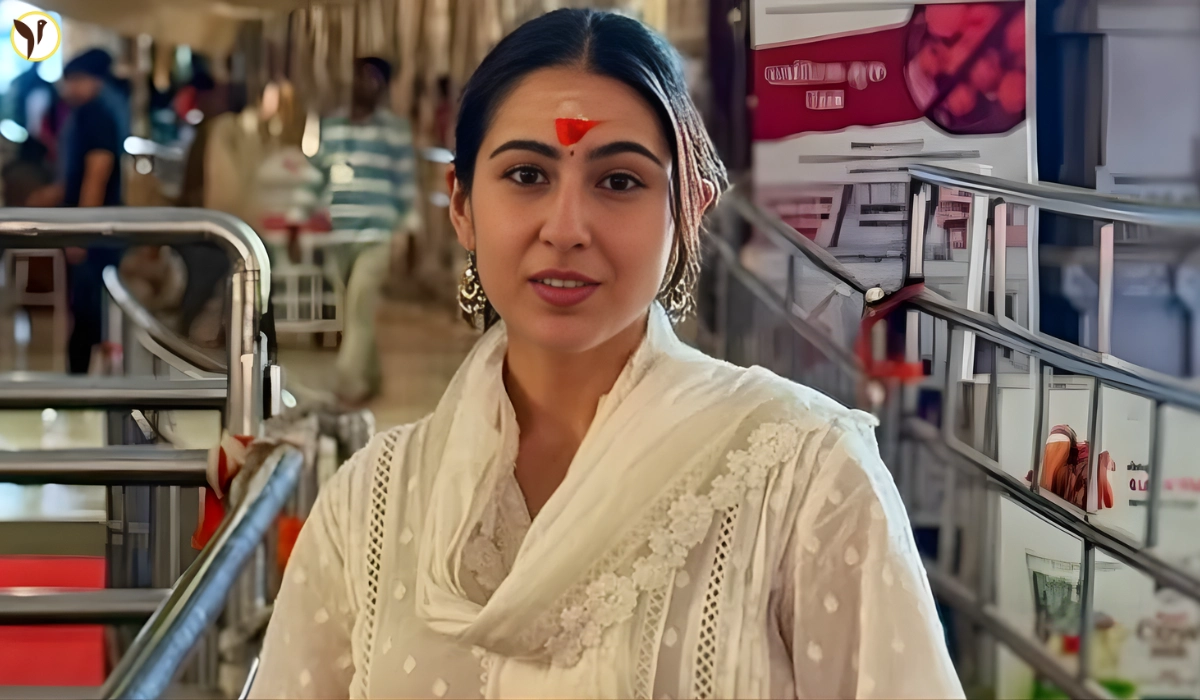
- Sara has been regularly visiting Kedarnath and other temples like Mahakal in Ujjain and has often shared those visits on social media.
- In the press briefing, the temple committee itself mentioned her as an example of a non-Hindu who visits frequently and would now need to submit an affidavit affirming faith in Sanatan Dharma to continue praying inside the temples.
Because she is a popular public figure with a “mixed” background and a visible temple-going image, her case has become a symbol of the larger debate:
- Can a person who already prays at temples be asked to formally prove their faith?
- Does her surname or family background make people doubt her belief more than others?
What Has Sara Ali Khan Said Earlier About Her Religion and Faith?
Till 18 March 2026, there has been no fresh detailed public statement from Sara Ali Khan specifically on this new affidavit rule
However, she has spoken earlier about her religious identity and upbringing:
- In a 2024 interview, Sara said she was “born to a secular family in a sovereign, secular, democratic republic” and that her upbringing taught her to stand up against what is wrong.
- She mentioned that her religious beliefs, food choices, and how she travels are her personal decisions, and she does not feel the need to “defend” them to anyone.
- She also said that her temple visits, which are often captured by the paparazzi, are simply a reflection of who she is and what she believes in.
These past comments show that Sara sees herself as deeply Indian, culturally blended, and spiritually inclined, rather than fitting into a single narrow religious box.
This is why many people now feel that asking her to “prove” her faith through an affidavit looks like doubting something that she has already expressed through her actions and words for years.
How Did Kangana Ranaut React to Sara Ali Khan Being Asked to Prove Faith?
Actor Kangana Ranaut, who is often vocal on religion and politics, has also reacted to this controversy.
According to recent coverage, Kangana said there should be no fear in declaring one’s Sanatani faith and suggested that if someone truly believes in Sanatan Dharma, they should not hesitate to say it clearly, even in writing.
Her broad line of argument has been:
- If you are a Sanatani at heart, why hide it?
- Declaring your faith openly is not something to be ashamed of or scared of.
While Kangana did not attack Sara directly, her comments have been read by many as a subtle push for people like Sara Ali Khan to publicly affirm their Sanatan belief, especially when they enjoy the spiritual and social capital of visiting temples.
What Exactly Is the Affidavit Rule for Kedarnath and Badrinath Temples?
To understand the issue properly, it is important to break down what this “faith affidavit” actually means.
From what has been reported so far:
-
Any non-Hindu wishing to offer prayers at Kedarnath or Badrinath must submit an affidavit.malayalam.
-
In this affidavit, they must:
-
Declare belief in Sanatan Dharma / Hinduism.
-
Affirm that they respect temple traditions and rules.
-
-
Once this document is submitted, they can be granted permission to offer prayers like other devotees.
The rule, as explained by the temple committee:
-
Does not automatically ban non-Hindus.
-
But places an extra step and a written test of faith on them.
In practical terms, it means someone like Sara Ali Khan, if officially treated as non-Hindu, would have to:
- Prepare an affidavit (usually stamped / notarised).
- Clearly write that she believes in Sanatan Dharma.
- Submit the document and then visit as a devotee.
Why Are People Calling It a “Faith Test”?
Many observers, activists, and social media users have compared this affidavit rule to a “faith test”.
Their main concerns are:
- It shifts the conversation from devotion to documentation.
- A person’s inner belief is being measured by a legal paper.
- It puts people with “mixed” or “interfaith” backgrounds under special pressure to explain and prove themselves.
For someone like Sara Ali Khan, who already prays at temples and has publicly said she respects all faiths, such a rule can feel like:
-
“Your actions are not enough, we want a signed statement.”
This is where the question of fairness comes in.
Is the Rule Fair? Arguments in Support of the Affidavit Policy
People and groups who support the new rule give several reasons:
Temple Autonomy and Tradition
- Temples have always had certain rules about who can enter which area and how rituals are done.
- Supporters say the temple committee has the right to define conditions for entry to protect the sanctity of the place.
Safety and Misuse Concerns
- They argue that clearly identifying devotees through affidavits could prevent misuse, political drama or provocative acts inside sensitive religious spaces.
- With huge crowds during Char Dham Yatra, they feel extra checks are justified.
Not a Ban, Just a Declaration
- Many supporters say, “We are not stopping anyone; we are just asking you to formally state what you already believe.”
- If a person is truly a believer, they should not have any issue signing a paper, according to this view.
Clarity in Interfaith Contexts
-
In mixed-faith or celebrity cases, supporters feel a written declaration removes confusion and stops unnecessary controversies later.
From this side, the rule is presented as a protection of temple identity, not an attack on individuals like Sara.
Is the Rule Unfair? Arguments Against Asking Sara Ali Khan to Prove Faith
On the other hand, critics of this decision see it as deeply problematic. Their arguments include:
Targeting by Identity and Surname
- Even if the rule is “for all non-Hindus,” critics feel that individuals with Muslim surnames or mixed backgrounds will be disproportionately questioned, like Sara Ali Khan.
- It creates a sense that some Indians are “more suspect” than others, based on their name or family history.
Violation of Personal Freedom and Privacy
- Faith is a deeply personal matter.
- Forcing someone to write and sign their belief for public authorities can feel intrusive and against the grain of a secular democracy.
Contradiction With India’s Secular Image
- Sara herself earlier spoke of India as a sovereign, secular, democratic republic and her own family as secular.
- Critics say that affidavit rules for temple entry send a confusing message internationally about India’s religious openness.
Practical Discrimination
- In practice, most ordinary tourists will not be asked for affidavits unless they “look” or “sound” like non-Hindus.
- This creates space for bias, profiling, and arbitrary treatment.
In this view, the rule may look neutral on paper, but on the ground, it can become discriminatory and can hurt those who already live multiple identities, like Sara.
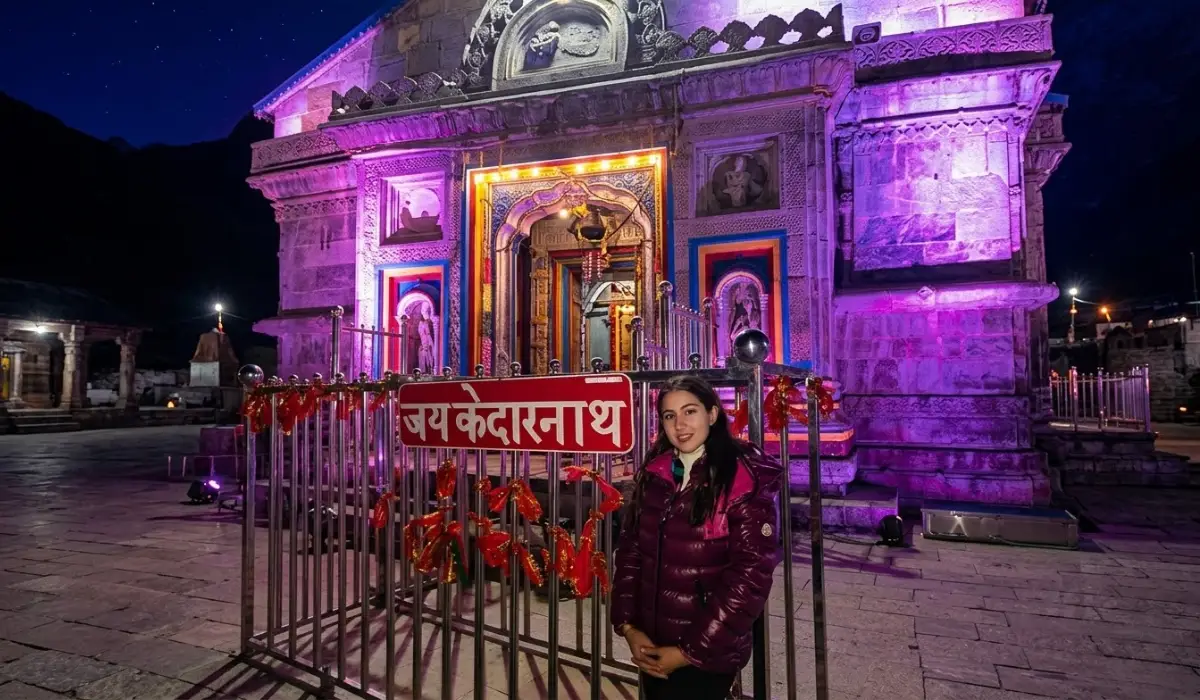
Sara Ali Khan’s Past Temple Visits and Earlier Backlash
This is not the first time Sara Ali Khan’s temple visits have triggered reactions.
- In earlier years, she was criticised by some hardline voices from the Muslim community for visiting temples like Kedarnath and Ujjain’s Mahakal and for sharing those photos on social media.
- She was accused of “shirk” (associating partners with God) by some Islamists for participating in what they saw as non-Islamic worship.
- At the same time, many Hindus appreciated her devotion and saw her as a symbol of interfaith harmony.
Now, the new affidavit rule is seen by many as pressure from the other side, where she is being indirectly told:
-
If you come here and pray, you must officially align yourself with Sanatan Dharma in writing.
So Sara Ali Khan stands in a very tricky place:
- Criticised by some for being too Hindu,
- And now possibly asked to legally prove she is Hindu enough.
Political Reactions: Congress vs Temple Rule
Reports from Uttarakhand mention that the decision has also drawn political reactions, especially from the opposition.
- Certain Congress voices have criticised the rule, questioning whether it aligns with the Constitution’s secular values and freedom of religion.
- They argue that creating paperwork for faith can turn spiritual spaces into bureaucratic zones.
On the other side, supporters closer to the ruling ecosystem often stress:
- Respect for Sanatan traditions.
- The right of religious institutions to frame internal rules without political interference.
Thus, the Sara Ali Khan affidavit controversy has moved beyond a celebrity story into a political and ideological flashpoint.
Legal and Constitutional Angle: Can Temples Demand Proof of Faith?
The Indian Constitution guarantees:
- Freedom of religion,
- The right to manage religious affairs for religious denominations,
- And equality before the law.
In practice:
- Many temples in India historically had rules restricting entry in certain inner areas to specific groups.
- Courts have at times upheld temple autonomy and at other times intervened when rules violated fundamental rights.
Whether this specific affidavit rule could be challenged in court would depend on:
- Whether it is seen as reasonable regulation of a religious institution.
- Or as discrimination that violates fundamental rights of citizens based on religion or background.
As of 18 March 2026, there is no major reported court case specifically striking down or upholding this exact affidavit rule, but the debate has clearly started in public discourse.hindustantimes+2
Social Media Reaction: Support, Anger and Memes
On social media, the story has blown up because it mixes:
- Religion
- Bollywood
- Celebrity culture
- Kedarnath, a hugely emotional religious place for many youth
General patterns of reaction include:
- Some users supporting the rule and posting hashtags about protecting Sanatan Dharma and respecting temple rules.
- Others posting threads, videos and memes questioning why Sara Ali Khan’s faith is every few months turned into a public exam.
- A section of users also sharing old clips of Sara talking about secularism to defend her and say that a person can respect many faiths at once.
Because Sara has not made any fresh detailed comment yet, a lot of the online conversation is actually about people projecting their own beliefs, fears and hopes onto her name and image.
Does Asking Sara Ali Khan to Prove Faith Help or Hurt Social Harmony?
This is the deeper question behind the headline.
Possible Positive Effects
- Supporters say the rule gives clarity: if you step into a Hindu shrine and pray, you are declaring yourself, at least in that space, as a believer.
- They think it can reduce provocations by people who might otherwise use religious places for content, stunts or controversies.
Possible Negative Effects
- It can make interfaith individuals like Sara Ali Khan feel that they must choose one identity publicly and suppress their multiple influences.
- It can create fear among tourists and pilgrims who are spiritual but not neatly labelled as Hindu, Muslim, Sikh, etc.
- It can make religious spaces feel less like open spiritual shelters and more like controlled zones with paperwork.
For a country like India, where millions have interlinked histories, marriages and identities, this debate cuts to the heart of what it means to be Indian and religious at the same time.
The Sara Ali Khan Kedarnath visit controversy grows as temple authorities propose an affidavit rule. The move has sparked debate ahead of the Char Dham Yatra.https://t.co/PhsECr9ekY
— Outlook India (@Outlookindia) March 18, 2026
Why This Story Matters Beyond Sara Ali Khan
At first look, this seems like yet another Bollywood controversy. But it actually raises big questions that matter to everyone:
- Can faith be proved on paper?
- Who decides who is “Hindu enough” or “Muslim enough”?
- How should temples and other religious institutions balance tradition, security, and openness?
- Can a person grow up in a secular, mixed family and still be fully welcome in traditional spaces of any one religion?
Sara Ali Khan, because of her family background, celebrity status, and visible temple devotion, has become a case study for these questions.
Even if she quietly files an affidavit and continues to visit Kedarnath, the debate will not end. The larger struggle over identity, faith and paperwork in modern India will continue.
Other Articles to Read:
- Marvel Rivals Season 7 Trailer Drops With Two Major Character Surprises
- Joe Kent Resigns and Exposes How Israel Pressured Trump into a Fake Iran War
- Tejasswi Prakash Reveals a Terrifying Experience From Her Own House
- Lollapalooza 2026 Lineup, Dates, Tickets & Full List of Performers
- Afroman Ohio Trial: Raid Video Lawsuit, Net Worth & Full Story Explained
- You Won’t Believe Who’s in ‘Spider-Man: Brand New Day’ Cast