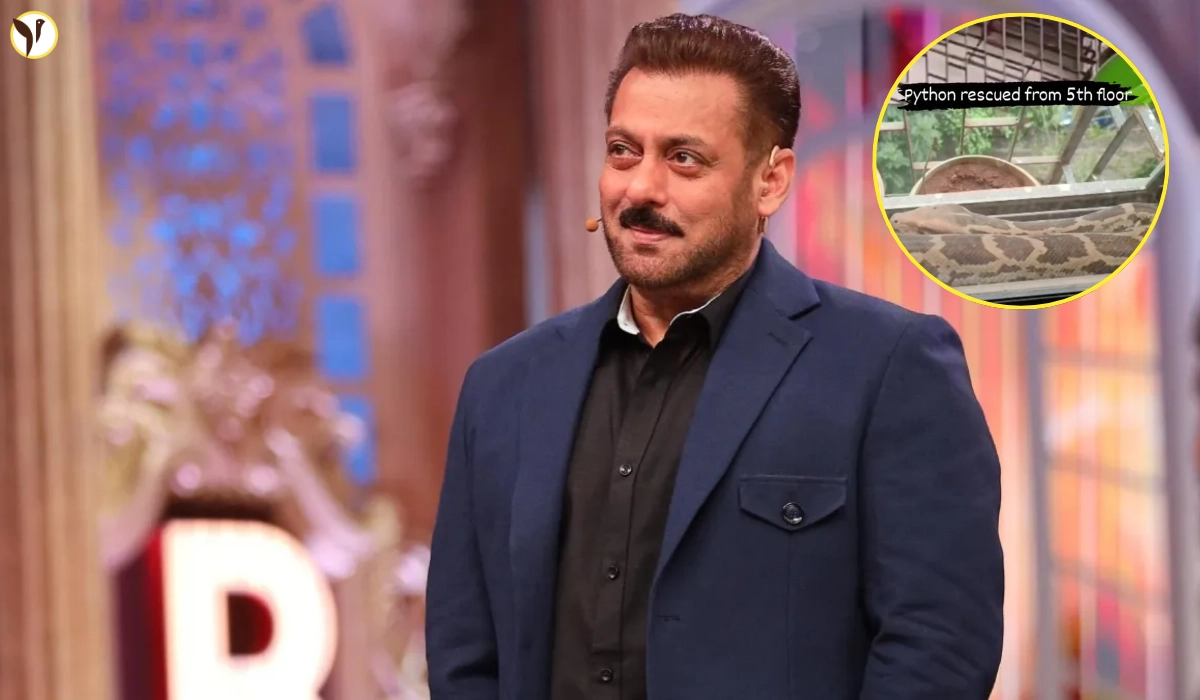


A snake was safely rescued from the premises of Salman Khan’s Galaxy Apartments in Mumbai’s Bandra area on Monday, after security personnel spotted it near the car parking shutter section and called in a trained rescuer. The reptile was identified as a Dhaman, also known as the Indian rat snake, a species that is generally non-venomous and commonly found in urban areas.
What Happened at Galaxy Apartments on Monday Evening
Monday evening in Mumbai's upscale Bandra neighbourhood took an unexpected turn when a five-foot snake was spotted slithering through the car parking area of Galaxy Apartments — the iconic residence of Bollywood superstar Salman Khan.
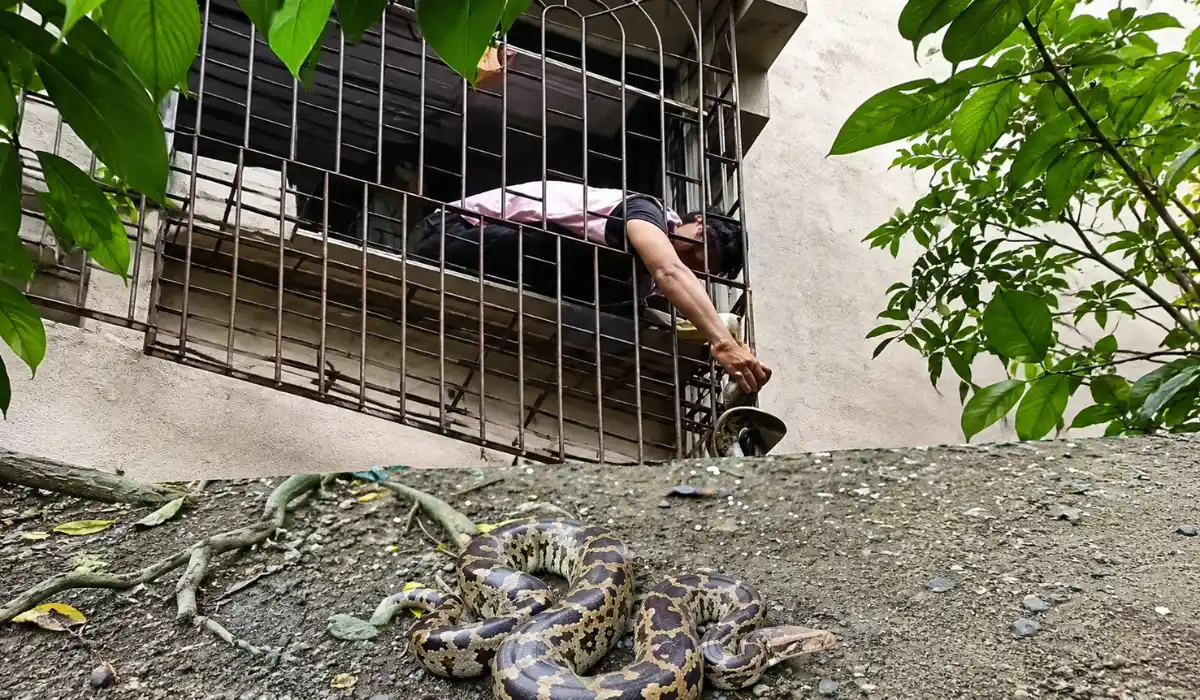
It was police constable Manoj Katte, on routine duty outside the building, who first noticed the reptile and immediately raised the alarm. Rather than attempting to handle the situation himself, Katte did exactly what wildlife experts advise: he called in a professional. He alerted Vicky Dubey, a well-known Mumbai-based snake rescue specialist popularly called "Snake Dost", who promptly reached the scene.
The rescue, captured on video and now circulating widely across social media, shows Dubey approaching the snake with calm composure — no protective suit, no panic — carefully securing the reptile by its tail, wrapping it in a controlled manner, and placing it safely into a bag. Local police officials from Bandra West Police Station were also present throughout the operation. Importantly, not a single person was harmed.
The incident was formally logged: an official diary entry was made at Bandra West Police Station, and the Forest Department control room was duly informed.
The Snake Identified: Meet the Dhamin, Mumbai's Most Misunderstood Reptile
The serpent at the centre of this viral moment has been identified as a Dhamin — scientifically known as Ptyas mucosa and commonly referred to as the Indian rat snake or Oriental rat snake.
Here's what you need to know about this species:
|
|
|
|
|
|
|
|
|
|
|
|
|
|
|
|
|
|
|
|
|
|
|
|
|
|
|
|
|
|
|
|
|
According to Wildlife SOS, the Indian rat snake is among the most commonly rescued reptile species across urban India, particularly during seasonal transitions. The Dhamin is also protected under Schedule II of India's Wildlife (Protection) Act, 1972 — meaning it is illegal to kill or harm one.
One important note: the Dhamin is frequently mistaken for a cobra because it inflates its neck and emits a growling sound when threatened. This mimicry, designed by evolution to deter predators, has ironically made it a target of human fear and violence. In urban settings, this misidentification is a leading cause of unnecessary harm to an otherwise beneficial species.
Why Did a Snake End Up at a High-Rise in Bandra?
This is the question that deserves more attention than the celebrity address.
Mumbai is a city built atop mangroves, creek systems, and dense green corridors — particularly in areas like Bandra, Powai, and Goregaon. The city's rapid vertical development has pushed wildlife into increasingly narrow habitats, and snakes — excellent climbers and navigators — regularly find their way into residential compounds, parking areas, and drainage systems.
The timing is also relevant. May marks the beginning of Mumbai's pre-monsoon season, when rising humidity and warming soil temperatures prompt snakes to move more actively. Wildlife experts note a consistent spike in snake sightings across Mumbai between May and September every year.
Put simply: a snake entering a building's parking lot in Bandra is not extraordinary — it's ecology doing what ecology does. What matters is how people respond to it.
The Response That Deserves Praise
The actions of Constable Manoj Katte and rescuer Vicky Dubey set a textbook example of how urban snake encounters should be handled.
Too often, the first instinct when a snake is spotted is fear, followed by harm. Snakes are beaten, burned, or killed — even non-venomous ones — out of panic. In this case, the outcome was different because:
- The first responder stayed calm and called an expert instead of improvising.
- A trained professional arrived quickly, demonstrating the value of accessible wildlife rescue networks in cities.
- The snake was removed alive and unharmed, to be released safely back into its natural habitat.
- Authorities were formally notified, creating an official record — something rarely done in informal snake encounters.
Videos of the rescue have drawn widespread appreciation online, with many viewers noting that Dubey's bare-handed handling of the snake reflects years of experience and deep familiarity with the species.
What You Should Do If You Spot a Snake
Given that Mumbai's snake season is approaching, here's a clear, expert-backed guide:
|
|
|
|
|
|
|
|
|
|
|
|
|
|
|
|
|
|
|
|
|
The Indian rat snake specifically is protected by law. Harming one — even unintentionally — can attract legal consequences under the Wildlife (Protection) Act.
Salman Khan: Security Context Worth Noting
Galaxy Apartments in Bandra has long been one of Mumbai's most security-conscious residential addresses. The building houses Salman Khan along with members of his family and maintains a round-the-clock police presence following past security threats to the actor.
Salman Khan, who was not reported to be at the location during the snake incident, is currently focused on his upcoming film Maatrubhumi: May War Rest in Peace (directed by Apoorva Lakhia), in which he plays Colonel B. Santosh Babu, based on the 2020 Galwan Valley clash between India and China. The film was earlier titled Battle of Galwan.
The snake sighting adds an unusual entry to the building's security log — a natural intruder, this time, rather than a human one.
#indtoday | A five-foot-long non-venomous rat snake was spotted inside the premises of Galaxy Apartments in Bandra, the residence of #Bollywoodsuperstar Salman Khan.
— indtoday (@ind2day) May 19, 2026
The sighting triggered #alertness among security personnel. #SalmanKhan #Bandra #Mumbai #RatSnake #SnakeRescue pic.twitter.com/NzoJeFTJ1W
The Bigger Picture: Urban Wildlife in Mumbai
Monday's incident is a small but meaningful window into a larger, ongoing tension in Mumbai: the collision between one of the world's most densely populated cities and the rich biodiversity it was built over.
Bandra, Andheri, and Powai report dozens of snake rescue calls each year. Wildlife SOS data shows that Indian rat snakes alone account for a significant proportion of urban reptile rescues in Maharashtra. These rescues are only possible because of trained, passionate volunteers like Vicky Dubey — individuals who operate without institutional fanfare but provide an essential public service.
As Mumbai continues to expand, the frequency of such encounters will only grow. The answer isn't alarm — it's awareness. Knowing your local snake rescue contact is as practical as knowing your plumber's number in this city.
Other Articles to Read: