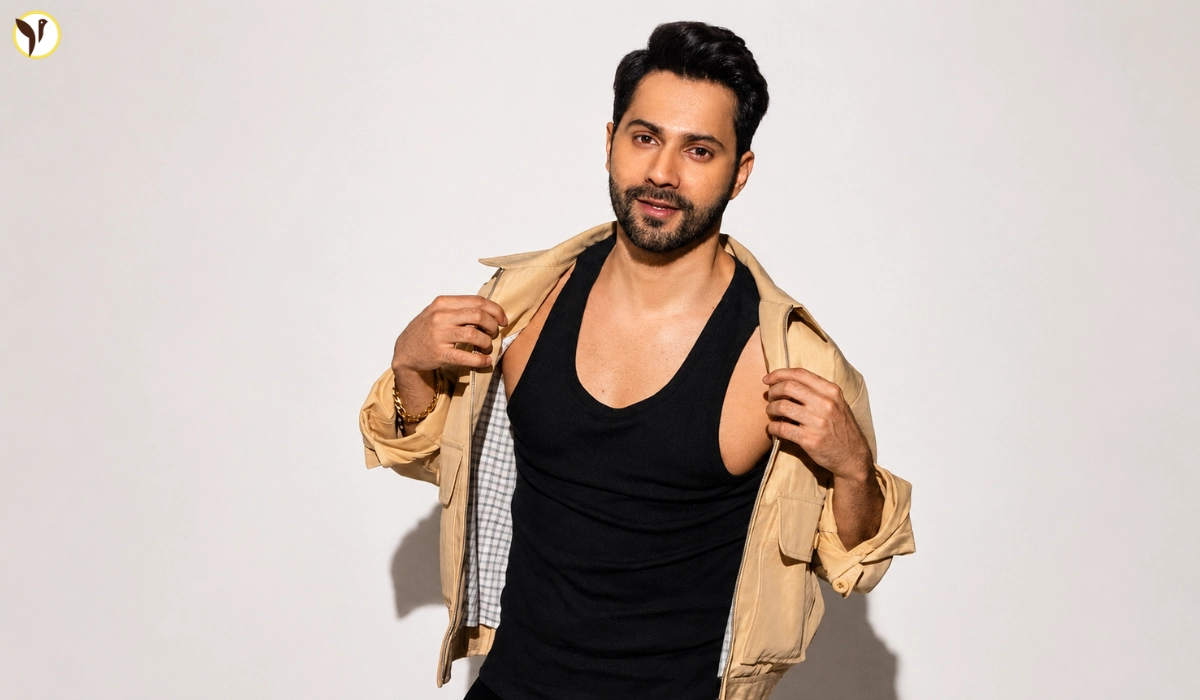


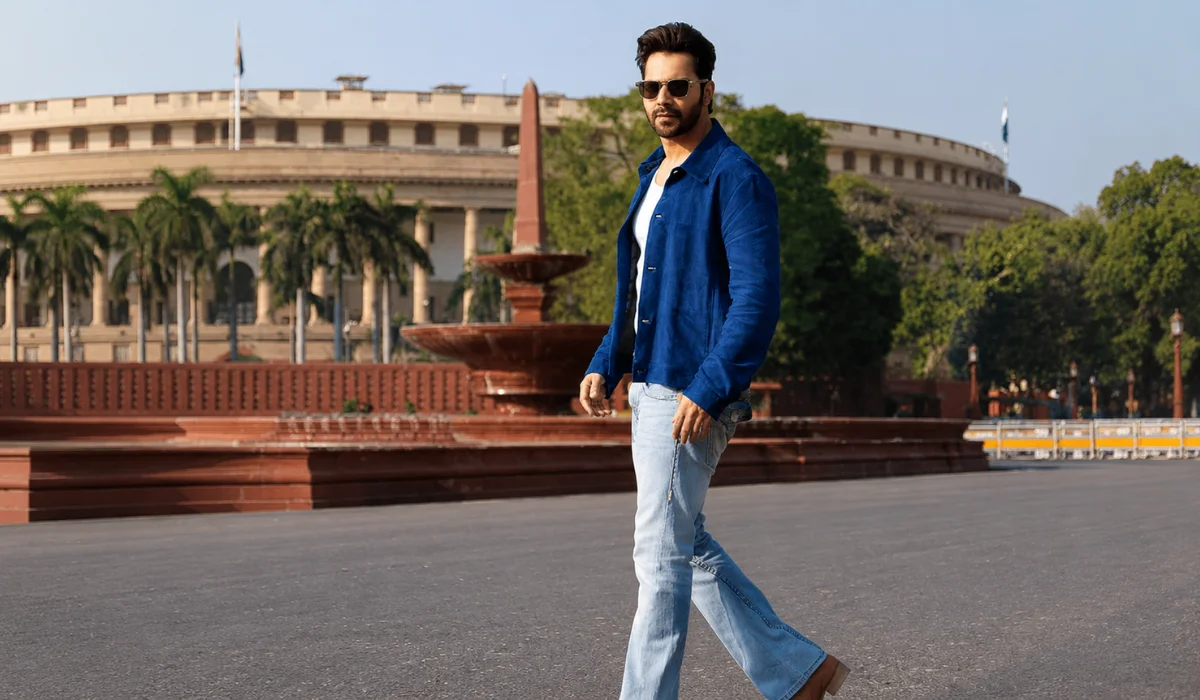
In a significant departure from the traditionally risk-averse posture of mainstream Hindi cinema, Varun Dhawan supports student protests and has publicly called on authorities to act. For an industry that has historically measured its political statements with an eye dropper to avoid alienating box-office demographics, Dhawan’s intervention signals a notable cultural inflection point.
This is not merely a celebrity endorsement of a trending hashtag. By aligning himself with students demanding accountability—primarily regarding systemic irregularities in competitive examinations and escalating youth unemployment—Dhawan has inadvertently placed a spotlight on the growing chasm between India’s administrative machinery and its youngest voters.
Here is a detailed breakdown of what transpired, the underlying structural issues driving the unrest, and why the silence of the privileged class is finally breaking.
The Catalyst: Why Are Students Protesting?
To understand the weight of Dhawan’s statement, one must first understand the gravity of the protests themselves. Over the past year, India has witnessed an unprecedented wave of student-led agitations. These are not isolated incidents confined to a single university campus; they are a decentralized, nationwide outcry against a perceived collapse of meritocracy.
The immediate triggers have been multiple:
- Examination Integrity: Allegations of paper leaks and irregularities in highly competitive exams like NEET-UG (for medical admissions) and UGC-NET (for university teaching positions) have left millions feeling cheated.
- Employment Anxiety: Despite macroeconomic growth, the reality of job creation for entry-level graduates remains grim, leading to intense frustration.
- Institutional Overreach: Students have also protested against steep fee hikes in premier institutions and the perceived politicization of campus spaces.
When Varun Dhawan voiced his support, he was not just commenting on a single rally; he was validating the collective anxiety of a demographic that makes up nearly 65% of India’s population.
Contextualizing the Unrest: A Data-Driven View
The current student agitation did not emerge in a vacuum. It is the culmination of years of increasing pressure on India’s education-to-employment pipeline. To truly grasp the scale of the issue, we must look at the structural bottlenecks facing Indian youth today.
|
|
|
|
|
|
|
|
|
|
|
|
|
|
|
|
|
|
|
|
|
|
|
|
|
Bollywood’s Shifting Calculus: From Apathy to Alignment
For decades, the unwritten rule in Bollywood was to maintain a studious ambiguity on socio-political issues. The logic was purely commercial: in a deeply polarized environment, taking a stand risked boycotts from one faction or another. Stars rarely stepped out of the "invoke-brotherhood-on-festivals" playbook.
However, Varun Dhawan’s stance is indicative of a slow but definite shift. Why is this happening now?
- The Inescapability of the Crisis: The sheer scale of the student protests means that almost everyone in the film industry knows someone directly affected—a nephew who studied relentlessly but saw his chances dashed by a paper leak, or a friend's child burdened by insurmountable educational debt.
- The Gen-Z Influence: Younger actors and the new wave of filmmakers are far more politically articulate than their predecessors. The audience, too, is demanding authenticity. A carefully curated, PR-approved silence is increasingly viewed as complicity by the digital-native demographic.
- Safety in Numbers: Dhawan is not the first. The gradual thawing of Bollywood’s political silence began with sporadic, cautious statements during the farmers' protests and has now trickled down to student issues. There is a dawning realization that advocating for students and education is broadly unobjectionable across the political spectrum, making it a "safer" first step into activism.
The Anatomy of Dhawan’s Statement: A Journalistic Deconstruction
When analyzing a celebrity's foray into civic discourse, it is crucial to separate performative allyship from substantive support. Dhawan’s appeal to "authorities to act" operates on two levels.
On the surface, it is a basic request for administrative accountability—a demand that those in power acknowledge the flaws in the system and rectify them. But beneath the surface, it serves a critical narrative function. When a mainstream, mass-market star repeats the students' demands, it strips the establishment of its most potent weapon: the ability to dismiss the protesters as a "fringe element" or "misguided youth."
By validating the protests, Dhawan forces the issue into the drawing rooms of middle-class India, where his films are consumed. He translates a complex administrative failure into a relatable moral injustice.
Why It Matters: The Real-World Impact of Celebrity Amplification
Skeptics often ask: Does a celebrity’s tweet or statement actually change government policy? The blunt answer is no. A statement from a film star does not rewrite legislation or fix a leaked examination paper.
However, to dismiss its value is to fundamentally misunderstand how modern civic movements sustain themselves. Celebrity amplification matters for three distinct reasons:
- Agenda Setting: The 24-hour news cycle is fickle. Student protests, while massive, often suffer from news fatigue. A high-profile endorsement resets the news cycle, forcing prime-time anchors and editors to re-allocate broadcast time to the crisis.
- Moral Buffering: Protesters, particularly in developing nations, often face severe state pushback, including police action, internet shutdowns, or targeted profiling. When prominent public figures throw their weight behind a movement, it provides a degree of implicit moral shielding. The cost of heavy-handed crackdowns rises when the optics are being watched by millions outside the political bubble.
- Fundraising and Legal Aid: Visibility often correlates directly with resources. High-profile attention drives crowdfunding efforts and attracts pro-bono legal networks to bail out detained students or file public interest litigations (PILs) in the courts.
The Authority’s Dilemma: Navigating the New Pressure
For the authorities—both bureaucratic and political—this new dynamic presents a complex challenge. The traditional playbook for managing student unrest involved a mix of localized containment, waiting out the momentum, and issuing piecemeal concessions.
That playbook is now obsolete. When a Varun Dhawan or an Alia Bhatt speaks on an issue, it ceases to be a purely law-and-order scenario and becomes a public relations crisis. The administration is now forced to balance its administrative defenses with narrative management. They must respond not only to the students' specific demands (e.g., a CBI probe, a re-test) but also to the broader public sentiment that the system is fundamentally broken—a sentiment now amplified by the country's most visible cultural ambassadors.
What Happens Next: Forward-Looking Insight
The immediate aftermath of Varun Dhawan’s support will likely follow a predictable trajectory: political backlash from troll armies accusing him of "external interference," followed by a wave of supportive hashtags from fan clubs, and eventually, the news cycle will move on.
But the long-term implications are more profound.
1. The End of the Apolitical Star: We are witnessing the death of the "I am just an entertainer" defense. As India’s socio-economic fault lines widen—whether over jobs, education, or urban infrastructure—the expectation on public figures to take a stand will intensify. Neutrality will increasingly be viewed as a privilege of the elite.
2. Increased Student-Leader Collaborations: Expect to see more structured interactions between civil society, student unions, and cultural figures. We may soon see Bollywood personalities participating in fund-raising galas for legal defense funds or lending their voices to documentary evidence on educational reform.
3. Policy Acceleration: The sustained cultural pressure will force the government to fast-track technological solutions for exam integrity. The shift from physical paper-based exams to highly secure, hybrid digital testing environments—which has been stuck in bureaucratic red tape for years—will suddenly become a top priority to prevent further embarrassment.
Conclusion
Varun Dhawan’s decision to support the student protests and demand authoritative action is a mirror reflecting a changing India. It highlights a generation that is no longer willing to accept systemic failures as inevitable, and a cultural elite that is slowly realizing that silence in the face of obvious injustice is no longer a viable brand strategy.
While the students on the ground will be the ones who ultimately force institutional change, the echoing of their demands from the halls of Bollywood ensures that their struggle cannot be muted, ignored, or swept under the rug of administrative apathy. The convergence of mass entertainment and grassroots activism has reached a new, deeply consequential phase.
Other Articles to Read: