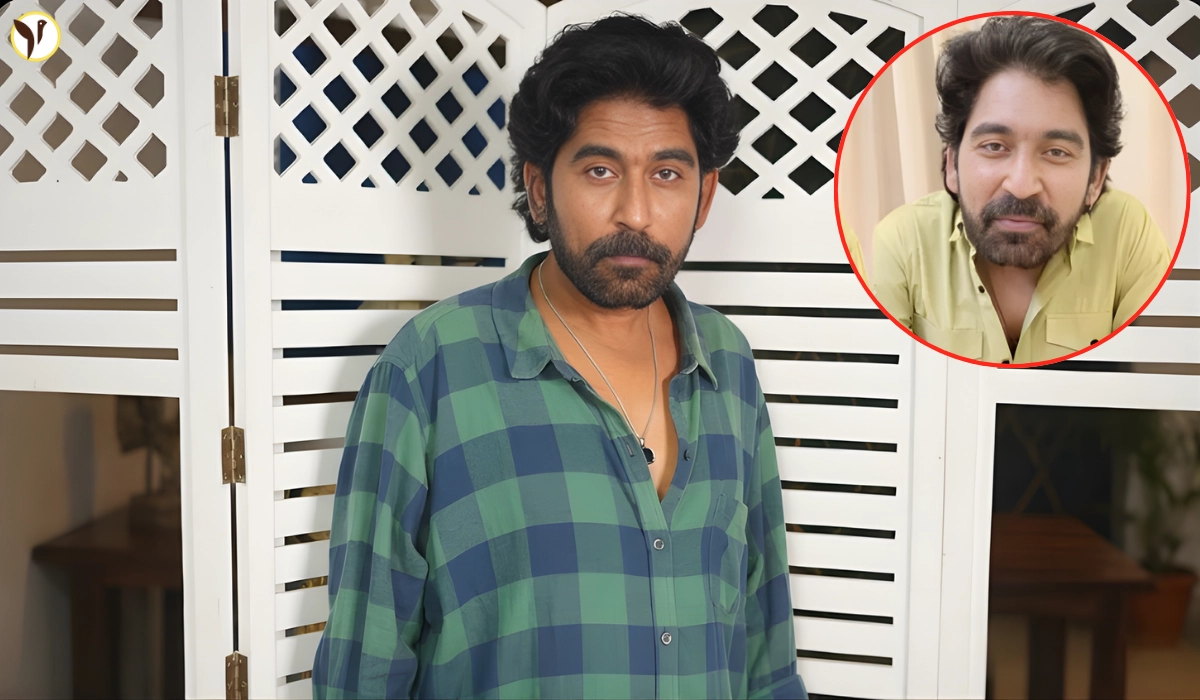


Published: April 11, 2026 | Bollywood The actor who played the terrifying Zahoor Mistry in Dhurandhar: The Revenge just broke the internet — not with a fight scene, but with something far more relatable: the truth about money, Mumbai life, and why the ₹1 crore rumours are completely false.
Vivek Sinha Dhurandhar Salary: What the Viral Instagram Video Actually Said
On Friday, April 10, 2026, Vivek Sinha took to Instagram to share a video addressing the fee rumours that had been swirling around his name ever since Dhurandhar: The Revenge became a monster hit at the box office.
In the video, Vivek first did something very sweet — he thanked everyone for the love. The amount of warmth people were showing him after Dhurandhar 2 was, by his own words, something he never expected.
But then he got to the point.
He mentioned that several Instagram pages had been sharing different numbers regarding his remuneration. Some claimed ₹60 lakh, others ₹80 lakh, and a few even suggested ₹1 crore.
And he shut it all down with five words that have since become the most-shared quote from a supporting actor in recent Bollywood memory.
In his own words, Vivek said: "Bhai, itna paisa nahi mila hai kasamse. Yeh sab mat dalo. Mujhe Dhurandhar se paisa mila hai, achcha paisa mila. Jo expected the amount tha woh mila. Lekin utna paisa nahi mila, aur joh paisa mila tha khatam ho chuka hai. Mumbai mein rehta hoon bhai, aur bahot kharche hai Mumbai mein. Toh Dhurandhar wala saara paisa khatam ho chuka hai.
Translation for those who want it in plain English: "Brother, I swear I didn't get that much money. Don't spread this stuff. I did get paid for Dhurandhar, and it was good money. I got what I expected. But it wasn't that much, and whatever I did get — it's gone. I live in Mumbai, and Mumbai is expensive. So all the Dhurandhar money is finished."
That last bit — "khatam ho chuka hai" — hit people right in the heart.
Why Did This Video Go So Viral? The Real Reason India Loved It
This is the part that most news articles miss. It is not just about one actor setting the record straight. It is about something much bigger.
Think about it. When was the last time you saw a Bollywood actor — someone who just appeared in a ₹1,600 crore film — come online and say, "bhai, paisa khatam ho gaya"?
Never. Because in Bollywood, the game is always to look bigger than you are. To wear the biggest watch, drive the fanciest car, and never, ever admit that money is tight.
Vivek Sinha did the opposite. He was so honest it almost hurt to watch.
And that is exactly why India fell in love with him all over again.
In Mumbai, where success stories travel fast and rumours travel faster, Vivek found himself answering a question that had already taken on a life of its own. His message was simple and direct — the rumoured figures were wrong, and the money he received for Dhurandhar was not the amount being discussed online.
But more than that, his clarification brought the discussion back to a more grounded place, where the facts matter more than the chatter. The rumour may have been dramatic, but his answer was plain: the amount was not ₹1 crore, and the money he received is already gone.
In a world full of manufactured celebrity moments, this felt shockingly real.
The ₹1 Crore Rumour: How Did It Even Start? Inside the Viral Misinformation Chain
This is where the story gets interesting — and a little frustrating.
You see, when a film becomes as massive as Dhurandhar: The Revenge, everyone wants a piece of the story. Misinformation spread quickly because of viral posts and edited content circulating on social media. Such claims often create unnecessary assumptions about actors' income and lifestyle. The situation highlighted how fast false information can impact public perception in the entertainment industry.
Here is what probably happened. Someone on Instagram saw Vivek Sinha's face everywhere. They assumed that if the film made ₹1,000 crore, the supporting actors must have been paid crores. So they made a post. Someone else saw that post, increased the number, and shared it again. By the time it reached the third or fourth person, ₹1 crore was being treated as confirmed fact.
This is the rumour economy of social media. Nobody checks. Nobody sources. They just share.
Vivek shared that these inaccurate reports prompted people to message him on DMs, seeking financial help for medical needs and other future expenses.
This is the part that really puts it in perspective. People were messaging this man and asking for money — for hospital bills, for emergencies — because they genuinely believed he was sitting on a crore. And Vivek, being Vivek, responded with humour and heartbreak at the same time.
Addressing it humorously, the actor remarked, "Bhai main de toh du par mere paas khud paise nahi hai (laughs)."
He also added, in a moment that showed his big heart even while admitting financial reality: "Jab agli picture aayegi aur accha paisa aaya toh main zaroor help karunga."
That translates to: "When my next film comes and I get good money, I will definitely help."
If that does not make you root for this man, nothing will.
"Main Pakistani Nahi Hoon": When Vivek Sinha Faced Real Threats for a Fictional Role
Before the salary controversy, there was a different kind of storm. And it was much more serious.
When Dhurandhar: The Revenge released on March 19, 2026, Vivek's character Zahoor Mistry delivered some incredibly charged dialogues — lines that were historically inspired by real events from the IC-814 Kandahar hijack of 1999.
After Sinha shared the dialogue "Hindu bahut hi darpok kaum hai…" to promote the film, his comments section was reportedly flooded with insults and threats, with many users attacking his appearance and questioning his nationality.
People were calling him a terrorist. Some were threatening him. Others were saying things about his appearance that were deeply personal and hurtful. The internet, as it sometimes does, completely lost the plot.
The movie portrayed the 1999 Indian Airlines flight IC-814 hijack, with Sinha playing one of the five hijackers. Many viewers criticized Sinha personally, confusing the actor with the character he played.
So Vivek did what he has consistently done throughout this film's release cycle — he went directly to his audience and told the truth.
The actor released a video on his Instagram page, clarifying, "Bhai main Pakistan ka nahin hoon. Main Bijnor ka rehne wala hoon, Dhampur mera shehar hai, aur main Mumbai mein rehta hoon."
Translation: "Brother, I am not from Pakistan. I am from Bijnor, Dhampur is my city, and I live in Mumbai."
Vivek clarified his nationality and roots, firmly stating, "Main Pakistani nahi hoon."
He also said something that every single one of those trolls needed to hear: "Main aatankwadi nahi hoon." I am not a terrorist.
He is an actor. And a very good one. There is a difference.
Mumbai Ki Mahengaai: Why "Khatam Ho Gaya" Makes Perfect Sense
Here is something that people in smaller cities often forget: Mumbai is extraordinarily expensive.
When Vivek said, "Mumbai mein rehta hoon bhai, aur bahot kharche hai Mumbai mein," he was not making excuses. He was stating a basic fact of life that millions of Mumbai residents know all too well.
A decent one-bedroom apartment in areas where working professionals in the entertainment industry tend to live — Andheri, Versova, Goregaon, Malad — can cost anywhere from ₹25,000 to ₹60,000 per month in rent. Food, transport, electricity, internet, medical expenses, professional wardrobe for auditions and events — it all adds up.
And here is the part nobody talks about: actors between projects don't have a salary. When the shoot is over, the money stops. You live off what you saved from the last project until the next one comes along.
He added that he lives in Bombay and that everyday expenses are high there, which he used to explain why the money was already spent. That detail matters because it shifts the story away from celebrity excess and toward the ordinary costs that shape life even for people working in high-profile projects.
When Vivek said the Dhurandhar money is finished, he was not being dramatic. He was being accurate. And in a country where we love to assume that everyone connected to a big film is rich, that kind of accuracy is rare and precious.
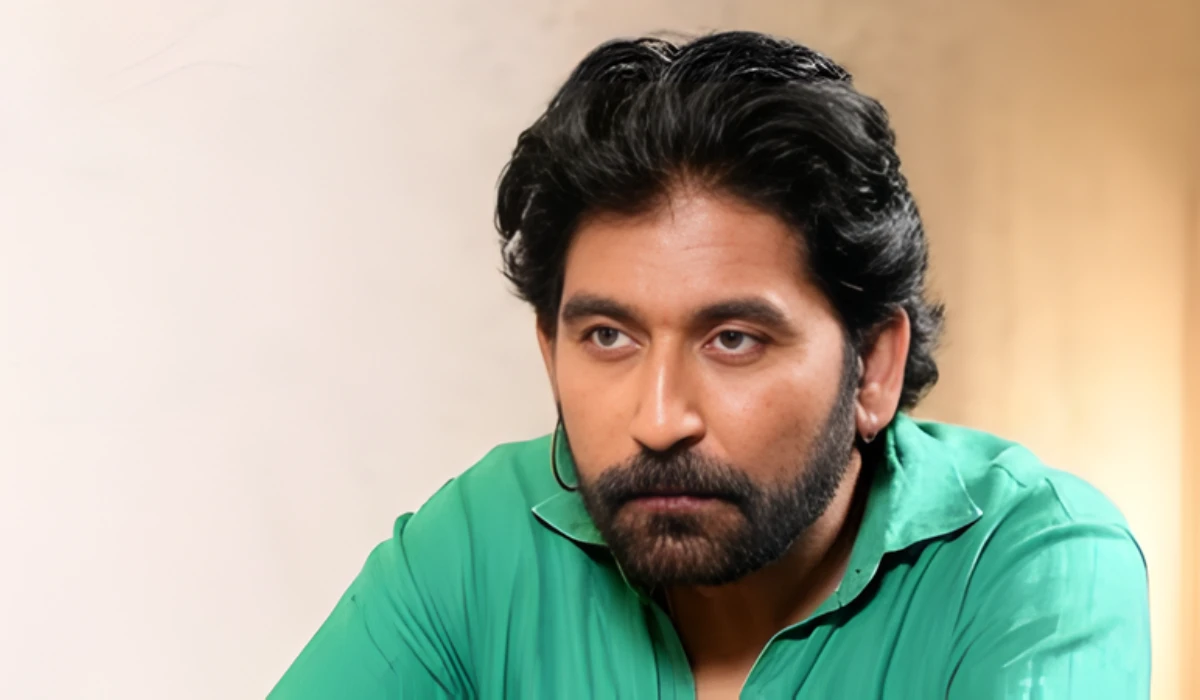
Dhurandhar The Revenge: Everything You Need to Know About the Film That Made Vivek Sinha Famous
For readers who want the complete picture, here is a deep dive into the film at the center of this story.
The Plot: India's Most Ambitious Spy Thriller
Dhurandhar: The Revenge is a 2026 Indian Hindi-language spy action-thriller film written and directed by Aditya Dhar. It is a sequel to the 2025 film Dhurandhar and the final installment of a duology. The film follows an undercover Indian intelligence agent who continues to infiltrate Karachi's criminal syndicates and Pakistani politics while avenging the 26/11 attacks and confronting larger threats.
The film's storyline loosely incorporates multiple real-life geopolitical events and conflicts in South Asia, including Operation Lyari, the 2014 Indian general election, and the 2016 Indian banknote demonetisation.
The Cast: A Bollywood All-Star Team
Dhurandhar: The Revenge features a huge ensemble cast including Ranveer Singh, R Madhavan, Arjun Rampal, Sanjay Dutt, Sara Arjun, Rakesh Bedi, Danish Pandor, Gaurav Gera, Udaybir Sandhu, Mustafa Ahmed, Nirmal Oberoi, Manav Gohil, Aditya Uppal, Ashwin Dhar, and Vivek Sinha.
Ranveer Singh plays dual avatars in the film. R Madhavan plays intelligence officer Ajay Sanyal. Arjun Rampal plays ISI Major Iqbal. Sanjay Dutt plays SP Chaudhary Aslam. And Vivek Sinha plays Zahoor Mistry — the hijacker whose very name sends chills down the spine of anyone who has seen the franchise.
How It Was Made: Shot Back-to-Back
Both parts were shot together concurrently as a single film. Principal photography began in July 2024 in Bangkok, Thailand, and wrapped in October 2025. Filming took place across Punjab, Chandigarh, Maharashtra, Ladakh, Himachal Pradesh in India, and Thailand, with some areas doubling for Pakistan-set sequences.
The Critical Reception: Mixed but Massive
The film received a wide range of reviews. It received mixed reviews overall, with praise for its performances, storytelling, soundtrack, and technical aspects, and criticism for its levels of violence and for alleged nationalist propaganda.
Some highlights from critics: Taran Adarsh of Bollywood Hungama gave 4 out of 5 stars, saying the film's standout is its emotional core with a powerful story of courage, resilience, revenge, and justice. Rishabh Suri of Hindustan Times rated it 4 out of 5, noting it as "a roller-coaster thriller elevated by Ranveer Singh's powerful performance."
Like its predecessor, it was banned in all Gulf Cooperation Council countries. Nevertheless, the film quickly became a major box office success.
What Vivek Sinha's Honesty Tells Us About Bollywood's Broken Pay Structure
Let us talk about the elephant in the room that Vivek's video has forced into the open.
Bollywood has a pay gap problem. It has always had one. But we rarely talk about it this directly.
The stars at the top — your Ranveer Singhs, your Shah Rukh Khans — command fees that run into tens of crores per film. And rightly so, because they are the ones carrying the weight of a film's commercial success on their shoulders.
But the supporting actors, the character artists, the people who make scenes memorable and stories believable? They exist in a completely different financial universe.
A supporting actor in a major Bollywood production might earn anywhere from a few lakhs to a few crores, depending on their profile, the film's budget, and the negotiation. But they do not share in the film's profits. They are hired for a fixed fee. What the film earns after that is none of their business, contractually speaking.
Vivek Sinha became a famous actor after playing the villain Zahoor Mistry in Aditya Dhar's successful Dhurandhar movie franchise. His filmography shows a continuous career progression that started from his first small role in PK to his current work as a main character in intense dramatic shows.
Despite that progression, despite the fame, despite the viral moments and the massive film — the money ran out. Because that is how the math works for supporting actors in India.
Vivek did not say any of this as a complaint. He said it matter-of-factly, with a laugh, asking for prayers. But the implication is clear, and it has sparked a conversation in the industry about whether supporting actors deserve a better share of a film's success.
What Happens Next for Vivek Sinha: The Career Opportunities Ahead
Here is the good news: after this kind of visibility, Vivek Sinha's career trajectory is almost certainly heading upward in a big way.
Playing a memorable villain in a ₹1,600 crore franchise is the kind of thing that changes an actor's position in the industry permanently. Directors notice. Casting directors take calls. Scripts start arriving. Fees go up for the next negotiation.
His portrayal of a hijacker produced such authentic results that online viewers began to associate him more with his character than with his actual identity.
That is the kind of performance that sticks in the industry's memory. And combined with his viral honesty about the salary situation, Vivek has done something rare — he has made people root for him both as an actor and as a human being.
The next time Vivek Sinha signs a big project, you can be sure of two things: the fee will be higher, and there will be no Instagram rumours about it. Because now everyone knows he will just come online and tell you what he actually got.
And that kind of reputation — for being the most honest man in a room full of PR-polished celebrities — is worth more than any single paycheck.
The Bigger Conversation: Social Media Salary Speculation and Why It Is Harmful
Vivek Sinha's video has done more than clear up one actor's finances. It has started a broader conversation about how we consume and spread celebrity financial information.
Every day, thousands of Instagram reels and YouTube videos claim to reveal the "real" salaries of Bollywood actors. Most of this content is pure speculation dressed up as insider knowledge. A few numbers are sourced from genuine industry reports. Most are invented, inflated, or simply outdated.
The problem is that audiences treat these posts as facts. They share them. They comment on them. They message the actors asking for money. And sometimes, as in Vivek's case, they cause real-world consequences.
The situation highlighted how fast false information can impact public perception in the entertainment industry.
The solution is not complicated. Before sharing a celebrity salary claim, ask yourself: where did this number come from? Is there a credible source? Is this verified by the actor or their team?
If the answer is no, it is better to simply not share it. Because somewhere on the other end of that number is a real person — possibly one with an empty bank account and a Mumbai landlord to pay.
Complete Timeline: Vivek Sinha's Journey Through the Dhurandhar Storm
Here is a full timeline of everything that has happened, from the film's release to Vivek's salary video:
December 5, 2025 — Dhurandhar (Part 1) releases in theatres. Vivek Sinha plays Zahoor Mistry in what becomes one of the year's biggest films. The film surpassed ₹1,000 crore worldwide on December 26, 2025, becoming the fourth Hindi film to do so.
January 7, 2026 — Dhurandhar emerged as the highest-grossing film in Hindi domestic net collections, the most successful Bollywood film after the COVID pandemic.
March 17, 2026 — Vivek Sinha took to social media to address users who had mistaken his on-screen persona for his real-life identity, firmly stating, "Main Pakistani nahi hoon."
March 18-19, 2026 — Dhurandhar: The Revenge releases with paid previews starting March 18. It grossed over ₹1,000 crore worldwide within a week.
April 8, 2026 — The film entered the top 10 highest-grossing films of 2026 worldwide, having minted around ₹1,640 crores globally in 20 days.
April 10, 2026 — Vivek Sinha took to Instagram to share a video addressing the fee rumours, clarifying that despite different figures being claimed — ₹60 lakh, ₹80 lakh, and ₹1 crore — he received a fair but not crore-level payment, and that the money is already spent.
April 11, 2026 — The video goes massively viral. The phrase "Joh paisa mila tha, khatam ho chuka hai" becomes one of the most shared Bollywood quotes of the week. This article is published.
Dhurandhar 2 actor Vivek Sinha refutes rumours of Rs 1 cr fee, says he's spent all his money alreadyhttps://t.co/JjJLnPZJxJ
— SCREEN (@ieEntertainment) April 11, 2026
Expert Perspective: What Industry Insiders Say About Supporting Actor Pay in Bollywood
While Vivek did not complain — he was gracious and even funny about it — his situation has prompted industry observers to speak up.
The basic structure of Bollywood's pay system means that supporting actors rarely benefit from a film's commercial success beyond their initial fixed fee. Unlike in Hollywood, where certain profit-sharing arrangements are more common, Bollywood's supporting talent typically negotiates a one-time payment and moves on.
For an actor who creates a character as memorable as Zahoor Mistry — one that people remember, talk about, meme about, and make threats over because they forgot it was fictional — there is a strong argument that the financial reward should be proportional to the cultural impact.
Whether that argument will translate into actual industry reform is another question. But Vivek Sinha's honest moment on Instagram has, at minimum, made people think about it.
What Makes Vivek Sinha Different: The Qualities That Built a Fan Base Overnight
In the month since Dhurandhar: The Revenge released, Vivek Sinha has done something extraordinary. He has not just become famous for his acting. He has become genuinely liked as a person.
That is much harder to achieve. And it is worth examining why.
He is direct. When he had something to say — whether about his nationality, about threats he received, or about his salary — he came online and said it. No waiting for a PR statement. No carefully worded note from a publicist. Just a man with a phone and things on his mind.
He is grateful. In the video, the actor began by expressing gratitude for the appreciation coming his way. He remembered to thank people even while he was clarifying things about himself.
He is funny. His joke about not being able to help people because he himself has no money — that's the kind of self-deprecating humor that makes audiences trust you.
He is grounded. He spent nearly a decade in Delhi working in theatre, acting, and teaching before moving to Mumbai. That kind of patience and discipline does not leave you. It shows up in how you carry yourself when the spotlight arrives.
And he has a big heart. The part where he said "jab agli picture aayegi, main zaroor help karunga" — when my next film comes, I will definitely help — is not something you say for the cameras.
Other Articles to Read: