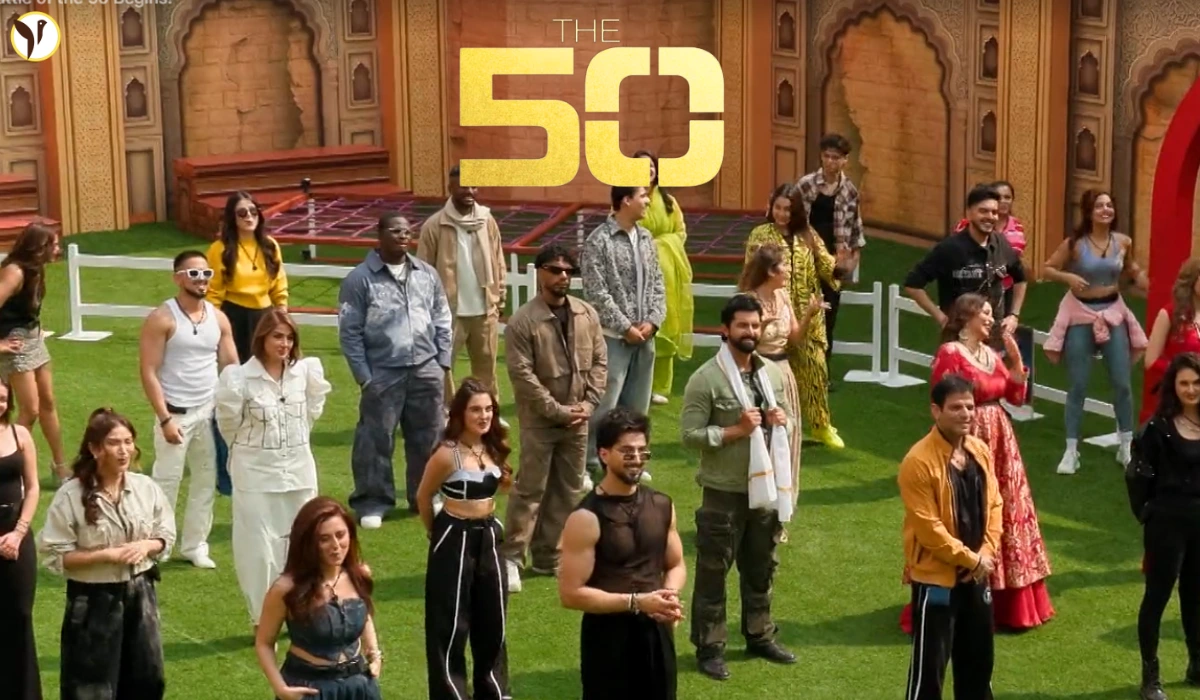


Indian reality television has never tried to reach this far in the past. The new show The 50, which premiered on February 01, 2026, on Colors TV and JioHotstar, is not just another competitive reality show; it is an intentional effort to redefine the size of the show, the level of challenge and the amount that fans can participate in it. The way that the 50 has placed 50 celebrities in a large palace with only limited protection portrays that it's a clear contrast to the highly structured, contained reality shows to which we have become accustomed.
The 50 has premiered during a time when reality show viewers are feeling worn out by the same types of predictable stories that we are used to seeing, but in contrast to that is the promise of mayhem, largeness, and fan participation at The 50. How long this game plan for The 50 will last has yet to be determined, but it was clear after the opening week that this won't be a quiet opening.
A Format Built on Controlled Chaos
At its core, The 50 is a survival-based reality game. Fifty celebrities, influencers, and familiar reality faces enter a massive palace—referred to on the show as a “Mahal”—with no traditional rulebook guiding daily life. Instead of fixed house rules, contestants navigate through tasks that test physical endurance, strategic thinking, and social manipulation.
Eliminations unfold through a combination of in-game performance and voting outcomes. Unlike conventional formats where the prize money is won solely by the contestant, The 50 introduces a fan-linked reward system. Portions of winnings earned by strong performers are routed to participating viewers, creating a direct incentive for audiences to stay invested beyond passive watching.
This viewer-first financial hook is one of the show’s most distinctive elements and a clear attempt to deepen engagement in an increasingly competitive OTT ecosystem.
A Cast Designed for Collision
The casting strategy behind The 50 is intentionally expansive. Instead of focusing on a narrow celebrity bracket, the show blends reality TV veterans, social media influencers, television actors, musicians, and digital creators.
Names such as Nikki Tamboli, Rajat Dalal (Bigg Boss 18 runner-up), and Digvijay Rathee bring existing fan bases and unresolved rivalries. Actors like Karan Patel and Shiny Doshi add mainstream television recall, while creators from fitness, rap, comedy, and YouTube broaden the appeal for younger viewers.
With 50 contestants sharing screen time, the show leans into unpredictability rather than individual character arcs—an approach that mirrors real-world crowd dynamics more than curated storytelling.
Premiere Week Sets the Tone
The February 1 premiere wasted no time establishing the show’s confrontational energy. A physical confrontation during an arena-style task between Rajat Dalal and Digvijay Rathee became an early talking point, with accusations of unfair play and “double standards” dominating post-episode discussions.
Karan Patel’s sharp on-camera remarks and Nikki Tamboli’s confrontational gameplay added to the intensity. Clips from the premiere circulated widely across social platforms, quickly pushing The 50 into trending territory during its opening week.
While the production team maintains a firm stance against physical violence, the promos and edits suggest that tension—and the risk of crossing lines—is part of the show’s narrative fabric.
How Fan Participation Changes the Game
One of The 50’s most talked-about features is its fan-centric prize model. Viewers don’t just vote; they can benefit financially from the success of contestants they support. Voting takes place through JioHotstar’s integrated system, with real-time updates influencing weekly outcomes.
This structure subtly shifts contestant strategy. Strong performers aren’t only protecting their own position but also safeguarding benefits for their supporters. For fans, it introduces a tangible stake—making loyalty more than emotional.
Bigg Boss Comparisons Are Inevitable
With Banijay Asia behind the project, comparisons to Bigg Boss were unavoidable from day one. Yet The 50 distinguishes itself through scale and pacing. Where Bigg Boss thrives on slow-burn narratives within a limited house, The 50 opts for constant motion, crowd politics, and compressed confrontations.
Fifty contestants mean alliances form and dissolve rapidly. No group stays dominant for long, and the lack of rigid rules forces players to self-regulate—or risk elimination.
Production Ambition Meets Viewer Appetite
From a production standpoint, The 50 is one of the most resource-heavy reality shows attempted in India. The palace setting, cinematic task design, and dual-platform distribution reflect a strategy aimed at both traditional television audiences and OTT-first viewers.
Episodes air daily on Colors TV, while JioHotstar offers full-episode access for binge-watchers. This hybrid approach acknowledges changing consumption habits, particularly among younger viewers who prefer uninterrupted viewing.
Controversy and Boundaries
The show’s “lawless” positioning has sparked debate. Promos teasing physical altercations and aggressive confrontations have drawn criticism from some quarters. Producers have reiterated that violence remains a ground for eviction, but the line between intensity and excess is clearly being tested.
For The 50, this tension may be part of its appeal—but it also presents a long-term challenge in balancing spectacle with responsibility.
Where the Show Could Go Next
With early eliminations expected to thin the massive contestant pool quickly, speculation around wildcard entries and structural twists is already building. The format’s flexibility allows producers to adapt based on viewer response—a crucial advantage in the fast-moving OTT landscape.
If The 50 sustains momentum, it could influence how future Indian reality shows are designed—bigger casts, faster pacing, and deeper viewer integration.
Conclusion
The 50 isn’t trying to be comfortable viewing. It’s deliberately overwhelming, noisy, and competitive. For audiences bored of familiar reality rhythms, that ambition alone makes it worth attention. Whether it becomes a long-term benchmark or a bold one-season experiment will depend on how well it manages scale, storytelling, and viewer trust in the weeks ahead.