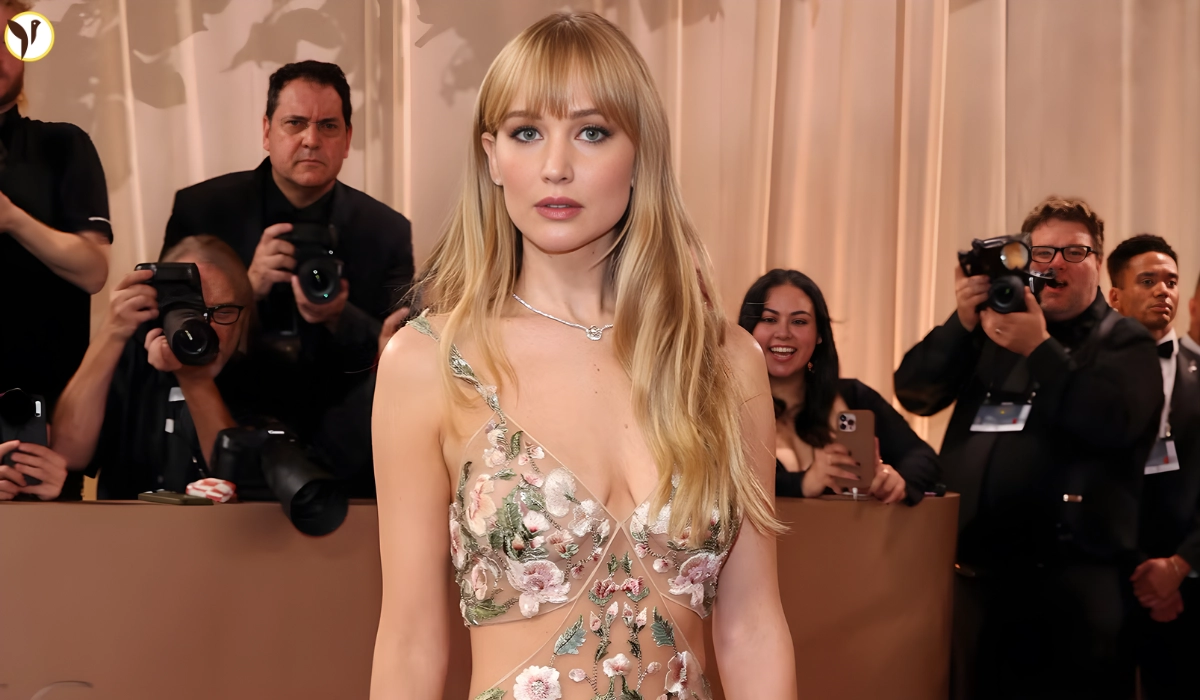


When a highly successful actress of her generation such as Jennifer Lawrence shares her thoughts regarding rejection, it shows how much of the industry is steeped in glamour. A recent item by Lawrence regarding having lost out on a role in Once Upon A Time In Hollywood due to being called not "pretty enough" exposes the fact that being judged based on your looks, as well as other aspects of your performance, continues to have an effect on career paths even for those who have won Oscars.
This is not a story about regret. Rather, it is about integrity, professionalism, and changing perceptions on talent and physical appearance within the entertainment field.
A rare admission from a global star
Jennifer Lawrence has never positioned herself as untouchable. From early interviews to award-season conversations, she has consistently spoken about insecurity, pressure, and the realities behind fame. Her recent comment about missing out on a Quentin Tarantino film reinforces a long-standing truth in Hollywood. Success does not eliminate scrutiny.
The role eventually became part of the ensemble of Once Upon a Time in Hollywood, a film known for its nostalgic lens on the industry. Lawrence’s reflection highlights that even prestige projects rely heavily on subjective casting decisions, often tied to rigid ideas of beauty.
Why this reflection stands out now
By 2025, Jennifer Lawrence is no longer chasing validation. She has already achieved what most actors aspire to: an Academy Award, multiple Golden Globe wins, and a filmography that spans blockbusters and character-driven dramas. That context gives her words weight.
Her statement was not framed as bitterness. It was delivered as a matter-of-fact observation about how roles are sometimes decided. That tone is important. It shifts the conversation from personal disappointment to systemic practice.
For Indian audiences, where film industries also wrestle with appearance standards, this resonates deeply. Whether in Hollywood or Bollywood, talent often competes with narrow visual expectations.
Beauty standards versus performance
Casting decisions are complex. Directors look for chemistry, tone, age alignment, and visual storytelling. Yet Lawrence’s experience points to a lingering imbalance where appearance can override proven performance.
This is particularly striking given her career range. From emotionally intense roles to mainstream franchises, she has repeatedly demonstrated versatility. Her height, often discussed casually in fan conversations, or her age, which now places her among seasoned performers rather than newcomers, should theoretically widen opportunities. In reality, they sometimes narrow them.
The industry’s quiet reliance on visual archetypes has not disappeared. It has simply become less openly discussed.
OTHER ARTICLES TO READ:
- When Will Harry Styles Album “Kiss All the Time. Disco, Occasionally” Drop?
- Honey Singh My Story World Tour 2026: India Zone 1 Cities Revealed
- Meet the 50 Confirmed Contestants for the Latest Reality Show
- Why Farrhana Bhatt Hasn't Met Salman Khan Since Bigg Boss Finale
- Taskaree Review: Emraan Hashmi's Airport Crime Thriller Everyone’s Talking About
- What Record Did KL Rahul Create to Make World Cricket History?
- Bhopal Makar Sankranti Turns Nightmare: Five Family Members Die in Road Crash
- Laughter Chefs Season 3: 5 Contestants Exit the Show — Here’s the Reason
- Euphoria Season 3 Trailer Out: Zendaya Returns With Dark New Twist
- Akshaye Khanna’s Powerful Comeback in Dhurandhar 2 ?
Life beyond the spotlight
Outside films, Lawrence’s public image has evolved. Her marriage to an art dealer brought a shift in priorities, one she has acknowledged in interviews. She maintains a limited Instagram presence compared to many peers, choosing privacy over constant engagement. This distance from social media culture also separates her from the algorithm-driven beauty standards that dominate online spaces.
Her net worth, often cited in celebrity business coverage, reflects years of commercial success. Yet her willingness to speak about rejection shows that financial security does not erase professional vulnerability.
Awards, credibility, and creative control
Looking ahead to conversations around major award seasons, including the Golden Globes 2026, Lawrence’s standing remains strong. Awards bodies tend to value longevity, risk-taking, and honesty. Her openness adds to that credibility rather than diminishing it.
Her recent and upcoming movies suggest a careful approach to scripts, often prioritizing depth over spectacle. That choice aligns with a broader industry shift where established actors seek roles that challenge norms rather than reinforce them.
A wider industry mirror
Lawrence’s remark acts as a mirror for Hollywood. It raises questions without assigning blame. Who defines “pretty enough”? How often does that definition exclude capable performers? And how many similar stories never reach public ears?
For readers, especially younger audiences watching celebrity culture closely, this insight offers perspective. Fame does not mean freedom from judgment. Success does not guarantee fairness. And sometimes, walking away from a role says more about the system than the individual.
Conclusion
Jennifer Lawrence’s career is not defined by a role she did not get. It is defined by the ones she chose, shaped, and carried with conviction. Her reflection adds another layer to her public narrative. Not as a cautionary tale, but as a grounded reminder that progress in entertainment is uneven and ongoing.
As conversations around representation, age, and appearance continue, voices like hers help keep the discussion rooted in reality rather than illusion.