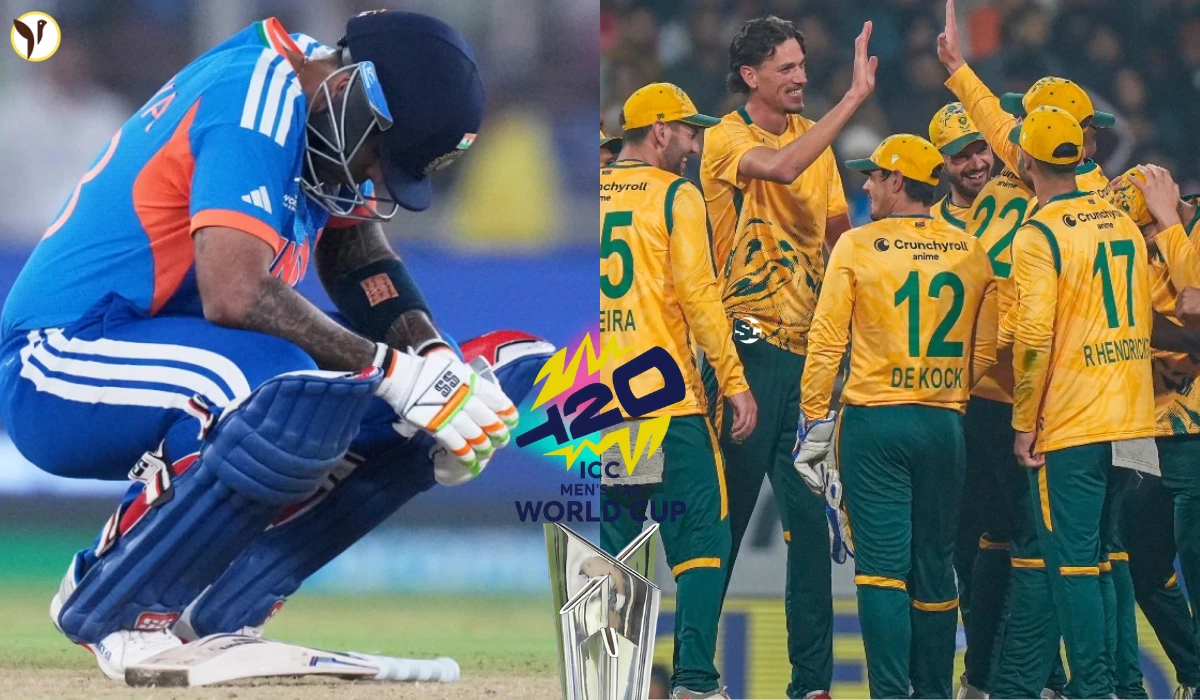


India’s unbeaten run across ICC World Cup matches came to a halt in Ahmedabad on February 22, as South Africa produced a disciplined, high-pressure performance to seal a 76-run victory in the T20 World Cup Super 8 stage. For Indian supporters, this was more than just a group-stage loss. It reopened memories of the ODI final heartbreak at the same venue in 2023 and raised fresh questions about India’s middle-order stability under pressure.
At the Narendra Modi Stadium, the margins were stark. South Africa 187 for 7. India 111 all out in 18.5 overs. The result shifts momentum in Group 1 and reshapes the road to the semi-finals.
Miller’s Counterattack Anchors South Africa’s 187
After being asked to bat, South Africa built their innings around calculated aggression rather than reckless hitting. The platform was steady without being explosive in the first half. Then came the surge.
David Miller played the defining innings of the night. His 63 off 35 balls combined power with placement. He targeted the shorter boundary, manipulated the spinners, and accelerated precisely when India looked to squeeze. Dewald Brevis added 45 with fearless strokeplay, ensuring South Africa did not stall in the middle overs.
India’s bowling was not entirely off-colour. Jasprit Bumrah stood out with figures of 3 for 15, once again proving why he remains India’s most reliable big-match bowler. However, the supporting cast struggled to maintain consistent lengths. Varun Chakaravarthy conceded 47 in his four overs, and South Africa capitalised during overs 14 to 18, the phase that ultimately pushed the total beyond India’s comfort zone.
A score of 187 was competitive. On a surface that appeared good for batting, it was not out of reach. But it demanded composure.
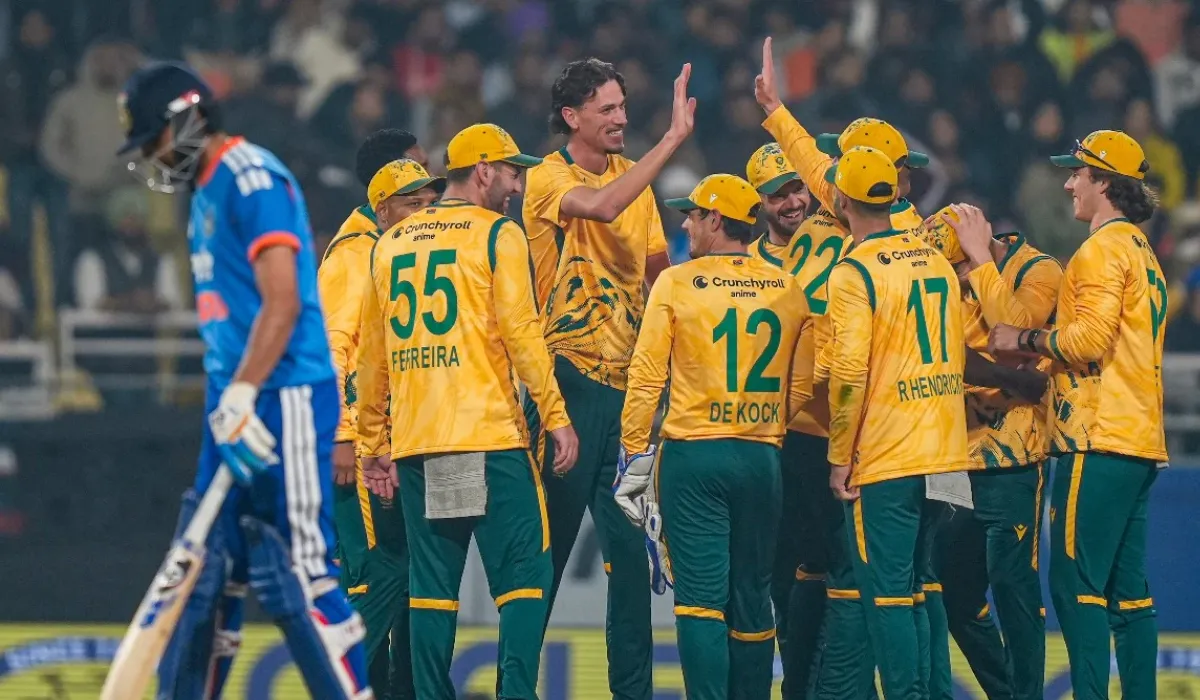
The Streak Ends in Ahmedabad
This defeat carries emotional weight for Indian fans. Since the ODI World Cup final loss to Australia on November 19, 2023, India had won 12 consecutive ICC World Cup matches across formats, including lifting the T20 World Cup title.
That consistency built confidence around this group’s tournament temperament. The loss to South Africa does not erase those achievements, but it interrupts the narrative of dominance.
Ahmedabad has now witnessed two major ICC setbacks for India within three years. The psychological element of big-match chases in this venue will inevitably become part of the discussion, even if players publicly downplay it.
Tactical Breakdown: Where India Lost Control
There were three decisive phases.
First, overs 14 to 18 of South Africa’s innings. India allowed 50-plus runs in that stretch. The difference between 170 and 187 proved significant.
Second, India’s middle overs from 7 to 15. The strike rotation dried up. Instead of calculated risk, batters attempted release shots against well-set fields.
Third, shot selection against bounce. Jansen’s hard lengths created uncertainty. Several dismissals came from mistimed pulls and defensive pushes that carried to fielders.
This was not a pitch collapse. It was a pressure collapse.
SKY Wants Quick Reset After T20 World Cup Setback
Suryakumar Yadav made it clear that India are not dwelling on the defeat to South Africa. The captain stressed the need to move forward quickly, focus on execution, and treat the loss as a learning moment rather than a lingering setback. With the Super 8 stage still open, the message from the dressing room is simple: reset, respond, and stay in the tournament.
Group Stage Equation Tightens
Before this match, India topped the Super 8 group. South Africa’s victory brings them level in momentum and strengthens their net run rate position.
India’s upcoming clash against Zimbabwe on February 25 becomes crucial. A win keeps qualification prospects firmly in India’s control. A slip would complicate permutations.
For Indian supporters planning to track the campaign, official highlights are available on JioCinema and Hotstar, while detailed scorecards remain accessible on Cricbuzz and ESPNcricinfo. The semi-final tickets for Mumbai are already seeing heavy online demand, reflecting continued fan engagement despite this setback.
Super 8 Points Table Update: Group 1 & Group 2 After Feb 22
The Super 8 stage has begun to take shape, and after the India vs South Africa clash, the standings in both groups already reflect early pressure. Net Run Rate is sharply divided, and even one heavy defeat has created visible separation in the table.
Super 8 – Group 1 Standings
|
|
|
|
|
|
|
|
|
|
|
|
|
|
|
|
|
|
|
|
|
|
|
|
|
|
|
|
|
|
|
|
|
|
|
|
|
|
|
|
|
|
|
|
|
|
|
|
|
|
Super 8 – Group 2 Standings
|
|
|
|
|
|
|
|
|
|
|
|
|
|
|
|
|
|
|
|
|
|
|
|
|
|
|
|
|
|
|
|
|
|
|
|
|
|
|
|
|
|
|
|
|
|
|
|
|
|
Squad Balance and Selection Questions
The defeat is likely to prompt internal conversations rather than dramatic changes. However, some themes are clear.
The top order needs stronger starts. The middle overs require clearer role definition. Shivam Dube’s ability to anchor suggests stability, but he cannot operate alone. Spin resistance remains an area of concern.
These are adjustments, not structural crises. India still possess depth and experience. The margin for error in a Super 8 stage is simply thinner.
Looking Ahead to Zimbabwe
India’s next fixture offers a reset opportunity. The team will need controlled aggression and sharper middle-over planning. South Africa have demonstrated a blueprint: disciplined bowling, tight fields, and pressure through dot balls.
A tournament often turns on a single defeat. The response matters more than the loss itself.