

Rajasthan Royals, the franchise that once redefined the Indian Premier League with an underdog title run in 2008, is now at the centre of a very different kind of headline. A preliminary offer valuing the Jaipur-based team at around $1.3 billion has pushed the Royals close to becoming the IPL’s first billion-dollar franchise, underlining how Indian cricket has transformed into a global sports business with serious financial weight.
For fans, this is not just about ownership changes or big numbers. It marks a moment where legacy, loyalty and modern sports finance intersect — and where an IPL team’s value is no longer judged only by trophies, but by its long-term commercial power.
A Sale Process That Signals a New IPL Era
The current owners of Rajasthan Royals, Emerging Media Ventures, have initiated a structured sale process with advisory support from international investment bank Raine Group. According to people familiar with the process, a valuation floor of roughly $1.1 billion has been set, with a US-led consortium linked to existing investor Kal Somani placing a preliminary bid close to $1.3 billion.
Four bidding groups have reportedly progressed to advanced stages. These include Indian digital and media interests such as Times Internet, alongside international financial investors. Large global private equity names have been discussed in market circles, though no confirmations have been made public.
The timing is important. With parallel buzz around a potential Royal Challengers Bengaluru (RCB) transaction, the Royals process is being closely watched as a real-world test of how far IPL franchise valuations can stretch in 2026.
From 2008 Fairytale to Global Sports Asset
Rajasthan Royals were never the richest team when the IPL began. In fact, their 2008 title under Shane Warne became a symbol of tactical brilliance over star power. That story built a loyal fan base in Jaipur and beyond, even as on-field consistency fluctuated in later years.
Between 2022 and 2025, RR reached playoffs intermittently under captain Sanju Samson, but they did not add another trophy. In traditional sporting terms, that inconsistency would normally cap a team’s value. In today’s IPL, however, the equation is broader.
Franchises are now evaluated like media-entertainment businesses:
broadcast income, sponsorship depth, global fan reach, digital engagement, and expansion into overseas leagues all carry heavy weight.
Why Investors Are Willing to Pay a Premium
At first glance, a billion-dollar price tag for a team that has won the IPL only once may seem aggressive. The logic becomes clearer when the league’s revenue structure is unpacked.
-
The central IPL media rights deal (2023–2027) is worth tens of thousands of crores, with nearly half the revenue shared equally among the 10 franchises.
-
Title sponsorships, on-ground partners and digital advertising continue to grow, even in seasons where individual team performance dips.
-
IPL franchises now operate as year-round brands, not just two-month cricket teams.
Rajasthan Royals also benefit from a multi-league footprint. The wider Royals ecosystem has links to teams in other T20 leagues, allowing talent development, data sharing and commercial synergies that investors value.
Jaipur’s Fan Economy Still Matters
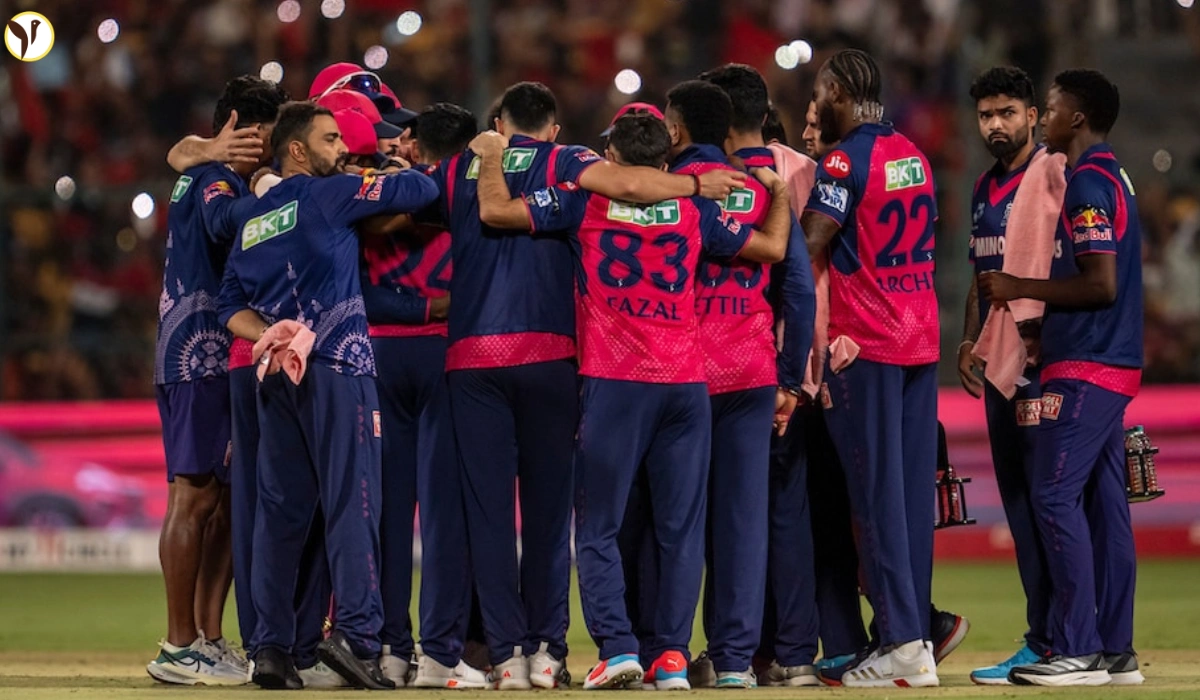
Beyond spreadsheets, Rajasthan Royals retain something investors cannot easily manufacture: deep regional loyalty. The pink jersey has become one of the most recognisable identities in the IPL. Merchandise sales remain strong, and matches at Sawai Mansingh Stadium regularly sell out when the team is competitive.
Local heroes such as Sanju Samson and Riyan Parag anchor the team’s connect with Rajasthan’s younger fan base. Even during seasons without playoff finishes, engagement levels have stayed resilient — an important signal for sponsors and broadcasters.
Brand Value vs Enterprise Value: Understanding the Gap
One point that often confuses readers is the gap between reported brand value rankings and a potential billion-dollar sale price. In recent brand studies, Rajasthan Royals ranked near the bottom of the IPL table, with a brand value estimated around $53 million in 2025.
That figure reflects brand perception and marketing strength — not the total enterprise value. Investors buying today are paying for future cash flows from media rights, sponsorship growth, league expansion and digital platforms. The sale multiple being discussed — often quoted in the 20–25x EBITDA range — suggests buyers are betting on sustained IPL growth rather than short-term performance spikes.
A Market Reset for Other IPL Teams
If the Royals deal closes near the current numbers, it could reset expectations across the league. Franchises that have never explored a sale may suddenly find inbound interest. Teams already under review, including RCB, will face sharper valuation benchmarks.
For the BCCI and the IPL governing council, this strengthens the league’s positioning as a stable, long-term sports property — closer in structure to major US leagues than to traditional cricket boards.
What Comes Next in the Process
The next phase is expected to include formal due diligence, followed by binding offers ahead of the IPL season. Any transaction will require league and regulatory approvals, a standard step in franchise ownership changes.
While minority investors are understood to be exploring liquidity, the structure of control post-sale will depend on the final bidder and terms. No changes to team branding or location are expected under IPL rules.
Conclusion
Rajasthan Royals’ journey — from a low-budget champion to a potential billion-dollar asset — mirrors the IPL’s own evolution. Cricket in India has moved decisively into the global sports-entertainment economy, where valuations are driven as much by future audiences as by past scorecards.
For fans, it is a reminder that the game they follow so passionately now sits on a world stage where capital, content and culture collide.