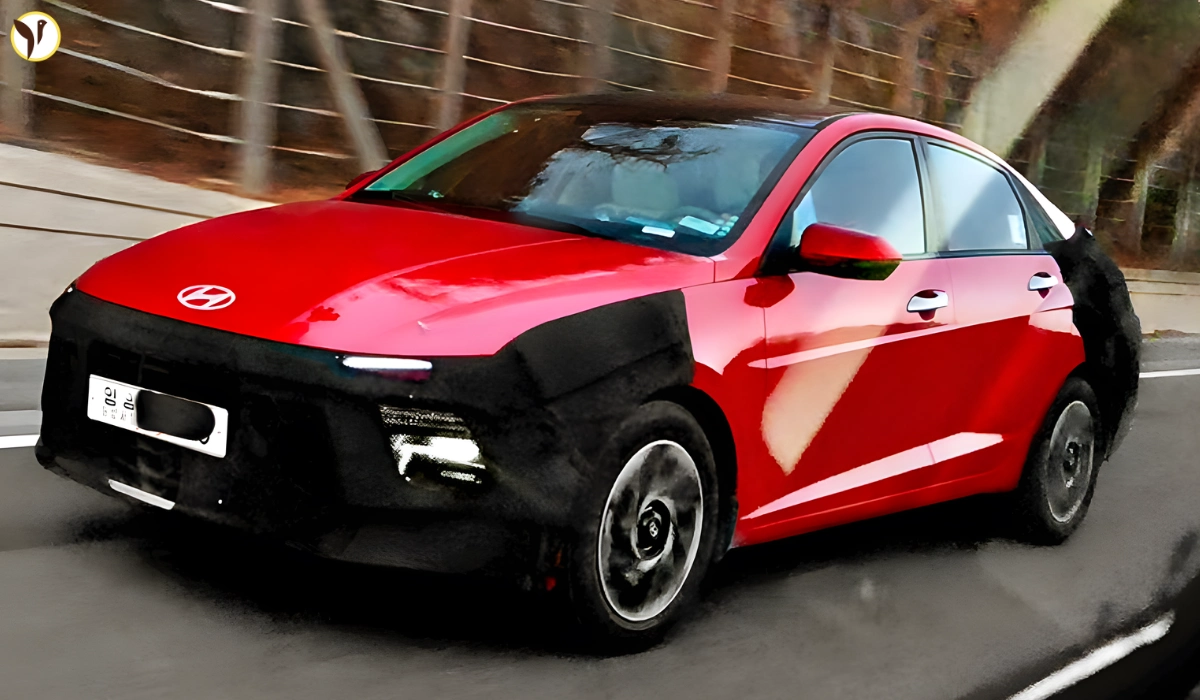


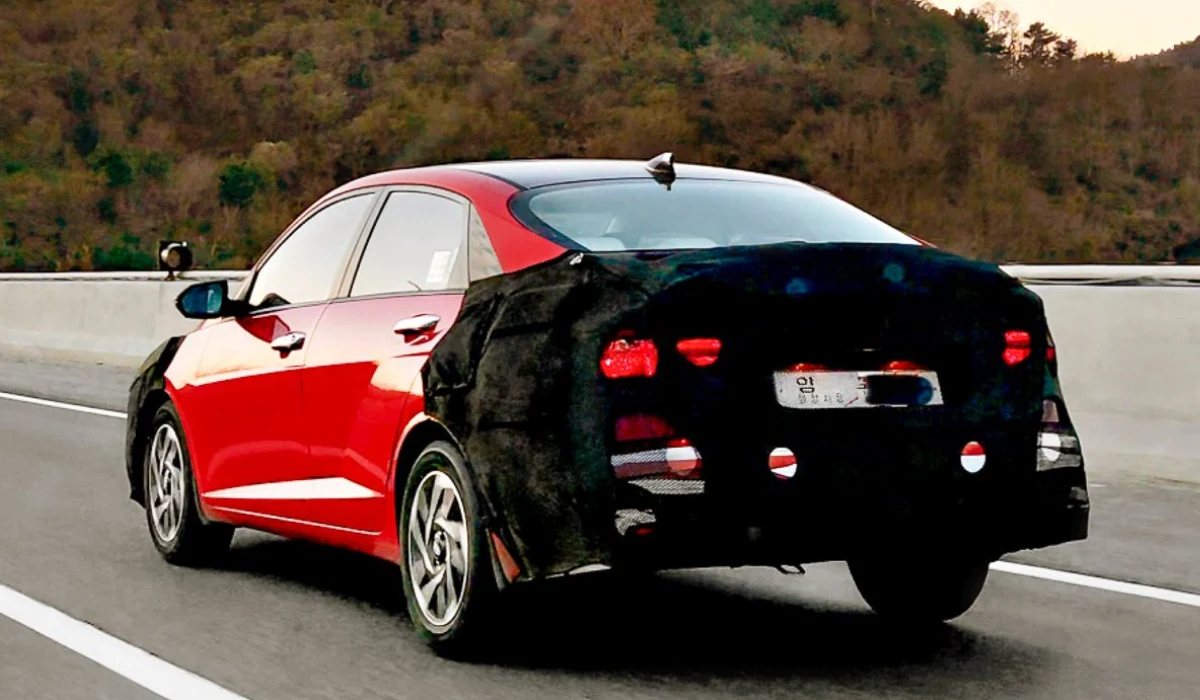
The upcoming 2026 Hyundai Verna facelift, recently spotted in a striking red shade, is creating buzz again. Even though it’s covered in camouflage, you can instantly tell Hyundai is polishing the design rather than reinventing it. The grille appears sleeker, the bumpers are chunkier, and the LED DRLs look sharper and more modern. The rear also gets refreshed detailing with cleaner lines and a more premium LED signature. Hyundai seems to be aiming for a sportier, more global look—something that appeals equally to buyers in the USA and Asia. It’s familiar, yet clearly upgraded.
Inside: The Biggest Upgrade Yet
Step inside, and the 2026 Verna feels like a whole new car. Spy shots reveal a curved dual-screen setup, likely two 12.3-inch displays that merge into one seamless panel. This instantly gives it a more futuristic vibe, similar to Hyundai’s higher-end models in the US. A new flat-bottom steering wheel, refreshed dashboard materials, and updated UI add to the premium cabin experience. The interior now feels more like a compact luxury sedan rather than an entry-level option, which gives Hyundai a stronger edge in the American market where design and tech matter a lot.
Same Engines, Smarter Drive
Mechanically, Hyundai seems to play it safe. The 2026 Verna is expected to continue with the 1.5L naturally aspirated and 1.5L turbo-petrol engines. While specs won’t change much, the smart additions will. Hyundai may expand its ADAS Level-2 features, offering lane-keeping assist, adaptive cruise control, blind-spot detection, and enhanced safety tech. These updates align perfectly with US buyers who now expect advanced safety as standard even in compact sedans.
2026 Hyundai Verna facelift Specifications
|
|
|
|
|
|
|
|
|
|
|
|
|
|
|
|
|
|
|
|
|
Final Thoughts
If you’re in the US and looking for a stylish, tech-loaded compact sedan that feels premium without costing premium money, the 2026 Verna might be worth waiting for. It’s not a dramatic redesign, but the updates are thoughtful and practical. Hyundai is clearly focused on enhancing the user experience—especially on tech, cabin quality, and safety—areas where buyers don’t compromise anymore.