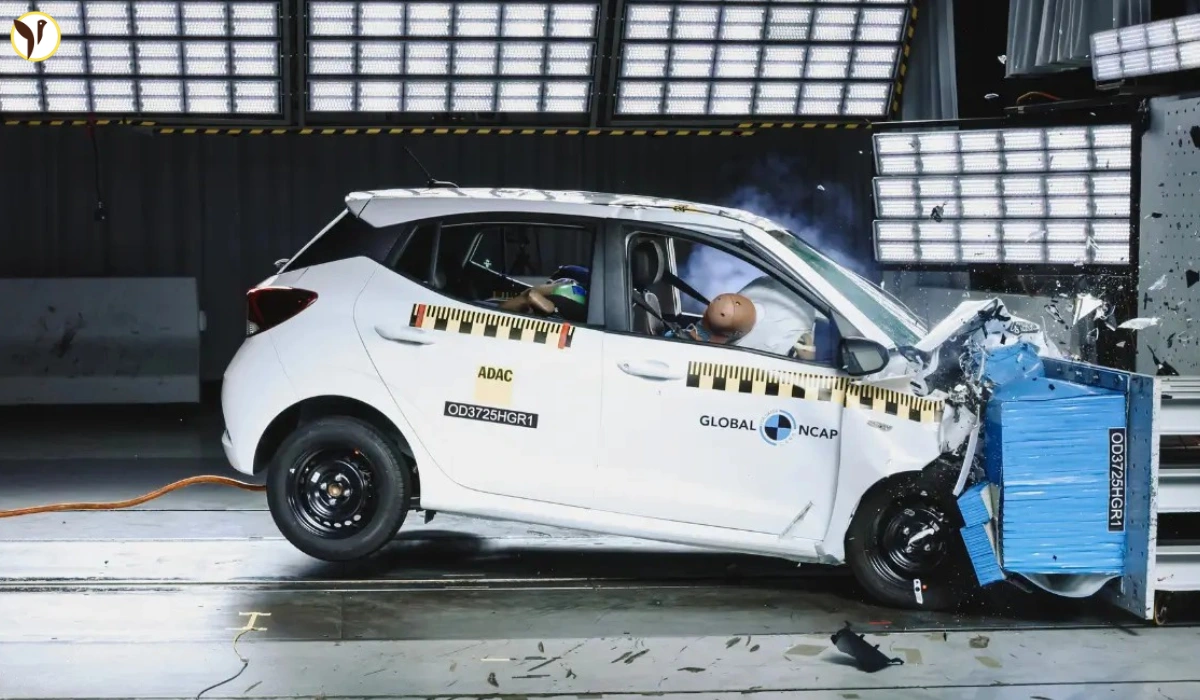


The Hyundai Grand i10, one of India’s most popular hatchbacks for families and first-time buyers, has failed the latest Global NCAP crash test — receiving 0 stars for adult protection and 2 stars for child protection. For a car trusted by lakhs of households for daily travel, this result has naturally raised safety concerns across the Indian market.
High-Risk Safety Alerts for Adults
Global NCAP highlighted extreme risk of life-threatening injuries to both the driver and front passenger during frontal crashes. The report says the head, chest and neck areas showed major vulnerability, especially in high-speed impacts.
For many Indian buyers who choose the Grand i10 for city comfort and mileage, the results may feel surprising. The car has a strong fan base, but when it comes to crash control and cabin strength, the structure was rated “unstable”, meaning it can’t bear stronger impacts. In a country where road accident numbers are already high, this poor safety score creates a wake-up call for manufacturers and customers alike.
Child Safety — Better but Still Not Strong Enough
While the Grand i10 scored 2 stars for child safety, experts mentioned that protection remained far from ideal. The absence of ISOFIX mounts in many variants, inconsistent airbag support for child occupants, and weak restraint stability leave small passengers vulnerable in the event of a crash.
Safety Features Missing in the Base Models
This crash result also highlights growing complaints among Indian buyers about important safety features offered only in higher variants.
Many Grand i10 base models miss out on:
-
Side + curtain airbags
-
Electronic Stability Control (ESC)
-
ISOFIX mounts
-
Seatbelt pretensioners
-
Stronger Crumple zones
For a car that attracts first-time buyers and students, not getting these features unless you upgrade to top trims has become a serious talking point.
Final Thoughts
The Hyundai Grand i10 remains a smooth, practical hatchback for city drives. But with 0-star safety for adults, buyers who prioritize family protection should think twice or consider variants with more comprehensive safety packages. As India moves toward safer cars under Bharat NCAP, results like this will hopefully encourage brands to upgrade safety even in entry-level models.