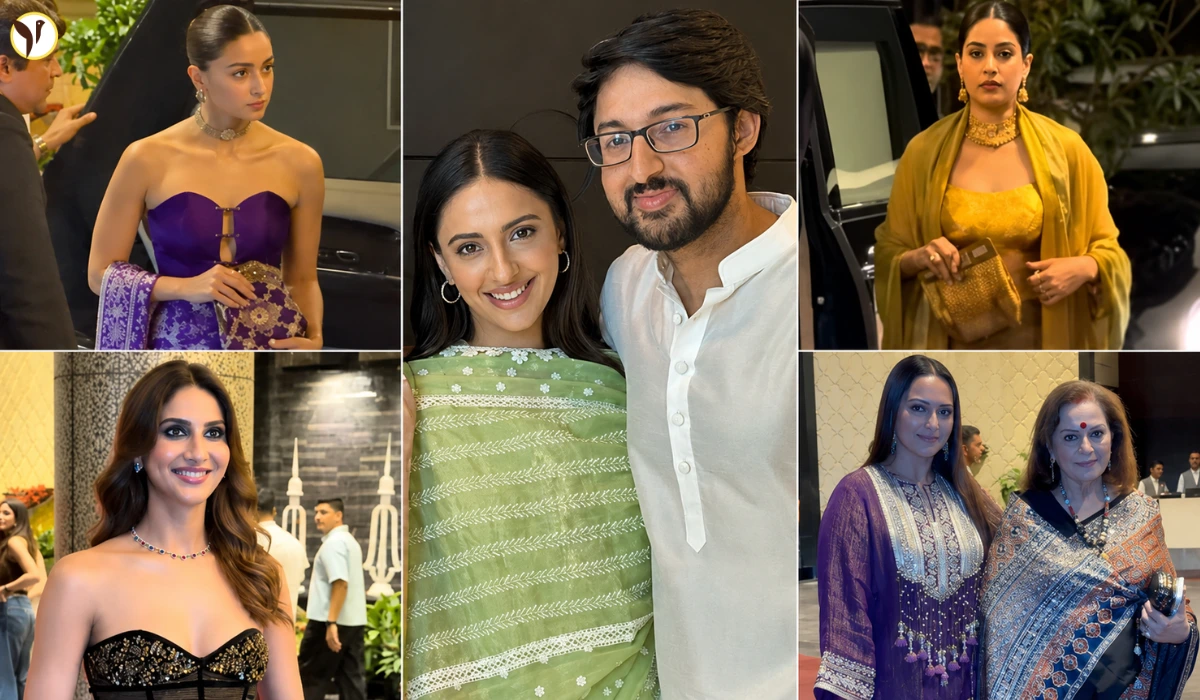


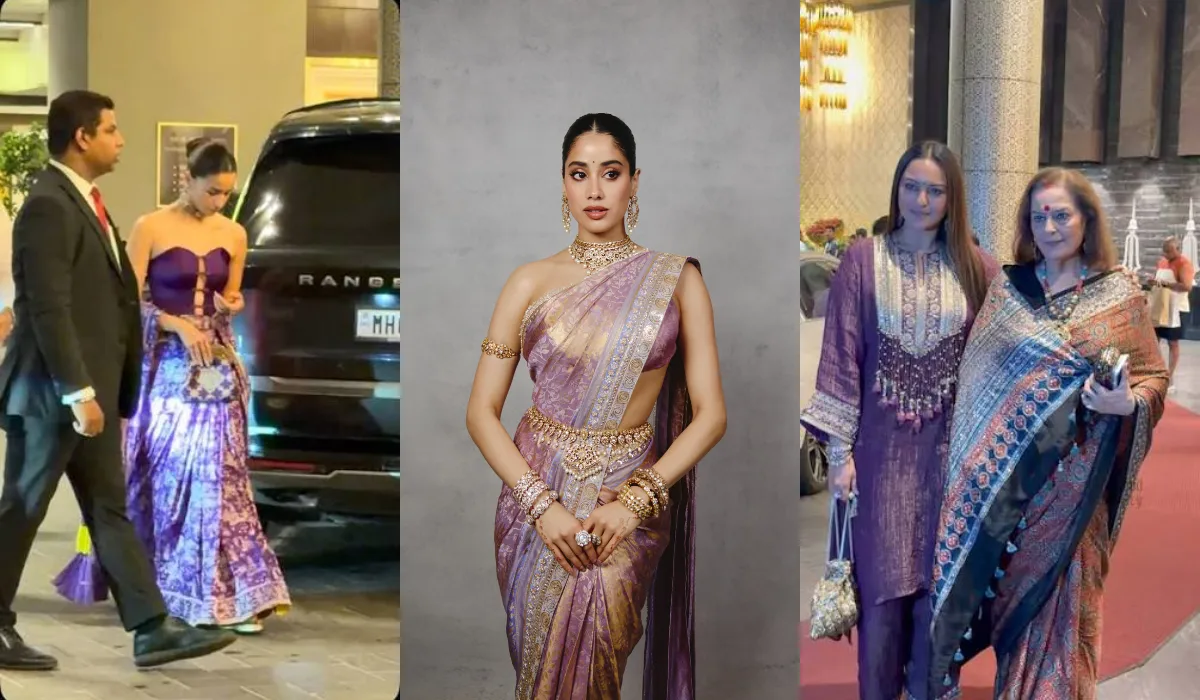
When the flashbulbs erupted outside the venue and Alia Janhvi Sonakshi arrive at Akanksha Ranjan Kapoor's wedding, it was easy for onlookers to reduce the moment to a mere fashion portfolio. However, looking solely at the drapes, silhouettes, and color palettes misses the broader narrative. In the tightly knit ecosystem of the Hindi film industry, a wedding is rarely just a celebration of two individuals; it is a meticulously observed sociological event. It is a public declaration of alliances, a shifting of social hierarchies, and a masterclass in modern celebrity optics.
The presence of Alia Bhatt, Janhvi Kapoor, and Sonakshi Sinha at Akanksha’s nuptials was not a random convergence of busy schedules. It was a deliberate congregation of Mumbai’s most prominent young actors, signaling a fascinating evolution in how Bollywood friendships are formed, maintained, and leveraged in the public eye. Here is an in-depth analysis of what transpired, the underlying industry dynamics at play, and what this means for the future of celebrity culture in India.
The Power of Proximity
To understand the weight of these arrivals, one must first understand who Akanksha Ranjan Kapoor is within this matrix. She is not merely an actor who has appeared in films like Guilty and Monica, O My Darling. She is the daughter of seasoned actors Anu and Kashyap Ranjan Kapoor, making her a legacy child. More importantly, she has functioned for years as a social conduit in Bollywood—bridging the gap between the older generation of star kids and the current cohort of working actors.
Akanksha’s primary claim to social prominence is her deeply rooted, long-standing friendship with Alia Bhatt. In an industry known for its transactional relationships, their bond stretches back to their teenage years, predating Alia's ascent to the top of the box office.
When Alia Bhatt shows up at a friend's wedding, she brings the weight of her current status as a box-office behemoth. Janhvi Kapoor’s presence represents the consolidation of the "young legacy" bracket—actresses who grew up together and are now navigating the pressures of stardom side-by-side. Sonakshi Sinha, slightly senior in age and experience, represents a different tier of established star power, someone who has moved past the initial churn of early fame into a comfortable veteran status among her peers.
The Bollywood Inner Circle Dynamics: An Analysis
The following table provides an original analysis of what each high-profile guest represents in the context of this specific social gathering, moving beyond mere filmography to analyze their "social capital."
|
|
|
|
|
|
|
|
|
|
|
|
|
|
|
|
|
|
|
|
|
|
|
|
|
The Moment Alia, Janhvi, and Sonakshi Arrive at Akanksha Ranjan Kapoor's Wedding: A Study in Star Power
The choreography of a celebrity arrival is never accidental. When the trio arrived, the visual language they deployed spoke volumes about the current aesthetic zeitgeist of Bollywood.
Gone are the days of exaggerated sequins, heavy lehengas, and ostentatious jewelry for a friend’s wedding. The prevailing mood was "quiet luxury" meets "heritage Indian." Alia opted for a understated, fluid drape that prioritized fabric manipulation over embellishment. Janhvi leaned into a contemporary silhouette with traditional embroidery, while Sonakshi chose a classic, deeply rooted traditional look.
This convergence of style is not accidental. It reflects a broader fatigue with loud celebrity culture. Post-pandemic, the Indian audience has developed a sharper eye for authenticity. By dressing in a manner that is elegant but notCostume-like, these actors signal to the public: We are here as friends, not as billboards. It is a subtle but profound shift in how stars manage their relatability.
Furthermore, their body language upon arrival—unhurried, smiling at familiar faces, acknowledging the paparazzi but not lingering for extended photo ops—demonstrates a high level of media literacy. They provided the necessary visuals for the shutterbugs without performing for them.
Alia Bhatt And Janhvi Kapoor Prove There's No One Way To Dress For A Sangeethttps://t.co/ML33HnXjrT#AliaBhatt #JanhviKapoor
— News18 (@CNNnews18) July 11, 2026
What Happens Next?
The sight of Alia, Janhvi, and Sonakshi arriving at this wedding also highlights a macro-trend in Indian celebrity culture: the deliberate drawing of the velvet rope.
A decade ago, a wedding involving even peripheral Bollywood figures was a televised or heavily streamed spectacle (think of the Bachchan, Kapoor, or even the Chopra-Jonas weddings). Today, there is a concerted effort to pull these events back into the private sphere. The heavy paparazzi presence outside Akanksha’s venue was met with a strict boundary: photos outside, absolute silence inside.
What happens next? We are likely to see the "bifurcation" of celebrity events intensify.
- The Public Optic: carefully managed arrivals and departures, designed to generate exactly the kind of analytical coverage you are reading now, satisfying the public's appetite for star-gazing.
- The Private Reality: Strictly enforced "no-phone" policies inside the venue. The actual celebrations, the dancing, the emotional moments, will remain largely unseen by the general public, distributed only on closed, private Instagram stories among the attendees.
This strategy serves a dual purpose. It protects the celebrities' privacy and prevents the over-saturation of their personal lives, which historically leads to audience fatigue. Simultaneously, it creates an aura of exclusivity. When the public knows a party is happening but cannot see it, the cultural value of being in that room skyrockets. Akanksha Ranjan Kapoor’s wedding becomes less about the act of getting married and more about the modern "secret society" of Bollywood elite.
The Economics of Female Friendships in Bollywood
Historically, Bollywood journalism was plagued by narratives of female rivalry. Magazines and tabloids routinely pitted leading ladies against one another, fabricating feuds to drive engagement. The visual of Alia, Janhvi, and Sonakshi arriving together in a show of unified support for a friend is a direct rebuke to that archaic media model.
Today, public displays of female friendship are highly monetizable. Brands look favorably upon actors who project a healthy, supportive social image. An actress perceived as collaborative and secure in her standing is far more appealing to luxury fashion and lifestyle brands than one embroiled in catfight narratives.
By showing up in full force for Akanksha, these women are not just supporting a friend; they are reinforcing their own personal brands as secure, emotionally intelligent, and socially grounded individuals. It is a PR strategy that happens to be genuinely heartwarming—a rare intersection in the world of entertainment.
Why Akanksha’s Wedding Matters to the Public
It is fair to ask: why should the average reader care about the wedding of an actor who is not currently headlining 200-crore films?
The answer lies in the concept of the "hub." Akanksha Ranjan Kapoor functions as a social hub. She is the connective tissue between various disparate factions of the industry. Her wedding serves as a rare physical gathering point for a demographic of actors who are otherwise incredibly isolated, trapped in shooting schedules, brand meetings, and gym routines.
For the audience, observing these gatherings provides a map of the industry's actual power structures. Box office numbers tell you who is currently successful; wedding guest lists tell you who is genuinely respected, socially secure, and deeply embedded in the fabric of the film community. It is a peek behind the curtain of manufactured PR into the organic, lived reality of these stars.
Other Articles to Read: