

When the public speculates about a celebrity wedding of Taylor Swift’s caliber, the imagination immediately leaps to custom couture, A-list guest lists, and floral installations that rival botanical gardens. However, beneath the veneer of romance lies a cold, hard infrastructure problem. In New York City, constructing a private, secure, and leak-proof event for the most recognizable woman on the planet requires a baseline capital outlay that has nothing to do with champagne or centerpieces.
In the landscape of Taylor Swift's New York wedding reality, $160,000 is not the budget for the reception. It is simply the price of entry—the estimated cost required to lock down the physical space, basic municipal compliance, and rudimentary perimeter security before a single vendor sets foot on the premises. To understand what an event of this magnitude actually entails, one must look past the gossip columns and examine the architectural, legal, and logistical machinery of ultra-high-net-worth event planning in Manhattan.
Where Does $160,000 Go?
For a standard affluent couple, $160,000 might fund an entire wedding at a venue like The Plaza or The St. Regis. For a figure of Swift's visibility, that figure barely covers the foundational logistics required to secure a location for 24 to 48 hours.
Based on municipal fee schedules, luxury real estate rental benchmarks, and private security retainer data for high-profile individuals, the "entry price" breaks down into three non-negotiable pillars.
The Infrastructure Baseline for a Top-Tier NYC Celebrity Wedding
|
|
|
|
|
|
|
|
|
|
|
|
|
|
|
|
|
|
|
|
|
|
|
|
|
|
|
|
Why Tribeca is the Only Option
Swift’s deep ties to New York City are well-documented, but her real estate portfolio dictates the logistics of a potential wedding. She owns a sprawling $18 million, 8,300-square-foot penthouse in Tribeca. While hosting a wedding at a private residence might seem like the ultimate way to control the environment, in NYC, it is arguably the most complex route.
Co-op boards and condominium associations in Tribeca are notoriously stringent. To host an event of this scale in a residential building, the liability insurance requirements alone typically demand a $5 million to $10 million special event policy. Furthermore, freight elevators must be reserved for days to bring in staging, flooring to protect original hardwoods, and commercial kitchen equipment.
If the wedding were to occur at a commercial luxury venue like The Rainbow Room or a private estate in the Hudson Valley, the $160,000 baseline shifts. Commercial venues already possess the necessary fire suppression systems, commercial kitchens, and insurance frameworks. However, commercial venues also mean relying on the venue’s staff, exponentially increasing the risk of information leaks. In the calculus of Taylor Swift's New York wedding reality, paying a massive premium to impose total secrecy on a private residence is often deemed safer than trusting a venue’s payroll.
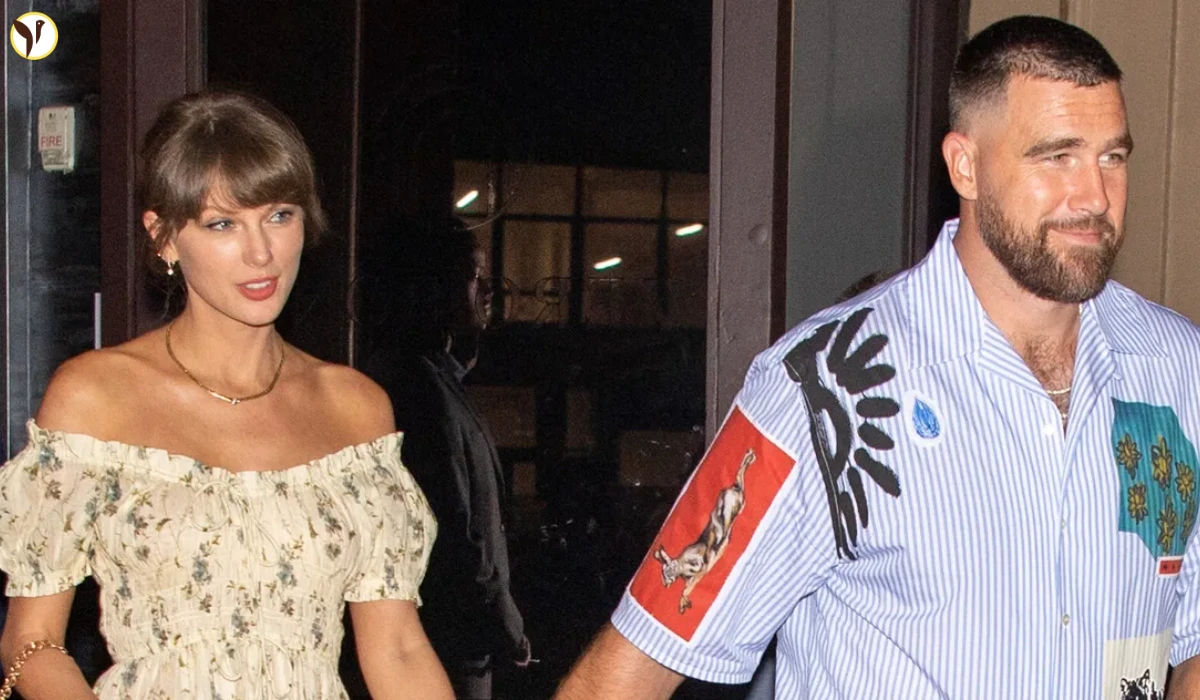
📸| Taylor and Travis looking gorgeous attending a wedding today! pic.twitter.com/d4oR7Gf4Gj
— Taylor Swift Updates 💎 (@swifferupdates) July 11, 2026
Fort Knox Meets Floral Design
The single largest variable in a high-profile NYC wedding is the security apparatus. Standard wedding security involves a few guards checking names at a door. For Swift, security begins weeks in advance with counter-surveillance operations.
- Airspace Control: If the event utilizes a rooftop or terrace, dealing with the Federal Aviation Administration (FAA) and the New York Police Department’s Aviation Unit is mandatory. Temporary Flight Restrictions (TFRs) are incredibly difficult to secure over Manhattan and are generally reserved for heads of state. Without a TFR, the venue is vulnerable to helicopter-based paparazzi, requiring ground-level visual mitigation (such as massive canopy structures).
- The Guest List Vetting: Every plus-one, every hair stylist, every caterer must go through a rigorous background check. This requires hiring an intelligence firm weeks in advance, adding tens of thousands of dollars to the overhead.
- Decoy Logistics: Industry insiders note that top-tier celebrity events now frequently employ "decoy" vendor trucks or utilize multiple entry points to confuse trackers. This requires hiring additional vehicles and personnel purely for misdirection.
The Invisible Economy: The Cost of Silence
Perhaps the most fascinating economic byproduct of the modern celebrity wedding is the "NDA economy." In the past, a household staff member or florist might sell details to a tabloid for a few thousand dollars. Today, the legal apparatus surrounding these events is designed to make leaking information financially ruinous.
To achieve Taylor Swift's New York wedding reality, every single vendor—from the plumber brought in to ensure the portable bathrooms function correctly to the string quartet—must sign comprehensive Non-Disclosure Agreements. However, NDAs alone are not foolproof.
To ensure compliance, top-tier event planners now employ a "blackout bonus" system. Vendors are quoted a standard rate for their services, but they are offered a substantial completion bonus (sometimes matching their base fee) paid 30 days after the event, contingent upon absolute silence. If a single photograph surfaces, they forfeit the bonus and face legal action. This effectively doubles the cost of labor for the event, shifting the financial burden from the service provided to the silence maintained.
What Happens Next: The Precedent of the Stealth Wedding
While the public waits for any official confirmation regarding a wedding date, the logistics outlined above are already shaping how the luxury event industry operates in New York. The era of the highly publicized, magazine-sponsored celebrity wedding is over.
When figures like Swift, Beyoncé, or the Kardashians plan milestones, the goal is complete informational vacuums. The $160,000 entry price is a testament to how much it costs to create a physical and legal moat around a human being in one of the most densely populated, heavily photographed cities on earth.
For the events industry, this sets a daunting new baseline. Planners catering to UHNW (Ultra-High-Net-Worth) clients are no longer just selling aesthetic visions; they are selling operational security. The next generation of luxury weddings will be judged not by how extravagant the floral arrangements are, but by how completely they managed to evade the public eye.
Other Articles to Read: