
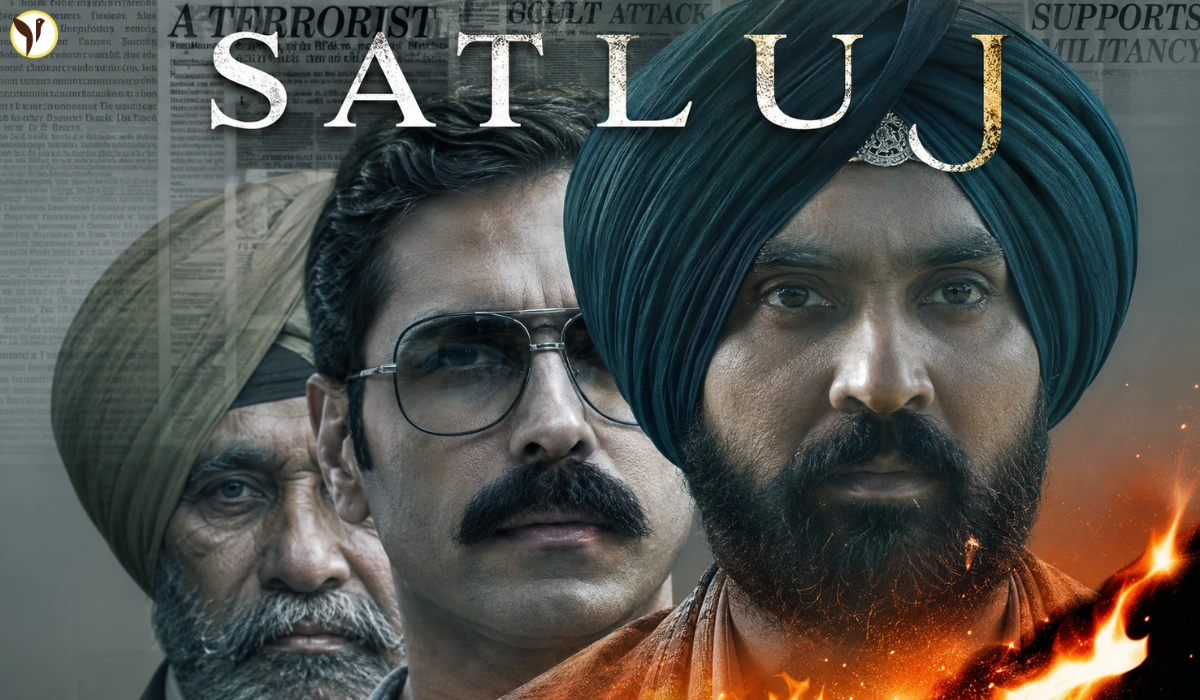


In a significant move that bridges the gap between pop culture and constitutional law, Punjabi superstar Diljit Dosanjh has formally entered the legal fray to challenge the recent restrictions placed on activities along the Satluj riverbed in Punjab. By filing a Public Interest Litigation (PIL) and specifically invoking Article 19 of the Indian Constitution, Dosanjh has elevated what many initially viewed as an administrative dispute into a broader conversation about fundamental rights, cultural preservation, and the limits of environmental governance.
This is not merely a celebrity voicing discontent on social media. The filing of a PIL represents a strategic, legally structured challenge that demands accountability from the state. For the public, understanding the nuances of this case is essential, as its outcome will set a precedent for how Punjab—and potentially India—balances ecological conservation with the livelihoods and cultural expressions of its people.
The Anatomy of the Satluj Ban: What Actually Happened?
To understand Diljit Dosanjh’s legal challenge, one must first understand the ban itself. Over the past few years, the Punjab government and the Punjab Pollution Control Board (PPCB), acting under pressure from the National Green Tribunal (NGT), have implemented stringent restrictions on the Satluj riverbed.
The primary stated objective of these restrictions is ecological preservation. The Satluj riverbed had become a hotspot for large-scale commercial events, unauthorized construction, and massive public gatherings. Left unchecked, such activities lead to severe soil erosion, destruction of local flora and fauna, and unchecked pollution that degrades the river ecosystem.
However, the enforcement of these environmental protections resulted in a sweeping ban that effectively prohibited cultural gatherings, musical events, and even traditional local festivals along the riverbanks.
Timeline of the Satluj Riverbed Restrictions
|
|
|
|
|
|
|
|
|
|
|
|
|
|
|
|
|
|
|
|
|
|
|
|
|
The Legal Core: Why Invoke Article 19?
At the heart of Dosanjh’s PIL is Article 19 of the Indian Constitution, which guarantees certain fundamental freedoms to Indian citizens. The legal team representing the artist has cleverly framed the cultural ban not just as an economic inconvenience, but as a constitutional infringement.
Specifically, the PIL relies on two crucial clauses:
- Article 19(1)(a) — Freedom of Speech and Expression: The argument here extends beyond just speaking. The Indian judiciary has historically recognized that art, music, and cultural performances are forms of expression. By denying artists and communities the physical spaces where these expressions traditionally occur, the state is indirectly censoring cultural expression.
- Article 19(1)(g) — Freedom to Practice any Profession, Trade, or Business: A massive ecosystem of workers—stage builders, sound engineers, local vendors, transport workers, and artists—relies on riverside events. A blanket ban destroys their ability to earn a livelihood without offering alternative spaces or compensation.
The Doctrine of Proportionality
Dosanjh’s legal strategy is not arguing that the state has no right to protect the environment. Instead, it relies on a judicial principle known as the "Doctrine of Proportionality."
When the government restricts a fundamental right (like the right to livelihood or expression), the restriction must be proportional to the threat it aims to address. A blanket ban is the most extreme form of restriction. The PIL will likely argue that the state must prove why less restrictive measures—such as capped audience sizes, strict waste-management protocols, or designated zones—cannot achieve the same environmental goals. If the state cannot prove this, the ban is legally vulnerable.
[Image: A wide shot of the Satluj riverbed showing the natural ecosystem and sandy banks | Source: Punjab Tourism Board Archives]
Why This Matters: Beyond the Celebrity Headline
It would be easy to dismiss this as a wealthy artist upset about losing a concert venue. That reading misses the profound socio-economic and cultural layers of this case.
1. The Socio-Economic Ecosystem
When a mega-concert is booked on the Satluj riverbed, the economic ripple effect is immense. To understand the stakes, look at the localized economic data surrounding large-scale outdoor events in Punjab:
|
|
|
|
|
|
|
|
|
|
|
|
|
|
|
|
|
|
|
|
Diljit Dosanjh’s PIL gives a legal voice to this fragmented, unorganized workforce that lacks the resources to fight the state bureaucracy on their own.
2. Cultural Erasure vs. Ecological Conservation
Rivers in Punjab are not just geographical features; they are deeply woven into the region's socio-cultural fabric. The Satluj is a recurring motif in Punjabi folklore, Sufi poetry, and modern music. Historically, riverbanks have served as the original "open-air theaters" for the community.
By cordoning off these spaces entirely under the guise of environmentalism, the state risks committing a form of cultural erasure. The PIL forces the judiciary to ask a difficult question: Can we save the river by severing the people from it? True environmentalism requires sustainable coexistence, not the exclusionary privatization or militarization of natural spaces.
The Counter-Argument: The State's Environmental Imperative
To maintain complete journalistic objectivity and provide a comprehensive view, it is vital to examine the state's side of the argument. The Punjab government and environmental watchdogs are not acting out of malice.
The Satluj river is in genuine distress. Industrial effluents, agricultural runoff rich in pesticides, and historical sand mining have heavily polluted the river. When large-scale events are held on the riverbed, the aftermath often includes tons of non-biodegradable waste (plastic, confetti, structural debris) that gets swept into the river during the monsoon season.
Furthermore, the compaction of the riverbed by thousands of feet and heavy vehicles alters the river's natural flow dynamics, exacerbating flooding in adjacent villages during the rainy season. From the state's perspective, a blanket ban is an administrative necessity. Processing individual permits for events requires a level of bureaucratic oversight, vigilance, and integrity that local authorities often lack. A total ban is, unfortunately, the easiest fail-safe against environmental degradation.
Satluj Movie Review: Diljit Dosanjh Delivers Career-Best Performance in Jaswant Singh Khalra Biopic Now Streaming on ZEE5 #Satluj #DiljitDosanjh #ArjunRampal #ZEE5 #JaswantSinghKhalra #SatlujReview #Bollywoodhttps://t.co/7cBvb2Bvg3
— VvipTimes (@Vvip_Times) July 10, 2026
What Happens Next: The Legal Roadmap
Now that the PIL has been filed, the matter enters the domain of the Punjab and Haryana High Court. Here is what legal analysts anticipate will unfold in the coming months:
- Admission and Notice: The High Court will formally admit the PIL and issue notices to the Punjab government, the PPCB, and the NGT, asking them to file their responses.
- The "Less Restrictive Means" Debate: The core hearings will revolve around whether the government explored alternatives before enforcing a total ban. The court may demand an actionable, sustainable policy framework rather than a binary "ban or no ban" approach.
- Potential Interim Relief: Dosanjh’s legal team may seek an interim order allowing specific events (with strict environmental bonds or guidelines) to proceed while the case is being heard.
- The Precedent: Regardless of the immediate outcome, this case will force higher courts to articulate clearer guidelines on how Article 19 rights intersect with environmental directives under the NGT.
A Necessary Friction
Constitutional experts view this PIL as a necessary friction in a democratic setup. "We are seeing a pattern across India where environmental protections are used as a blunt instrument," notes a senior advocate practicing environmental law in Chandigarh, who spoke on the condition of anonymity due to the pending litigation. "The NGT was established to act as a specialized environmental watchdog, but its orders are often implemented by state governments as blanket, draconian bans that bypass the procedural safeguards of the Constitution. When a public figure like Diljit Dosanjh challenges this, he forces the system to refine its approach from prohibition to regulation."
This case highlights a critical flaw in modern governance: the inability of administrative bodies to implement nuanced, regulated solutions. A blanket ban requires zero ongoing administrative effort once enforced. Creating a framework that allows a cultural event to happen while ensuring the riverbed is left pristine requires immense coordination, monitoring, and political will. The PIL is essentially calling out this administrative lethargy.
Conclusion
Diljit Dosanjh’s decision to challenge the Satluj ban through a PIL invoking Article 19 is a watershed moment in the intersection of Indian pop culture, constitutional law, and environmental policy. It shifts the narrative from a superficial "celebrity versus government" standoff to a profound legal inquiry into how a society respects its natural resources without suffocating its cultural and economic life.
The courts now have the opportunity to establish a landmark judgment: one that protects the Satluj from exploitation, but also protects the citizens' fundamental right to gather, express, and earn a livelihood along its historic banks. For the thousands of workers, artists, and locals watching this case unfold, the hope is that the law will ultimately choose sustainable coexistence over absolute prohibition.
Other Articles to Read: