

When audiences think of high-stakes underwater action in global cinema, they picture Tom Cruise in Mission: Impossible or Kate Winslet's grueling water sequences in Avatar: The Way of Water. Seldom does the Indian film industry—particularly its leading ladies—get mentioned in the same breath. That narrative is undergoing a seismic shift.
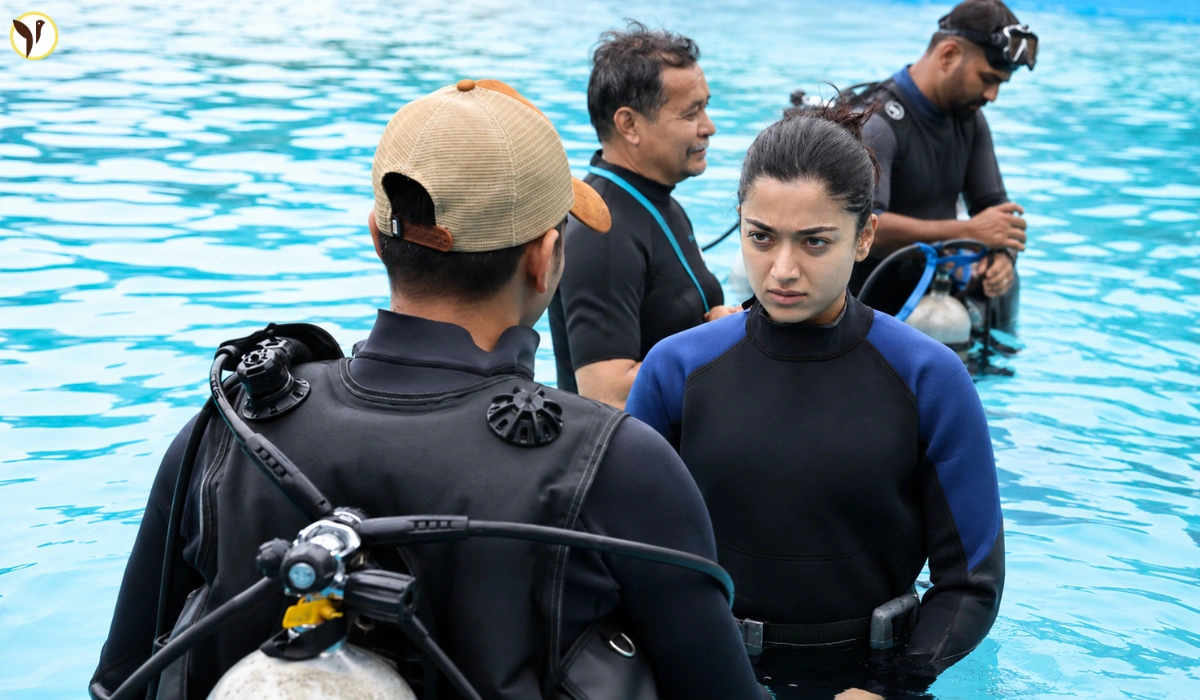
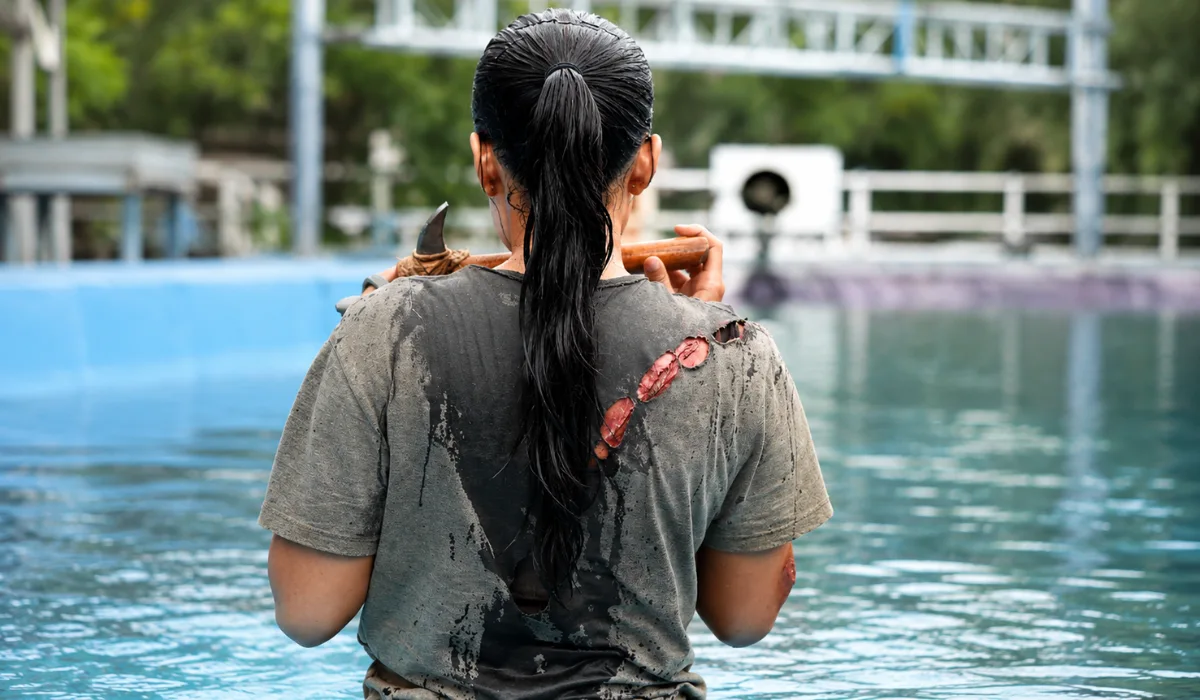
Rashmika Mandanna, widely recognized for her girl-next-door charm and emotive romantic roles, has just pulled off a cinematic feat that demands the industry’s attention. The actress recently completed a staggering 20-hour solo underwater fight sequence for an upcoming high-octane project. To be clear: this was not a quick insert shot. It was a sprawling, choreographed combat sequence executed entirely without a stunt double.
This isn't merely a behind-the-scenes trivia point designed for promotional buzz. It is a measurable, physical breaking of barriers that highlights a critical evolution in how Indian cinema is approaching female action protagonists. Here is a deep dive into what actually happened, the immense logistics involved, and why this matters for the future of the industry.
The Anatomy of a 20-Hour Underwater Feat
To understand the magnitude of this achievement, one must first separate Hollywood myth from cinematic reality. Filming underwater is notoriously inefficient. A standard underwater shot takes roughly four to five times longer to execute than a land-based shot due to safety checks, lighting adjustments, and the natural limitations of human breath-holding.
A 20-hour underwater shoot does not mean the actress was submerged for 20 hours straight—which would be physiologically impossible and a severe safety violation. Rather, it represents 20 hours of cumulative, in-water camera time over a grueling multi-day schedule, dedicated entirely to a single, uninterrupted fight sequence.
What the Sequence Entails
Unlike standard water sequences where actors are suspended on wires or rely heavily on breath-holding editors to cut away to wide shots, Mandanna’s sequence required continuous, solo physical engagement.
According to set reports and stunt coordination frameworks, the sequence involves hand-to-hand combat, evasion tactics, and dynamic movement through a submerged set. Because she was solo, there was no co-actor to feed off physically; the entire pacing, weight distribution, and spatial awareness had to be calibrated against an imaginary threat or automated rigging.
By the Numbers: Breaking Down the Stunt
To provide clarity on why this is a landmark achievement, we must look at industry standards. The table below outlines standard aquatic stunt metrics compared to the parameters of Mandanna's recent shoot.
Underwater Filming Standards vs. Rashmika Mandanna's Feat
|
|
|
|
|
|
|
|
|
|
|
|
|
|
|
|
|
|
|
|
|
|
|
|
|
|
|
|
|
|
What Happens to the Body
Executing a fight on land requires explosive energy. Underwater, it requires a completely different kinetic intelligence. Water provides roughly 800 times the resistance of air. Throwing a punch underwater isn't just about strength; it’s about controlling the rebound of your own body.
During a 20-hour cumulative shoot, an actor faces several severe physiological stressors:
- Thermoregulation Failure: Even in heated tanks, the body loses heat 25 times faster in water than in air. Core temperature drops lead to muscle fatigue and delayed reaction times.
- Nitrogen Narcosis (The "Martini Effect"): Even at shallow depths (10-30 feet), breathing compressed air can cause mild nitrogen narcosis, leading to impaired judgment and delayed cognitive processing—dangerous when remembering complex choreography.
- Barotrauma: The pressure changes during frequent ascents and descents put immense strain on the middle ear and sinuses.
Mandanna’s ability to maintain choreographic precision over 20 hours of cumulative exposure to these elements points to a level of extreme physical conditioning that goes beyond standard "actor prep." It borders on athletic endurance training.
Why This Matters: The Death of the "Delicate Heroine" Trope
For decades, the Indian film industry’s approach to female action was largely archival. A leading lady would perform a few stylized strikes on land, after which the camera would pan to a stunt double—usually a woman with a distinctly different body type and hair texture—to execute the heavy falls or vehicular stunts. The audience was expected to suspend disbelief.
We are now in an era defined by the "Pan-India" cinematic scale, where audiences consume John Wick, Extraction, and Kill Bill with the same voracity as local language cinema. The modern viewer's eye is trained. They spot the double. When they spot the double, the immersion breaks.
Rashmika Mandanna’s decision to execute this sequence solo serves a dual purpose:
- Narrative Integrity: It ensures the emotional continuity of the scene remains unbroken. The fear, strain, and triumph visible on her face are real, not acted in a dry studio later.
- Industry Precedent: It applies immense, positive pressure on her contemporaries. When a top-tier star who commands massive box office numbers refuses to use a double, it becomes a new benchmark for what is expected from A-list actors.
Contextualizing the Shift in Indian Action Cinema
Mandanna is not operating in a vacuum. She is part of a growing, albeit slow, vanguard of Indian actresses redefining physical roles.
- Alia Bhatt undertook intensive rock-climbing and combat training for Raazi and later Heart of Stone.
- Deepika Padukone performed high-altitude stunts and combat in Bhaval and Pathaan.
- Taapsee Pannu has consistently pushed boundaries with physical transformations in Rashmi Rocket and Dhak Dhak.
However, what sets Mandanna’s underwater feat apart is the isolation of the stunt. Combat on land allows for a choreographer to physically guide an actor's limbs. Underwater, communication is limited to hand signals. The actor is truly alone. This transitions the role from "actor performing a stunt" to "athlete executing a routine."
How Do You Shoot a 20-Hour Solo Sequence?
To appreciate the forward-looking insight of this event, one must understand the logistical mountain that a production house must move to facilitate a solo underwater fight of this scale.
The Environment
The sequence was filmed in a custom-built, temperature-controlled water tank rather than open water. Open water (oceans/lakes) introduces uncontrollable variables like currents, visibility drops, and marine life. A tank allows for precise underwater lighting rigs—crucial for capturing high-frame-rate combat without motion blur.
The Safety Apparatus
As noted in the data table, a ratio of three safety divers to one actor was maintained. These divers were not just emergency responders; they were equipped with secondary air tanks (hookah systems) that could be instantly passed to Mandanna between takes, preventing the need for her to constantly surface and decompress.
The Choreography
Traditional fight choreography relies on sound—the thud of a fist, the snap of a kick—to sell the impact. Underwater, sound is muted and distorted. The choreography had to rely entirely on visual weight. Every strike had to be visibly slower but carry the illusion of immense force, utilizing the water's resistance to sell the impact.
What Happens Next: The Ripple Effect
The immediate aftermath of this 20-hour shoot will be felt in the post-production suite. Underwater footage requires extensive color grading to correct the loss of contrast and red wavelengths that occur naturally at depth. The VFX team will likely use minimal wire-removal, as the solo nature of the shoot means Mandanna had to generate the kinetic energy herself.
Career Trajectory
For Rashmika Mandanna, this is a strategic pivot. Having solidified her position as the premier romantic lead in the South and a rising star in Bollywood (with Animal and Pushpa 2: The Rule under her belt), action is the final frontier. If this sequence lands well with audiences, it positions her for a new tier of projects—potentially female-led spy thrillers or hard-core action franchises that were previously reserved for male stars like John Abraham or Tiger Shroff.
Industry Standards
If the sequence becomes a talking point upon the film's release, expect insurance companies and production houses to revise their standard stunt contracts for female leads. The baseline expectation for "action prep" will shift from two weeks of basic flexibility training to months of specialized, discipline-specific conditioning.
Other Articles to Read: