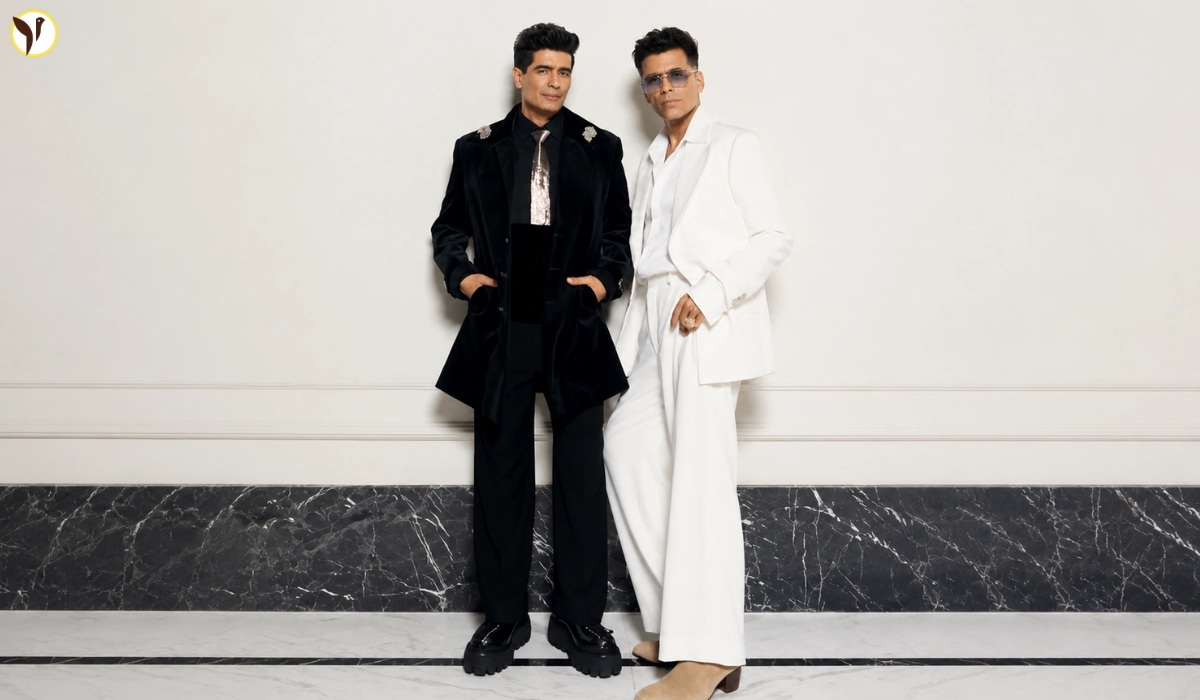


When the front row settles and the music swells at a Manish Malhotra showcase, the expectation is universally understood: Bollywood glamour, shimmering fabrics, and unapologetic opulence. Yet, at his recent couture presentation, the narrative pivoted. The sequins took a backseat to silk, and the spotlight moved from cinematic stardom to the quiet, calloused hands of India’s grassroots artisans.
In an era where global fashion is grappling with the hollow nature of fast fashion and algorithmic trends, Manish Malhotra didn't just show clothes—he showed India's soul. This was not merely a style transition; it was a strategic, cultural, and economic positioning of Indian heritage as the new pinnacle of global luxury.
The Runway Reimagined: Beyond the Surface Sheen
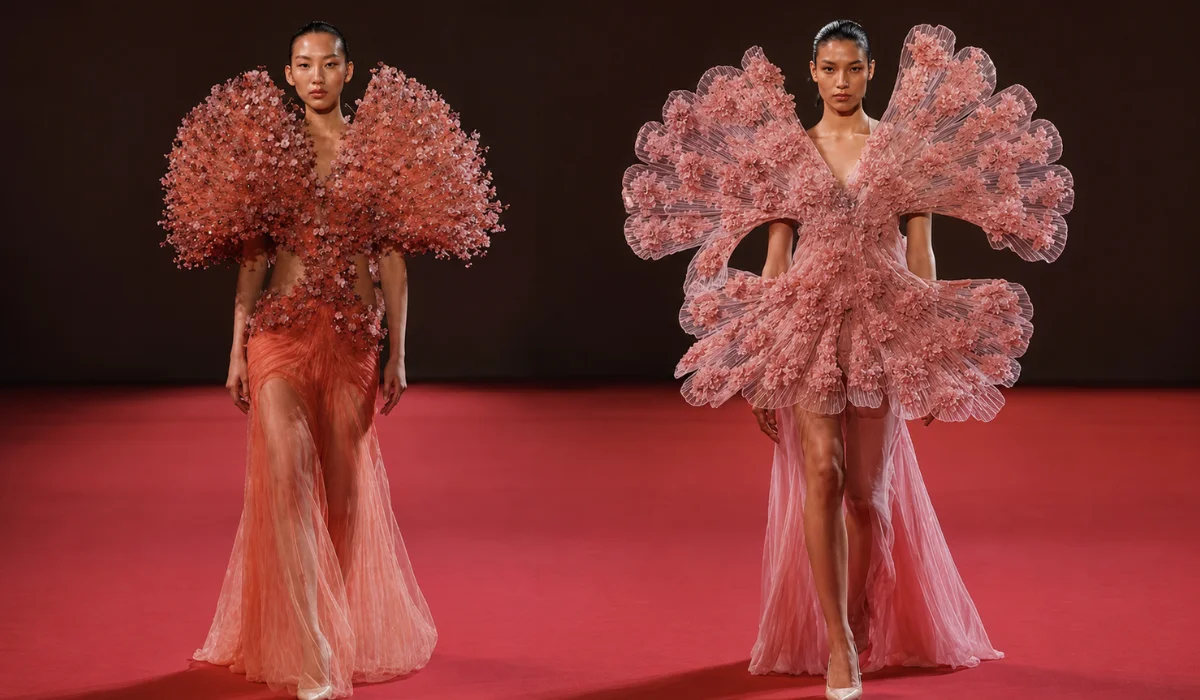
For decades, Indian couture on the runway has been trapped in a specific visual lexicon: heavy embellishments, Swarovski crystals, and Western silhouettes adorned with Indian motifs. Malhotra’s latest collection dismantled this formula.
Instead of relying on the atelier’s embroidery frames, the collection served as a canvas for indigenous textiles—specifically focusing on the intricate weaves of Varanasi, the geometric brilliance of Chanderi, and the rich heritage of Benarasi brocades. The garments were structured around the drape and the weave itself, allowing the raw, unfiltered talent of the weaver to dictate the design.
By placing the craftsmanship—rather than the celebrity wearing it—at the center of the conversation, the showcase forced the audience to acknowledge the source of the beauty. It was a stark departure from the traditional fashion calendar, functioning instead as an anthropological exhibition of Indian textile history.
Measuring the Handloom Economy
To understand why this showcase matters beyond aesthetic appreciation, one must look at the economics of Indian handlooms. Fashion journalism often ignores the math behind the motifs. However, when a designer of Malhotra's scale pivots to handlooms, the macroeconomic implications are substantial.
Below is an analysis of India’s handloom sector and its intersection with the luxury market, contextualizing the impact of high-visibility runway endorsements.
|
|
|
|
|
|
|
|
|
|
|
|
|
|
|
|
|
|
|
|
|
|
|
|
The End of Cultural Derivation
For a long time, Indian fashion designers engaged in a subtle form of cultural derivation—taking a patch of Zardozi or a bandhani print and applying it to a gown. It was Indian color without Indian context.
Malhotra’s recent work represents a shift toward cultural authentication. By presenting entire garments constructed purely from heritage weaves—respecting the grain, the weight, and the traditional motifs of the fabric—he stopped treating Indian textiles as mere embellishment. He treated them as the foundation.
This matters for two primary reasons:
- Redefining Luxury: In the West, luxury is often defined by heritage houses (Chanel, Dior) with centuries of history. India has an equally rich history, but it has historically been commoditized as "exotic" rather than "luxurious." Centering handlooms re-categorizes Indian craft as high luxury.
- Arresting the Artisan Exodus: The handloom sector is in crisis. Younger generations of weaving families are abandoning the loom for more stable, urban jobs. When a marquee name validates their ancestral work on a global stage, it instills a sense of pride and financial viability that government schemes alone have failed to achieve.
A New Lexicon for Global Fashion: Provenance over Production
Internationally, the fashion industry is facing severe backlash over its environmental footprint and unethical labor practices. The "greenwashing" of fast fashion has made consumers deeply skeptical.
This is where India’s inherent manufacturing model becomes its strongest competitive advantage. A handwoven Banarasi textile has a negligible carbon footprint. It requires no synthetic dyes, relies on human energy rather than fossil fuels, and is inherently circular—often passed down through generations as heirlooms.
By showcasing India's soul through its looms, Manish Malhotra is effectively introducing a new lexicon to global fashion: Provenance over Production. He is demonstrating that you do not need a factory in Italy to create a luxury product; a wooden pit loom in a Varanasi bylane possesses an authenticity that cannot be manufactured. This angle provides international buyers and fashion media with a narrative that aligns perfectly with global ESG (Environmental, Social, and Governance) mandates.
Indian haute couture presence ‘overdue’, says designer Manish Malhotra https://t.co/2RUty7Lfsv
— Straits Times Life (@ST_LifeTweets) July 10, 2026
The Economics of Heritage: What Happens When Weavers Get the Limelight?
The most critical question following a showcase of this nature is: Does the money actually reach the weaver?
Historically, the middleman hierarchy in the Indian textile supply chain has absorbed the majority of the profits. However, when a designer builds a collection around a specific region's weave, it necessitates a direct-to-artisan relationship.
When a couture house explicitly names the weave (e.g., "Pure Mushru Silk" or "Authentic Kashi Vastra") rather than labeling it generically as "embroidered silk," it triggers a demand for Geographical Indication (GI) tagged products. GI tagging protects the intellectual property of the weavers and prevents cheap power-loom replicas from cannibalizing their market.
The forward-looking insight here is the potential for a "Designer-Weaver Patronage Model." Similar to how Renaissance artists were funded by the Medici family, top-tier Indian designers have the capital and the platform to act as modern patrons. By committing to buying directly from weaving clusters at premium rates, designers can create micro-economies of scale that sustain entire villages.
What Happens Next: The Scalability Challenge
While a couture runway show is visually stunning, the true test of this "India's soul" narrative lies in its scalability. Couture, by definition, is exclusive. The real disruption will occur when this philosophy trickles down to Malhotra’s bridge-to-luxury lines and, eventually, influences the broader market.
1. The Prêt-à-Porter Dilemma: Translating a handwoven couture piece into ready-to-wear is difficult. It requires balancing the high cost of handlooms with the price sensitivity of the middle-market. We will likely see designers investing in hybrid models—using power-looms for the base structure but employing handloom weavers for the visible, high-impact elements (like pallus, borders, and dupattas).
2. Infrastructure Investment: To meet potential increased demand from high-fashion houses, weaving clusters need infrastructure upgrades—better lighting, improved yarn storage, and digital looms that assist rather than replace the weaver. Expect to see more designers partnering with NGOs and corporate CSR arms to fund this infrastructure.
3. The Global Retail Push: In the next 18 to 24 months, expect to see these heritage-heavy collections positioned aggressively in international department stores (like Harrods or Galeries Lafayette) not in the "ethnic wear" section, but squarely within the "Global Luxury" or "Artisanal Craft" aisles.
The Verdict: A Definitive Cultural Pivot
Manish Malhotra’s latest showcase was not a fleeting thematic experiment; it was a calculated, necessary evolution of Indian fashion. For too long, the Indian designer's narrative has been split in two: either apologizing for traditional wear or bastardizing it to fit Western molds.
By choosing to let the loom lead, Malhotra has proved that Indian textiles do not need to be "modernized" through Western cuts to be relevant. They are already perfect. They just need the right stage.
For the reader, the takeaway is simple: the most luxurious thing you can wear today is not a logo plastered across a handbag. It is a piece of fabric that holds the geometry of a Chanderi weave or the centuries-old mathematical precision of a Banarasi jaal. It is the literal fabric of a nation, worn not just to be seen, but to be understood.
Other Articles to Read: