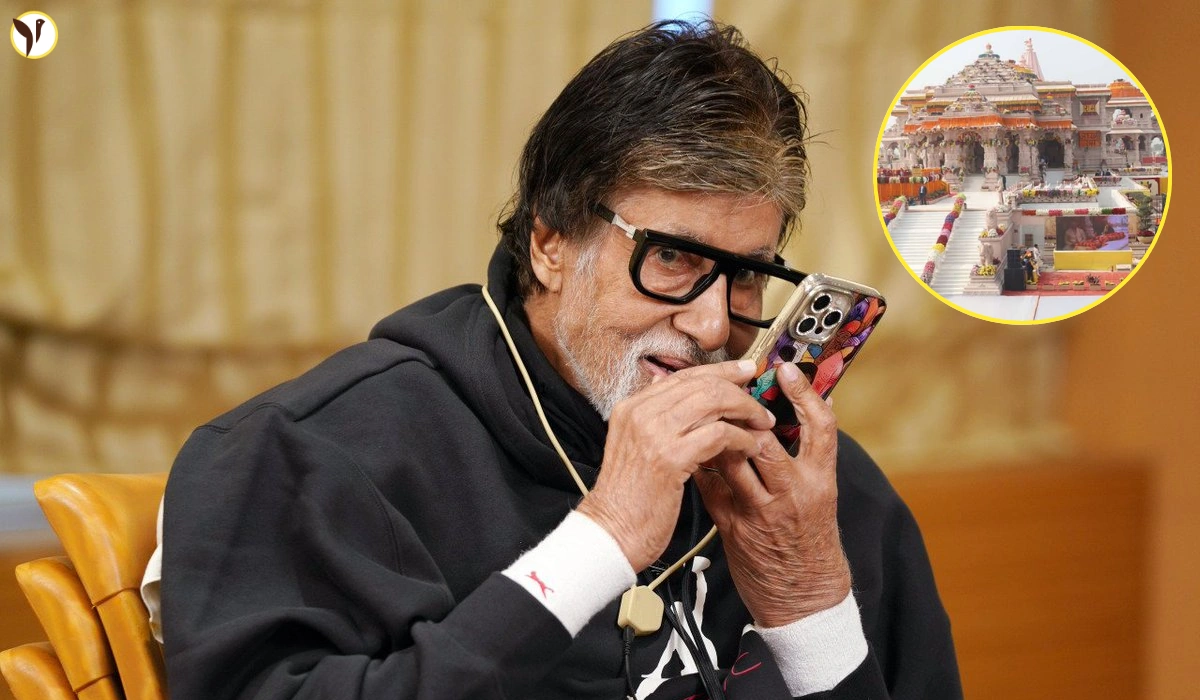


When a smartphone rings at 3 AM in a Mumbai residence, it is rarely a harbinger of good news. But in the weeks leading up to the historic Pran Pratishtha (consecration) of the Ram Mandir in Ayodhya, a predawn phone call carried a different weight entirely. It was a moment of logistical finality that culminated in one of the most high-profile individual financial contributions to the temple project.
The narrative of Amitabh Bachchan's 3 AM Ayodhya call — Rs 15 Cr transferred next day is not merely a celebrity gossip footnote. It is a fascinating window into the high-stakes, tightly timed machinery of managing a civilizational milestone. For the public, a mega-donation is a headline. For the institutions involved, it is a complex exercise in compliance, banking logistics, and cultural synchronization.
Here is a deep dive into what actually transpired during those early morning hours, why the timing mattered, and what this massive transfer reveals about the evolving relationship between India's cinematic elite and socio-religious landmark projects.
The Anatomy of a Predawn Transaction
The details of this specific episode were shared by Amitabh Bachchan himself via his official blog, a platform he uses to bypass traditional media to communicate directly with the public. According to his account, representatives from the Shri Ram Janmabhoomi Teerth Kshetra Trust reached out to him in the early hours of the morning.
The purpose of the call was not a sudden solicitation, but rather the execution of a planned commitment. The Trust was in the final stages of reconciling funds and closing out specific financial books ahead of the January 22, 2024, ceremony. They needed confirmations and transfers to be completed within a narrow, unforgiving window.
By the next day, Rs 15 Crore had been wired from the actor’s accounts to the Trust. This was in addition to an earlier contribution of Rs 5 Crore, bringing his total disclosed donation to Rs 20 Crore.
Why a 3 AM call? In the world of high-net-worth corporate and philanthropic transfers, "business hours" are often irrelevant, especially when dealing with international wires, multi-bank clearances, or the tight schedules of high-profile individuals. Bachchan’s schedule is notoriously grueling, often involving shoot schedules that stretch past midnight. For the Trust's logistics team, securing a verbal confirmation at an hour when the donor was finally accessible—and ensuring the funds hit the accounts before the banking day started—was a tactical necessity, not a dramatic flourish.
The Financial Breakdown: Contextualizing the Rs 20 Crore Contribution
To understand the magnitude of this transfer, it must be viewed against the backdrop of other massive contributions. The Ram Mandir project was funded by a micro-donation drive that collected millions of small checks, but it also relied on significant macro-donations from industrialists and public figures.
Below is an analytical breakdown of how Bachchan's contribution fits into the broader financial landscape of the Trust’s publicly disclosed major donations during the final phase of construction.
|
Donor Profile |
Entity/Individual |
Estimated Contribution |
Nature of Donation |
Strategic Timing |
|
Bollywood Icon |
Amitabh Bachchan |
Rs 20 Cr (Rs 5 Cr initial + Rs 15 Cr) |
Direct Financial Transfer |
Weeks prior to Pran Pratishtha |
|
Corporate Infrastructure |
Larsen & Toubro (L&T) |
Unspecified (In-kind/Services) |
Construction & Project Management |
Ongoing (Phase 1 completion) |
|
Industrial Conglomerate |
Reliance Industries |
Undisclosed (Estimated high-value) |
Corporate CSR & Direct Funding |
Pre-inauguration phase |
|
Heavy Industries |
Vedanta Ltd (Anil Agarwal) |
Undisclosed (Pledged support) |
Financial & Material |
Pre-inauguration phase |
|
Public Micro-Donations |
Citizens of India |
Over Rs 3,500 Cr (Total Fund) |
Small checks, cash, online |
11-year cumulative period |
The Cultural Calculus: Why Bachchan’s Move Mattered
For decades, India's film industry—particularly its Mumbai-based Hindi sector—has maintained a complex, sometimes cautious relationship with overt religious and political expressions. The prevailing strategy for top-tier stars has historically been secular universalism, avoiding alignments that might alienate specific demographic segments.
However, the Ayodhya project represented a paradigm shift. The consecration of the Ram Mandir was not framed merely as a religious event by the broader cultural mainstream, but as a historic, civilizational milestone.
Bachchan’s willingness to publicly disclose his 3 AM interaction and the subsequent Rs 15 Crore transfer signaled a shift in the cultural calculus. It reflected an acknowledgment that the cultural center of gravity in India had shifted, and that participating in the Ayodhya milestone was no longer a polarizing political act, but a mainstream cultural consensus.
By detailing the exact hour of the call and the mechanics of the transfer, Bachchan lent an aura of authenticity to the donation. It dispelled rumors of proxy donations or arm's-length PR stunts, replacing them with the imagery of a sleep-deprived octogenarian personally ensuring his financial commitment was honored before dawn.
Are @dir_ed, @IncomeTaxIndia aware of ⤵️. The man is 🤫 on the shenanigans vis-a-vis Ayodhya.
— শিবজ্যোতি SIBAJYOTI (@SHIBU_DIBRUGARH) July 7, 2026
Amitabh Bachchan called at 3 am to buy Ayodhya land and transferred Rs 15 crore the next day, recalls Abhinandan Lodha | Hindi Movie News - The Times of India https://t.co/cW7h7Ul4Qq
Behind the Scenes: The Trust’s Banking Machinery
Transferring Rs 15 Crore is not as simple as opening a UPI app. The logistics of moving such funds involve rigorous banking protocols, especially when the recipient is a highly scrutinized public trust.
- KYC and Source of Funds: For any transfer exceeding Rs 50 Lakhs, Indian banking regulations require rigorous tracking of the source of funds to prevent money laundering. The Trust, anticipating massive inflows, had dedicated banking desks at major public sector banks.
- RTGS vs. NEFT: Transfers of this magnitude are universally executed via Real-Time Gross Settlement (RTGS), which operates on a 24/7 basis for high-value transactions. The "next day" execution likely involved the donor's bank initiating the RTGS during early morning batch processing.
- Receipt and Reconciliation: The Shri Ram Janmabhoomi Teerth Kshetra Trust employed a dedicated audit team. Once the RTGS hit the Trust's account, an automated or manually expedited receipt generation process was triggered, ensuring the donor's name was officially logged in the Trust's books ahead of the January 22 deadline.
What Happens Next? The Lifecycle of a Mega-Donation
With the Pran Pratishtha completed, the immediate urgency of the 3 AM call has passed, but the utility of the funds is ongoing. The Rs 15 Crore transferred by Bachchan does not sit idle.
Phase 2 of the Ram Mandir Complex: The current structure is the Garbhagriha (sanctum sanctorum) and the immediate surrounding floor. The next five to ten years will see the construction of the remaining complex, which includes a massive visitor pavilion, a museum detailing the temple's history, residential facilities for pilgrims, and extensive landscaping. Funds from the final surge of donations are currently being earmarked by the Trust’s engineering committee for these architectural phases.
Transparency and Public Audit: Because the Trust operates under intense public and media scrutiny, high-profile deposits like Bachchan's are subject to future statutory audits. While the Trust is not entirely bound by the Right to Information (RTI) Act in the same way government bodies are, it has committed to publishing audited financial statements. The Rs 20 Crore from Bachchan will eventually appear in these public ledgers, providing a paper trail that verifies the anecdote shared on his blog.
Other Articles to Read: