

For decades, “Jumma Chumma De De” has lived in Bollywood memory as a crowd-thriller: a swaggering Amitabh Bachchan performance, a giant set, a chorus of backup dancers, and a song so culturally sticky that it still resurfaces in television tributes, nostalgia playlists and wedding DJ sets. But a new look at the making of the number complicates that memory. According to veteran choreographer Chinni Prakash, the shoot of the song was far from routine — and at one point, it became physically dangerous for actress Kimi Katkar.
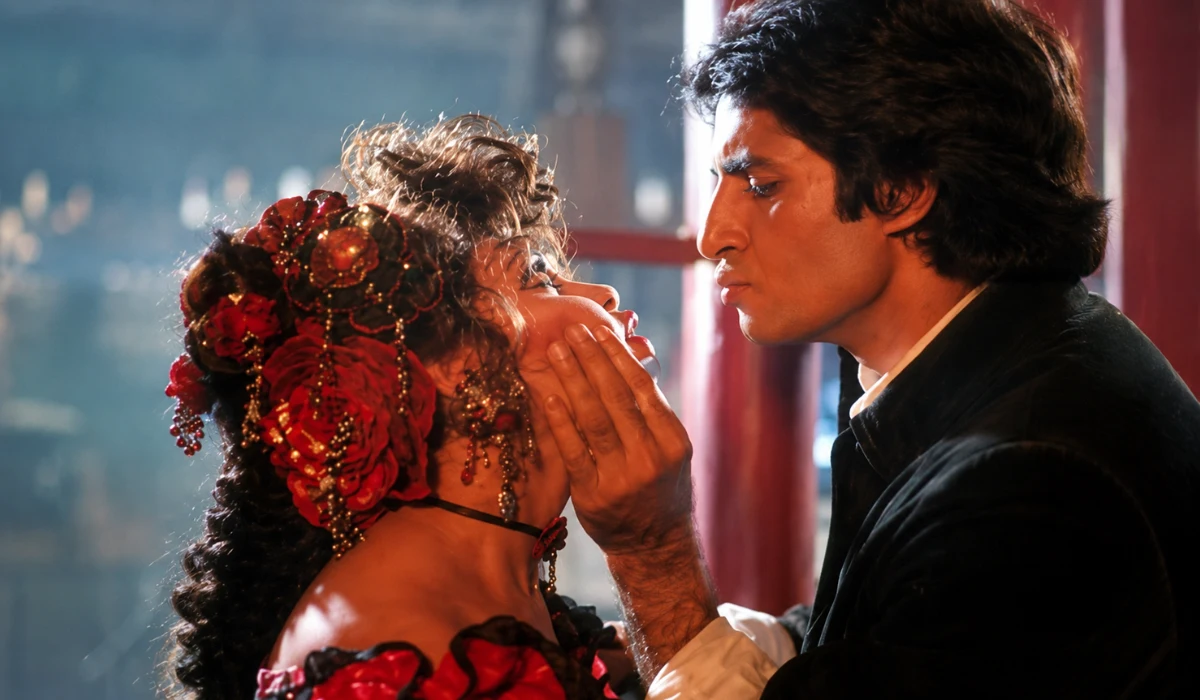
Prakash, speaking in a recent interview recalled by entertainment outlets, described a sequence involving a high-pressure water nozzle during the filming of Jumma Chumma De De from the 1991 film Hum. What looked like a playful cinematic moment on screen, he said, was far harsher behind the camera. Katkar, who was positioned alone on one side of the setup, was allegedly thrown nearly 20 feet by the force of the water and injured during the take. Shooting had to be halted after she fell and began crying, according to his account.
The anecdote is striking not just because it punctures the glamour of a beloved song, but because it speaks to a larger truth about Hindi cinema’s past: some of its most iconic moments were created in an era when safety protocols, stunt supervision and on-set communication were far less formalised than they are today.
What happened during the Jumma Chumma shoot
Prakash’s recollection centres on one specific section of the song, in which Amitabh Bachchan and Kimi Katkar perform amid water effects and a charged, carnival-like atmosphere. The choreographer said the setup used a fire-engine nozzle rather than a standard prop nozzle, and that the pressure of the water was stronger than the team anticipated.
According to his version of events, the imbalance in the staging made the sequence riskier than it looked: on one side, a group of men — including Bachchan, junior artistes and crew — were holding the nozzle setup; on the other, Katkar was alone. When the water was released during the first take, the force reportedly sent her flying backward.
Prakash’s description is vivid and unsettling because it turns a familiar frame from a mass entertainer into a reminder of how physical performance in mainstream Indian cinema often came with invisible risk, especially for actresses expected to keep dancing, smiling and performing through difficult conditions.
He also recalled that the shoot took place at Mukesh Mills in Mumbai, a location with its own logistical challenges. The water mechanism, he said, was being operated from another level, and this was a pre-digital production environment — no walkie-talkies, no instant shut-off coordination, no quick communication between floors. In practical terms, that meant the crew could not immediately stop the water the moment someone yelled “cut.”
That detail matters. It suggests the problem was not simply a “tough shoot,” which many stars from earlier generations have spoken about with a kind of nostalgic pride. It was a shoot where the margin for error was uncomfortably high.
Why this story matters beyond nostalgia
Stories like this often get filed away as old-school Bollywood lore: “the set was chaotic,” “everyone pushed through,” “that’s how films were made then.” But reducing the incident to trivia misses what makes it relevant now.
First, it shows how spectacle in 1980s and early-1990s Hindi cinema was often built on improvisation rather than tightly controlled production safety. Large-scale songs were mounted with enormous extras, practical effects, heavy equipment and punishing schedules. Those songs remain central to Bollywood’s cultural memory, but the labour and risk behind them were rarely documented with the same enthusiasm as the finished product.
Second, the anecdote re-centres Kimi Katkar, who is often remembered in shorthand as the glamorous co-star of Hum and the face opposite Bachchan in Jumma Chumma. What gets lost in that shorthand is the physical demand of such performances. In Prakash’s telling, Katkar was injured, the shoot stopped, and yet she continued working. In another era, that perseverance may have been narrated as professionalism. In a contemporary reading, it also raises uncomfortable questions: How much choice did actresses really have on big sets? How often was “professionalism” simply another word for enduring unsafe conditions?
Third, the story lands at a moment when film industries globally are more willing to talk about workplace standards, performer safety, consent and risk management — not just in stunt scenes, but in songs, crowd sequences and action-adjacent choreography. Bollywood has modernised significantly, but retrospective stories like this are useful because they show what that progress had to correct.
The paradox of Jumma Chumma: iconic, excessive, and nearly too much
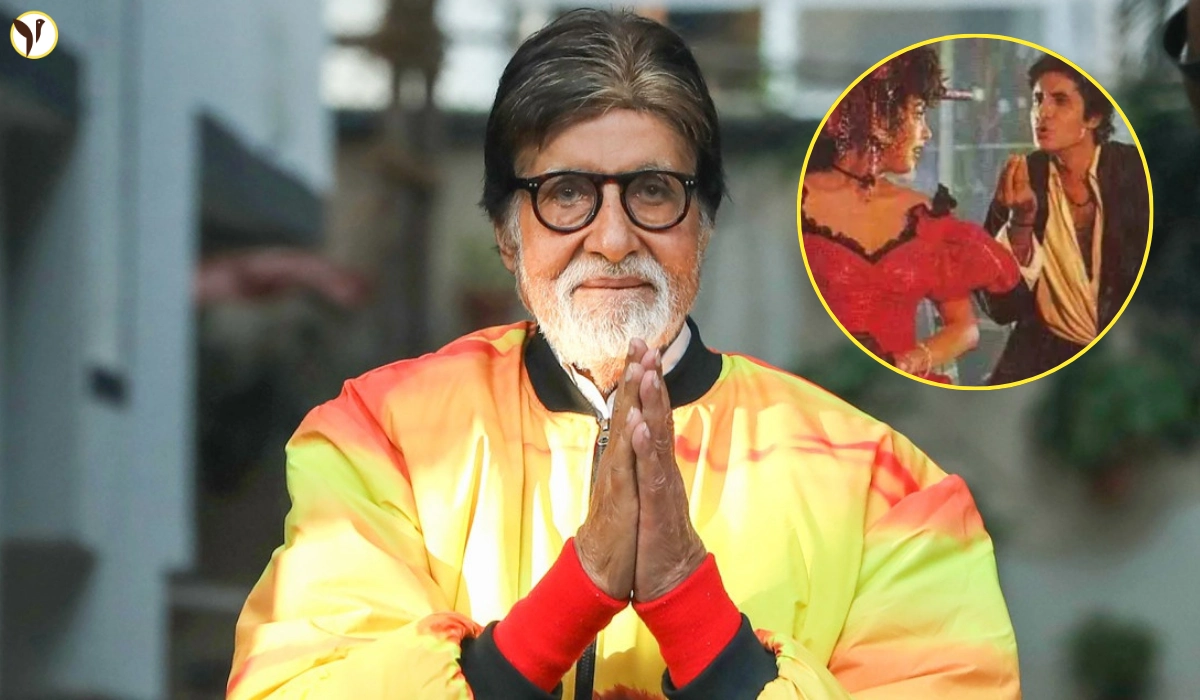
There is another layer to the Jumma Chumma story that helps explain why it has stayed in public conversation. Chinni Prakash has also said Amitabh Bachchan was initially hesitant about the song’s hook step, worrying it might look vulgar or awkward on his tall frame. That detail is revealing because it captures a tension at the heart of the number: the song was designed to be bigger, brasher and more theatrical than the average film track of its time.
In other words, Jumma Chumma was always pushing at the limits of scale and image. It wanted to be unforgettable. And it succeeded.
That ambition is part of what makes the safety anecdote believable in a broader production sense. Songs like this were not shot as gentle interludes. They were engineered as event sequences — high-energy spectacles with crowds, props, costume gimmicks, camera movement and often physically demanding repetition. Prakash has said Bachchan himself kept pushing through multiple takes despite health challenges and the complexity of the shoot. That determination is part of the legend of the song, but it also underscores the intensity of the working environment.
A quick timeline: how the story resurfaced
|
|
|
|
|
|
|
|
|
|
|
|
|
|
|
|
|
|
|
|
Kimi Katkar’s role in the story deserves more attention
One reason this anecdote resonates is that it subtly exposes a familiar imbalance in how Bollywood history is told. The enduring headline is usually the superstar’s: Amitabh Bachchan’s song, Amitabh Bachchan’s dance move, Amitabh Bachchan’s comeback moment, Amitabh Bachchan’s hesitation about the choreography. But the most arresting new detail in this case is about the actress on the set — Kimi Katkar — and the fact that a celebrated song sequence apparently left her hurt.
That does not diminish Bachchan’s place in the song’s legacy. It simply shifts the lens. Film songs are collaborative productions, and when new information emerges, it is worth asking whose experience has been missing from the story all along.
Katkar has not, in the reporting around this anecdote, publicly re-narrated the incident herself in detail. That means the available account is still largely Prakash’s recollection, and any responsible retelling should make that clear. But even with that caveat, the anecdote adds a crucial layer to the cultural afterlife of Jumma Chumma: behind the famous beats and choreography was a production environment that may have put one of its performers in harm’s way.
#AmitabhBachchan's presence alone is enough to command attention. Timeless, iconic, and effortlessly legendary—some stars simply shine brighter. ❤️📸#thefilmycharcha pic.twitter.com/spSi2HWwFQ
— The Filmy Charcha (@thefilmycharcha) June 21, 2026
What this says about Bollywood then — and now
There is a temptation, especially with legacy stars and beloved songs, to frame every rediscovered anecdote as charming trivia. This one resists that treatment. It belongs to a larger archive of stories from older Hindi film sets — stories of injuries, punishing schedules, ad hoc effects and performers expected to simply carry on.
The industry has changed. Modern productions, especially high-budget ones, are more likely to involve dedicated action teams, medical support, safety briefings, stunt coordinators and tighter on-set controls than films from the late 1980s and early 1990s did. That does not mean accidents have disappeared, but it does mean there is now a stronger vocabulary for discussing accountability.
The significance of the Jumma Chumma anecdote, then, is not that it “spoils” a classic song. It does the opposite: it makes the song legible as a piece of labour, not just entertainment. It reminds viewers that spectacle has a cost, and that cost is often borne by performers whose discomfort never reaches the final cut.
What happens next
In all likelihood, this story will continue to circulate as part of the endless fascination around Amitabh Bachchan’s filmography and the making of his iconic songs. But its most useful afterlife may be as a prompt for better entertainment reporting: less fixation on nostalgia for nostalgia’s sake, and more interest in how films were actually made, who took the risks, and what those stories reveal about the industry’s evolution.
For audiences, the takeaway is not to stop enjoying Jumma Chumma. It is to watch it with a fuller understanding of what Hindi cinema once demanded from the people on screen — especially women whose contribution to iconic songs has too often been flattened into glamour alone.
Seen that way, the story behind the song is bigger than one uncomfortable anecdote. It is a small but telling window into an era of Bollywood where the show had to go on, even when the set itself may not have been safe enough.
Other Articles to Read: