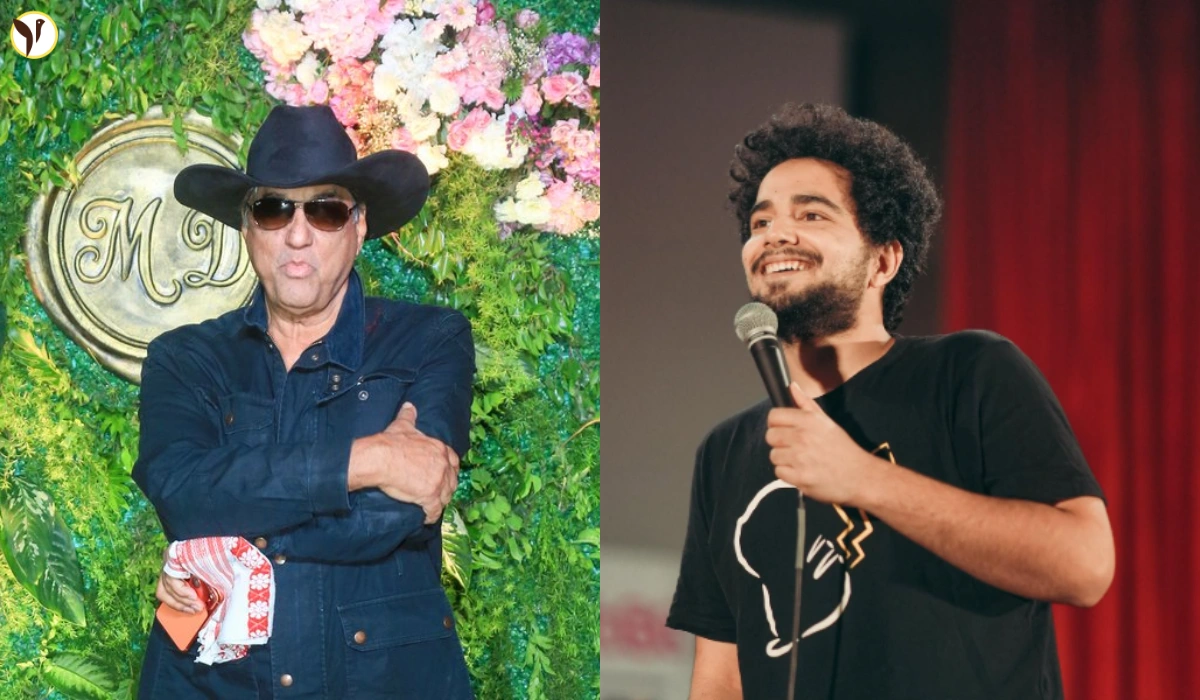


He once called the comedian "kutte ki dum" and suggested a national donkey parade. Then came the commercial. As India's Got Latent Season 2 arrives on Netflix, the real story is about what changes — and what doesn't.
There is an old saying in Indian television: no one stays angry forever when the cameras are rolling. Mukesh Khanna, the man who played Shaktimaan for eleven years, would probably disagree with that. Until very recently, he seemed to be breaking the rule himself — holding one of the loudest, most colourful grudges in recent Indian entertainment memory. The target: comedian Samay Raina, the 27-year-old chess-player-turned-YouTube-sensation who once ran India's Got Latent, the chaotic digital talent show that became as famous for its controversy as for its comedy.
Then, on June 20, 2026, India's Got Latent Season 2 quietly premiered — simultaneously on Netflix and YouTube — and something stranger than fiction had already occurred: Mukesh Khanna had appeared alongside Samay Raina in a commercial. The man who had called Raina "kutte ki dum," who had demanded a national donkey parade through Indian cities as punishment for the comedian's sins, had decided to share a frame with him after all.
To understand why this matters — and why it encapsulates something important about how Indian digital culture processes scandal, outrage, and forgiveness — you have to go back to where everything broke down.
The Collapse: February 2025
India's Got Latent had the kind of organic rise that television producers spend millions trying to manufacture. Launched in June 2024, the show — hosted and self-produced by Raina — essentially combined the structure of talent shows like Got Talent with the freewheeling roast energy of American podcast shows like Kill Tony. Contestants performed unusual, niche, or absurd "latent" talents; celebrity judges rated them; comedians roasted everything in sight. The format generated a massive, fiercely loyal audience that felt like it was watching something television could never broadcast.
The trouble arrived in the sixth bonus episode, recorded in early February 2025, when podcaster Ranveer Allahbadia — known online as BeerBiceps — appeared as a guest judge. During the show, Allahbadia posed a question to a contestant that was so gratuitously offensive it triggered a nationwide reaction: multiple FIRs, an inquiry by the National Commission for Women, police investigations across several states, and a parliamentary mention.
Raina, who had hosted and produced the episode, bore the legal weight alongside Allahbadia and fellow panelist Apoorva Mukhija. On February 12, 2025, he removed every episode of India's Got Latent from his YouTube channel and issued a statement saying he would cooperate fully with authorities. The show — at that point one of the most-watched YouTube properties in India — went dark overnight.
The Full Timeline: From Controversy to Comeback
|
|
|
|
|
|
|
|
|
|
|
|
|
|
|
|
|
|
|
|
|
|
|
|
|
|
|
|
|
|
|
|
|
|
|
|
|
|
|
|
|
|
|
|
The Loudest Critic: Mukesh Khanna Enters the Chat
For most of 2025, the internet's moral reckoning with India's Got Latent proceeded in the usual cycles — outrage, debate, slow forgetting. What recharged the conversation was Raina's own intervention: his stand-up special Still Alive, which arrived on April 7, 2026, and functioned less as an apology than as a counter-attack. In it, Raina addressed the fallout from the IGL scandal with characteristic dark humour, discussed his mental health struggles during the exile period, and — crucially — roasted several public figures who had piled on during the controversy. One of them was Mukesh Khanna.
Raina had referenced Shaktimaan in his special, joking about how even the beloved 90s superhero had come after him in the aftermath of the controversy. Khanna, who guards the legacy of Shaktimaan with a devotion that has become the stuff of internet legend, took the bait.
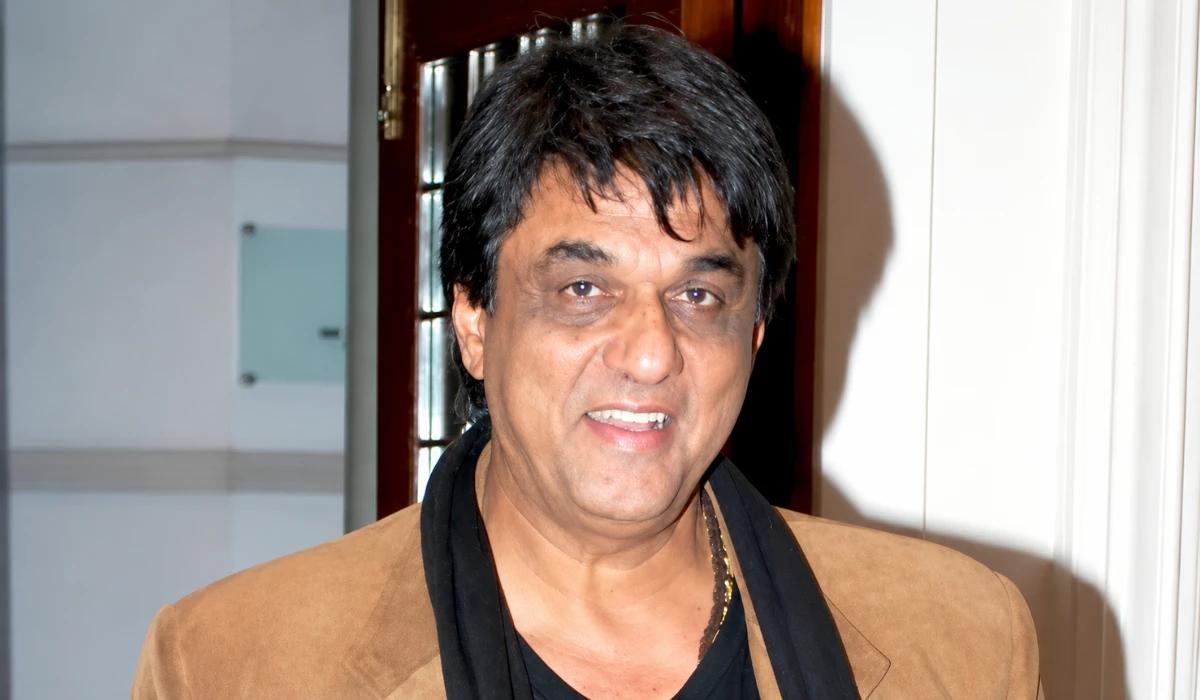
"Kutte ki dum tedhi rehti hai. Use lakh sheeshiyon mein rakho, baahar nikalo, phir tedhi ki tedhi. Samay Raina ki bhi ek dum hai. Kitna bhi maaro, seedha karo, woh wapas tedhi ho jaati hai."
The Pivot Nobody Saw Coming
What makes the Mukesh Khanna arc genuinely surprising — and genuinely worth examining — is how quickly it reversed. Within weeks of the "donkey parade" statement, as India's Got Latent Season 2 was announced and the internet began building momentum around Samay Raina's revival, Khanna appeared in a commercial alongside the very comedian he had publicly condemned.
The response online was swift and, frankly, predictable: a wave of screenshots, side-by-side comparisons, and accusations of rank hypocrisy. "Mukesh Khanna was brutally abusing Samay Raina for 'destroying culture' just a few days back. Today, Shaktimaan is happily shooting a commercial with the same Samay Raina," read one widely shared post. Others were more pointed: "Where is his respect now?"
Neither Khanna nor Raina has issued a public statement explaining the collaboration or addressing the apparent contradiction. As of publication, neither has confirmed whether this represents a genuine personal reconciliation or simply a professional engagement conducted in parallel to their very public feud.
‘Shaktimaan bik gaya’: Mukesh Khanna works in new ad with Samay Raina after saying ‘he should be paraded on donkey’https://t.co/3XOpHHX2Hi
— Hindustan Times (@htTweets) June 22, 2026
What India's Got Latent Season 2 Actually Means
Whatever the private truth of the Khanna-Raina détente, the larger significance of India's Got Latent's return is harder to dismiss. The show's Season 2 is not simply a YouTube comeback — it is a Netflix original, a milestone that marks the first time a major global streaming platform has co-produced and simultaneously aired a digital creator's show alongside their own YouTube channel.
Netflix and Samay Raina confirmed the creative collaboration on June 19, 2026 — one day before the premiere. The announcement confirmed that IGL Season 2 would drop every two weeks, with identical cuts available on both platforms at the same time, giving viewers complete freedom of choice. Netflix is also developing an exclusive, separate Raina comedy special, further details of which are to be announced. The dual-platform strategy, Netflix noted, is "unusual in India's streaming market, where creators and platforms typically compete for exclusivity."
India's Got Latent: Season 1 vs Season 2 — Key Differences
|
|
|
|
|
|
|
|
|
|
|
|
|
|
|
|
|
|
|
|
|
|
|
|
|
|
|
|
|
|
|
|
The Deeper Pattern: Outrage as Prologue
Samay Raina's return — and the Mukesh Khanna story that frames it — speaks to something broader about how Indian digital culture handles scandal. In the traditional entertainment industry, a controversy of the scale that engulfed India's Got Latent in early 2025 would likely have ended careers. The combination of FIRs, political pressure, media pile-on, and audience backlash would have been professionally terminal.
But the creator economy operates on different physics. Raina's disappearance from public life was not read purely as shame — it was also read as authenticity. His return, through Still Alive, gave him a vehicle to reframe the narrative entirely. The special, which garnered more than 43 million views within weeks, wasn't a conventional mea culpa. It was Raina doing what Raina does: using the controversy as material, converting damage into comedy, and banking on an audience willing to separate the man from the moment.
Mukesh Khanna's trajectory is, if anything, even more instructive. His attacks on Raina were themselves widely mocked — the "donkey parade" imagery was treated as unintentional comedy by much of the internet, and his eventual appearance in a commercial with Raina was read as proof that moral outrage in India's entertainment world has a predictably short shelf-life when opportunity presents itself. Whether that reading is fair to Khanna is almost beside the point. The pattern is the story.
What Happens Next
The central question now is whether India's Got Latent Season 2 can separate itself from the shadow of Season 1's implosion, or whether it will lean into it. Early signals suggest the latter: the show's promotional material has not shied away from the controversy, and Raina's own comments in Still Alive suggest he views the chaos as an asset rather than a liability. The Season 2 production upgrade — from local stages to a large theatrical studio — indicates that at minimum, the show arrives with more infrastructure than before.
The Netflix partnership, however, introduces a new variable. YouTube's content moderation and Netflix's standards are not identical, and the addition of a major global platform as co-distributor will inevitably place fresh constraints on the kind of unfiltered content that made IGL famous in the first place. Whether Raina can maintain the show's anarchic energy within those parameters is the genuine creative challenge of Season 2 — and one that no amount of controversy management can resolve for him in advance.
As for Mukesh Khanna and Samay Raina: neither has spoken about what the commercial actually means. Perhaps that silence is the most honest statement either could make. In an industry where opinions travel faster than consequences, a shared frame is sometimes the loudest declaration of all.
Other Articles to Read: