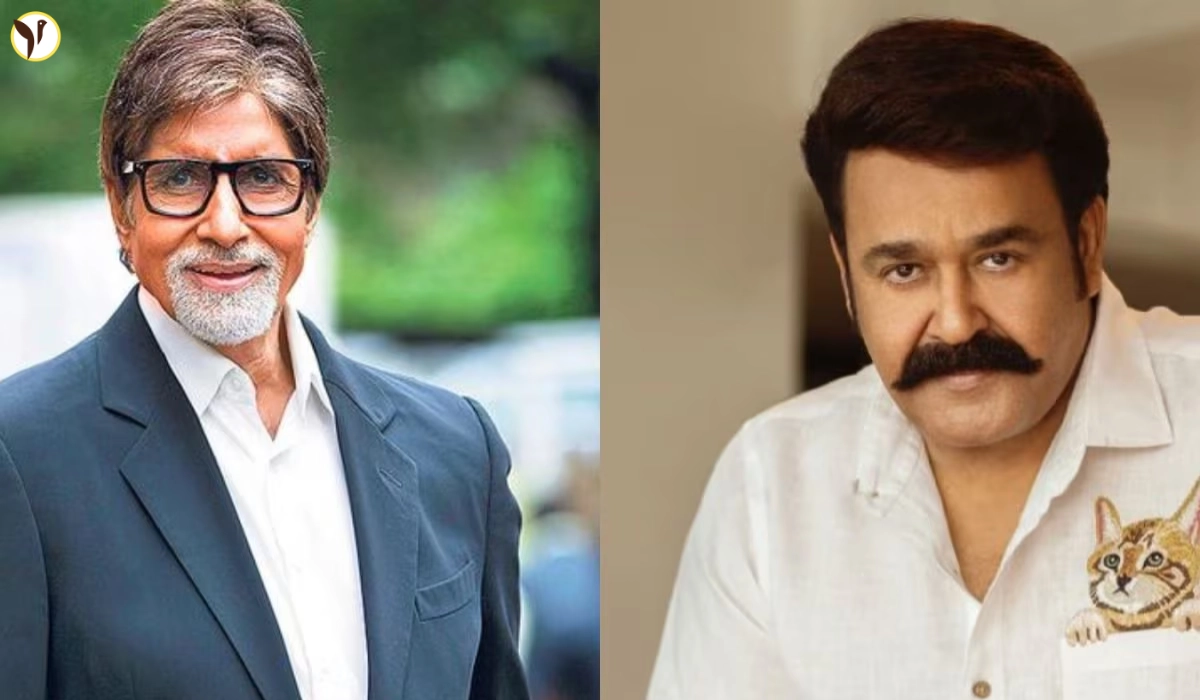


In an era where AI deepfakes and digital misuse threaten personal brands, Indian celebrities from Amitabh Bachchan to Mohanlal have turned to courts to safeguard their personality rights. These legal battles highlight a growing crisis in identity protection, blending privacy concerns with commercial interests.
From Amitabh Bachchan to Mohanlal, a wave of Indian celebrities has marched into the Delhi and Bombay High Courts, seeking urgent injunctions against the AI-powered theft of their identity. What began as scattered individual cases has, by 2025–26, become a defining legal movement — one that is quietly reshaping how India thinks about digital rights, personality, and the limits of artificial intelligence.
What Is "Personality Rights" — And Why Does It Matter Now?
Before diving into the cases, it helps to understand what these stars are actually fighting for.
Personality rights safeguard individual control over their identity — name, image, voice, signature, and likeness — when used publicly or commercially. These rights have two major components: the Right to Publicity, which prevents commercial misuse without consent, and the Right to Privacy, which guards against deepfakes, morphed visuals, and fake endorsements.
Crucially, Indian intellectual property laws still do not define "celebrity" or "personality rights." The Copyright Act, 1957 recognises "performers" and grants special rights under Section 38, but there is no dedicated statute. Courts have had to improvise — and they've done so with remarkable speed and clarity.
The trigger for this judicial urgency? The volume of deepfake materials escalated from approximately 500,000 in 2023 to 8 million in 2025 — a 16-fold explosion in just two years. India, with over 750 million smartphone users and social media platforms that can spread content to millions within minutes, is particularly exposed.
The Landmark Cases: A Star-by-Star Breakdown
Amitabh Bachchan — The Case That Started It All (2022)
The modern era of celebrity personality rights litigation in India begins with one name.
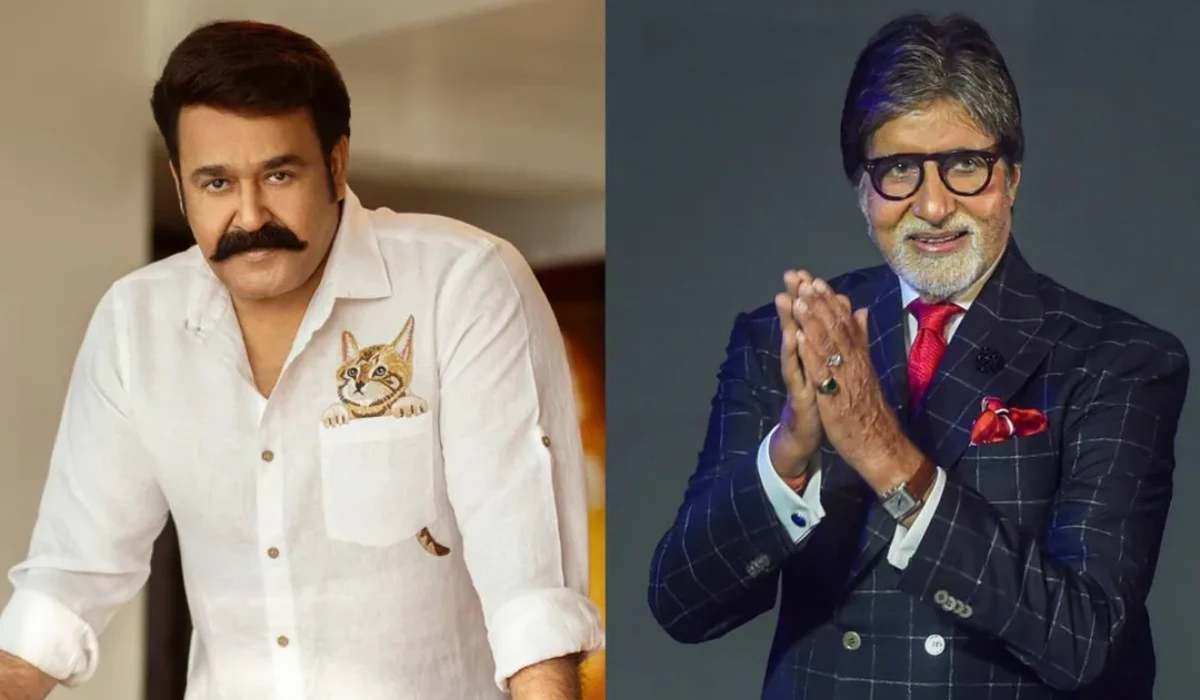
In Amitabh Bachchan v. Rajat Nagi (2022), the Delhi High Court granted an injunction in the form of a John Doe order against the use of his persona, safeguarding his personality rights by clearly recognising Bachchan's right to control the use of his name, voice, and images for commerce.
The Delhi High Court's comprehensive John Doe order acknowledged that systematic misuse of celebrity status through deepfake technology for fraudulent schemes causes irreparable harm. This was not merely a win for a film star — it was the founding precedent that every subsequent case has built upon.
Anil Kapoor — Protecting a Catchphrase (2023)
Anil Kapoor obtained a Delhi High Court order in 2023 to stop unauthorised use of his name, voice, and iconic catchphrase "jhakaas." This was a notable expansion of what personality rights can protect — not just a face or a name, but the distinctive verbal expressions that define a star's public persona.
Jackie Shroff — "Bhidu" Goes to Court (May 2024)
Jackie Shroff moved the Delhi High Court seeking protection for his personality rights, including his famous nickname "Bhidu." Justice Prathiba M. Singh granted an interim injunction on May 15, 2024, restraining entities from commercially exploiting the actor's name, voice, dialogues, and signature style.
The judgment explicitly addressed AI misuse, with the court stating that personality rights must extend to protecting individuals from technological manipulation and unauthorised AI-generated content.
Aishwarya Rai Bachchan — The Dignitary Battle (September 2025)
Perhaps the most visceral case in this entire wave. Aishwarya Rai Bachchan's plea alleged that manipulated visuals, created through deepfake and artificial intelligence tools, were being circulated online in sexually explicit form. Her senior advocate told the court: "Her name and image are being used to satisfy someone's sexual desires. This is very unfortunate."
The court proceeded against the dissemination of morphed pornographic deepfakes and illicit sales of merchandising, underscoring the necessity for such exploitation to be addressed. The court provided an ex parte ad interim injunction, directing a takedown of the offending URLs.
This case signalled a grim escalation: for female celebrities, the misuse had moved beyond financial fraud into something far more violating.
Hrithik Roshan — AI Impersonation Goes Industrial (October 2025)
In an order passed on October 15, 2025, the Delhi High Court restrained John Doe defendants from utilising Hrithik Roshan's name, likeness, image, voice, personality or any other aspects of his persona to create any merchandise, misuse using Artificial Intelligence, deepfakes, machine learning, face morphing or GIFs for commercial purpose.
One defendant, Jammable Limited, operated a website that enabled its users to create audio clips in Roshan's voice through artificial intelligence. Platforms named included Meta, Google, Telegram, eBay, and Amazon — indicating just how industrialised and cross-platform the misuse had become.
Mohanlal — South India Joins the Fight (March–April 2026)
The most recent major case involves the Malayalam superstar, signalling that this is no longer just a Bollywood concern.
The Delhi High Court issued an ex parte injunction to stop the unauthorised commercial use of actor Mohanlal's name, image, and voice online. It ordered e-commerce sites and social media platforms to remove infringing content and merchandise within 36 hours.
The case reflects a broader trend before the Delhi High Court, where several public figures — including actors, sportspersons, journalists, and spiritual leaders — have approached the court seeking protection of their personality rights against unauthorised use.
How Courts Are Acting Without a Dedicated Law
One of the most remarkable aspects of this story is that India has no dedicated "personality rights" statute. Yet courts have consistently delivered strong relief. How?
The absence of a statutory framework for the protection of personality rights has not dissuaded Indian courts from granting robust remedies. Indian courts have protected the proprietary aspects, recognising not only commercial interests for celebrities, but also the dignity and autonomy of individuals in the digital age.
The legal toolkit courts have assembled includes:
- Article 21 of the Constitution (Right to Life and Personal Liberty) — interpreted to cover dignity and privacy in the digital age
- Common law passing off — unauthorised use of someone's identity for commercial gain confuses the public and amounts to passing off
- Copyright Act, 1957 (Section 38) — performer's rights
- Trade Marks Act, 1999 — protection of distinctive personas as marks
- IT Act, 2000 (Sections 66C, 66D, 66E) — identity theft, cheating by impersonation, privacy violations
Courts have started using "John Doe" orders (also called anonymous injunctions), representing all unknown perpetrators until their real identities are revealed — a practical workaround for the fact that deepfake creators often operate anonymously from foreign IP addresses.
Why the Surge? The AI Factor
The numbers tell the story bluntly. Open-source voice cloning algorithms can create remarkably accurate audio within seconds with just a small amount of audio input. Platforms powered by such models can boast voice cloning accuracy of 95%, making it incredibly easy for anyone, regardless of technical expertise, to imitate the voice of any public figure, actor, or singer.
Deepfakes, voice cloning, and synthetic endorsements spread at speed. They reach millions within minutes. The gap between a bad actor creating a fake endorsement video and a fraudulent product reaching thousands of consumers has collapsed to hours.
The financial stakes are enormous too. When a celebrity's face is used to promote a scam supplement or a fraudulent investment scheme, victims lose real money while the star's reputation takes the collateral damage. Courts have recognised this as irreparable harm — which is why they've been willing to grant same-day injunctions.
What Happens Next: The Road India Must Travel
The judicial activism has been admirable, but it is reactive by nature. IT Minister Ashwini Vaishnaw announced that comprehensive deepfake regulations would be introduced "very soon," emphasising a "techno-legal approach." However, critics note that similar promises made in 2023 remain unfulfilled.
What India urgently needs:
1. A Dedicated Personality Rights Statute — Clear definitions, penalties, and licensing frameworks rather than patchwork common-law remedies.
2. Platform Liability Reforms — Following court orders, Meta has developed automated content removal systems and Google has implemented AI-generated content disclosure requirements — but these came under judicial compulsion, not voluntary compliance.
3. Faster Enforcement Mechanisms — Most court orders give platforms 36–72 hours to remove content. But by then, a deepfake video can have millions of views.
4. Protections for Ordinary Citizens — Every case above involves a famous name. But voice cloning fraud has already hit ordinary citizens. The Cyber Cell of the Kerala Police documented a case as the first reported cheating case in the state where scammers used AI to fake videos — targeting a 72-year-old man, not a film star.
#India | Amitabh Bachchan To Mohanlal: Stars Who Sought Legal Protection Over Their Identityhttps://t.co/ySqLtEEJUR
— News18 (@CNNnews18) May 8, 2026
The Bigger Picture: Identity in the Age of AI
A slow walk in dark sunglasses and a gravelly voice evokes Amitabh Bachchan. A persona is not limited to a name or a photograph — it is a blend of voice, expressions, gestures, style, and cultural recall. In 2025, Indian courts treated this blend as a valuable legal interest that demands strong protection.
That framing matters. Because once courts establish that a celebrity's persona — their voice, their gait, their catchphrase — is a legally protectable asset, it creates precedent that eventually trickles down to protect everyone's digital identity.
The stars going to court aren't just protecting endorsement revenues. They're establishing, case by painstaking case, that in the age of generative AI, your identity belongs to you.
Other Articles to Read:
- Sonam Kapoor Just Proved That One Decade Of Love Is Better Than Any Bollywood Movie
- Saif Ali Khan Reunites with Shah Rukh Khan in Kartavya: 'I Look Up To Him'
- Daadi Ki Shaadi Review: A Simple Story With a Surprisingly Powerful Message
- Is Samay Raina Finally Bringing Back India’s Got Latent Season 2 On May 9
- Uri Actress Riva Arora Exposes Shocking Harassment by Blinkit Agent
- Shakti Kapoor Shuts Down Fake Death With Rumour Strong Response