



In the summer of 1998, as the Nilgiri Mountain Railway chugged its way through the lush, mist-laden valleys of Ooty, a piece of cinematic history was being filmed under highly precarious conditions. Today, "Chaiyya Chaiyya" from Dil Se.. is globally recognized—recently experiencing a massive resurgence when it was featured in the Hollywood blockbuster Monkey Man. Yet, the enduring image of Shah Rukh Khan and Malaika Arora dancing atop a moving train almost never materialized in the way we remember it.
The hidden mechanics of Bollywood’s most iconic dance number reveal a fascinating story of artistic vision colliding with the immutable laws of physics. Because of a specific requirement involving a 100kg weight constraint, Malaika Arora ultimately snatched Farah Khan's originally envisioned concept for the song, altering the trajectory of Bollywood "item numbers" forever.
The Original Vision: Defying Aesthetic Conventions
To understand the magnitude of this casting shift, one must look at Farah Khan’s initial choreographic vision. In the late 1990s, the standard template for a female presence in a high-energy dance sequence was deeply entrenched in specific tropes—typically a heavily styled, traditional heroine or a stereotypical "vamp." Farah Khan, who had recently transitioned from an assistant to a full-fledged choreographer, wanted to shatter this mold.
During initial conceptualization, Khan envisioned a stark visual contrast for "Chaiyya Chaiyya." She wanted to pair the lean, agile Shah Rukh Khan with a conspicuously heavy female dancer—specifically someone weighing around 100kg. The intent was not comedic, but rather to create a jarring, avant-garde visual dichotomy. It was a bold artistic choice aimed at challenging the industry’s rigid beauty standards and creating a sequence that was visually unforgettable purely through its unconventional aesthetics.
However, translating an artistic vision into a physical reality on top of a moving locomotive introduced variables that no amount of creative enthusiasm could override.
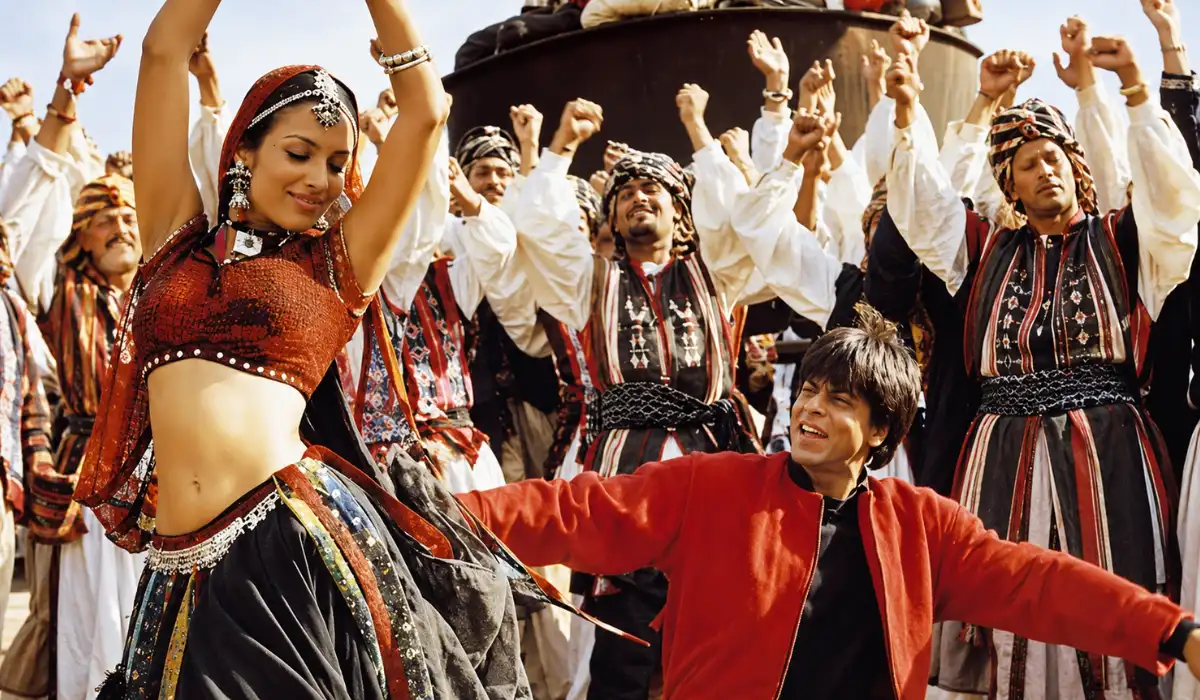
The Logistical Reality: Physics on the Nilgiri Mountain Railway
The decision to shoot "Chaiyya Chaiyya" on the actual Nilgiri Mountain Railway—a UNESCO World Heritage site known for its narrow gauge and steep, winding tracks—was a logistical nightmare. Unlike a controlled studio environment where the camera, the subjects, and the elements can be managed, a moving train in the Western Ghats introduced severe physical dangers.
Here is an analytical breakdown of the production constraints that dictated the final casting:
|
|
|
|
|
|
|
|
|
|
|
|
|
|
|
|
|
|
|
|
|
|
|
|
|
The primary concern was the center of gravity. A moving train, especially on winding mountain tracks, experiences lateral swaying forces. A dancer weighing 100kg performing rigorous, fast-paced steps would have an incredibly high center of gravity. If the train took a sharp curve, or if the dancer lost balance, the momentum generated by a 100kg body would likely result in a fatal fall. Furthermore, the narrow tunnels along the route meant that if an emergency occurred, the crew had mere seconds to pull someone to safety.
When presented with the risk assessment, director Mani Ratnam and the stunt coordinators made an executive decision: the 100kg concept was a liability they could not insure or safely execute.
#ShilpaShirodkar Says She Lost Chaiyya Chaiyya song with #ShahRukhKhan Because @TheFarahKhan Thought She Was Fat, Weighed 100 Kgs ⚠️⚠️⚠️
— Always Bollywood (@AlwaysBollywood) July 6, 2026
Shilpa said in a show, “Yes, actually Farah had come with the song to dance with #SRK , and she said, ‘This is the song, but I will give you… pic.twitter.com/2N3zo2GZ1w
The Pivot: How Malaika Arora Entered the Fray
With the original concept scrapped due to safety mandates, the production needed a replacement who could fulfill three distinct criteria: she had to be exceptionally light (to mitigate the gravity and wind issues), she needed immense physical stamina to dance on a moving surface for hours, and she required a distinct visual appeal to hold her own against a superstar like Shah Rukh Khan.
Enter Malaika Arora. In 1998, Malaika was primarily known as an MTV India VJ and a model. She was not a traditional Bollywood actress, which ironically aligned with Farah Khan’s underlying desire to break the conventional heroine mold. Weighing roughly half of the originally envisioned dancer, Malaika possessed the physical lightness required by the insurance and safety teams.
More importantly, she brought an effortless, westernized grace that contrasted sharply with the deeply traditional Sufi lyrics penned by Gulzar and the rustic composition by A.R. Rahman. Because the 100kg dancer was ruled out, Malaika didn't just step into a vacuum; she snatched the opportunity and redefined it. She infused the sequence with a brand of confident, stylized swagger that Bollywood had rarely seen in a standalone dance performance.
Why This Matters: The Redefinition of the "Item Number"
The ripple effects of this last-minute casting change extended far beyond the borders of Dil Se... To appreciate why this moment matters in the context of Hindi cinema, we must look at the evolution of the "item number."
Before "Chaiyya Chaiyya," item numbers were largely the domain of character actors or established heroines doing special appearances (like Helen in earlier decades, or Karisma Kapoor in "Zuba Zuba"). The women were invariably part of the film’s narrative fabric.
Malaika’s presence in "Chaiyya Chaiyya" introduced the archetype of the "modern outsider"—an independent, glamorous figure who exists purely to elevate the song's aesthetic value without being bogged down by the film's heavy plot (which in Dil Se.. dealt with terrorism and insurgency).
Had the 100kg dancer been used, the song would likely be remembered today as an eccentric, arthouse experiment by Mani Ratnam. By pivoting to Malaika, the song became a pop-cultural phenomenon. It standardized the concept that a music video within a film could be driven by a model-turned-performer whose sole purpose was visual and rhythmic impact. This blueprint directly paved the way for Malaika’s own "Munni Badnaam Hui" over a decade later, and established the careers of numerous other models who transitioned into headline-grabbing dance numbers (such as Nora Fatehi and Jacqueline Fernandez).
What Happens Next: The Enduring Legacy of a Compromise
Viewed through a modern lens, the story of "Chaiyya Chaiyya" is a masterclass in adaptable filmmaking. Farah Khan did not get her 100kg visual contrast, but she leveraged Malaika’s model-like precision to create a different kind of contrast—one between the gritty, dusty environment of the train and the polished, high-fashion aesthetic of the lead performers.
Today, this piece of cinema history has taken on a new life. With the inclusion of "Chaiyya Chaiyya" in Dev Patel’s Monkey Man, the song has been introduced to a global audience that is now dissecting its production. Modern stunt coordinators and filmmakers frequently cite this song as an example of a bygone era of Bollywood filmmaking—a time before stringent CGI and green screens, when physical risks were taken in real-world environments.
For Malaika Arora, that fateful casting pivot remains the bedrock of her decades-long career in the Indian entertainment industry. For Farah Khan, it stands as a testament to her ability to pivot her choreographic genius when physical reality intrudes upon artistic vision. And for the audience, it leaves behind a lingering question of "what if"—a fascinating parallel universe where a 100kg dancer balanced on the roof of a train, forever altering the aesthetic of Indian cinema.
The Anatomy of a Classic: Key Elements That Made the Song Work
To fully grasp why the song succeeded despite the massive conceptual change, it is helpful to isolate the non-human elements that held the sequence together:
- Santosh Sivan’s Cinematography: Sivan did not use heavy, modern stabilizers. The slight shakiness of the camera mirrors the actual movement of the train, grounding the viewer in the physical reality of the shoot.
- A.R. Rahman’s Rhythm: The driving, relentless beat of "Chaiyya Chaiyya" inherently mimics the rhythmic clacking of train wheels on a track, creating a subconscious synchronicity between the audio and the visual environment.
- Sukhwinder Singh’s Vocals: The raw, unpolished energy of Singh’s voice provided a masculine, earthy anchor that balanced the glamour introduced by Malaika’s visual presence.
Other Articles to Read: