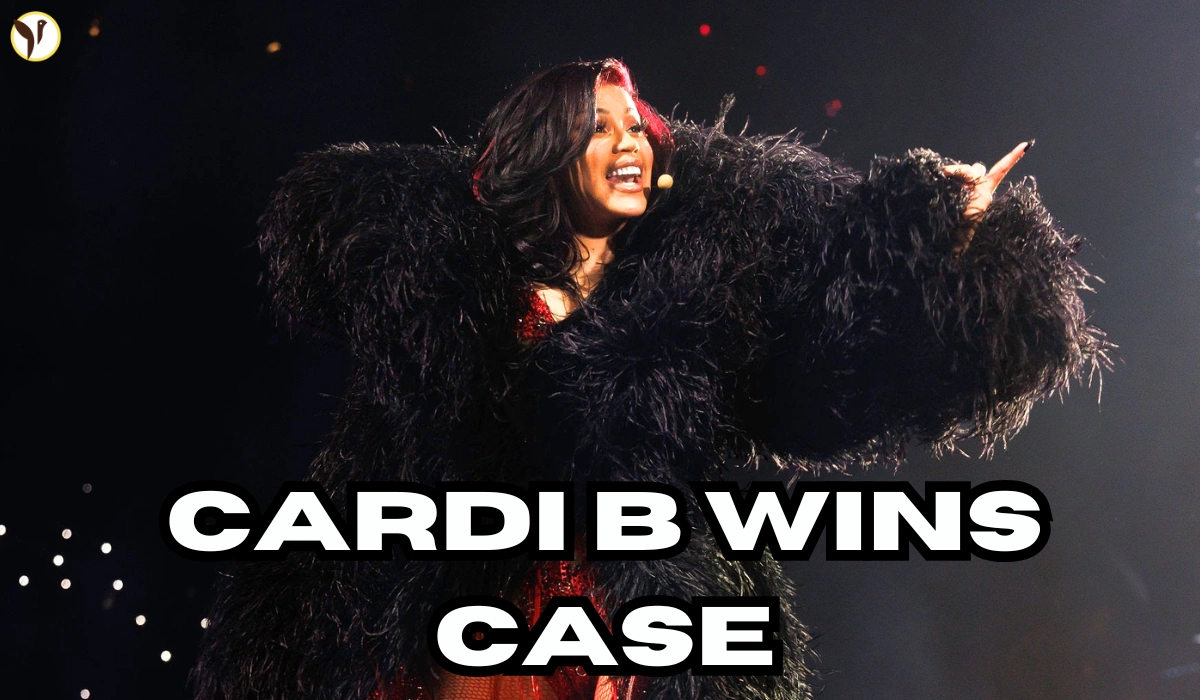


You’ve probably seen songs disappear overnight due to legal disputes. That’s exactly what fans feared with Enough (Miami)—but that scenario is now off the table. A federal judge has dismissed the copyright lawsuit against Cardi B, confirming the track can continue streaming, performing, and earning without restrictions.
The decision doesn’t just protect one song. It reinforces how music copyright works in an era where short hooks and viral sounds dominate charts.
What exactly happened in the lawsuit
The legal dispute began in early 2025 when an independent artist claimed that Cardi B’s track copied a hook from his earlier release linked to Reservation Dogs.
The accusation focused on a very small portion of the song. According to the claim:
- A short melody in the chorus sounded similar
- The rhythm pattern felt nearly identical
- The hook created confusion between both tracks
The plaintiff sought millions in damages and even asked the court to restrict the song’s distribution and performances.
But when the case reached federal court, the argument didn’t hold up under deeper analysis.
Why the judge dismissed the case
After reviewing both songs, the court focused on a core principle of copyright law: not everything in music is protected.
The judge concluded that:
- The disputed portion was extremely short
- The musical structure was widely used in the industry
- There was no clear evidence of intentional copying
Simple explanation
Music often relies on shared foundations like chords and rhythms. If those basic elements were protected, it would be nearly impossible for artists to create new songs.
Why this decision matters beyond one song
This ruling sends a strong signal across the music industry.
For artists and producers
- More creative freedom with hooks and short phrases
- Reduced fear of legal action over basic elements
- Faster releases without legal delays
For the industry
- Higher bar for future copyright claims
- More clarity around what qualifies as infringement
- Reduced misuse of lawsuits over minor similarities
In simple terms, it protects creativity without allowing overreach.
Cardi B’s track record in legal battles
If you’ve followed her career, you know this isn’t the first time Cardi B has faced legal scrutiny. But her overall record remains strong.
- Multiple copyright cases dismissed
- Some disputes settled without court rulings
- No major courtroom losses in copyright trials
This consistency reflects both strong legal strategy and the complexity of modern music disputes.
Streaming platforms and business impact
When copyright claims surface, platforms like Spotify and YouTube often prepare for possible takedowns.
That didn’t happen here.
- No interruption to streaming
- No freeze on royalties
- No removal warnings
This stability matters because even temporary removals can cost millions in lost revenue and audience engagement.
The bigger trend: Why music lawsuits are rising
You might have noticed an increase in music-related lawsuits over the past decade. There’s a reason for that.
Common reasons behind lawsuits
- Viral hooks that resemble older tracks
- High streaming revenue attracting claims
- Easier access to global music catalogs
Cardi B vence processo após produtores a acusarem de plágio na música “Enough (Miami)”, que acabou sendo ARQUIVADO.pic.twitter.com/nIdXjMmzn2
— POP C 🇧🇷 (@BRpopc) March 31, 2026
But courts are drawing a line
- Short phrases are usually not protected
- Common musical structures belong to everyone
- Only unique, original compositions qualify
This case reinforces those boundaries clearly.
Latest updates you should know
- The lawsuit has been fully dismissed by a federal judge
- No compensation awarded to the plaintiff
- Cardi B retains full rights to the track
- No restrictions on future performances or licensing
At this stage, no further legal escalation has been confirmed.
Other Articles to Read:
- Kathanar Trailer Out Jayasurya Brings Grand Dark Fantasy To India
- Tragedy in Bihar: 8 Women Killed in Nalanda Temple Stampede, Probe Ordered
- Who Is the Iran Parliament Speaker? Why He Rejected Trump’s Claim
- Splitsvilla X6 Himanshu Arora Breaks Silence: Why Did He Unfollow Diksha Pawar?
- The Teacher S3 Cast Revealed With Dark New School Drama
- Pink Elephant in Jaipur Was Not AI, Truth Behind Viral Photos Revealed
A defining moment for modern music law
The evolution of the music industry is illustrated by this instance. The current state of music moves at an incredible pace, trends develop around the world within a few hours and creative overlap is unavoidable.
The law is transitioning with the changes by providing protections surrounding originality while maintaining the availability of the basic elements of creativity to all of the creators.
For you, it provides for continual access to your favourite songs; for the Artist, it provides for a clearer set of rules within an increasingly complicated creative environment.
For Cardi B, it represents a clear legal success that helps to allow for ongoing growth in both her music and her career.