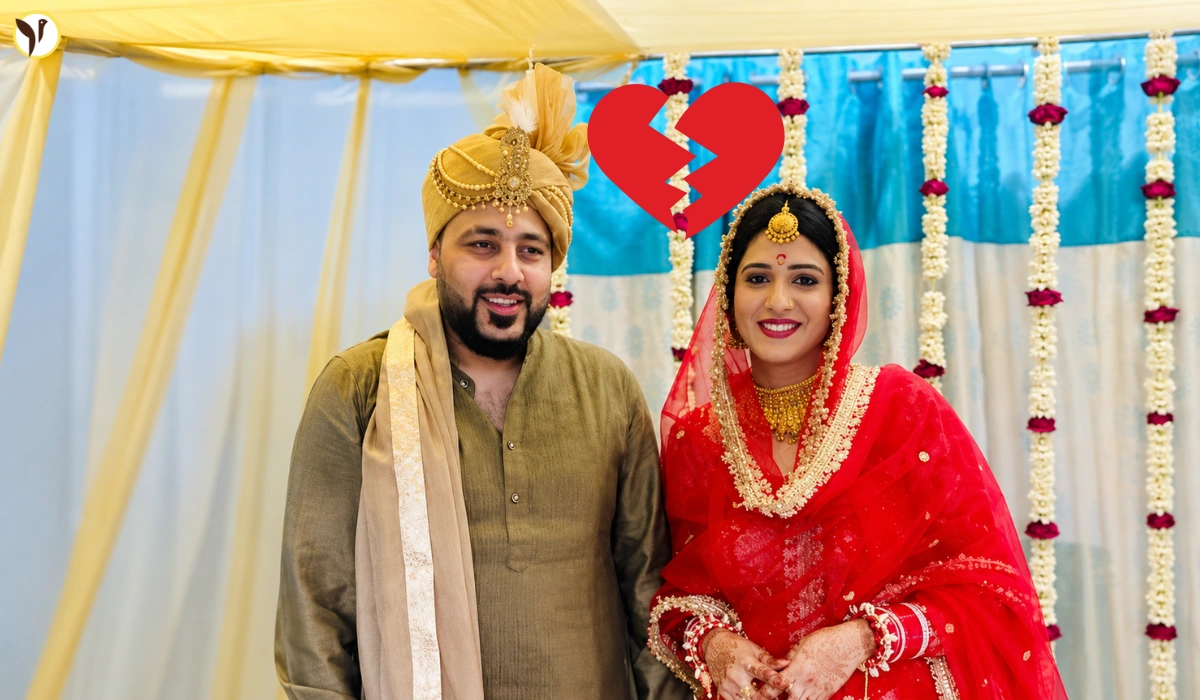


When rapper Badshah and Punjabi actress Isha Rikhi tied the knot in a deeply traditional Anand Karaj ceremony in February 2024, the public narrative was predictable. The headlines focused on the grandeur, the guest list, and the culmination of a high-profile romance. However, roughly four months into the marriage, Isha Rikhi stepped away from the curated perfection of celebrity unions to voice a sentiment that rarely makes it past the velvet ropes of the entertainment industry: she revealed her biggest fear, and it wasn't about infidelity, financial instability, or the pressures of fame.
Her fear was much more foundational. It was the fear of losing her individual identity to the overwhelming shadow of her husband’s stardom.
In an era where celebrity PR machinery works overtime to project marital bliss, Rikhi’s admission is a jolt of uncomfortable reality. It shifts the conversation from what marriage looks like to what it feels like when two people possess vastly unequal cultural currency. To understand why this matters, we have to look past the surface-level gossip and examine the complex sociology of modern Indian celebrity marriages.
A Union of Unequal Public Scales
Before dissecting the psychological weight of Rikhi’s statement, context is crucial. Badshah (born Aditya Prateek Singh Sisodia) is not just a musician; he is a cultural phenomenon. With billions of streams, a discography that dictates party playlists across the subcontinent, and stints as a judge on major reality shows, his brand is omnipresent.
Isha Rikhi, while a recognized face in the Punjabi film industry having starred in films like Jatt Boys Putt Jattan De and Happy Go Lucky, operates on a different scale of fame. When the two married, the immediate societal reflex was to rebrand her primarily as "Badshah’s wife." For a woman who spent years building an acting career, this involuntary rebranding is the psychological friction point.
What Exactly Is the Fear?
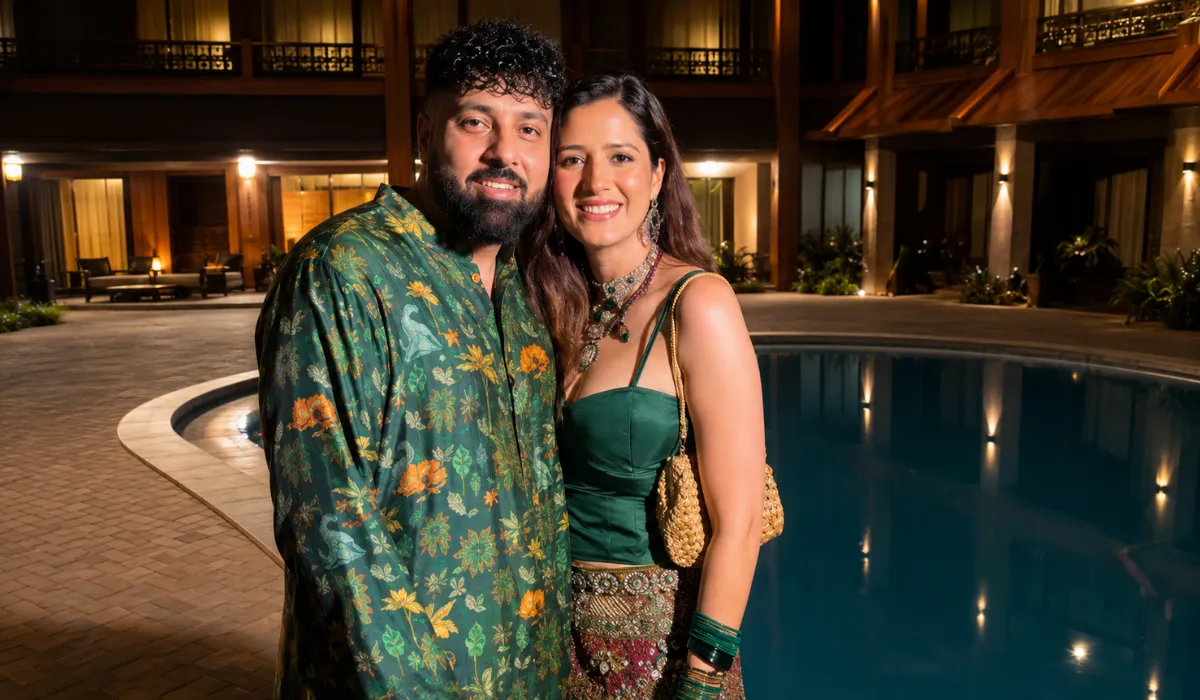
During a recent interaction, Rikhi articulated her anxiety with striking clarity. She expressed a profound fear that her own aspirations, her career, and her distinct personality would eventually be overshadowed by Badshah's colossal public persona. She fears waking up one day to realize she has become merely an appendage to his narrative, rather than the author of her own.
This is not insecurity. From a sociological standpoint, this is self-preservation.
When a woman marries a man whose first name is recognized in millions of households, the structural dynamics of the relationship inherently bend toward his orbit. Event organizers address her as his plus-one; journalists ask her about his music rather than her films; social media algorithms tag her in his fan pages. The fear Rikhi is voicing is the fear of "enmeshment"—a psychological state where boundaries between individuals dissolve, leaving one person's identity entirely consumed by the other's.
The Cultural Microcosm
Isha Rikhi’s vulnerability is significant because it acts as a microcosm for a broader generational shift among Indian women.
A decade ago, the unwritten rule for a woman marrying into a high-profile family—celebrity or industrialist—was silent assimilation. The "good wife" archetype required stepping back, managing the home, and playing the supportive background character. Today, women of Rikhi’s generation are entering marriages with established careers, financial independence, and a distinct sense of self. They are no longer willing to be subsumed.
By speaking out just four months into the marriage, Rikhi is setting a boundary in real-time. She is telling the public, and perhaps reminding herself, that she is Isha Rikhi first, and Badshah's wife second. This distinction is vital for her mental well-being and professional longevity.
Identity in High-Profile Marriages
To truly grasp the magnitude of Rikhi's fear, we must look at how female identity typically fares in high-profile Indian marriages. The transition from an independent professional to a celebrity spouse involves a severe loss of agency over one's public narrative.
Below is an analysis of how different female celebrities have navigated the "Identity Shadow" when marrying highly dominant male figures in the Indian public sphere.
|
|
|
|
|
|
|
|
|
|
|
|
|
|
|
|
|
|
|
|
|
|
|
|
|
|
|
|
|
|
Differentiation of Self
To understand why Rikhi’s fear is not just valid, but healthy, we can look to Dr. Murray Bowen’s family systems theory, specifically the concept of "Differentiation of Self."
Differentiation refers to a person's ability to maintain their sense of self while remaining emotionally connected to others. In a marriage where one partner is overwhelmingly famous, the less famous partner faces a constant external pull to become a "puppet" of the famous partner's narrative.
- Low Differentiation: The individual absorbs the identity of the famous spouse, loses touch with their own goals, and experiences anxiety when not in the spouse's vicinity.
- High Differentiation: The individual can say, "I love you, I support you, but I am not you. My work, my fears, and my path are my own."
By publicly acknowledging her fear of losing herself, Rikhi is demonstrating high differentiation. She is refusing to passively let the marriage overwrite her identity.
Badshah’s Role in This Narrative
It would be a disservice to frame this solely as Isha’s burden. In any marriage, the maintenance of a partner's individual identity is a joint project. Badshah’s response to this dynamic will dictate the health of their relationship moving forward.
Historically, the rapper has been known to be fiercely protective of his personal life, keeping his previous marriage and his daughter out of the media glare. With Isha, he has been slightly more public, but the true test of his partnership will be seen in his actions over the next few years.
Will he insist she accompanies him to every music launch and reality show set, reinforcing her role as his accessory? Or will he actively champion her return to Punjabi cinema, produce her projects, and step back when the spotlight needs to be on her? The latter requires a level of ego-death that is rare in the hyper-competitive music industry.
Navigating the Crucial First Year
The first year of marriage is widely considered the "make-or-break" period for establishing long-term boundaries. Four months in, Isha Rikhi is currently in the thick of the honeymoon phase, yet she is remarkably clear-eyed about the pitfalls ahead.
Here is what we can expect to see if she successfully navigates this fear:
- A Return to Scripted Work: For Rikhi to combat the "Badshah's wife" tag, she needs to re-establish her professional capital. We will likely see her sign a compelling Punjabi film project or a digital series where her acting chops, not her marital status, are the talking point.
- Strategic Public Separation: We may see the couple deliberately reducing their joint public appearances. While couple goals are great for social media, they are terrible for individual brand building.
- Building a Solo Brand: Rikhi may pivot toward entrepreneurial ventures—be it fashion, beauty, or lifestyle—where she is the primary face and decision-maker, entirely independent of the music industry.
- Redefining the Interview Circuit: Moving forward, her publicist will likely set strict ground rules: no questions about Badshah's music, his tours, or his past. Interviews will be strictly cordoned off to her professional and individual life.
A Victory for Authenticity
In a cultural landscape that demands women smile for the cameras and suppress their anxieties, Isha Rikhi’s admission is an act of quiet rebellion. It is easy to dismiss her fears as the growing pains of a newlywed, but doing so ignores the deeply entrenched sexism of the Indian entertainment ecosystem, which routinely cannibalizes women's identities to bolster men's legacies.
Four months into her marriage, Isha Rikhi hasn't just revealed her biggest fear—she has issued a declaration of self-preservation. Whether the public and the media choose to respect that boundary remains to be seen, but the foundation for a modern, equitable partnership has been boldly laid out in the open.
Other Articles to Read: