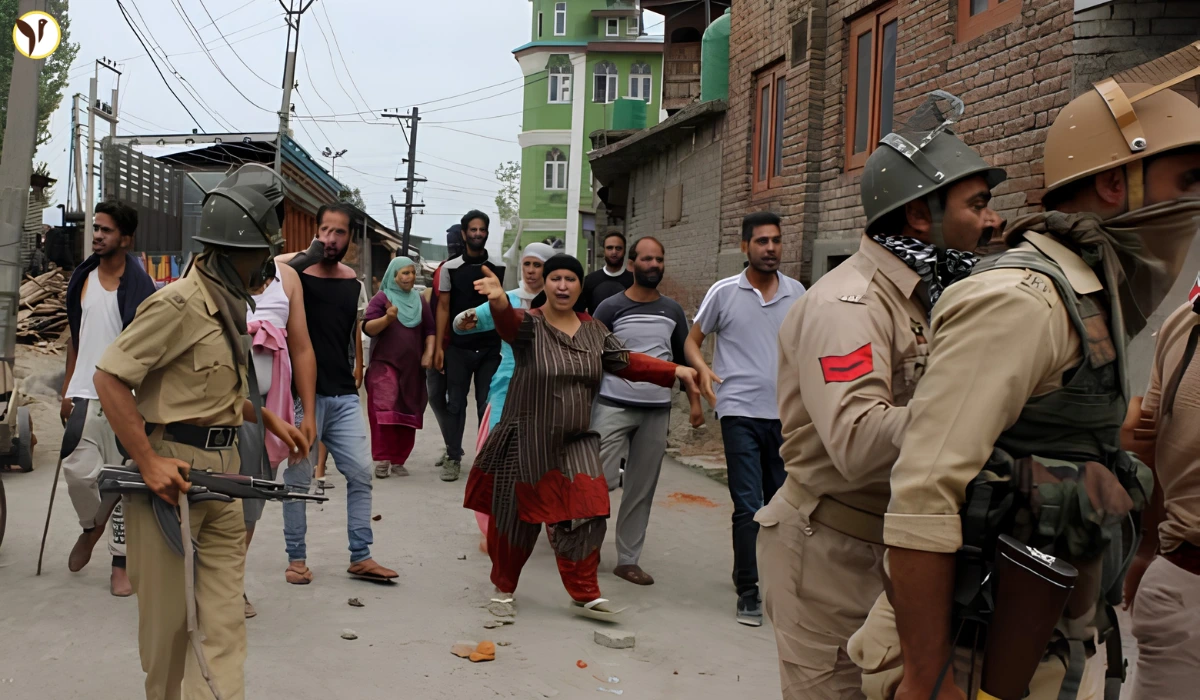
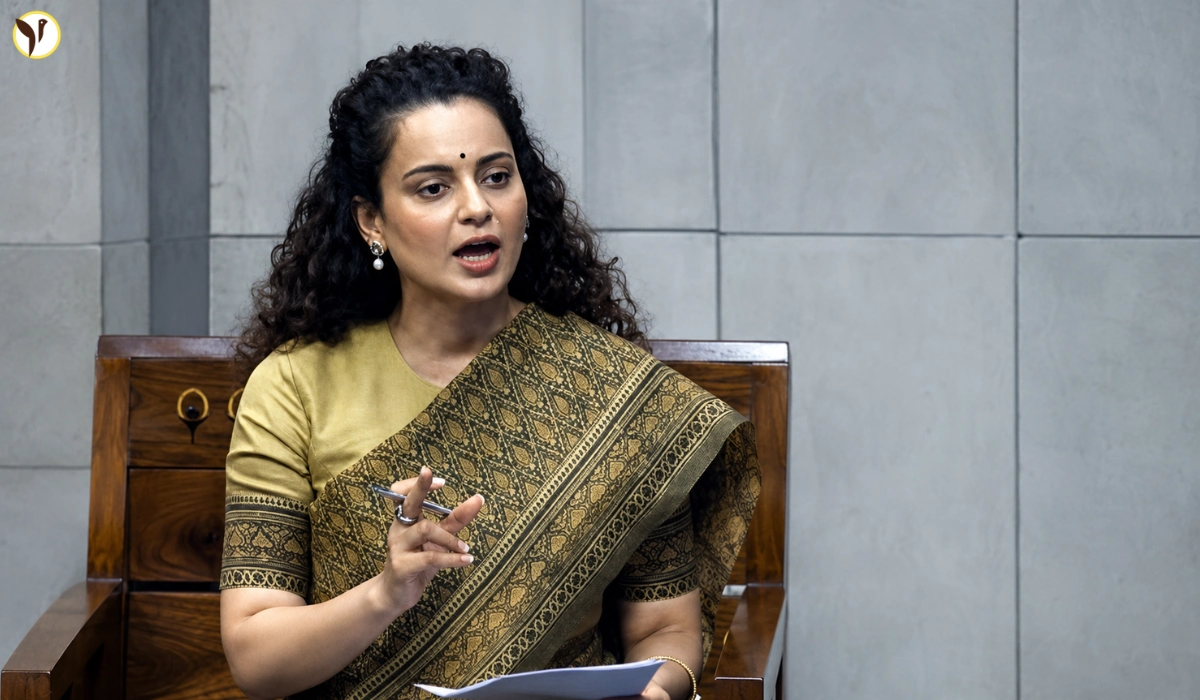


The recent news cycle has been dominated by a highly controversial statement where Kangana Ranaut calls CJP protesters cockroaches. Student agitation, historically recognized as a legitimate cornerstone of democratic expression in India, has suddenly found itself at the receiving end of a vicious rhetorical attack from a sitting Member of Parliament.
When a public representative resorts to insectoid analogies to describe citizens—particularly students exercising their constitutional right to protest—it signals a deeply troubling shift in political discourse. This is not merely a case of a celebrity sparking a Twitter debate; it is a reflection of how institutional language is being coarsened to dismiss genuine civic grievances.
Here is a deep dive into what actually happened, the context of the student protests, the historical danger of such language, and what this means for the future of democratic engagement in India.
The Incident: What Actually Happened?
The controversy erupted when Kangana Ranaut, the Bharatiya Janata Party (BJP) MP from Mandi, Himachal Pradesh, took to her social media platforms to comment on a group of protesters associated with the Citizens for Justice and Peace (CJP) and student activists who had gathered to raise demands regarding judicial interventions and civic rights.
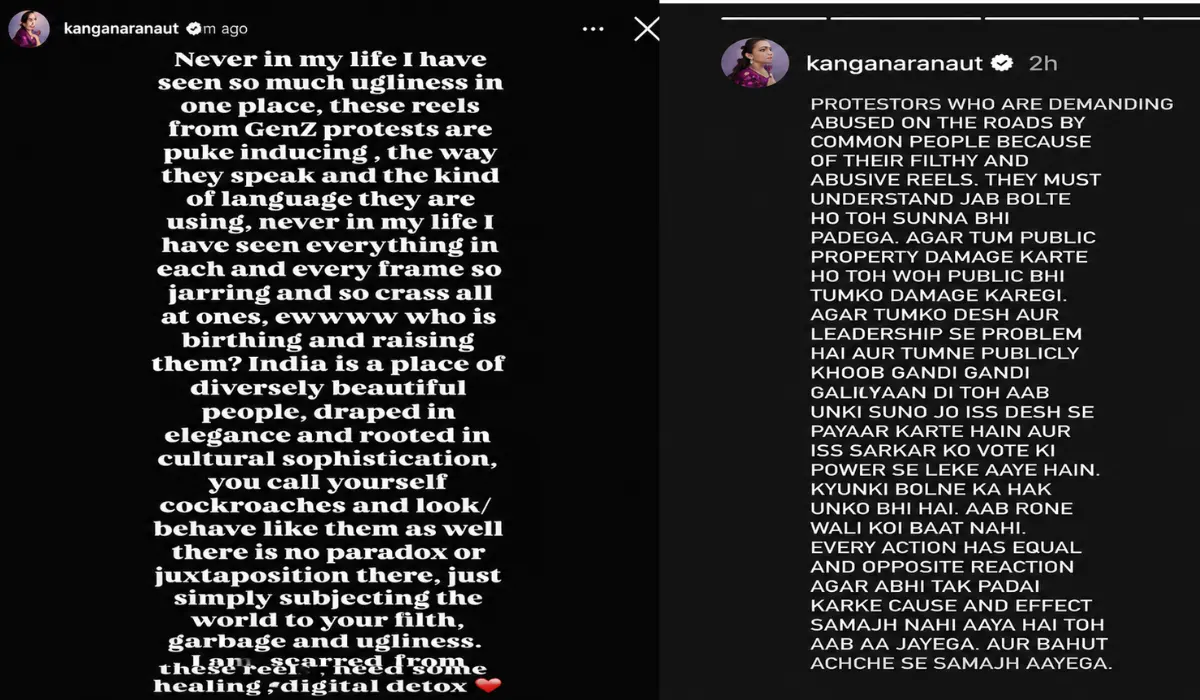
In her statement, Ranaut did not critique the ideological stance or the specific demands of the students. Instead, she bypassed substantive debate entirely, labeling the protesters as "cockroaches" and suggesting they needed to be "eradicated."
This specific choice of words moved the conversation away from political disagreement and into the realm of dehumanization. In a political climate already charged with polarization, a sitting MP using such terminology to describe unarmed civilians immediately triggered widespread condemnation from opposition leaders, civil rights activists, and student organizations across the country.
Understanding the Catalyst: The Student Agitation
To understand the gravity of the remark, one must understand what the students were actually protesting. The term "student agitation" is often used loosely in media, but these protests are rooted in specific, verifiable grievances related to transparency, judicial accountability, and employment.
The Core Demands of the Recent Protests
To provide clarity on the ground reality, here is a breakdown of the primary issues driving the current student unrest that drew Ranaut's commentary:
|
|
|
|
|
|
|
|
|
|
|
|
|
|
|
|
|
|
|
|
The students involved are not fringe elements. They are aspirants who have spent years preparing for competitive exams, only to see their futures compromised by systemic inefficiencies and alleged corruption. By reducing this complex, deeply personal agitation to a "cockroach" infestation, the narrative completely strips the students of their agency and legitimate grievances.
When Kangana Ranaut Calls CJP Protesters Cockroaches, Student Agitation Faces a New Threat
The mechanics of dehumanizing language in politics are not new, but their application in modern Indian social media discourse requires urgent scrutiny.
Why use the word "cockroach"? In entomological terms, cockroaches are pests that infiltrate homes, carry disease, and require extermination. When applied to human beings by a person in power, it serves a specific psychological and political purpose: it otherizes the target.
The Historical Parallel of Dehumanization
Political scientists and linguists have long warned against the use of pest analogies in political speech.
- Stripping Empathy: You can negotiate with a political opponent. You cannot negotiate with a pest. This language is designed to tell the public that these protesters do not deserve empathy, a hearing, or constitutional protections.
- Justifying Force: Historically, when a population is likened to vermin or insects by those in power, it serves as a subconscious justification for state violence or police brutality. If the protesters are "pests," then a heavy-handed police crackdown is framed not as a human rights violation, but as "pest control."
This is why the outrage is not an overreaction, as some supporters might claim. It is a defense of the basic democratic principle that dissenters are still citizens.
The Celebrity-Politician Pipeline: Outrage as Political Capital
To fully grasp this situation, one must analyze Kangana Ranaut’s specific trajectory from a Bollywood star to a political representative.
Traditionally, politicians rose through the ranks of grassroots organizing, student unions, or local governance. Their language was often measured because they had to answer to local constituencies. The modern "celebrity-politician," however, operates on a different metric. Their primary currency is visibility, and their core constituency is often an online base that rewards provocative, combative rhetoric.
The Strategy of Absolutism
For a celebrity-turned-politician, nuance is a liability. Acknowledging that the students have a valid point about paper leaks—even while disagreeing with the political backing of the CJP—does not generate viral engagement. Calling them "cockroaches" does.
This creates a feedback loop:
- Provocative Statement is Made (e.g., comparing protesters to insects).
- Public Outrage Ensues (from civil society and opposition).
- Supporters Rally (framing the outrage as "anti-national" or an attack on their leader).
- Algorithmic Reward (high engagement translates to greater digital reach).
In this pipeline, the actual issue—the student agitation—gets entirely buried. The students become mere props in a larger theater of political performance art.
#WATCH | Delhi: BJP MP Kangana Ranaut says, "Our 75-year-old Prime Minister was targeted, and filthy abuse was hurled at his late mother. We, too, have participated in student protests. But what kind of students are these, and what kind of obscene language are they using? In what… pic.twitter.com/S4uFS0C9NI
— ANI (@ANI) July 28, 2026
Why This Matters for Indian Democracy
The danger of normalizing this rhetoric extends far beyond one MP's social media account. It degrades the fabric of public discourse in three distinct ways:
The Chilling Effect on Youth
India has a massive youth population. When young people see that exercising their democratic right to protest will result in being likened to the lowest forms of life by elected officials, it creates a chilling effect. It tells the youth that the system does not view them as stakeholders, but as nuisances.
The Erosion of Institutional Respect
The protests in question are largely directed at the executive and legislative failures regarding exam integrity, seeking redress from the Judiciary. When an MP openly mocks citizens seeking judicial recourse, it undermines public trust in the institutional bridges that hold a democracy together.
The Death of Substantive Debate
Instead of the government having to answer why paper leaks continue to occur, the national conversation is hijacked into a debate about whether an MP's words were "too harsh" or "taken out of context." The diversion is tactical. It moves the spotlight away from administrative failure and onto cultural warfare.
What Happens Next: Forward-Looking Insights
Moving forward, this incident will likely have ripple effects across India’s political and social landscape.
Legally, while free speech protects a politician's right to criticize, hate speech laws in India technically prohibit language that incites violence or creates enmity. However, prosecution of sitting MPs for dehumanizing rhetoric remains exceedingly rare, setting a precedent of impunity.
Politically, the opposition is likely to use this statement as a rallying cry in the upcoming state and local elections, particularly to mobilize youth voters. The narrative will be framed around "arrogant rulers vs. struggling students."
Socially, civil rights organizations like the CJP and various student unions are likely to double down on their legal petitions. Historically, attempts to suppress student movements through ridicule or force have only led to the movements expanding their base and solidifying their demands.
The ultimate test for Indian democracy will not be whether Kangana Ranaut faces consequences for her words, but whether the substantive issues driving the student agitation—exam transparency, employment, and judicial accountability—are addressed with the seriousness they require, rather than being dismissed with a metaphor.
Other Articles to Read: