
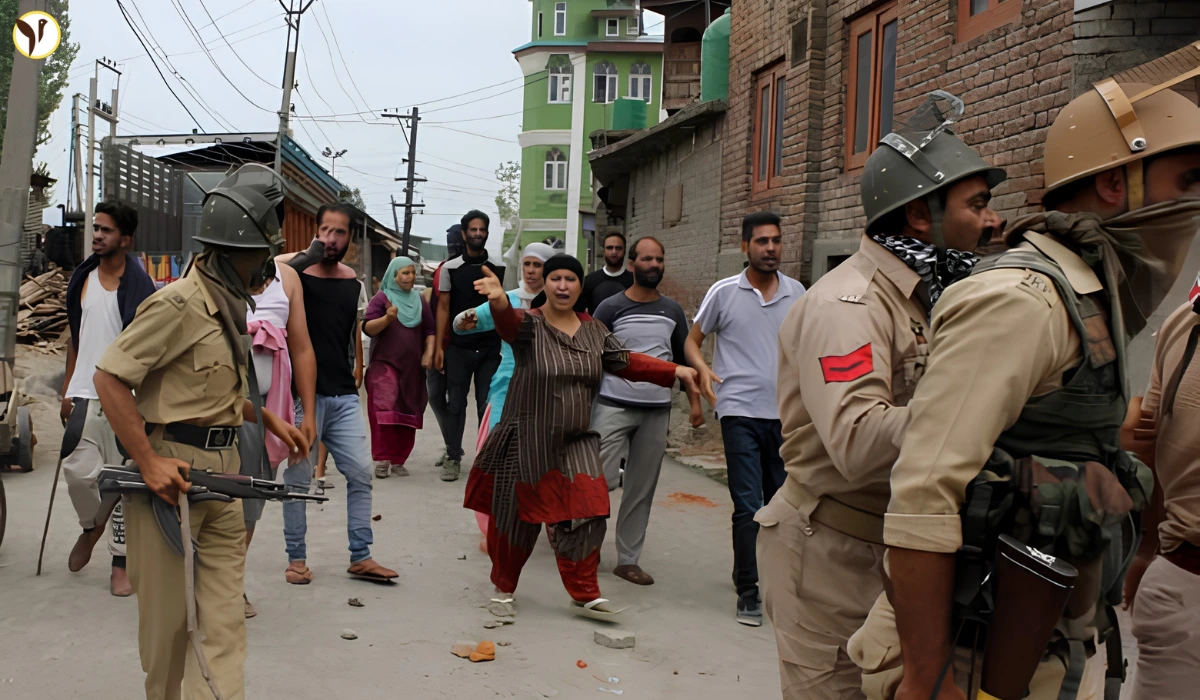


The autumn season in the Kashmir Valley is traditionally defined by the bustling apple harvest—a period of intense agricultural activity that brings a surge of economic vitality to the region. It is also the time when thousands of migrant laborers from states like Bihar, Uttar Pradesh, and Chhattisgarh arrive to earn their yearly livelihoods. This symbiotic economic relationship was violently disrupted when the Chhattisgarh Migrant Workers Shot Dead in Kulgam Terror Incident sent shockwaves through both the Kashmir valley and the hinterlands of central India.
On the evening of October 19, 2024, unidentified terrorists ambushed a group of non-local laborers in the Waltergam area of south Kashmir’s Kulgam district. The attack was swift, targeted, and lethal: two workers from Chhattisgarh were killed, and a third was left battling for his life.
For seasoned observers of Jammu and Kashmir's security grid, this is not merely an isolated spike in violence. It represents the continuation of a deeply entrenched, morally bankrupt strategy employed by Pakistan-backed terror outfits—specifically The Resistance Front (TRF)—aimed at crippling the region's economy by severing its lifeline to outside labor.
The Anatomy of the Waltergam Ambush
The facts of the Kulgam attack follow a grim, now-familiar script. The laborers, who were residing in a rented accommodation near an apple orchard in the Gudder area of Waltergam, were approached by armed militants. Without provocation or demands, the gunmen opened fire at close range before fleeing the scene under the cover of the dense orchards that characterize the topography of south Kashmir.
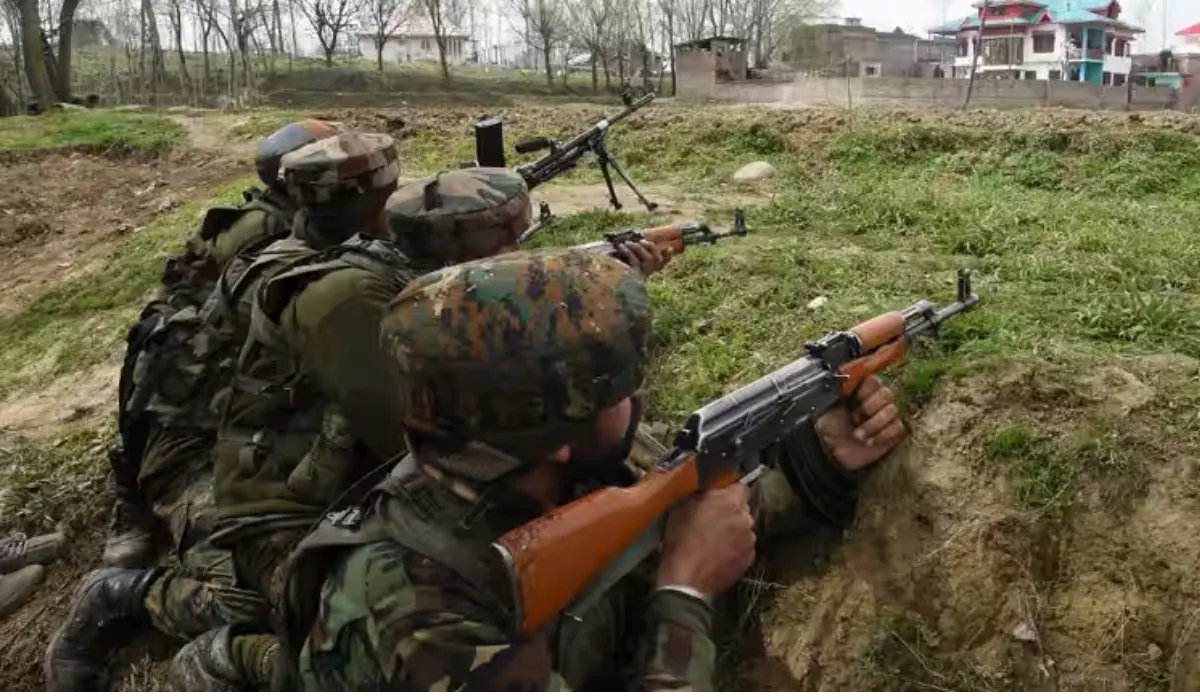
Security forces and local police迅速 rushed to the spot, cordoning off the area to launch a search operation. However, the topographical advantage almost always favors the fleeing militants in these orchard belts. The victims were evacuated to a local medical facility, where two were pronounced dead on arrival.
Who Were the Victims? The Human Cost of Conflict
Beyond the cold statistics of casualty charts lie the human stories of inter-state migration driven by rural distress. The deceased were identified as residents of impoverished districts in Chhattisgarh, a state where a significant portion of the rural population relies on seasonal migration to sustain their families.
These workers travel over 1,500 kilometers to work in harsh conditions—plucking, packing, and loading heavy crates of apples. They do this because the wages offered during the two-month Kashmir apple season (typically August to November) often exceed what they can earn in half a year back home. The attack in Kulgam did not just extinguish two lives; it pulled the rug out from under families in Chhattisgarh who were dependent on these remittances for food, education, and debt repayment.
A Systematic Campaign Against Soft Targets
To understand the Kulgam incident, one must view it through the lens of historical data. The targeting of non-local workers and minorities in Kashmir is a calculated geopolitical tactic, not random violence.
Below is an analysis of the pattern of targeted civilian killings by terror outfits in the Kashmir Valley over recent years, which highlights the strategic pivot toward "soft targets."
|
|
|
|
|
|
|
|
|
|
|
|
|
|
|
|
|
|
|
|
|
|
|
|
|
|
|
|
|
|
|
|
|
|
|
|
Why Migrant Workers? The Twisted Logic of Terror
The immediate question any rational observer asks is: Why attack poor laborers who have no stake in the political conflict?
The answer lies in the cynical calculus of insurgency. According to counter-terrorism experts, the TRF—which serves as a smokescreen for Lashkar-e-Taiba (LeT) to avoid international sanctions—employs a multi-pronged strategy:
- Economic Strangulation: Kashmir's apple industry is worth over ₹8,000 crore annually. It requires an estimated 50,000 to 70,000 outside laborers to function smoothly. By executing the Chhattisgarh migrant workers in Kulgam, the militants send a direct message: if you come here to work, you will die. A successful exodus of labor paralyzes the local economy, creating local discontent against the establishment.
- International Media Amplification: Attacks on highly fortified military camps rarely yield high casualty numbers for militants anymore, due to upgraded security protocols. Targeting unarmed civilians guarantees international headlines and feeds the narrative of a "restive region" to sympathetic foreign media outlets.
- Psychological Warfare: It creates a permanent state of anxiety among the local populace, forcing them to self-censor and comply with militant diktats out of fear of reprisal.
The Economic Ripple Effect: Kashmir and Chhattisgarh
The fallout from the Kulgam terror attack creates a dual crisis.
In Kashmir, local apple growers are caught in a vice. If migrant workers flee, the harvested apples cannot be packed and transported to mandis (markets) in Delhi, Punjab, and beyond. The fruit is highly perishable. A delay of even a week can lead to massive financial ruin for small-to-medium orchard owners. Consequently, some growers are forced to hire local labor at exorbitant rates, entirely wiping out their profit margins.
In Chhattisgarh, the impact is sociological. The state has a high concentration of Scheduled Tribes (ST) and marginalized communities who view seasonal migration as a necessary evil. When incidents like the Kulgam shooting occur, it creates widespread panic among the families of migrants. Panchayats (village councils) in districts like Kanker, Balodabazar, and Dhamtari often issue advisories discouraging youth from traveling north, thereby shrinking the already limited employment opportunities available to them.
KULGAM: WHAT A “BRAVE RESISTANCE” TWO LABOURERS MURDERED AT A BRICK KILN
— The Kashmir Clarity (@Kashmir_Clarity) August 1, 2026
Deepak Ratray and Bhupender had travelled to Kashmir to earn an honest wage. They carried no weapons, issued no threats and held no political power. Their hands carried the dust of a brick kiln; their… pic.twitter.com/x3D2ozaecm
The Security and Administrative Response
The aftermath of the Chhattisgarh Migrant Workers Shot Dead in Kulgam Terror Incident triggers a standardized, yet heavily scrutinized, security and administrative protocol.
1. The Tactical Response: The J&K Police and the Indian Army's Rashtriya Rifles have launched intensive Cordon and Search Operations (CASO) in the dense orchards of Kulgam and adjoining Shopian district. The focus is on identifying the specific "hit squad"—usually comprising 2-3 local recruits guided by a seasoned Pakistani or Afghan commander. Intelligence gathered from previous encounters suggests these squads often use .303 rifles or stolen AK-series assault rifles to carry out these assassinations.
2. The Administrative Response: The Chhattisgarh government has historically reacted to such incidents by announcing ex-gratia compensation (typically ranging from ₹2 lakh to ₹5 lakh) to the next of kin. However, financial compensation does little to address the systemic vulnerability of interstate migrant workers. There is an urgent, unmet need for a formalized registration mechanism—a database that tracks where migrant workers are employed in Kashmir, ensuring they have access to secure, clustered accommodations rather than isolated rented rooms that make them easy targets.
3. The Political Repercussions: Attacks on migrant workers inevitably spark political friction. Opposition parties are likely to question the central government's claims of "normalcy" returning to the Valley, while the ruling establishment will point to the drastic reduction in overall militancy-related fatalities compared to the peak years of the 1990s and 2000s.
The Unresolved Vulnerability of India's Migrant Workforce
The tragedy in Kulgam exposes a glaring blind spot in India's internal security and labor welfare framework. Migrant workers are the invisible engines of India's agrarian and construction economies, yet they exist in a legal gray zone.
When a worker leaves Chhattisgarh for Kashmir, they step outside the protective ambit of their home state's labor laws, while simultaneously failing to be integrated into the host state's welfare machinery because they lack local residential proof. This lack of documentation makes it incredibly difficult for security forces to provide targeted protection.
Until a centralized, inter-state migrant worker database is established—one that functions in real-time and coordinates between the labor departments of Jammu & Kashmir and source states like Chhattisgarh—these soft targets will remain painfully exposed to the whims of terror networks looking for easy propaganda victories.
Conclusion
The killing of the Chhattisgarh migrant workers in Kulgam is a stark reminder that the conflict in Jammu and Kashmir has not entirely transitioned from bullets to ballots. While overt, large-scale violence has undeniably decreased, the shift toward targeted assassinations of civilians represents a chilling evolution in terror tactics.
It is an attack on India's constitutional promise of the right to life and livelihood. It is an attack on the economic sovereignty of Kashmir's apple growers. Most tragically, it is an attack on the poorest of the poor, who merely ventured far from home in the hope of securing a slightly better tomorrow for their families. As the security forces hunt for the perpetrators in the orchards of south Kashmir, the systemic vulnerabilities that allowed this tragedy to unfold remain firmly intact.
Other Articles to Read: