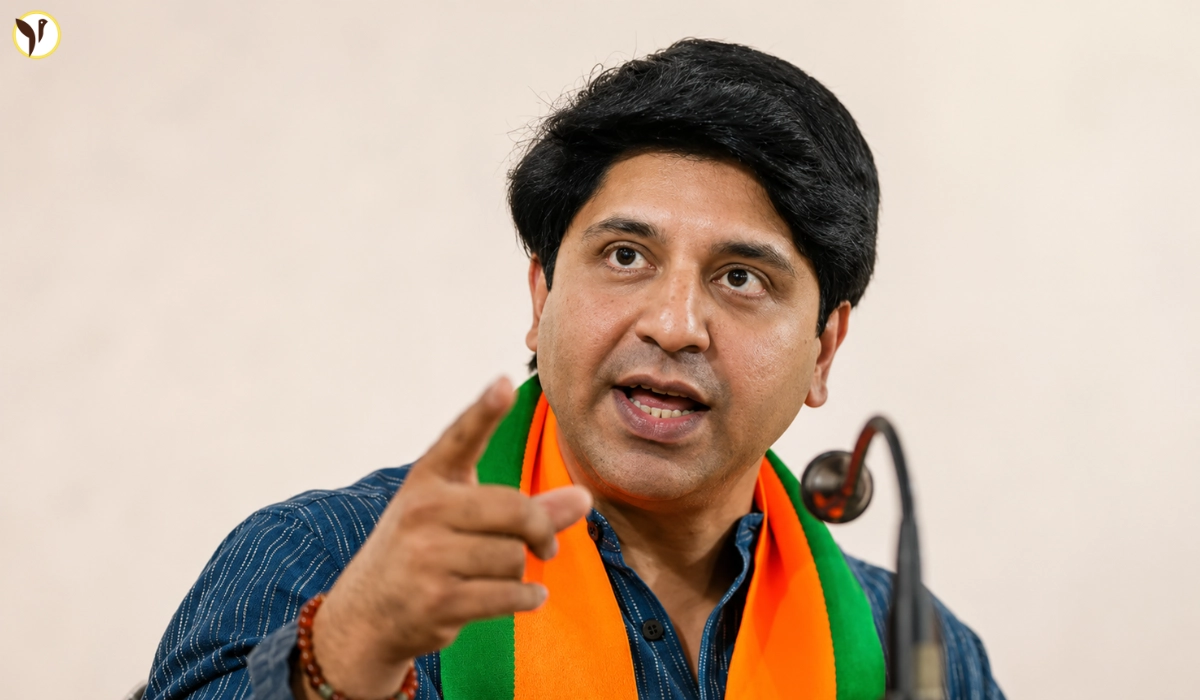


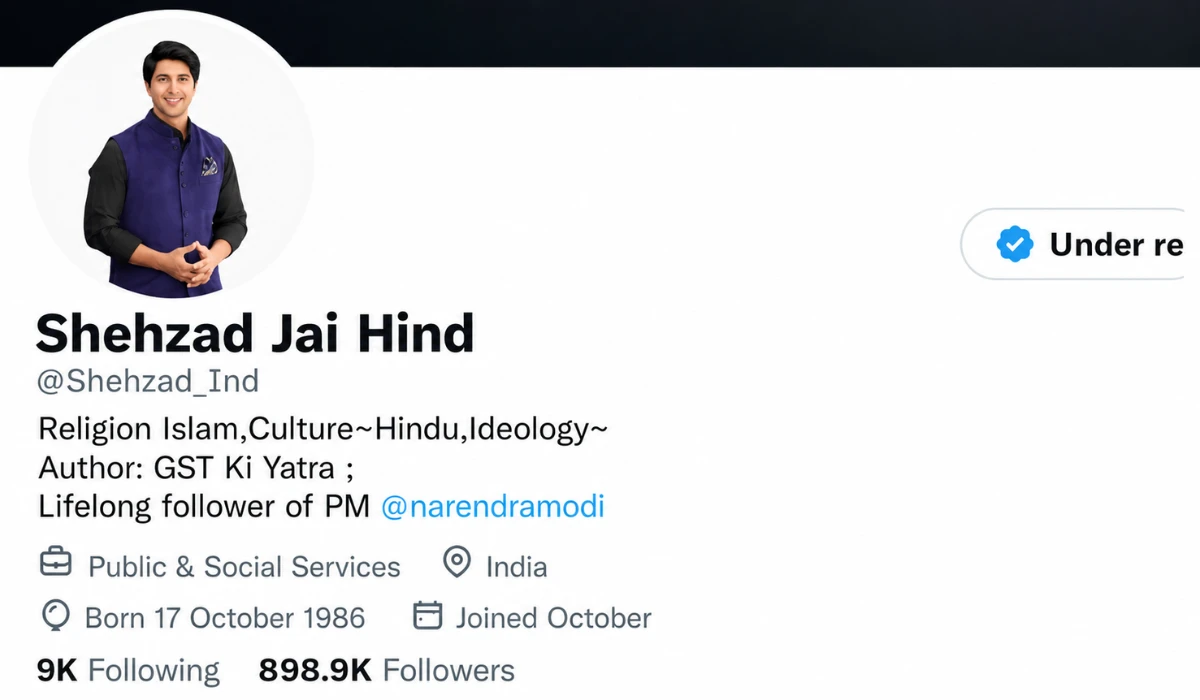
In the hyper-fast realm of Indian political communication, a few deleted characters on a social media profile can trigger a nationwide media frenzy. Recently, the phrase "Shehzad Poonawalla Quits BJP" began trending rapidly across digital platforms after observant users noticed a conspicuous update to his official X (formerly Twitter) bio. The removal of his official designation as a National Spokesperson for the Bharatiya Janata Party (BJP) immediately ignited intense resignation speculation.
However, in an era where digital footprints are heavily scrutinized and political signaling often happens in plain sight, what does a simple bio tweak actually signify? While the digital rumor mill has already written his exit script, a closer examination of the situation reveals a more complex picture of political maneuvering, media strategy, and the evolving nature of political exits in India.
What Exactly Happened? The Digital Trail
The origins of this speculation are entirely rooted in digital observation. Over a 48-hour period, users tracking political profiles noted that Shehzad Poonawalla’s X bio had been altered.
Previously, his profile prominently featured the tag: "National Spokesperson, BJP." Following the update, this designation was entirely stripped out. In the absence of an official press release from the party or a formal statement from Poonawalla himself, this silent edit was interpreted by many as a definitive digital resignation.
To understand the gravity of this change, one must look at the timeline of events as they unfolded online.
Timeline of the Speculation
|
|
|
|
|
|
|
|
|
|
|
|
|
|
|
|
|
|
Who is Shehzad Poonawalla?
To assess whether this bio update is a mere technical glitch, a planned role change, or an actual exit, one must understand Poonawalla’s unique position within the BJP’s ecosystem.
Shehzad is the younger brother of Tehseen Poonawalla, a well-known political commentator and a vocal supporter of the Indian National Congress. This fraternal dynamic has frequently been leveraged in Indian political debates, with Shehzad often positioned by the BJP as the "insider" countering the Congress narrative championed by his brother.
Having joined the BJP around 2017-2018, Shehzad quickly rose through the ranks to become a National Spokesperson. He was a staple on prime-time television debates, known for his aggressive, unapologetic defense of the party’s policies and his sharp, often personalized, critiques of the opposition. His utility to the BJP was not just as a message deliverer, but as a specific rhetorical weapon aimed at the Congress leadership.
Why the "Shehzad Poonawalla Quits BJP" Speculation Holds Weight
In traditional politics, a resignation is a formal letter submitted to a party chief. In modern Indian politics, the sequence is often reversed: the digital signaling comes first, the formal letter follows.
The reason this specific instance carries weight is due to the precedent set by recent political history. Over the last few years, several high-profile politicians across party lines have altered their social media bios to remove party affiliations days—or even weeks—before making a formal exit. The bio update acts as a "soft launch" of a resignation, allowing the politician to test the waters, gauge public and media reaction, and prepare their next career move before the party machinery formally responds.
If Poonawalla has indeed stepped down, it represents a notable shift in the BJP’s communication strategy. The party heavily relies on a young, articulate brigade of spokespersons to dominate the 24/7 news cycle. Losing a seasoned debater like Poonawalla requires either a replacement of equal caliber or a strategic shift away from the aggressive debating style he represented.
The Anatomy of a "Digital Resignation"
This situation provides a compelling case study in how political communication has evolved. The concept of a "digital resignation" bypasses traditional media gatekeepers.
When a politician updates a bio, they control the narrative. If a journalist asks, "Have you resigned?" the politician can easily deflect with, "My bio was updated by a team," or "I am focusing on other party work," effectively buying time. If the party decides to issue a show-cause notice, the politician has already secured the public sympathy or momentum that comes with being a "trending" topic.
In Poonawalla's case, the silence from both him and the BJP’s official communication channels is deafening. In standard crisis communication protocol, if a prominent spokesperson's bio is altered erroneously, the party’s IT cell or the individual themselves issue a swift clarification to squash rumors. The lack of such a denial is precisely what fuels the credibility of the resignation speculation.
Three Plausible Scenarios
Because there is no official confirmation, responsible journalism requires looking at the situation through a lens of objective probability. There are three primary scenarios that explain the current situation:
The Formal Resignation Route
Poonawalla has indeed decided to part ways with the BJP, potentially due to internal restructuring, a lack of organizational elevation, or a shift in his personal career trajectory (such as a move toward legal practice or international consulting). In this scenario, an official statement is likely imminent, possibly timed to bypass peak news hours to minimize damage control for the party.
Internal Role Reassignment
The BJP frequently reshuffles its internal media cells. Poonawalla may have been relieved of his duties as a National Spokesperson but given a different organizational role that does not require a public-facing designation. Political parties often ask members to remove specific titles from public profiles during transition periods to avoid confusing the public about their current official capacity.
A Technical Oversight or Deliberate Signal
It is possible that a social media manager made an error while updating other aspects of his profile. However, given Poonawalla’s personal savvy with social media, many political insiders discount this. A more cynical view is that this is a deliberate "signal" sent to the party high command regarding dissatisfaction, a tactic sometimes used to negotiate better roles or positions within the organization.
Shehzad Poonawalla, who served as the national spokesperson of the Bharatiya Janata Party, has resigned from the party.
— Hindustan Times (@htTweets) July 31, 2026
Poonawalla tendered his resignation to the top brass of the BJP and cited personal reasons behind the decision, CNN-News18 reported citing sources.
More… pic.twitter.com/5TVvgc4PJu
The Broader Impact on BJP's Media Machinery
Regardless of the outcome, the intense focus on a single spokesperson's bio highlights how heavily the BJP’s public image is tied to its designated communicators. The party has historically maintained a disciplined media narrative. When a prominent voice goes silent or appears to go rogue, it creates a temporary vacuum that opposition parties are quick to exploit.
The Congress and other opposition factions have already begun using the trending speculation to suggest internal discord within the BJP, pointing to it as evidence of dissatisfaction among the ranks following recent electoral outcomes in various states. How the BJP's central leadership handles this—whether they ignore it, issue a clarification, or announce a replacement—will dictate the lifespan of this news cycle.
Expert Perspective: Reading the Silence
Political analysts often state that in Indian politics, what is not said is as important as what is spoken. The strategic silence from Poonawalla’s official accounts—where he continues to post political commentary but avoids addressing the bio change—suggests a calculated approach.
If this is an exit, Poonawalla is likely negotiating the terms of his departure and his future narrative. A spokesperson who built his career on aggressive television defense cannot simply disappear; he must transition to a new identity, perhaps as an independent political analyst or a strategic consultant, where his insider knowledge becomes his primary asset.
For the reader trying to make sense of the "Shehzad Poonawalla Quits BJP" headlines, the most rational takeaway is this: the digital evidence strongly suggests a departure or a significant change in status. Until an official denial is issued, the burden of proof rests on the party and the individual to confirm otherwise.
Other Articles to Read: