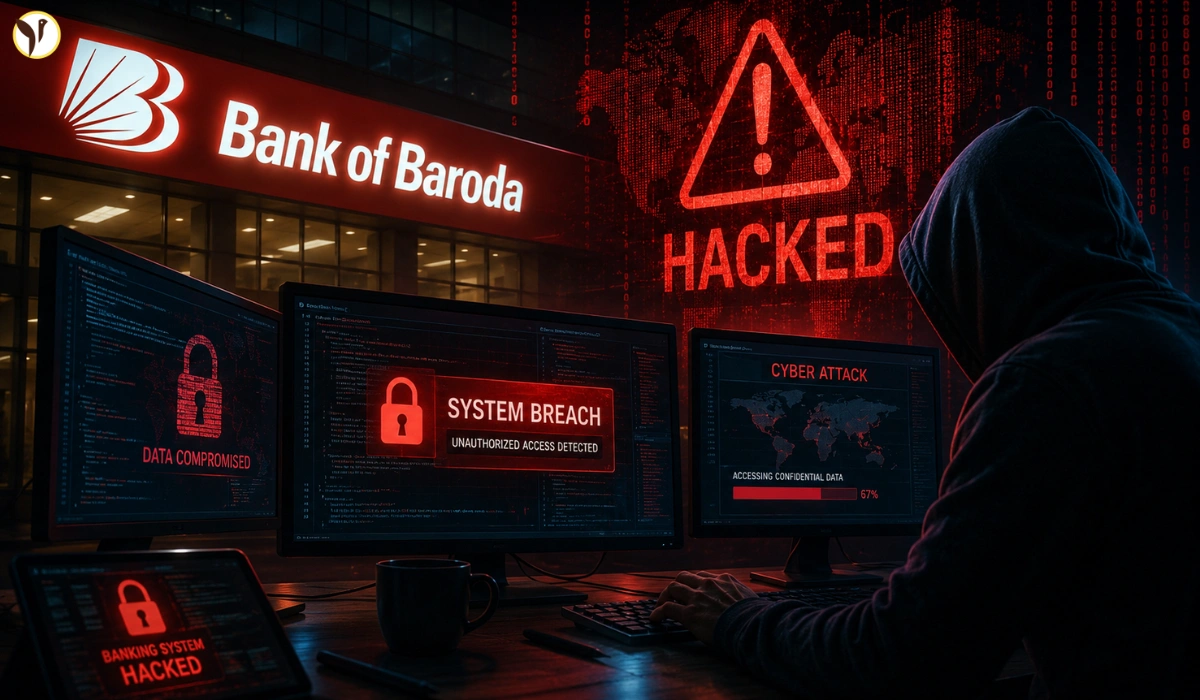


When a major public sector bank attributes a massive data leak to a single compromised email address, the immediate public reaction is rightfully skeptical. How does one email equate to one terabyte (1TB) of sensitive banking data allegedly being listed for sale on the dark web?
Recently, Bank of Baroda (BoB) found itself at the center of this exact cybersecurity paradox. Following claims by a dark web threat actor that they were auctioning 1TB of the bank's internal data, BoB issued a statement attempting to contextualize the breach. The bank’s stance was precise: the incident originated from the hacking of just one employee's email account.
For a layperson, the math does not add up. For cybersecurity professionals, however, it paints a concerning picture of modern enterprise vulnerabilities. This disconnect between corporate public relations and technical reality is exactly what needs unpacking. Here is a deep dive into the mechanics of the Bank of Baroda incident, why the "one email" defense is technically plausible but structurally alarming, and what it means for the average consumer.
The Anatomy of the Claim: What Exactly Happened?
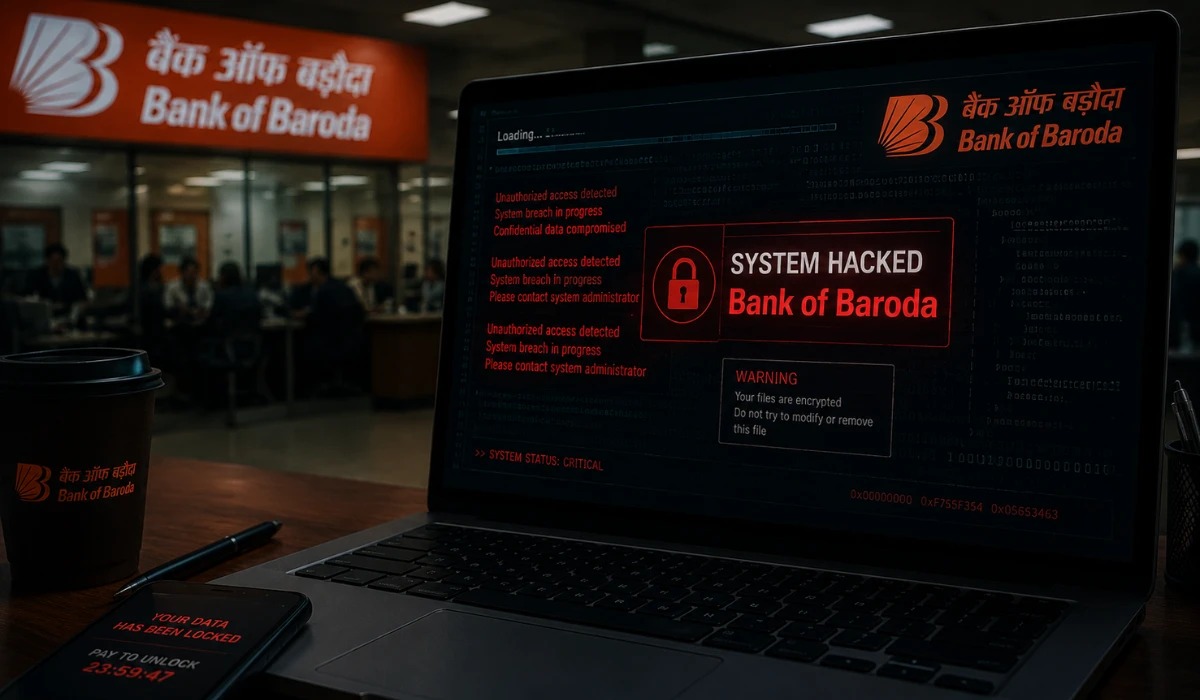
The controversy began when a cybercriminal entity posted on a prominent dark web forum, claiming to possess 1TB of Bank of Baroda data. The supposed cache included allegations of internal system screenshots, database structures, and potentially sensitive customer information.
In response, Bank of Baroda confirmed an "unauthorized access" incident but rapidly downscaled the narrative. The bank stated that forensic investigations revealed a single employee's official email ID had been compromised. The implication was clear: this was not a sophisticated breach of the bank's core banking server, but rather an isolated, albeit damaging, account takeover.
To understand the gravity of the situation, we must first understand what 1TB of banking data actually looks like in a physical context.
Data Volume Breakdown: What Does 1TB of Banking Data Contain?
To put the alleged 1TB leak into perspective, raw data volume in the banking sector is usually a mix of structured (databases) and unstructured (documents, emails) data. Based on standard enterprise data architecture analysis:
|
|
|
|
|
|
|
|
|
|
|
|
|
|
|
|
|
|
|
|
|
|
|
|
|
|
|
|
|
|
|
|
|
|
|
The "Why": How One Email Unlocks a Terabyte of Data
If Bank of Baroda's claim is entirely accurate—that only one email was hacked—how does a threat actor extract 1TB of data from it? The answer lies in a cybersecurity concept known as Lateral Movement and the fundamental flaw in how enterprises manage permissions.
The Email as a Master Key
In modern corporate environments, an email address is rarely just a mailbox. It is an identity node. A BoB employee’s email is likely tied to Microsoft 365 or Google Workspace. This single sign-on (SSO) credential acts as a master key. If an employee has their email compromised, the attacker now has access to their entire suite of workplace tools: SharePoint, OneDrive, internal CRMs, and communication platforms like Teams or Slack.
The Danger of Over-Privileging
The most common failure in large organizations is the "principle of least privilege" violation. Employees are often given access to broad shared drives that they do not strictly need for their daily jobs. If the compromised BoB email belonged to a mid-level manager in the IT, HR, or operations department, that single account might have had read/write access to massive shared repositories containing years of scanned KYC documents or system logs.
Automated Exfiltration
Once inside the shared drive via the compromised email, the attacker does not manually download files. They deploy automated scripts that silently compress and exfiltrate data to the dark web over days or weeks. To the bank's firewall, this traffic might look like routine, authorized cloud-syncing activity.
Why This Matters: The Impact on BoB and Customers
While the bank attempts to frame this as an "email hack" to prevent panic, the distinction between an "email compromise" and a "core server breach" is becoming meaningless to the consumer. If the 1TB of data on the dark web contains customer personally identifiable information (PII), the source of the leak is irrelevant to the victim.
The Reputational Tax: For a public sector bank competing with agile private sector banks and fintechs, trust is the primary currency. Claiming "only an email was hacked" can backfire if it is perceived as downplaying a severe data privacy failure.
Regulatory Scrutiny: Under India's Digital Personal Data Protection (DPDP) Act, 2023, data fiduciaries (banks) are mandated to implement "reasonable security safeguards." A single email compromise leading to a 1TB exfiltration suggests a failure in access management, potentially inviting scrutiny from the Reserve Bank of India (RBI) and the newly formed Data Protection Board.
The Fraud Pipeline: Dark web data does not just sit there. It is purchased by syndicates specializing in social engineering. Even if the leaked data is "just" internal emails and system screenshots, attackers use this information to craft highly convincing spear-phishing campaigns against other, higher-level bank executives—a tactic known as "harvesting."
— Bank of Baroda (@bankofbaroda) July 27, 2026
Contextualizing the Threat: A Pattern in Indian Banking
The Bank of Baroda incident is not an isolated anomaly; it is a symptom of a broader systemic issue. Indian financial institutions have faced a steady barrage of breach attempts.
Over the past three years, the RBI has repeatedly issued circulars emphasizing the need for Zero Trust Architecture (ZTA)—a security model that operates on the assumption that no user or system, whether inside or outside the network, can be trusted by default. Yet, many legacy public sector banks still operate on a "castle and moat" security model, where once you get past the perimeter (in this case, the email login), you have relatively free rein inside the castle.
Timeline of Recent Sector Vulnerabilities:
- 2022: A major server breach at a prominent private Indian bank exposed millions of customer records, later traced to a third-party vendor with excessive permissions.
- 2023: Multiple Indian banks reported credential stuffing attacks, where emails and passwords leaked from unrelated third-party sites were used to access banking employee portals.
- 2024 (Current): The BoB 1TB alleged leak highlights that despite RBI guidelines, lateral movement via compromised SSO accounts remains a critical vulnerability.
What Happens Next: The Inevitable Forensic Race
Bank of Baroda’s cybersecurity team, likely aided by external forensic consultants, is currently in the "containment and eradication" phase. However, the fallout will unfold over several stages:
- Data Validation: The immediate priority is verifying the authenticity of the 1TB sample. Threat actors frequently "inflate" the scale of a breach, mixing old, publicly available data with newly stolen sensitive data to drive up the ransom price.
- Access Audit: The bank will be forced to conduct a massive audit of its Active Directory and cloud permissions. Every shared drive linked to the compromised email will have to be locked down and reviewed.
- Customer Notification (If Applicable): If the forensic investigation confirms the presence of unmasked customer PII (like Aadhaar or account numbers) in the leak, the bank is legally obligated under the DPDP Act to notify affected users without "unreasonable delay."
- Enhanced Monitoring: BoB will likely implement stricter anomaly detection on its cloud environments, specifically looking for large-scale data compression or unusual download patterns from single accounts.
The Expert Takeaway: Redefining the Perimeter
The BoB situation serves as a harsh reality check for corporate India. The idea that an "email hack" is a minor inconvenience is a dangerous fallacy rooted in 1990s IT thinking. In 2024, an email account is an identity ecosystem.
For consumers, this incident reinforces the need for hyper-vigilance. If you are a Bank of Baroda customer, do not wait for a breach notification to take action. Proactively monitor your transaction alerts, never entertain unsolicited calls claiming to be from the bank (even if they know your account details—a direct result of data leaks), and regularly update your banking passwords.
For the banking sector at large, the message from the dark web is unambiguous: You are no longer protecting a perimeter; you are protecting individual data points. If one employee's careless click on a phishing link can expose a terabyte of sensitive information, the architecture protecting that data is already obsolete.
Other Articles to Read: