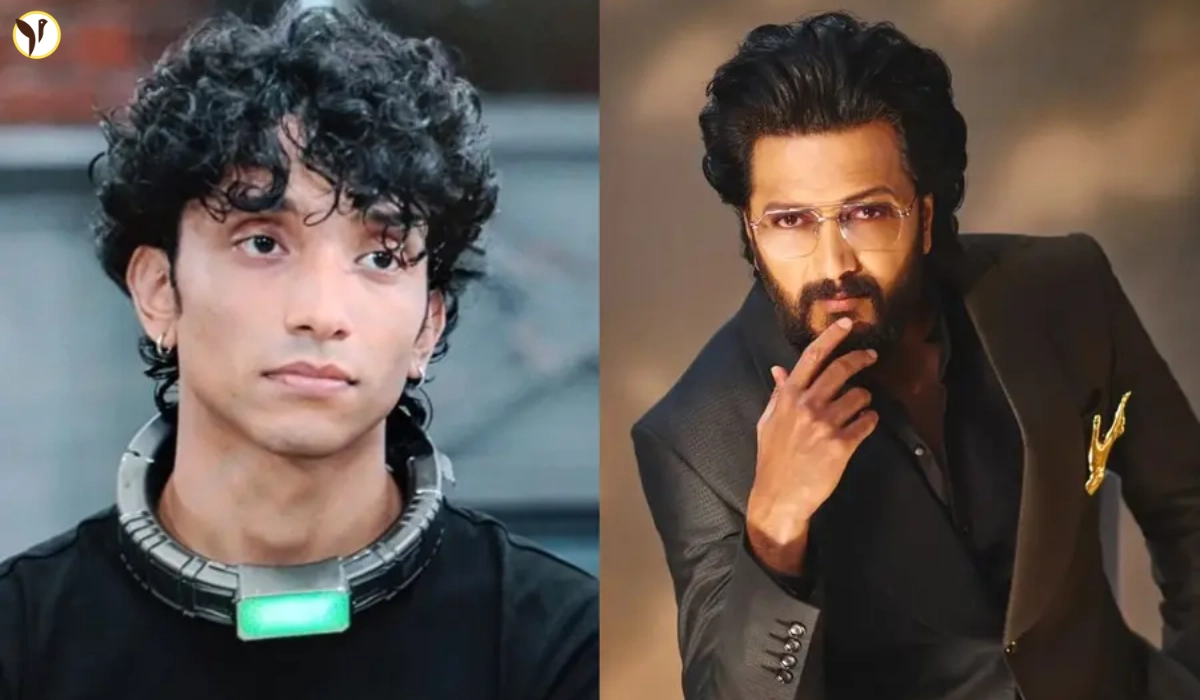


There is a distinct difference between a celebrity losing their temper and a professional enforcing a boundary. Recently, a video circulating across digital platforms showed actor Riteish Deshmukh firmly redirecting prominent paparazzo Yogesh Rawat off a film set with the clear warning, "I'll show you the door." While the initial wave of digital coverage framed this as a sudden outburst, a closer examination of the footage and the surrounding context reveals something far more structural. It is not merely a story of an actor snapping; it is a case study in the growing friction between Mumbai’s aggressive paparazzi economy and the protected confines of a creative workspace.
To understand why this moment matters, we have to look past the surface-level sensationalism and examine the unspoken contract that governs Bollywood sets, the economic pressures driving photographers, and what this specific incident signals for the future of entertainment journalism.
The Anatomy of the Incident: What Actually Transpired
In the age of 15-second reels, context is often the first casualty. The viral clip capturing the Riteish Deshmukh Yogesh Rawat encounter begins mid-interaction. However, piecing together the available footage and set protocols provides a clearer picture of the escalation.
According to eyewitness accounts and the video itself, the incident occurred during an active shooting schedule. Deshmukh, who is generally recognized for his affable and measured public demeanor, is seen directly addressing Rawat. The actor did not resort to personal insults; instead, he focused strictly on the violation of set protocols. The phrase "I'll show you the door" was not a physical threat, but an authoritative dismissal of a professional who had reportedly overstepped the designated media interaction zone.
To provide quick clarity on how this unfolded, here is a breakdown of the event timeline based on verified video evidence:
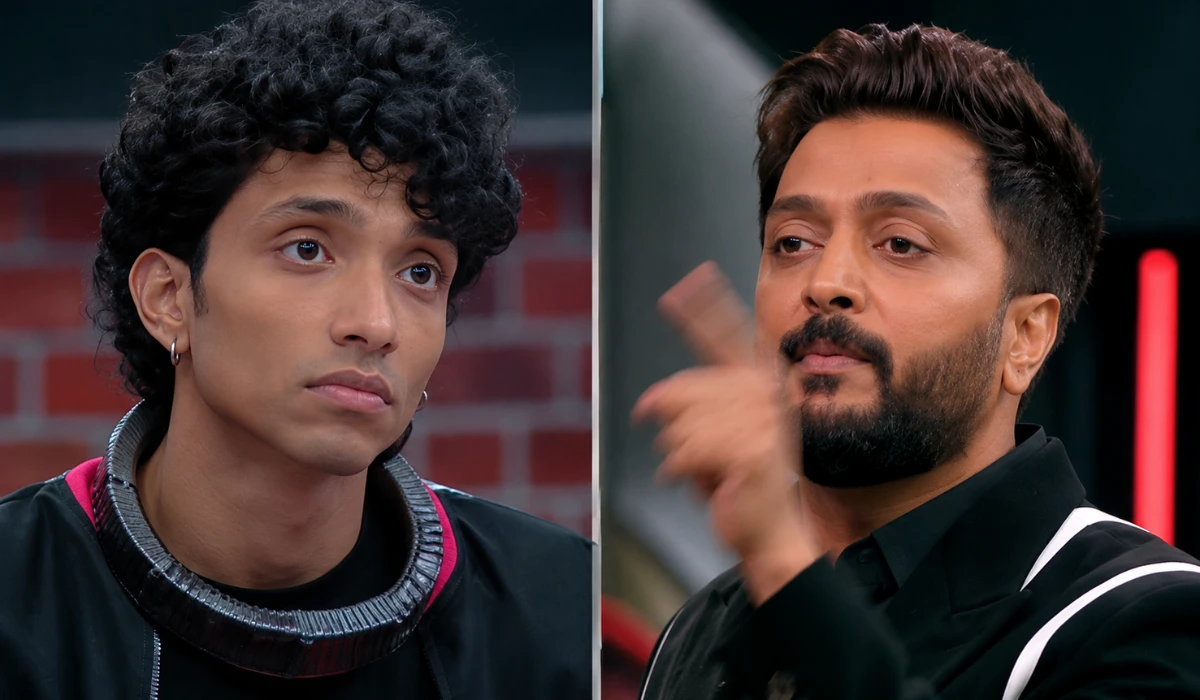
Timeline of the Riteish Deshmukh-Yogesh Rawat Set Incident
|
Timeframe |
Event Detail |
Contextual Significance |
|
Pre-clip |
Rawat and his camera crew enter an active shooting zone. |
Film sets have strict "closed" parameters once a take is about to begin to prevent audio/visual leaks. |
|
0:00 - 0:03 |
Deshmukh notices the intrusion and stops what he is doing. |
Indicates the intrusion was disruptive enough to halt the actor's prep or momentum. |
|
0:04 - 0:10 |
Deshmukh points toward the exit, addressing Rawat directly. |
The targeting of Rawat specifically suggests this was not a first-time occurrence but a culmination of repeated boundary pushing. |
|
0:11 - 0:15 |
Deshmukh states, "I'll show you the door." |
A definitive enforcement of set hierarchy, reminding the photographer that the set is a workspace, not a public red carpet. |
|
Post-clip |
Rawat's team continues recording as they back away. |
Highlights the modern paparazzi tactic: capturing the reaction is often deemed more valuable than the original intended shot. |
Why This Matters: The Sanctity of the Film Set
To a casual observer, a celebrity yelling at a photographer might seem like standard Hollywood or Bollywood drama. However, for working professionals in the film industry, Deshmukh’s reaction highlights a critical, ongoing battle: the defense of the film set as a private workplace.
When a film is in production, the set is technically a rented, highly secure location. Dozens of crew members—from lighting technicians to makeup artists—are working on tight schedules. An unauthorized camera capturing unfinished sets, unapproved costumes, or unreleased script nuances can compromise months of marketing strategies.
Riteish Deshmukh’s intervention was less about personal vanity and more about set hygiene. In an industry where leaks can cost production houses millions in PR recalibration, an actor stepping in to enforce the boundary is often an expected, if rarely filmed, part of the job.
The Paparazzi Ecosystem: Understanding the Other Side
Fair journalism requires examining the motivations of all parties involved. Why did Yogesh Rawat, one of Mumbai’s most established paparazzi, risk being ejected from a set?
The answer lies in the brutal economics of digital entertainment media. Over the last five years, the Bollywood paparazzi ecosystem has shifted from print-aligned freelance photography to independent, high-volume YouTube and Instagram channels. In this landscape, exclusivity is currency.
The Economics of the Mumbai Paparazzi
|
Metric |
Traditional Paparazzi (Pre-2015) |
Modern Digital Paparazzi (2020-Present) |
|
Primary Outlet |
Print newspapers, weekly magazines |
YouTube, Instagram Reels, X (Twitter) |
|
Revenue Model |
Flat rate per photo / salary |
Ad revenue, brand integrations, subscriber growth |
|
Content Demand |
1-2 high-quality red carpet shots per event |
5-10 videos per day to feed the algorithm |
|
Risk Tolerance |
Low (access to events was regulated) |
High (unauthorized set entries yield higher views) |
|
Incentive for Conflict |
Minimal |
Extremely High (a video of an actor "losing it" guarantees viral traction) |
Because the algorithm rewards high-emotion content, a video of a confrontation—like Deshmukh showing Rawat the door—is exponentially more profitable than a standard shot of the actor walking to his vanity van. The modern paparazzo is not just a photographer; they are reality-TV producers, and actors are often cast as the unwilling antagonists.
The "Good Guy" Breaking Point: Analyzing Deshmukh's Approach
What makes this incident particularly noteworthy is the specific figure at its center. Riteish Deshmukh has, for over two decades, cultivated an industry reputation as one of the most approachable, polite, and media-friendly stars in Bollywood. He is known to stop for selfies, engage in lighthearted banter with the paparazzi, and rarely, if ever, loses his composure in public.
When a figure known for their extreme patience draws a hard line, it serves as a barometer for the rest of the industry. If the paparazzi culture has become so intrusive that it pushes Deshmukh to a public rebuke, it underscores how unsustainable the current dynamic has become.
His choice of words—"I'll show you the door"—is also analytically significant. It is a bureaucratic, corporate phrase, not a street-level insult. It is the language of a host removing an uninvited guest, which reinforces the narrative that this was a matter of professional protocol rather than a personal meltdown.
The Legal and Ethical Gray Areas
This incident also brings to the surface the ambiguous legal framework surrounding paparazzi in India. Unlike countries like France or California, which have specific anti-paparazzi laws (such as California Civil Code 1708.8, which penalizes trespassing to capture visual images), India lacks a dedicated legal framework for this specific breed of digital journalism.
- Trespassing vs. Loitering: If a paparazzo enters a gated, rented property without authorization, it constitutes trespassing. However, if they are standing just outside the periphery using a telephoto lens, the law becomes murky.
- Right to Publicity vs. Freedom of Press: While the press has the right to report, actors have a right to publicity under common law, meaning unauthorized use of their likeness for commercial gain (like YouTube ad revenue) can be contested.
- Workplace Safety: Perhaps the strongest legal standing production houses have is under workplace safety regulations. A film set is a hazardous environment with heavy equipment; unauthorized individuals wandering onto the floor pose a literal safety liability.
Isse kehte hai apna pairo pe kuladhi marna🤦
— Kitabi_kidda (@kitabi_kidda) July 27, 2026
Yogesh says his fans trended "No Yogesh No Lockupp" and a lot of things about the show.
Ritesh - hame tumhari zarurat nahi hai yogesh tum jaa sakte ho #lockupp2 #lockupp #yogeshrawat #yoganksha #Riteshdeshmukh pic.twitter.com/yTm2lB0HtO
What Happens Next: Industry Ramifications
A single viral video rarely changes an entire industry overnight, but it acts as a catalyst for quieter, behind-the-scenes policy shifts. Following the Riteish Deshmukh Yogesh Rawat incident, several downstream effects are highly probable:
- Stricter Access Contracts: Production houses will likely begin inserting specific clauses into location rental agreements that legally hold the venue responsible if paparazzi breach the perimeter.
- Dedicated "Set Media Liaisons": Rather than actors having to police the sets themselves, we will see an increase in specialized crew members whose sole job is to intercept and manage digital media at the gates.
- Collective Actor Pushback: Deshmukh’s public stand gives other actors cover to be equally strict. We may see a shift where the media-friendly "banter" at the gates is reduced, replaced by purely transactional interactions.
- Self-Regulation by Paparazzi Unions: To prevent outright bans on their members—which would devastate their channels—paparazzi groups may internally police their own, establishing "do not cross" lists for specific active shoots.
The Bigger Picture: A Paradigm Shift in Stardom
Ultimately, the friction between Riteish Deshmukh and Yogesh Rawat is a symptom of a larger paradigm shift. The traditional Bollywood star was an untouchable figure, separated from the public by the magic of the silver screen. Today, the modern actor is expected to be a constant content creator, accessible 24/7.
Paparazzi are no longer just observers; they are active participants in the celebrity industrial complex, relying on the stars' daily lives to fund their own digital empires. When the observer becomes a parasite—disrupting the very work that creates the celebrity’s value—a rupture is inevitable.
Deshmukh’s firm "I'll show you the door" was not an explosion of unbridled rage, but a much-needed reality check. It was a reminder that while stars operate in the public eye, the machinery that creates their work remains private property. As the lines between journalism, content creation, and intrusion continue to blur, the industry is being forced to redefine where the red carpet ends, and the closed set begins.
Other Articles to Read: