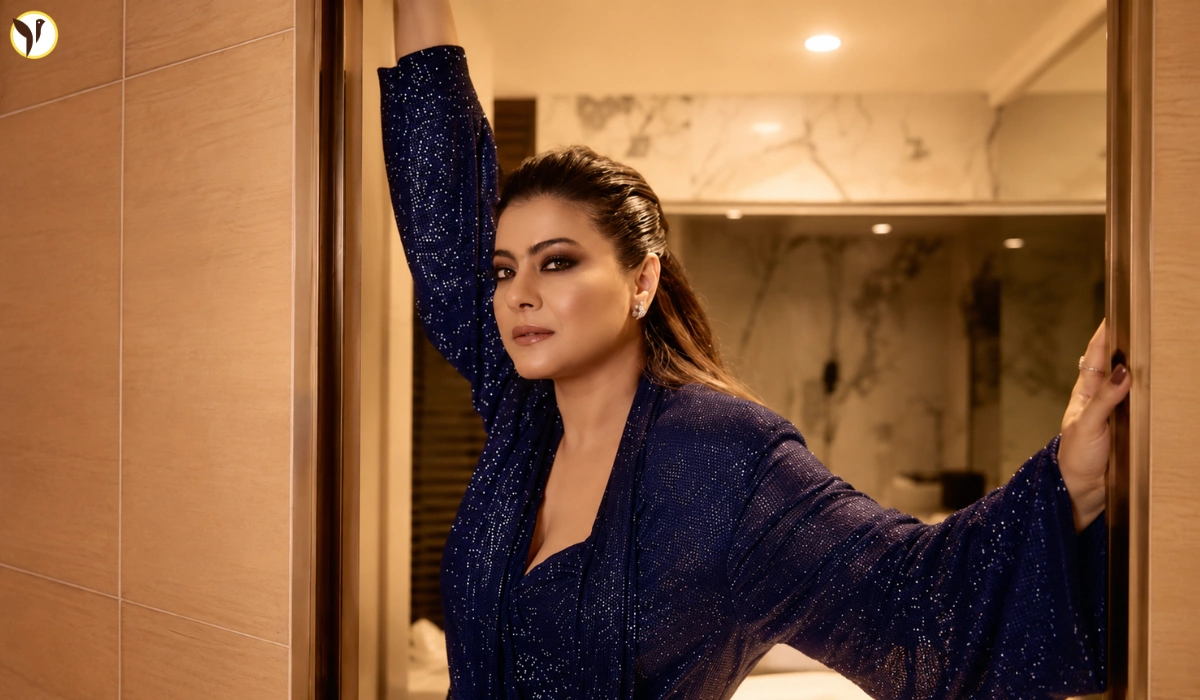


On what would have been Shomu Mukherjee's 83rd birthday, Kajol posted eight words that said everything about grief that time refuses to erase.
There are tributes that perform grief, and there are tributes that simply are grief. On June 19, 2026 — what would have been filmmaker Shomu Mukherjee's 83rd birthday — his daughter Kajol posted something that belonged firmly in the second category. Eight words. No photograph this time. No throwback reel. Just a letter opener addressed to a man who has been gone for seventeen years:
"Dear dad, I still don't know how to do this without you."
She captioned it: "Miss u every day.. #daddysgirlforever"
The simplicity of that sentence is precisely what makes it difficult to read. Kajol is, by any public measure, a woman who has it together — an actor who has commanded the screen for over three decades, a mother of two, a woman whose confidence has become something of her signature. And yet, here she is, once more, admitting to her father that she still hasn't figured out how to exist in a world he no longer occupies.
That is not a performance. That is a person.
A Birthday That Cannot Be Celebrated
Shomu Mukherjee was born on June 19, 1943, in Jamshedpur — then Bihar Province, British India. He came from one of Bollywood's foundational families: the son of legendary producer Sashadhar Mukherjee, who is credited with building Filmalaya Studios and shaping Hindi cinema through the 1940s and 50s.
Shomu followed his father into the industry not as an actor but as a craftsman of stories — directing, writing, and producing across a career that spanned the 1970s through the 1990s. While making Ek Baar Muskura Do (1972), he met the film's lead actress, Tanuja, and the two eventually married in 1973. Their daughters — Kajol and Tanisha — would both go on to become actresses, though it is Kajol who inherited the kind of stardom that redefines eras.
He died on April 10, 2008, following a heart attack. He was 64. Kajol was 33. Young enough for the loss to rupture something permanently; old enough to understand that it would never fully close.
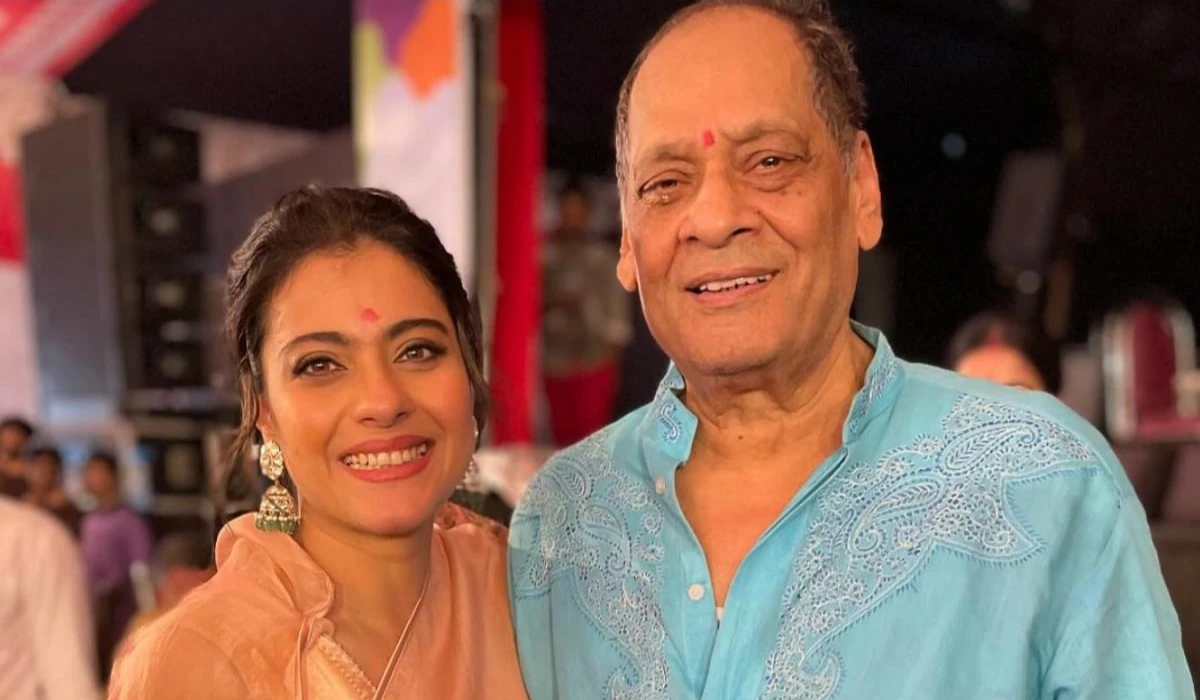
Shomu Mukherjee: The Filmmaker Behind the Family Name
|
|
|
|
|
|
|
|
|
|
|
|
|
|
|
|
|
|
|
|
|
|
|
|
|
|
|
|
|
|
|
|
Shomu Mukherjee's filmography is modest by mainstream standards, but his family's legacy in Indian cinema is anything but. The Mukherjee-Samarth network includes cousins Rani Mukerji, filmmaker Ayan Mukerji, and the late actor Deb Mukherjee — making it one of the most interconnected dynasties in Bollywood's history. Shomu's contribution was quieter, but in the industry's inner architecture, the family name carries weight that no single film can fully represent.
Seventeen Years of Remembering: A Pattern of Public Grief
What is striking about Kajol's relationship with her father's memory is not just that she remembers him — it is how she remembers him, and what she chooses to say each time.
The tributes have never been identical. They evolve. They reveal different chambers of the same loss.
|
|
|
|
|
|
|
|
|
|
|
|
|
|
|
|
|
|
|
|
|
|
|
|
Read together, these posts function less like a social media archive and more like a private journal made accidentally public. Each year adds another entry to a conversation that only one person can conduct.
The 'Tigress' and Her Maker
If there is a single image that defines how Kajol understands her inheritance from her father, it is the nickname he gave her: tigress.
On Father's Day 2025, she wrote that the confidence people associate with her most — that unfiltered, un-self-conscious presence that makes her one of the most watchable actors of her generation — came directly from Shomu Mukherjee. He told her to be loud, to be proud, to live without a filter. In a film industry that can spend entire careers quietly sanding down a woman's edges, that is not a small thing to give a daughter.
It also explains the grief. When the person who built your foundation is gone, you don't just miss them — you keep reaching for them whenever the ground feels uncertain. "I still don't know how to do this without you" is not weakness. It is an honest accounting of what it means to lose someone who was, quite literally, structural to who you became.
The Mukherjee-Samarth Dynasty: Context in Numbers
|
|
|
|
|
|
|
|
|
|
|
|
|
|
|
|
|
|
|
|
|
|
|
|
|
|
|
|
|
|
|
|
|
|
|
|
What a Letter to the Dead Actually Does
There is a long tradition of public figures writing to people who can no longer receive the words — in eulogies, in memoir, in poetry. What makes Kajol's repeated practice distinctive is that she does it not at moments of closure but at moments of ordinary time: birthdays, anniversaries, Father's Day. The recurring dates that mark presence in the living and absence in the dead.
In her 2024 post, she posed a question that was really a search for framework: "How did we remember people before photographs or videos? How did we grieve without societal pressures and religious expectations?" Her answer was that we grieved through action — through becoming the things they wanted us to be, through living in ways that made their existence matter.
"Missing them isn't enough; doing something about it every day makes it bearable."
This year, she stripped even that framework away. The post from June 19, 2026 has no philosophy in it. No lesson. No conclusion. Just "Dear dad" — the form of a letter, addressed to someone who cannot open it — and the admission that she still doesn't know how to manage without him.
Perhaps that is the truest thing anyone can say about grief after seventeen years: not that it gets better, but that the not-knowing becomes something you learn to carry.
Where Kajol Stands in 2026
At 51, Kajol remains one of Hindi cinema's most recognisable faces, with a career spanning over three decades and anchored by films like Dilwale Dulhania Le Jayenge, Kuch Kuch Hota Hai, Kabhi Khushi Kabhie Gham, and My Name Is Khan. She recently marked the 20th anniversary of Fanaa, her 2006 thriller with Aamir Khan, sharing memories from their Poland shoot. Her most recent projects include the OTT legal drama The Trial on Disney+ Hotstar and Do Patti (2024), in which she played a police officer for the first time — the film was also produced by her co-star Kriti Sanon.
Her professional momentum is undeniable. And so, quietly, is the grief she carries alongside it.
The two things are not in conflict. That, perhaps, is the most human part of the story.
Other Articles to Read: