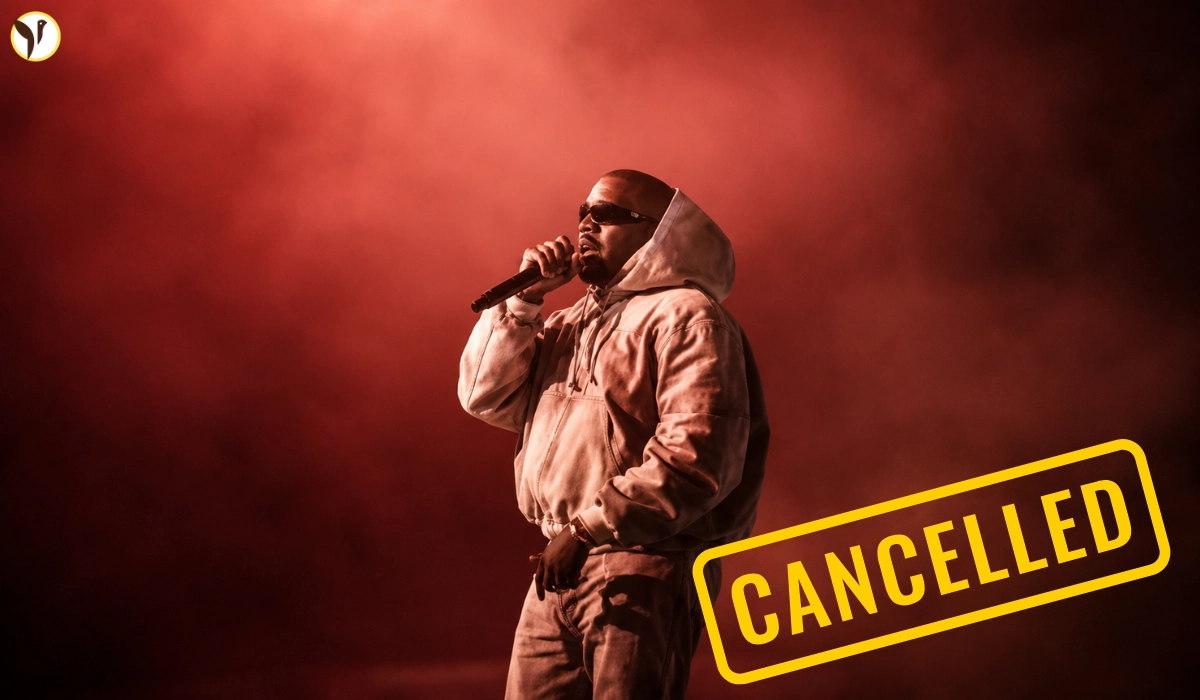


Kanye West’s New Delhi concert has been cancelled after officials issued security-related directives, ending months of uncertainty around his delayed India debut. The organisers say full refunds will be issued, and they are still exploring a new date and venue with Ye’s team.
The Story No One Told Completely
It was supposed to be a historic night — the first time Kanye West (now legally Ye) ever performed on Indian soil. Over 130,000 fans had queued virtually before a single ticket was sold. Scalpers had already flipped passes for ₹30,000 apiece. The Jawaharlal Nehru Stadium was set to host what organiser White Fox called "one of the largest live productions ever staged in India."
Then, on the evening of May 15, 2026 — just eight days before showtime — it was over.
The Kanye West New Delhi concert cancellation isn't just a celebrity headline. It's a story about security threats, geopolitical turbulence, a global tour in crisis, and tens of thousands of Indian fans left holding worthless tickets for the second time in two months.
Here's everything you need to know.
What Happened: The Timeline at a Glance
|
|
|
|
|
|
|
|
|
|
|
|
|
|
|
|
|
|
|
|
|
|
|
|
Why Was the Concert Cancelled? The Official Reason
Organiser White Fox released a formal statement on Instagram on May 15, which read in part:
"We are deeply disheartened to announce that Ye Live in India, scheduled for 23rd May 2026 in New Delhi, is unable to proceed due to directives issued by officials. After months of planning and preparation for what was set to be one of the largest live productions ever staged in India, the safety and well-being of attendees and the citizens of India remain our highest priority during this sensitive time."
The statement referenced "directives issued by government and law enforcement authorities" citing a "current high-alert situation in the capital." According to TMZ, Indian authorities had raised concerns about possible terrorism threats in and around Delhi — the kind of credible intelligence that leaves event organisers no room for manoeuvre.
The Bigger Picture: Why Delhi Was Already on Thin Ice
This wasn't a sudden decision made in a vacuum. The New Delhi concert had been wobbling for months:
First postponement (March 2026): The show was originally set for March 29, 2026. It was pushed back due to rising geopolitical tensions linked to the US-Iran situation, which created broader regional security concerns across South Asia at the time. Fans were told their tickets would remain valid for the rescheduled May 23 date — with no refund option offered then.
Pre-show red flags (early May): Despite White Fox's social media accounts posting teaser reels of stage setups and production previews in the days before cancellation, many fans noticed something odd: physical tickets had not arrived with fewer than 10 days remaining before the event. That absence triggered early alarm bells on Indian social media.
The capital's security climate: While Indian authorities have not publicly detailed the specific threat, New Delhi has operated under elevated security protocols given the India-Pakistan tensions in the broader regional context of 2026. A stadium event drawing tens of thousands — with international news profile — presented a risk calculus officials were unwilling to accept.
Who Were the Fans Affected — and What's the Scale?
When tickets dropped on February 18, 2026 via District by Zomato (the live events wing of Zomato), the response was staggering. More than 130,000 users sat in a virtual queue before a single seat was sold — what organisers called the largest pre-sale surge for any solo artist in Indian live music history.
Ticket prices ranged from ₹6,000 to ₹30,000 for official passes. Scalpers almost immediately acquired large volumes and listed them on third-party platforms at even higher premiums — a problem India has struggled to legislate against. (The Delhi High Court issued notice on a PIL against ticket scalping in 2024, but no comprehensive legislation has been passed as of this writing.)
The concert was being billed as a "one-night cultural phenomenon" with Ye performing career-spanning hits — from The College Dropout through Donda — with large-scale visuals and production. Fans had travelled plans, accommodation bookings, and in some cases ₹30,000+ sunk into a show that has now been cancelled twice.
What Happens to Your Tickets? Refund Details
The clearest immediate question for ticketholders is: will I get my money back?
According to White Fox and District by Zomato, the answer is yes — and without any action required on your part.
|
|
|
|
|
|
|
|
|
|
|
|
|
|
|
|
If you bought your ticket from a scalper or third-party site: You are not covered by White Fox's refund policy. Your only recourse is to pursue the reseller directly — which is why buying from unofficial sources remains a significant risk for Indian concert-goers.
Is the Concert Dead Permanently?
Not necessarily. A source cited by TMZ indicated that discussions are underway between White Fox and Ye's management team about a possible October 2026 rescheduling. White Fox's own statement confirmed that conversations about a new venue and date are ongoing.
However, any future date would represent the third attempt to bring Ye to India — and would face the same security and geopolitical conditions that have derailed two prior tries.
The Global Pattern: Why Delhi Isn't Alone
The New Delhi cancellation is the most recent chapter in a chaotic year of touring for the artist formerly known as Kanye West. Here's how Ye's 2026 global tour has unravelled:
|
|
|
|
|
|
|
|
|
|
|
|
|
|
|
|
|
|
|
|
|
|
|
|
The pattern reflects a dual crisis: some cancellations stem from security conditions entirely external to Ye (as is the case in India), while others are directly linked to controversy over his past public statements — including widely condemned antisemitic remarks made in 2022–23. In January 2026, Ye published a full-page apology in the Wall Street Journal and visited a Jewish human rights organisation, publicly accepting responsibility for his prior remarks. Some governments and festival organisers have still chosen not to host him.
India's cancellation appears clearly in the first category: a government directive based on a security threat, not a content objection.
Rapper Ye, formerly known as Kanye West, has had his much-awaited India debut concert in New Delhi cancelled following security directives issued by government and law enforcement authorities. The concert, scheduled for May 23, 2026, was earlier postponed once due to geopolitical… pic.twitter.com/mntVx3zW97
— IndiaToday (@IndiaToday) May 16, 2026
What This Means for India's Live Music Market
India has become one of the world's fastest-growing markets for international live events. In recent years, artists like Coldplay, Travis Scott, Diljit Dosanjh (whose Dil-luminati tour broke records), and Karan Aujla have drawn enormous crowds — and enormous demand that the country's ticketing infrastructure has struggled to serve.
The Ye India saga exposes two structural vulnerabilities in that growing market:
1. No anti-scalping law. Over 130,000 fans queued for Ye's tickets; scalpers scooped up large blocks immediately and resold them at multiples of face value. India currently has no comprehensive legislation preventing this. Despite a PIL before the Delhi High Court in 2024, no binding regulation has been enacted. Fans who paid inflated secondary prices now have no legal recourse for a refund.
2. Force majeure in geopolitically sensitive periods. India's position in a dynamic regional security environment means that large public gatherings — especially those with significant foreign profile — are subject to government override on short notice. Organisers, artists, and ticketholders alike bear that risk.
The broader takeaway for industry observers: India's live music sector is undeniably booming, but the regulatory framework hasn't kept pace with the scale of demand or the complexity of international bookings.
Other Articles to Read: