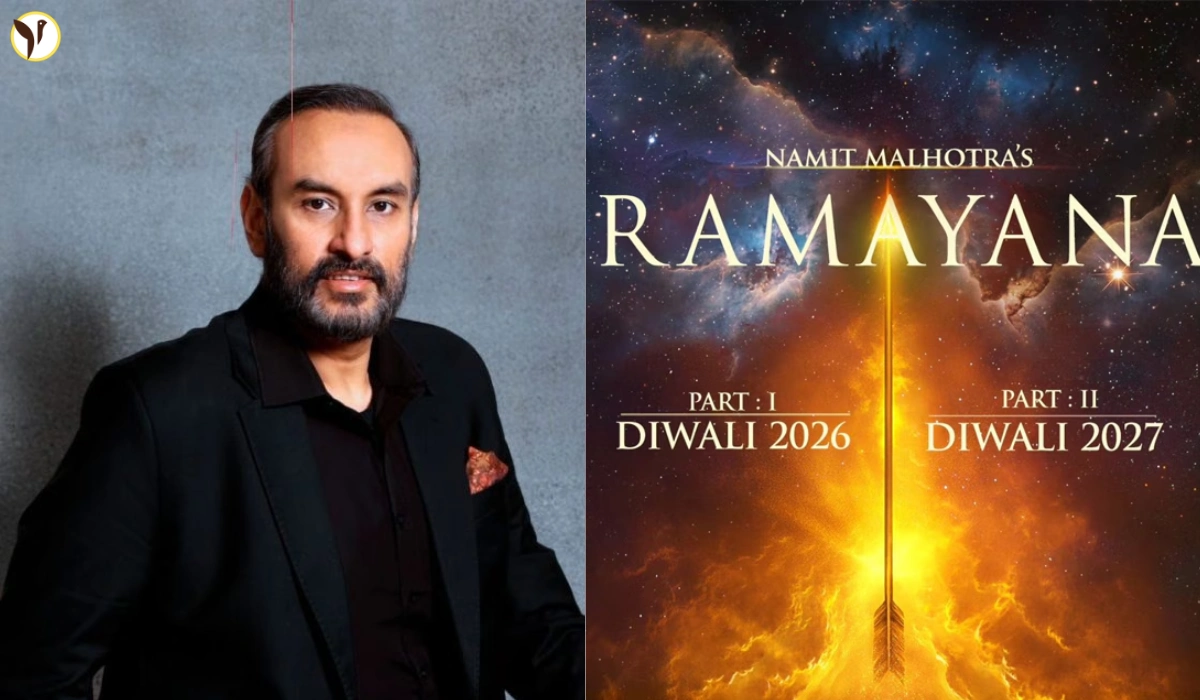


India’s most anticipated mythological film is positioning itself not as another adaptation, but as a cinematic event designed for global multiplexes. Producer Namit Malhotra has described Ramayana as a 20-year pursuit, and the project is now moving toward a two-part theatrical release planned for Diwali 2026 and Diwali 2027.
With Nitesh Tiwari directing and a cast led by Ranbir Kapoor, Yash, Sai Pallavi and Sunny Deol, the film is attempting something Indian cinema has rarely done. It seeks to present a sacred epic with Hollywood-scale production values while retaining cultural reverence.
For Delhi and North Indian audiences especially, the timing feels significant. Post the Ayodhya temple consecration in 2024, the Ramayana has returned to public conversation with renewed intensity. A cinematic retelling now enters a landscape that is emotionally charged and commercially ambitious.
From Hollywood VFX to an Indian Civilizational Epic
Malhotra’s credentials are central to this project’s positioning. As founder of Prime Focus and CEO of DNEG, he has overseen visual effects for international films including Dune, Inception and animated titles like The Garfield Movie. DNEG has won multiple Academy Awards for visual effects.
That global pipeline is now being redirected toward an Indian narrative. Malhotra has indicated in public forums that this film is meant to bridge Indian storytelling and global cinematic standards. The emphasis is not only on scale, but on authenticity in landscapes, creature design and battle sequences.
The ambition is clear. Indian mythology is being framed not as a regional genre, but as material capable of standing alongside international franchise spectacles.
A Creative Blend of Reverence and Technology
Malhotra has emphasized that the film is being approached with respect for a 5,000-year civilizational legacy. Reports suggest that cultural consultants, scholars and script advisors are involved to maintain script integrity.
At the same time, DNEG’s technological resources are expected to deliver large-scale recreations of Ayodhya and Lanka, including war sequences and mythological creatures. IMAX framing and immersive sound design are being prioritized for theatrical impact.
The music collaboration is also drawing attention. Hans Zimmer and A. R. Rahman are reportedly associated with the score. If confirmed in full capacity, the pairing could blend orchestral sweep with Indian melodic traditions.
For Indian cinema, such cross-industry collaborations are rare at this scale.
Casting Strategy and Cultural Positioning
Casting choices appear designed to balance commercial draw and character suitability.
Ranbir Kapoor brings recent dramatic gravitas following performances in large-scale films. Yash, after the success of K.G.F: Chapter 1 and its sequel, carries pan-India appeal and international recognition among diaspora audiences. Sai Pallavi’s reputation for authenticity and emotional depth aligns with the portrayal of Sita as a moral anchor rather than a decorative presence. Sunny Deol’s casting as Hanuman adds mass appeal, particularly in North India.
The director’s filmography is equally relevant. Nitesh Tiwari previously directed Dangal and Chhichhore, both known for emotional storytelling grounded in character arcs. Translating that emotional discipline into a mythological framework will be crucial.
Budget, IMAX Strategy and Overseas Push
Industry estimates place Part 1’s budget near ₹800 crore, making it one of the most expensive Indian productions. IMAX certification and a 1.90:1 aspect ratio presentation are being targeted to heighten battle sequences and large-scale environments.
The overseas release strategy reportedly includes North America, Europe and Gulf markets. Yash’s international footprint from the KGF franchise strengthens that positioning.
The goal is not only domestic box office success, but global theatrical presence.
Audience Expectations in a Sensitive Era
The Ramayana carries devotional significance beyond cinematic interpretation. Earlier television adaptations, especially the 1987 series, created enduring visual references for audiences.
Today’s viewers are more visually literate and internationally exposed. They expect cutting-edge visual effects without compromising spiritual integrity. That balance is delicate.
Social media sentiment shows strong emotional ownership of the narrative. Audience response will depend on whether the film preserves core character traits and ethical themes.
Industry Impact and Long-Term Outlook
If executed successfully, this two-part Ramayana could redefine how Indian studios approach mythological storytelling. It may encourage large-scale investments in culturally rooted content with international production pipelines.
However, expectations are immense. Visual spectacle alone will not secure lasting acclaim. Narrative sincerity, script strength and tonal balance will determine the film’s legacy.
As of now, the project stands as one of the most ambitious undertakings in modern Indian cinema.