


Rajeev Khandelwal, the acclaimed actor known for his roles in Aamir and Kahaani 2, has once again laid bare his lingering guilt over his mother Vijay Laxmi Khandelwal's death from ovarian cancer in 2018. In a raw recent interview, he confessed to blaming himself for missing early symptoms, turning personal grief into a powerful call for health awareness. This revelation, shared amid his busy career, underscores the profound emotional toll of cancer on families in India.
The Confession That Stopped a Primetime Audience
Eight years have passed. The grief has settled into something quieter — but the guilt, it seems, has never left.
In an upcoming episode of Sony Entertainment Television's reality show Tum Ho Naa, Bollywood and television actor Rajeev Khandelwal broke down the composed, camera-ready exterior that audiences have known for over two decades. Speaking candidly on-air, the 50-year-old actor admitted that he still holds himself responsible for not recognising the early warning signs of his mother's ovarian cancer — a disease that ultimately claimed her life in 2018.
The moment is not just television. It is a reckoning — both personal and public — that arrives at an almost poignant time: one day before World Ovarian Cancer Day, observed globally on May 8.
What Happened: The Loss Rajeev Has Carried Since 2018
Rajeev Khandelwal's mother, Vijay Laxmi Khandelwal, passed away in May 2018 after fighting ovarian cancer for approximately a year and a half. The actor, known for restrained performances in projects like Aamir (2008) and Left Right Left, announced her passing on social media with understated grief:
"My mom passed away day before yesterday after a year n a half long fight with cancer. We fought together, we hoped together but we couldn't come out of it together. I and my family are fine and have come to terms with it. She now lives within me."
In a subsequent interview with The Times of India at the time, Khandelwal had described the experience in deeply human terms — speaking of how his mother had become like his "daughter" or "baby" in her final months, with him and his two brothers taking turns to be with her around the clock. "While there is peace that she is not suffering anymore," he had said, "there is this heart-wrenching thought that from here on, I can't call anyone mummy."
Now, in 2026, the wound has reopened — purposefully, on national television.
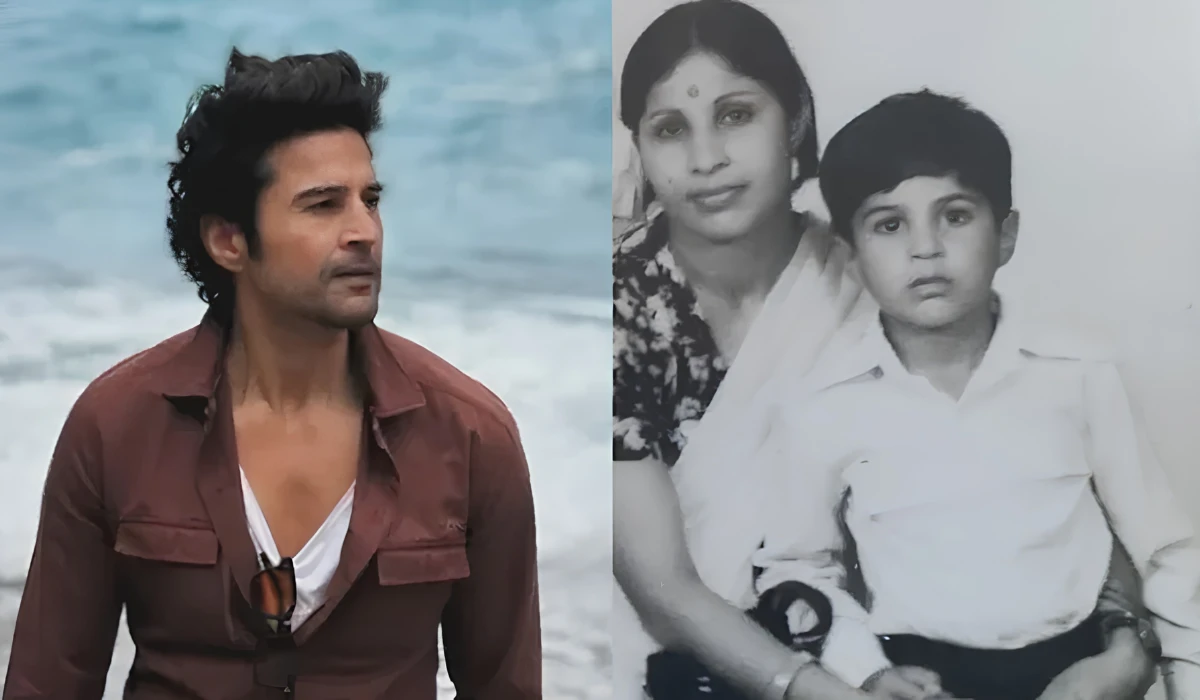
Why He Spoke Now: Tum Ho Naa and a Deliberate Platform
Khandelwal's return to daily television after several years came through Tum Ho Naa, a women-centric reality game show that premiered on Sony TV on April 28, 2026. The actor has described the show as "a tribute to women" — and his motivation for joining it was deeply personal from the start.
"I have only done shows where they've actually dared to step out of the routine," he told ANI at the launch. "This show is very organic. It happens at the moment." He added that his desire to "thank" his largely female audience after years away from TV was a primary driver.
But the upcoming episode reveals another layer: Khandelwal is using Tum Ho Naa as a vehicle for something far more urgent than entertainment. He has chosen prime-time television to do something doctors, campaigns, and public health announcements often fail to do — make ovarian cancer personal.
In his words on the show: "Ovarian cancer ko control kar sakte hain. Main apni mummy ka nahi kara saka, lekin aapke ird-gird jo mahilaayein hain unke liye zaroor soch sakte hain, samajh sakte hain."
(Translation: "Ovarian cancer can be controlled. I couldn't do it for my mother, but you can definitely think about and take care of the women around you.")
The Symptoms He Missed — And That Millions Still Ignore
Khandelwal's guilt has a clinical dimension that is worth taking seriously. He urged viewers to act immediately if they or the women in their lives experience any of the following:
- Persistent back pain (not linked to injury or posture)
- Loss of appetite or feeling full very quickly
- Abdominal bloating or a sensation of gas that continues over weeks
- Pelvic discomfort or pressure
- Unexplained fatigue
Why This Matters: Ovarian Cancer's Silent Burden in India
The numbers behind Khandelwal's personal story form a public health crisis hiding in plain sight.
|
|
|
|
|
|
|
|
|
|
|
|
|
|
|
|
|
|
|
|
|
|
|
|
The central problem is timing. Most women in India are diagnosed at an advanced stage, when treatment becomes significantly more difficult. A 2025 cross-sectional study published in the Indian Journal of Medical Research found that while fatigue (61.7%) and pelvic pain (54.2%) were recognisable, symptom awareness was strongly tied to socioeconomic class — meaning lower-income women are the least likely to connect vague discomfort to cancer.
Crucially, a Pap smear does not detect ovarian cancer, a fact many people are unaware of. The disease requires specific blood tests (like CA-125) and imaging for early detection.
The Timing: A Celebrity's Confession, One Day Before World Ovarian Cancer Day
The broadcast of this episode lands just before World Ovarian Cancer Day — May 8, 2026, whose global theme this year is "No Woman Left Behind." The theme calls for equitable access to timely diagnosis, quality care, and emotional support.
The convergence is striking. When a male celebrity — an actor, a son — steps on camera and admits he didn't know the symptoms, and that ignorance cost him his mother, it breaks through the noise that statistics and pamphlets rarely do. Khandelwal is not speaking as a health advocate. He is speaking as someone who failed to see the signs in time, and who has lived with that weight for eight years.
That kind of honesty, on that kind of platform, carries weight.
#Television | Rajeev Khandelwal Regrets Not Realising Mother's Cancer On Time: 'Khud Ko Gunehagaar Samajhta Hoon'https://t.co/6QLxlFH6Tj
— News18 (@CNNnews18) May 7, 2026
A Timeline of Grief and Advocacy
|
|
|
|
|
|
|
|
|
|
|
|
|
|
|
|
|
|
|
|
|
What Happens Next: The Ripple Effect of This Moment
The real question is not whether Khandelwal's confession will trend — it will. The question is whether it will move people to act.
India's ovarian cancer burden is worsening partly because the disease remains culturally under-discussed. Women frequently attribute bloating and back pain to dietary issues or reproductive cycles, and consulting a doctor for such "vague" symptoms carries social hesitation. When a respected male public figure says, plainly, "I didn't know, and I regret it every day," it repositions the conversation.
There is also a structural opportunity here. Tum Ho Naa airs on Sony TV — a channel with a large female viewership. If the show uses subsequent episodes to amplify awareness (through oncologists, survivors, or helpline information), it could function as more than entertainment.
Khandelwal, for his part, has already signalled his intent. Every episode of Tum Ho Naa, he has said, features something he wears that "represents women." It is a small, consistent gesture — but the ovarian cancer episode suggests there is a deeper commitment at work.
Other Articles to Read:
- Urvashi Rautela Finally Shuts Down Trolls Over Her Dabidi Dibidi Song With Balakrishna
- Citadel 2 Review: Is Priyanka Chopra & Richard Madden’s Series Worth the Hype?
- Ted Turner Dies At 87 Years After Creating The World’s First 24 Hour News Network
- Amanpreet Singh Passes Away at 36, Yuvraj Singh Devastated
- James Cameron & Disney Sued Over Avatar Character: What Started the Legal Battle?