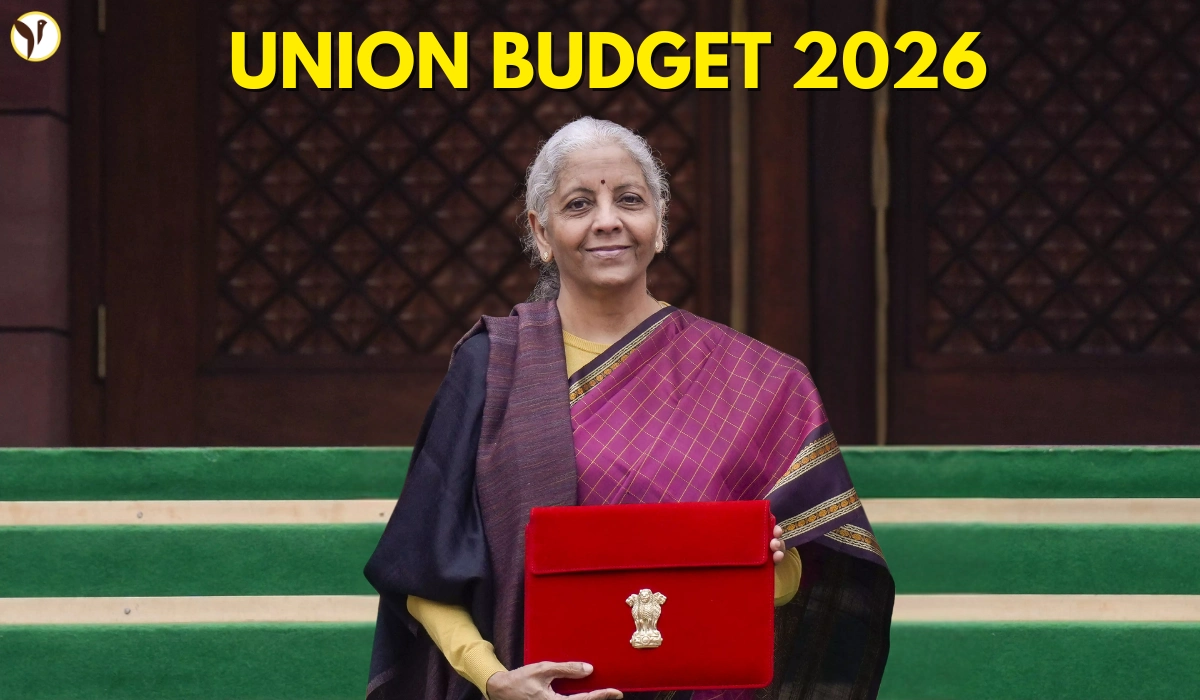


Finance Minister Nirmala Sitharaman presented the Union Budget 2026 on Sunday, marking a rare budget announcement on a weekend. While many salaried taxpayers expected changes in income tax slabs, the government chose stability over surprises. The real relief for salaried workers does not come from new slabs, but from simpler tax rules, lower upfront taxes on spending, and smoother return filing.
Budget 2026 strengthens the new tax regime as the default option, making it easier for salary earners to understand their tax liability and keep more of their income. From zero tax up to a certain income level to lower TCS on foreign spending, the changes quietly benefit the middle class. This article explains how salaried employees can legally reduce their tax burden under Budget 2026 and plan their finances better.
Budget 2026 Income Tax Slabs for Salaried Employees
The government has kept income tax slabs unchanged for FY 2026–27. Salaried taxpayers continue under the same slab structure introduced earlier under the new tax regime, which is now the default choice.
|
|
|
|
|
|
|
|
|
|
|
|
|
|
|
|
|
|
|
|
|
|
|
|
A 4% health and education cess applies to the final tax amount. The key benefit lies in the Section 87A rebate, which effectively cancels tax liability for eligible salaried taxpayers.

Why Section 87A Rebate Is a Big Win for Middle-Class Salaried
Under the provisions of Budget 2026, salaried individuals with taxable income up to ₹12 lakh can effectively pay zero income tax after applying the standard deduction and the Section 87A rebate. The rebate fully offsets the tax liability that arises under the new tax regime, making the entire income tax-free for eligible salaried taxpayers. This benefit removes the need for complex tax planning, heavy investments, or detailed paperwork. As a result, a large section of the middle-class salaried workforce can retain more of their earnings while following a simple and transparent tax structure.
How the New Tax Regime Helps Salaried Workers Save More in Budget 2026
Budget 2026 continues to promote the new tax regime as the preferred system for salaried taxpayers. It removes the pressure of tracking deductions like rent receipts or insurance proofs.
|
|
|
|
|
|
|
|
|
|
|
|
For higher incomes, savings increase further. At a salary of ₹20 lakh, savings under the new regime can cross ₹1 lakh, depending on deductions claimed earlier.
Lower TCS Rates in Budget 2026 Reduce Cash Burden for Salaried Families
One of the most practical benefits in Budget 2026 is the sharp reduction in Tax Collected at Source (TCS) on overseas spending. Key TCS Changes That Help Salaried Employees:
- TCS on foreign education, medical treatment and overseas tours reduced from 20% to 2%
- Applies to spending above ₹7 lakh under the Liberalised Remittance Scheme
- Immediate relief at the time of payment

Extended ITR Revision Deadline for Salaried Taxpayers
Budget 2026 makes tax filing less stressful by extending the deadline to revise Income Tax Returns. Key Filing Changes:
- Revised ITR deadline extended to March 31 of the assessment year
- Appeals now require only 10% pre-deposit, reduced from 20%
- Updated returns allowed even after scrutiny begins, with a small additional tax
Standard Deduction Remains at ₹75,000 for Salaried Employees
The standard deduction of ₹75,000 remains unchanged in Budget 2026. It directly reduces taxable salary income before tax slabs apply.
- Raises effective tax-free income
- Works alongside Section 87A rebate
- No documentation required
For many salaried workers, this pushes the effective zero-tax limit even higher.
Old vs New Tax Regime in Budget 2026: Which Saves More for Salaried?
Tax Comparison for ₹25 Lakh Annual Salary:
|
|
|
|
|
|
|
|
|
|
|
|
|
|
|
|
OTHER ARTICLES TO READ:
- Who Took Home Grammy Awards in 2026 and Where to See the Ceremony?
- Why Is Bill Gates’ Name Surfacing Again in Epstein File Claims?
- Australian Open 2026 Final LIVE: Aryna Sabalenka vs Elena Rybakina Showdown
- Why Is Pat Cummins Missing the T20 World Cup 2026? What Went Wrong
- What Did Yuzvendra Chahal Really Say About the AI ‘K3’ Poster That Went Viral?
- Why Rajat Dalal Slapped Digvijay in The 50 Show Promo
- Final Shot Done! Cocktail 2 Team — See How the Cast Celebrated
Why Budget 2026 Is a Long-Term Win for the Salaried Middle Class
The Budget 2026 introduces new ways to provide stability and consistency to the tax system through the reduction of the number of disputes, the decreasing the amount of taxes initially owed by salaried employees, and the introduction of a simplified system for filing tax returns (ie. a new Income Tax Act by April 2026). As a result, salaried employees will be able to spend more of their time working on their careers and financial future instead of worrying about the overbearing expense of their income tax obligations.