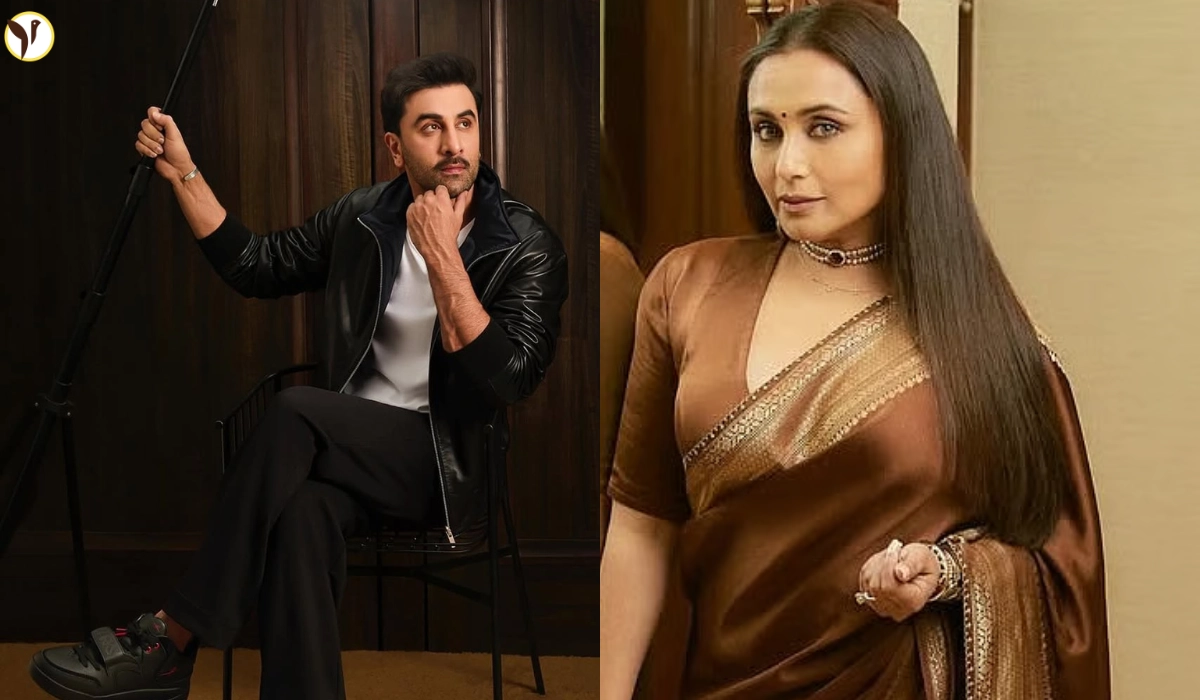


Ranbir Kapoor’s recent praise for Rani Mukerji has struck a chord because it goes beyond polite industry compliments. When a leading contemporary actor openly acknowledges the influence and depth of a senior performer, it offers a rare window into how Bollywood’s acting traditions are passed down, challenged, and preserved. For audiences, this isn’t just celebrity praise—it’s a reminder of why certain performers continue to matter across generations.
Respect That Reflects Bollywood’s Acting Legacy
Ranbir Kapoor describing Rani Mukerji as one of the finest actors Indian cinema has produced is significant because it comes from someone known for his own performance-driven choices. Ranbir belongs to a generation that grew up watching Rani headline women-centric films at a time when such projects were still considered risky. His admiration highlights how her work quietly shaped the standards that younger actors now inherit.
Rather than focusing on box-office numbers or star image, Ranbir’s words center on her commitment to character. This distinction matters. In an industry often driven by commercial metrics, acknowledgment of pure acting craft reinforces the value of performance over hype.
Working Together on ‘Saawariya’: A Learning Curve
Ranbir and Rani worked together early in his career, at a time when he was still finding his footing. That experience, by Ranbir’s own admission in past interactions, exposed him to an actor who treated every scene as a serious responsibility. Rani’s approach—preparing thoroughly, understanding emotional beats, and maintaining discipline on set—left a lasting impression.
For a newcomer, sharing screen space with an established performer can either intimidate or inspire. In Ranbir’s case, it appears to have done both. Observing Rani’s control over dialogue, silence, and emotional restraint offered lessons that can’t be taught in acting schools.
Why Rani Mukerji’s Career Still Commands Respect
Rani Mukerji’s longevity is not accidental. She navigated multiple phases of Hindi cinema—from romantic dramas to socially grounded stories—without losing relevance. Her performances have consistently balanced emotional intensity with restraint, a quality that many actors struggle to sustain over long careers.
What sets her apart is adaptability. As storytelling in Bollywood evolved, Rani transitioned seamlessly into roles that reflected changing audience sensibilities. This ability to grow with time is likely what Ranbir and others in the industry admire most.
OTHER ARTICLES TO READ:
- When Will JEE Main 2026 Session 2 Registration Start? Step-By-Step Guide
- Private Jet Crashes During Takeoff in US, 8 People on Board
- Wheel of Fortune India Premieres Tonight – Who Will Take the Jackpot?
- Renault Duster 2026 Debut Takes a Completely New Shape
- Why Trump Raised South Korea Tariffs to 25%—What It Means for India?
- Mahindra Thar ROXX Star Edition Signals a New Style Direction
- Has Border 2 Set the Highest Opening Benchmark of 2026?
Generational Dialogue Within Hindi Cinema
Ranbir’s comments also underline an unspoken dialogue between generations of actors. Bollywood often celebrates novelty, but it survives on continuity. When actors publicly acknowledge their predecessors, it creates a cultural bridge—reminding audiences that today’s performances are built on yesterday’s groundwork.
Such moments quietly reinforce respect within the industry. They show younger actors valuing experience, and senior performers being recognized not just as stars, but as benchmarks of excellence.
Conclusion
For viewers, Ranbir Kapoor praising Rani Mukerji offers more than celebrity sound bites. It encourages audiences to revisit her films with fresh perspective, understanding the discipline behind her performances. It also reframes Ranbir’s own career as one shaped by observation and learning, not just privilege or legacy.
In a media environment dominated by controversies, moments like these provide constructive insight into how cinema actually works—through mentorship, influence, and shared respect.