
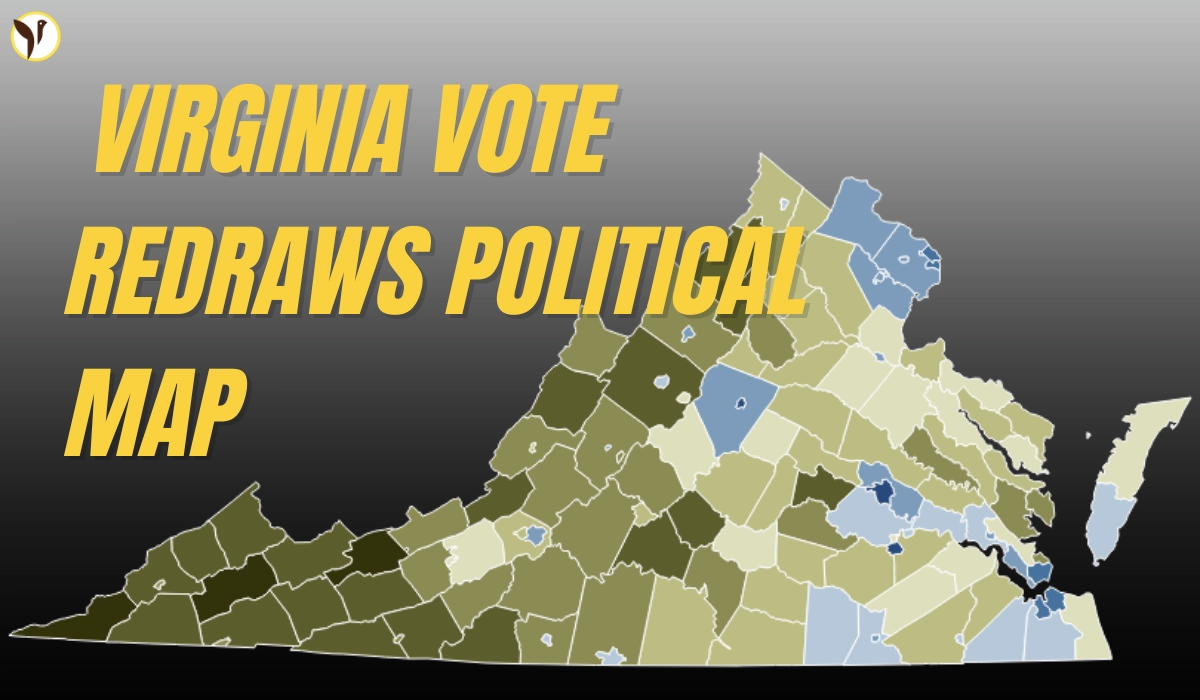


Virginia voters delivered a slim victory for Democrats on April 21, 2026, approving a constitutional amendment that allows lawmakers to redraw congressional districts ahead of the 2026 midterms. The measure passed with 51.5% of the vote, or 1,574,505 yes votes to 1,485,657 no votes, marking one of the commonwealth's most contentious ballot fights in recent memory. Turnout topped 3 million ballots in this off-year special election, fueled by massive spending and national attention on gerrymandering battles.
Why This Vote Happened Now
The amendment stems from a national wave of mid-decade redistricting sparked by Republican-led states like Texas in 2025. Democrats argued Virginia needed to respond to "restore fairness," temporarily handing map-drawing power back to the General Assembly until after the 2030 census. Voters had approved a bipartisan commission in 2020 to curb partisan maps, but Democrats, fresh off their 2025 sweep of governor, lieutenant governor, and attorney general races, pushed this change through two legislative sessions.
Legal drama defined the path to the ballot. A Tazewell County judge twice blocked it, citing procedural flaws, but the Virginia Supreme Court intervened, allowing early voting from March 6 to April 18. Republicans called it a power grab; Democrats framed it as defensive against GOP gains elsewhere.
Virginia voters line up at a polling station in Richmond during the April 21 special election (Source: Virginia Dept. of Elections).
Final Results Breakdown
With nearly all precincts reporting, yes votes held a roughly 89,000-vote edge. Urban and suburban strongholds like Alexandria (78.9% yes) and Albemarle County (64.8% yes) drove the win, while rural areas like Accomack (42.2% yes) and Alleghany (22.4% yes) went heavily no.
| Locality | Yes Votes | Yes % | No Votes | No % |
|---|---|---|---|---|
| Alexandria | 40,310 | 78.9% | 10,787 | 21.1% |
| Albemarle County | 31,456 | 64.8% | 17,104 | 35.2% |
| Accomack County | 5,085 | 42.2% | 6,963 | 57.8% |
| Alleghany County | 1,276 | 22.4% | 4,417 | 77.6% |
Polls had been tight, with late surveys like State Navigate (51% yes, April 2026) matching the outcome, while earlier Roanoke College polling showed a no lead.
The New Map's Potential Impact
The approved map, signed by Gov. Abigail Spanberger on February 20, reshapes all 11 districts into what analysts call a Democratic gerrymander favoring 10 blue seats. Currently, Virginia splits 6-5 Dem-GOP under the 2020 lines. Using past results, here's how it shifts:
| District | Old Map (2024 Pres. Dem %) | New Map (2024 Pres. Dem %) | Projected Rating |
|---|---|---|---|
| 1 | 46.7% | 52.5% | Safe D |
| 2 | 49.1% | 49.8% | Tossup |
| 5 | 43.2% | 53.3% | Likely D |
| 6 | 37.2% | 50.6% | Safe D |
| 9 | 27.5% | 25.0% | Safe R |
This could net Democrats up to four House seats in November 2026, tipping the narrowly divided chamber. Critics like former Gov. Glenn Youngkin decried it as diluting rural voices; supporters like Sens. Mark Warner and Tim Kaine backed it as a counter to Texas-style maps.
Proposed new Virginia congressional map highlighting district changes (Source: Virginia General Assembly).
Other Articles to Read:
- Dave Mason Dies at 79 Traffic Co-Founder and Rock Legend Remembered
- Claudia Doumit Secretly Marries ‘The Boys’ Co-Star Jack Quaid? Here’s the Full Story
- Ayushmann Khurrana Replaces Salman Khan In Sooraj Barjatya Yeh Prem Mol Liya
- Citadel 2 Trailer Drops: a Darker Spy World Returns with Deadlier Missions & Betrayals
- Alan Osmond Dies at 76 Remembering The Osmonds Star’s Legacy
Virginia Redistricting's Impact on 2026 House Races
Virginia's newly approved congressional map shifts the battleground dramatically toward Democrats ahead of November 2026 midterms. Currently holding 6 of 11 seats, Democrats stand to gain up to four more under this 10-1 partisan lean, potentially flipping House control amid President Trump's second term.
Key District Shifts
-
District 1 (Rob Wittman, R): Old map showed 46.7% Democratic presidential vote in 2024; new lines push it to 52.5%, turning a safe Republican seat likely Democratic. Rural southern areas diluted, favoring suburban growth.
-
District 2 (Jen Kiggans, R): From 49.1% Dem to 49.8%, creating a true tossup near Hampton Roads. Military bases and coastal conservatives now compete with urban influx.
-
District 5: Drops from 43.2% Dem to 53.3% advantage; Rep. Bob Good's rural base cracks open to Lynchburg colleges.
-
District 6: 37.2% to 50.6% Dem lean; merges three college towns in western Virginia to offset GOP strongholds.
-
District 9: Remains safe Republican at 25% Dem share, preserving one rural anchor for GOP.
Broader House Control Stakes
-
Democrats need only three net flips nationwide for majority; Virginia's four potential gains deliver that alone, countering GOP gains elsewhere like Texas.
-
Incumbents face primaries by August 4, 2026, with filing deadlines May 25; early chaos expected in reshuffled tossups.
-
Turnout critical: Off-year special election saw 3 million voters, but midterm surge could amplify suburban Democratic edges seen in 2025 statewide wins.
Legal and Political Risks
-
Supreme Court briefs incoming; GOP eyes Voting Rights Act challenges over rural vote dilution.
-
National ripple: Boosts Democratic morale post-2024 losses, but invites Republican retaliation in future cycles.
This map exemplifies mid-decade gerrymandering's return, prioritizing partisan math over 2020's bipartisan commission—watch November for confirmation.
High-Stakes Campaign and Money Trail
This became Virginia's priciest ballot measure ever, with over $93 million raised by April 16, mostly dark money. Pro-yes Virginians for Fair Elections spent $39 million on ads, backed by House Majority Forward and George Soros-linked groups. Opposition from Virginians for Fair Maps and Peter Thiel-funded PACs hit back with $20 million-plus, using stark civil rights imagery that drew NAACP rebukes.
Endorsements split sharply: Yes from Barack Obama, Nancy Pelosi, and Spanberger; no from Donald Trump, Mike Johnson, and the state GOP. Sign thefts and heated rhetoric marked the ground war.
What Comes Next for Virginia Politics
Legal fights loom post-election, with briefs due to the Supreme Court soon. If upheld, the map applies to 2026, 2028, and 2030 cycles. Republicans may challenge in federal court under Voting Rights Act claims, echoing national gerrymandering wars.
For 2026 midterms, incumbents like GOP Reps. Rob Wittman (1st) and Jen Kiggans (2nd) face tougher fights; new tossups could decide House control amid President Trump's second term. This vote underscores Virginia's purple evolution: Dems dominate statewide but GOP holds rural ground. Watch turnout in November—higher stakes could flip dynamics.
As a journalist tracking Virginia politics for years, this narrow win highlights voter fatigue with process overhauls but acceptance of partisan parity in a divided nation. It sets up blockbuster congressional races that could echo far beyond the commonwealth.