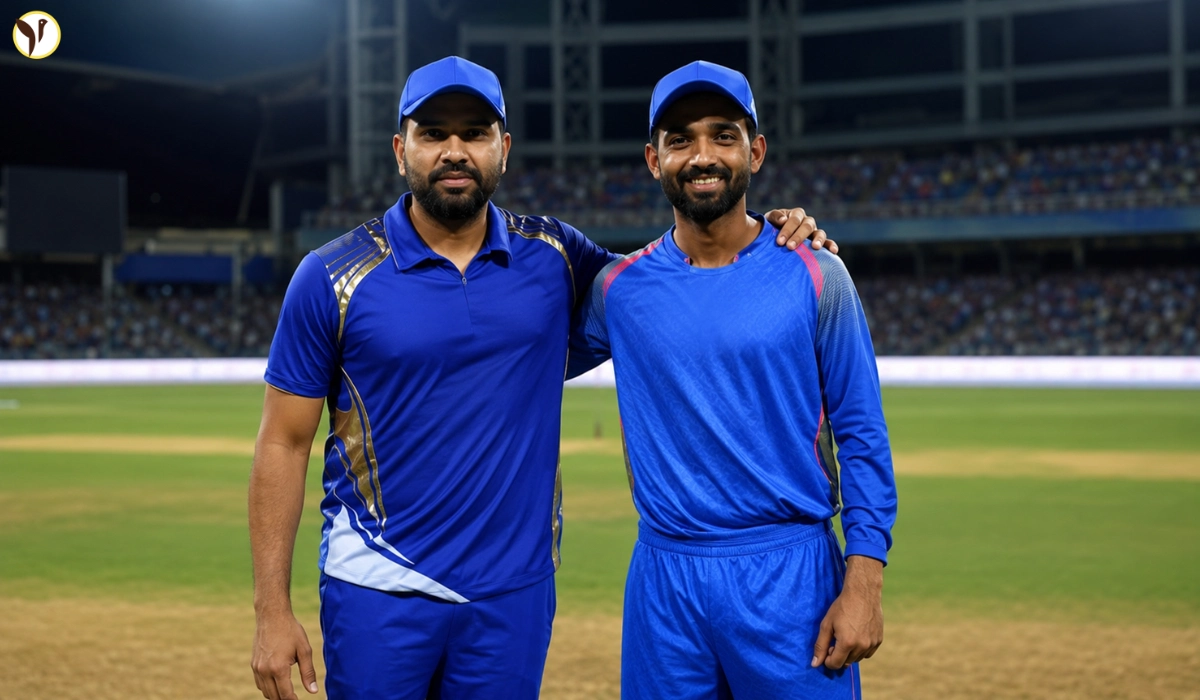
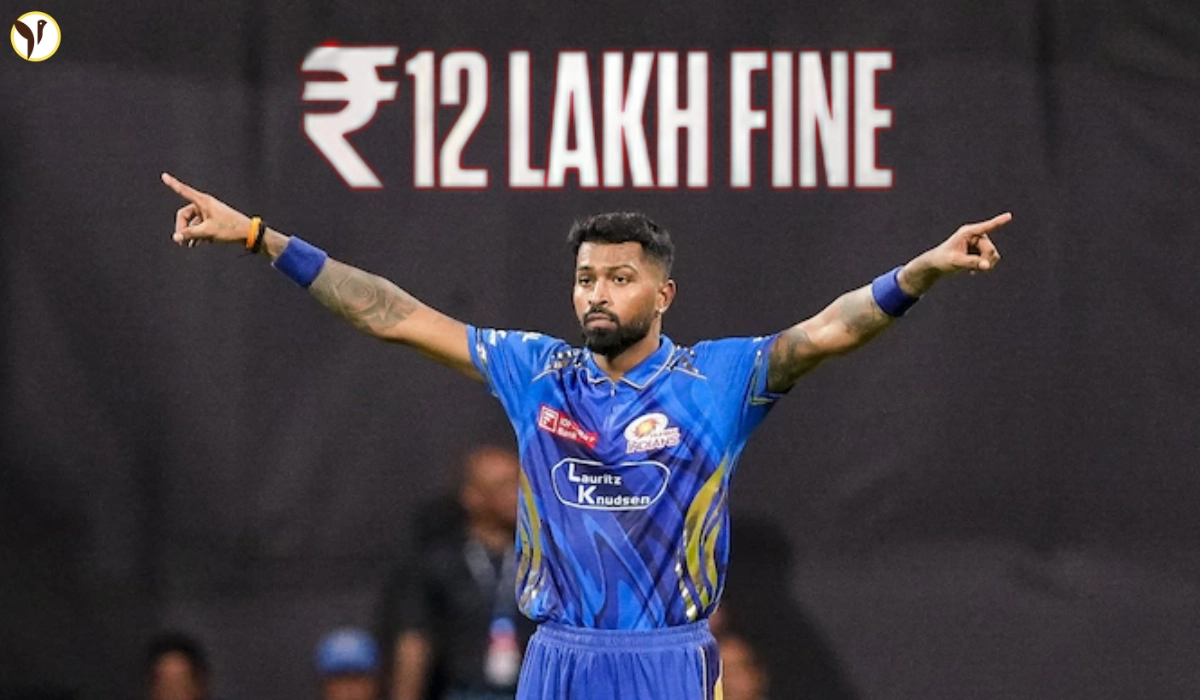


Published: April 14, 2026 | IPL 2026 | Mumbai Indians It was supposed to be just another IPL Sunday night at the Wankhede Stadium. Mumbai Indians were at home. The crowd was buzzing. The blue jerseys were out in full force. But by the time the match ended, Mumbai Indians captain Hardik Pandya walked off the field having lost the game — and woke up the next morning to find a ₹12 lakh fine sitting in his inbox.
Not for a heated argument with the umpire. Not for a controversial send-off. Not even for anything that happened during the bat-and-ball contest.
The reason? Mumbai Indians simply took too long to bowl their overs.
That's it. And yes, that alone costs you twelve lakh rupees in Indian Premier League cricket.
The IPL confirmed the fine after Match 20 between Royal Challengers Bengaluru and Mumbai Indians on Sunday, April 12, at the Wankhede Stadium. RCB beat MI by 18 runs in what turned out to be a high-scoring thriller.
But the fine is just one layer of the story. Below it lies a much bigger picture — one about a struggling team, a captain under fire, a historical match, and a set of IPL rules that most fans don't even know exist.
Let's break it all down, step by step.
What Exactly Happened? The Hardik Pandya ₹12 Lakh Fine Explained Simply
If you're hearing about "slow over-rate" for the first time and wondering what it has to do with cricket, here is the simplest explanation you'll ever find.
In T20 cricket, both teams have 20 overs to bowl. The match organisers want the game to finish within a certain time window. If your fielding team takes longer than allowed to complete their 20 overs, you're breaking a rule. And in the IPL, breaking that rule means the captain pays a fine — from his own pocket.
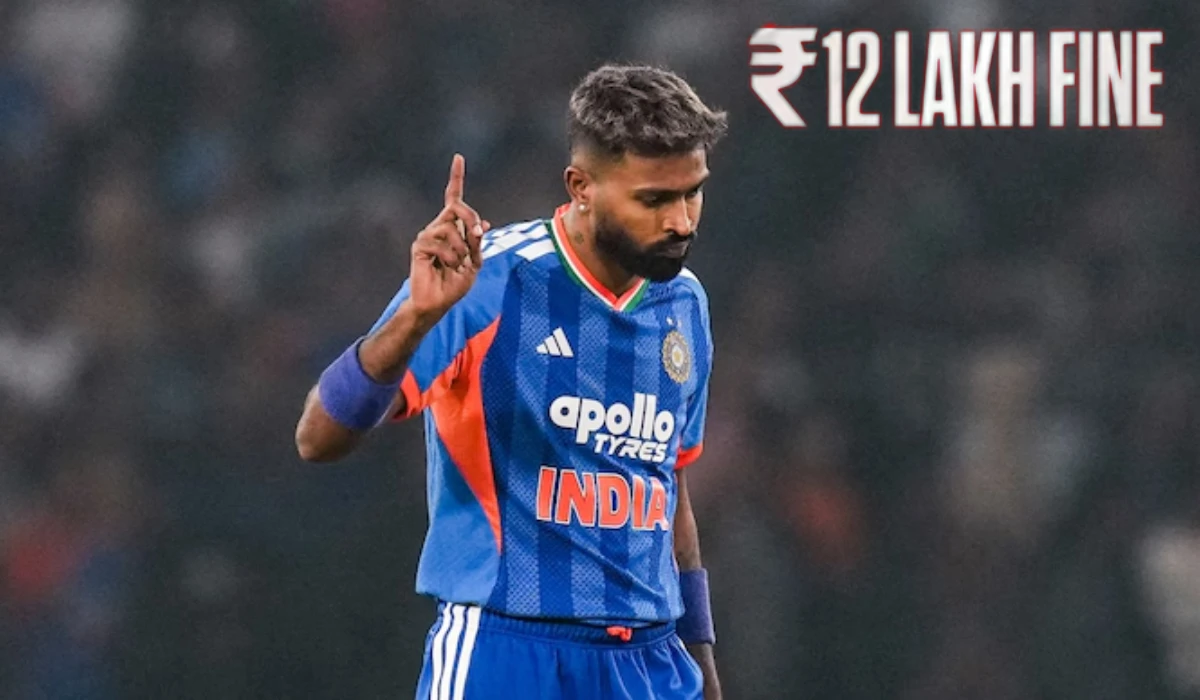
According to the official IPL statement: "Hardik Pandya, Captain, MI, has been fined for maintaining a slow over-rate. As this was his team's first offence of the season under Article 2.22 of the IPL's Code of Conduct, he has been fined INR 12 lakhs."
So the full, factual reason is this: Mumbai Indians, while fielding during RCB's innings, did not bowl their overs at the required pace. The game dragged longer than the time limit. And because Hardik is the captain — the person responsible for keeping his fielding side moving — he carries the penalty personally.
This is not a criminal offence. Nobody gets banned. Nobody loses a place in the team. But twelve lakh rupees is not pocket change, even for someone of Hardik Pandya's stature.
What is Article 2.22? The IPL Rule Behind the Fine
Most cricket fans talk about sixes and wickets. Very few talk about IPL's rulebook. But Article 2.22 is one of the most important rules in professional T20 cricket, and after this incident, it deserves a proper explanation.
Article 2.22 of the IPL's Code of Conduct for Players and Team Officials deals specifically with maintaining an acceptable over-rate during a match. In basic terms, it sets a time limit for how long a fielding team can take to complete their quota of overs.
The reason this rule exists is simple. T20 cricket is a product. It's entertainment. Broadcasters plan schedules around it. Stadiums have curfew timings. Fans come to watch an action-packed three-hour show — not a four-and-a-half-hour grind. If teams bowl slowly, matches run late, viewers switch off, and the entire broadcast schedule gets disrupted.
Pandya was fined after RCB's innings took a little over two hours to finish, which went beyond the allowed time window under IPL regulations.
Here is how the penalty structure works for captains under this rule:
- First offence in a season → Captain fined ₹12 lakh
- Second offence in a season → Captain fined ₹24 lakh, and one player from the team is suspended for one match
- Third or subsequent offence → Even heavier penalties, with possible suspension for the captain
Since this was Mumbai Indians' first such violation in IPL 2026, Hardik received only the financial penalty. No player was suspended. No points were deducted. But the warning has been registered — MI cannot afford a second slip-up.
The Historic Match That Triggered the Fine: MI vs RCB, April 12, 2026
To understand the full context of the penalty, you have to understand what kind of match this actually was. And here's where it gets genuinely fascinating.
The IPL 2026 clash between Mumbai Indians and Royal Challengers Bengaluru on Sunday, April 12 at the Wankhede Stadium turned out to be a historic affair, lasting a record four hours and 22 minutes — the longest ever IPL match to start on time without any unwanted breaks, reduced overs, or Super Over.
Think about that. Nearly four and a half hours of cricket. For a T20 match that's supposed to last about three hours. That's why over-rate became an issue.
The MI vs RCB contest was the third-longest game in IPL history in terms of balls bowled, with 262 deliveries being bowled during the course of the game. Out of this, MI bowled 132 deliveries, comprising 11 wides and 1 no-ball. RCB, on the other hand, bowled 130 balls, including 9 wides and one no-ball.
Wides and no-balls cost extra deliveries. Extra deliveries mean extra time. Extra time means the fielding captain is guilty of slow over-rate. It's a chain reaction that starts at the bowling crease and ends at the match referee's desk.
How RCB Set Up a Massive Total
Batting first, RCB put up a big score of 240 for 4. Phil Salt led the charge with a quick 78 off 36 balls, while Kohli added a steady 50 from 38 balls. The pair gave the team a strong start with a 120-run opening partnership. Patidar then took over in the middle overs, smashing 53 off just 20 balls to push the total even higher.
That's a stunning batting performance. Three players — Salt, Kohli, and Patidar — all scoring fifties in the same innings. And the way they scored tells you everything about how this game moved:
Phil Salt (78 off 36 balls): He came out swinging from ball one. Salt didn't try to build an innings slowly. He attacked every bowler from the start, and by the time MI's bowlers found their rhythm, he'd already done serious damage. His 78 runs off just 36 deliveries is the kind of start that demoralises a bowling attack before the 10th over even arrives.
Virat Kohli (50 off 38 balls): The anchor. While Salt attacked at the other end, Kohli played his natural game — busy, calculated, and relentless. Fifty runs off 38 balls is actually quite aggressive for a player often criticised for batting too cautiously. But in this match, with Salt going berserk at one end, Kohli's role was the intelligent one — run the singles, milk the boundaries when they come, don't give your wicket away.
Rajat Patidar (53 off 20 balls): And this is where MI's fielding day truly fell apart. The RCB captain came in during the middle overs and absolutely destroyed Mumbai's bowling, particularly the spin. Patidar smashed three consecutive sixes off Mayank Markande, including an audacious reverse switch hit over point. Markande leaked 20 runs in the over, helping RCB race to 144/1 after 12 overs.
Tim David (34 off 16 balls):* The Australian finisher did what he always does — came in late and hit the ball into the stands. Three sixes and two fours in just 16 deliveries.
MI's Chase: So Close, Yet So Far
Chasing 241 — a massive target at Wankhede — Mumbai Indians needed someone to do something special right from the top.
Opener Rohit Sharma started well but had to retire hurt on 19 due to a hamstring issue. Ryan Rickelton made 37, while Suryakumar Yadav scored 33 and captain Hardik Pandya added 40, but it wasn't enough as RCB sealed the win.
Rohit's injury was a massive blow. When your most experienced opener — the man who's won five IPL titles — has to walk off the field clutching his hamstring in the second over, the momentum immediately shifts. Mumbai were suddenly scrambling for someone to step up.
Sherfane Rutherford hammered an unbeaten 71 off 31 balls, smashing nine sixes towards the fag end of the match. Mumbai Indians eventually finished with 222/5 in 20 overs, falling short by 18 runs to slump to their third defeat in a row.
Nine sixes from Rutherford in a losing cause. That tells you how big the target actually was. Even one of the most violent finishers in world cricket couldn't get MI over the line. They needed 19 more runs and ran out of overs.
Hardik Pandya's Post-Match Reaction: "We've Been Doing Catch-Up"
After the loss, Hardik was candid in a way that showed he understands the gravity of MI's situation. He didn't make excuses. He didn't blame the pitch or the umpires. He acknowledged that his team has a serious problem.
"We conceded way too many runs. In the last couple of games, as a bowling unit and as a batting unit, we have been catching up. Really need to reflect on what's best we can do and how we can get the momentum we require. A lot of things need a rethink. But we have to see other options we can have with the bat and the ball. We need to still bat well and bowl well. If you do that, irrespective of the toss, we should be fine," Hardik said during the post-match interaction.
He also added: "We are speaking about and talking about how to get some momentum in the powerplay. We are trying to catch up in batting and bowling. We will see what we can do in the next game."
"Catch-up" is a telling word. The best teams in T20 cricket don't play catch-up. They set the tempo. They put the opposition under pressure. The fact that Hardik used this phrase twice is telling — Mumbai Indians, one of the richest and most decorated franchises in IPL history, are currently chasing the game rather than leading it.
Kal #RCB vs #MI ke match mein kaafi saare controversies dekhne ko mile 👀🔥
— Trending Topics with Faiz (@newswithaftab14) April 13, 2026
MI captain Hardik Pandya par slow over rate ke chalte 12 lakh rupaye ka fine lagaya gaya 💸
Wahin RCB ke batter Tim David par bhi action hua, unki match fee ka 25% fine-
#RCBvsMI #CricketDrama #IPL2026 pic.twitter.com/fYDlX0qG1f
Tim David Also Got Punished — For a Very Different Reason
While Hardik's fine is the big headline, there's another punishment story from the same match that's equally fascinating — and it involves Tim David of RCB.
David was fined 25 per cent of his match fee and received one demerit point for a Level 1 offence. This was for breaching Article 2.4, which deals with ignoring an umpire's instruction during a match.
So what exactly did Tim David do? Here's the full sequence of events that led to his punishment:
The controversy began in the 18th over of RCB's innings when David smashed a powerful six off Hardik Pandya. The force of the shot altered the ball's shape and, combined with moisture, prompted the umpires to call for a replacement.
This is a completely routine part of cricket. When a ball gets mis-shaped or damaged, the umpires are within their rights to swap it out. The new ball can't just be any ball picked up off the ground — it has to go through the umpires first, who check it and approve the replacement.
But Tim David had other ideas.
David insisted on inspecting the replacement ball and refused to return it despite several requests. A similar situation happened again in the final over, where he again did not hand the ball back to the officials, showing repeated non-compliance.
In both incidents, David just kept flipping the ball in the air, checking it himself, almost as if he was the umpire. The on-field officials warned him multiple times. He didn't comply. The same thing happened again in the 20th over.
The batter admitted to the offence and accepted the penalty given by the match referee.
To be fair to David, this wasn't a violent or aggressive incident. He didn't abuse anyone, didn't argue aggressively, didn't make a scene in the way you'd imagine a "disciplinary breach" to look. But rules are rules, and umpire instructions aren't optional. Once is a mistake. Twice is a pattern. The IPL took action accordingly.
The demerit point is also significant. While it's hard to quantify how much David's offence will impact RCB's Fair Play award standings, it's likely to have a negative effect. The Fair Play award goes to the side that upholds the spirit of cricket, team discipline, and respect for opponents and umpires throughout the season. RCB are currently ninth in the Fairplay award standings.
Final Word
This ₹12 lakh fine might look small for a star like Hardik Pandya, but its importance is much bigger.
It shows how modern cricket is evolving — where discipline, speed, and precision matter as much as talent.
For fans, it’s a reminder that even small rules can change big matches.
Other Articles to Read:
- First Look of Hai Jawani Toh Ishq Hona Hai Revealed: Varun Dhawan Shines in Rom-Com
- Why Shakti Mohan Chose to Be Single at 40 & Left Her Parents' Home
- Paramount Warner Deal Faces Hollywood Protest — What’s the Real Issue?
- Awez-Nagma Breakup Confirmed? Kunickaa Calls It Highly Emotional!
- Samay Raina Drops a Hint About Ranveer Allahbadia Collab: Is Something Big Coming?