

On January 18, 2026, a serious train accident occurred in southern Spain when a high-speed AVE train from Malaga to Madrid derailed near Adamuz in Córdoba province. It collided head-on with an oncoming Iryo train traveling from Córdoba to Madrid around 6:40 PM local time. At least 39 people died, and 75 passengers were hospitalized, including 15 in critical condition. This is the deadliest train accident in Spain since the 2013 Santiago de Compostela crash.
Spain Adamuz Train Collision: How the Accident Happened
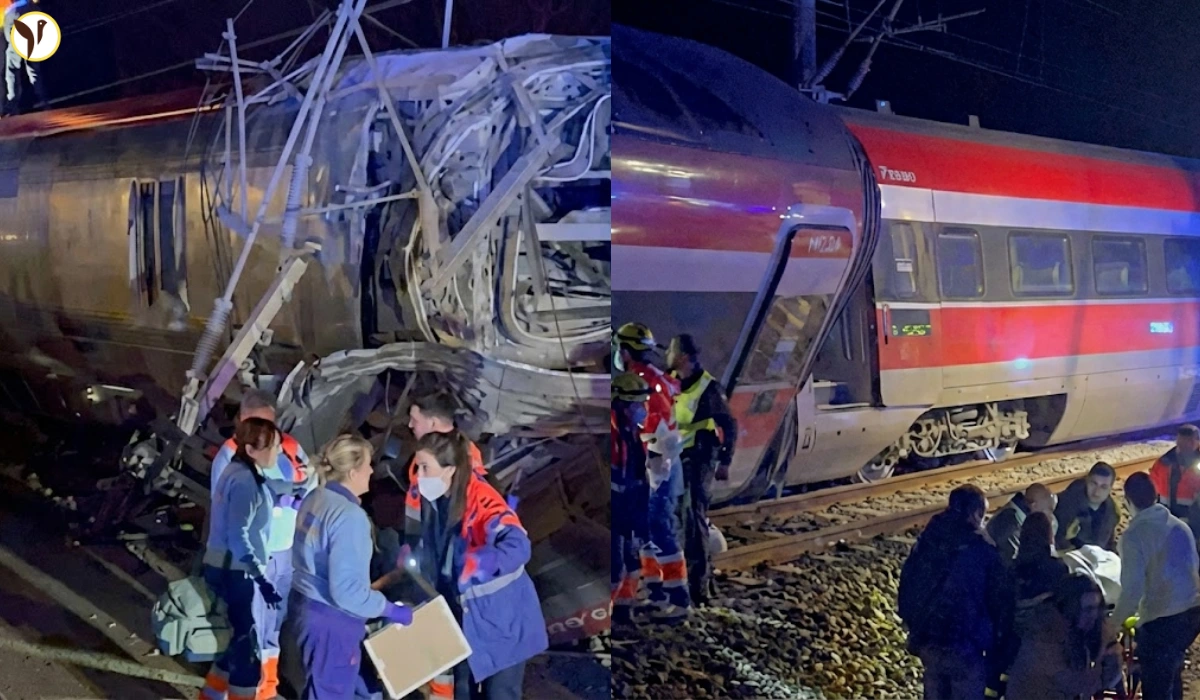
The accident happened on one of Spain’s busiest rail lines. The Malaga-Madrid AVE train, carrying around 300 passengers, suddenly derailed on a straight section of track. Seconds later, it collided head-on with the Iryo train going the opposite way. Both trains derailed badly, leaving twisted metal and broken carriages. At least 39 people died in the crash, and many others were injured.
Rescue teams rushed to the scene, using cutting tools to free trapped passengers. Local people reported hearing a huge bang that shook houses like thunder. Firefighters from Córdoba and Madrid quickly arrived and set up lights as night fell. Doctors and nurses from nearby towns treated the injured at an emergency medical tent on site. Army units were called in with cranes to lift derailed carriages. By the morning of January 19, most passengers were rescued, but clearing debris and checking under wreckage took time.
Spain Train Crash Rescue Efforts and Emergency Response
Firefighters worked for hours to free trapped passengers, while ambulances and helicopters transported the injured to hospitals. An on-site medical tent treated minor injuries, and military teams helped clear debris. Local residents brought water and blankets to assist rescue workers. Rail staff guided other trains to safe spots, and buses replaced disrupted services. Hotels near Córdoba provided free rooms, and counselors supported survivors.
How Many People Were Injured in the Spain Train Accident
Spain’s Health Minister Antonio Sanz confirmed that 75 people were hospitalized after the collision. Of these:
- 15 are in critical condition in intensive care.
- 24 have serious injuries, including broken bones.
- The remaining patients were treated for cuts and bruises.
One train driver died at the scene. Families waited anxiously at stations in Seville and Malaga for news. Adif, Spain’s rail company, opened help centers with counselors for relatives. Prime Minister Pedro Sánchez called it a night of deep pain for Spain and shared condolences on social media. Andalusia’s leader, Juanma Moreno, said his team was ready to support victims. Most passengers were Spanish citizens heading home or traveling for work.
What Caused the High-Speed Train to Derail in Spain
Transport Minister Oscar Puente said the derailment was unusual because the track had been fully upgraded last year. There were no curves or slopes—just a straight, flat track. Early investigations show no signal failures or speed issues, and weather was clear. Black boxes from both trains are under review. Spain’s AVE network is one of Europe’s safest, running trains up to 300 km/h for years without major accidents.
OTHER ARTICLES TO READ:
- Divya Ganesh Takes the Trophy: Inside Her Bigg Boss Tamil Journey
- IND vs NZ: Virat Kohli Creates History With Record-Breaking Century in 3rd ODI
- What Went Wrong When Wedding Celebration Turn Into Tragedy Overnight?
- 2026 VW ID.4: The New 'Electric Tiguan' Brings Buttons Back
- India’s First Vande Bharat Sleeper Launched on Howrah–Kamakhya Route: Check Details
- Shark Tank Moment: Why Entrepreneurs Quit ₹70 Lakh Income for a Protein Brand
- Shah Rukh Khan’s Upcoming Movies in 2026 & 2027: Release Dates
- Trip Ends in Tragedy: 5 Gujarat Tourists Die in Punjab Crash
Spain Train Crash Investigation and Next Steps
Authorities are now examining train recorders, track sensors, and wheel marks to find the cause. Human error is a possibility, but early signs suggest other factors may be responsible. Transport Minister Puente emphasized that no blame has been assigned yet. The full investigation may take several weeks. Spain continues to expand its AVE network, prioritizing safety. Officials promise to implement lessons from this accident to prevent similar incidents in the future.