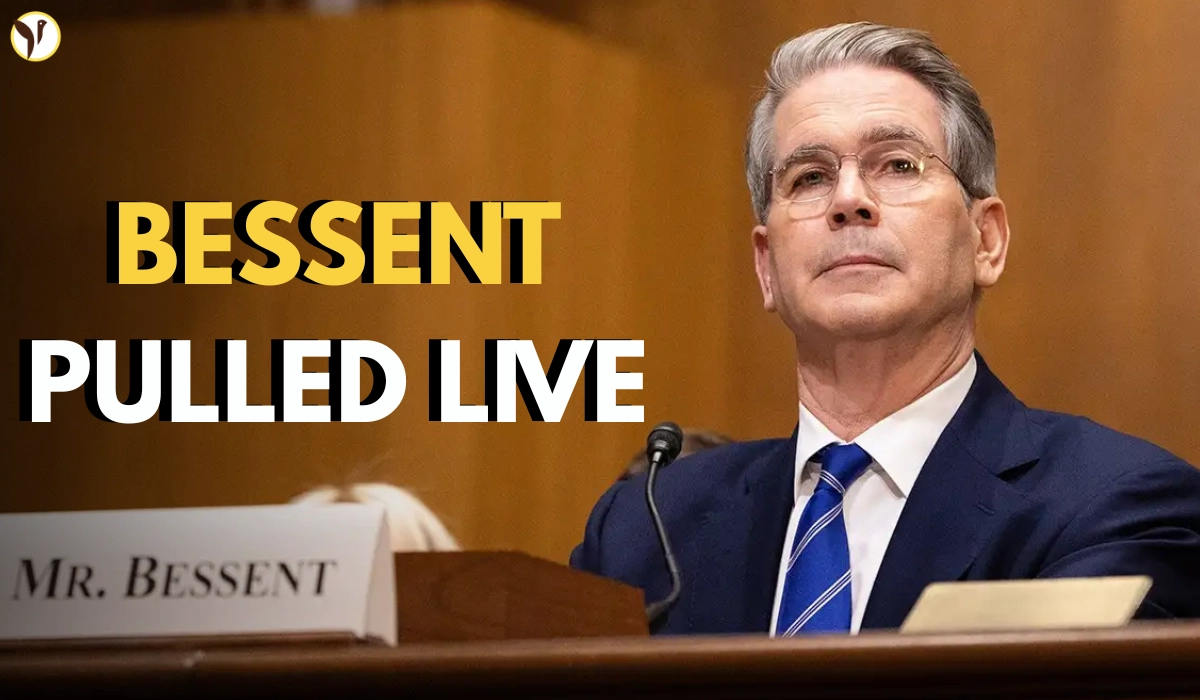


A surprising moment on live television has sparked global curiosity after Scott Bessent abruptly ended a CNN interview when an aide whispered that Donald Trump wanted him “right away.” The interruption happened during a discussion about sanctions on Iran and rising security risks in the Red Sea shipping corridor. Within seconds, Bessent wrapped up the interview and left the studio. The short clip quickly spread across social media, drawing millions of views and raising questions about what urgent issue inside the White House required the treasury secretary’s immediate attention.
A Quiet Whisper That Ended the Interview in Seconds
The moment unfolded during CNN’s The Situation Room with Wolf Blitzer, where Scott Bessent was answering questions about global economic risks, oil prices, and US sanctions policy.
While speaking, an aide stepped in and whispered a message into Bessent’s ear. According to reports, the message was simple but urgent: the president wanted to see him immediately.
Bessent briefly paused, nodded, and quickly ended the conversation before leaving the interview set.
For viewers watching live, the sudden exit felt unusual. High-level government interviews are usually carefully scheduled, and abrupt interruptions rarely happen on camera.
That unexpected moment is exactly why the clip spread rapidly online.
Viral Video Sparks Global Curiosity
Within hours, short clips from the broadcast began circulating across social media platforms.
Many viewers focused on the change in Bessent’s tone after receiving the message. Some online users interpreted the shift as urgency or tension, though there has been no official confirmation of what the meeting involved.
The viral moment triggered several discussions online:
-
Was there a sudden geopolitical development?
-
Did a new decision about Iran sanctions emerge?
-
Could global oil markets have triggered an emergency policy meeting?
At this stage, officials have not publicly detailed the reason behind the president’s request.
However, political analysts say such urgent calls often happen during rapidly changing international situations.
Why the Discussion About Iran and Oil Markets Matters
The interview was already addressing a sensitive topic before the interruption.
US officials have been closely monitoring developments around Iran and its regional allies, particularly attacks on commercial vessels near the Red Sea.
This region includes the Bab el-Mandeb Strait, a narrow maritime route connecting the Suez Canal to global shipping lanes. A significant portion of the world’s oil supply travels through this corridor.
Recent attacks linked to the Houthi movement in Yemen have forced some cargo ships and tankers to reroute around Africa, increasing transportation costs and delivery times.
Because of this, governments and financial markets remain extremely sensitive to developments in the region.
U.S. Treasury Secretary Scott Bessent was abruptly pulled from a live interview after being told “the President wants you right away.”
— Clash Report (@clashreport) March 13, 2026
After returning, his voice was noticeably shaken. pic.twitter.com/jx5CamFi03
Who Is Scott Bessent?
Scott Bessent plays a key role in shaping US economic and financial strategy.
Before entering government service, he was known in global finance as the founder of Key Square Capital Management, a macro-focused investment firm managing billions in assets.
Inside the administration, his responsibilities include:
-
Managing US financial policy and government debt
-
Designing sanctions against foreign governments
-
Monitoring global financial stability
-
Coordinating economic responses to international crises
These responsibilities mean treasury officials often participate in high-level national security meetings.
That context makes sudden calls from the White House less surprising for people familiar with how Washington operates.
Why Financial Markets Watch Moments Like This
When senior economic officials are called into urgent meetings, global markets often pay attention.
The reason is simple. Decisions related to sanctions, oil supply routes, or international trade can quickly affect energy prices and investor confidence.
The Red Sea route alone carries a large share of global maritime oil shipments. Any disruption in this corridor can create ripple effects across shipping, fuel prices, and global supply chains.
That is why investors closely track signals coming from the White House, especially when they involve treasury officials responsible for financial policy.
Other Articles to Read:
- North Korea Suddenly Launches Missiles Toward Sea of Japan — A New Warning Signal?
- AI Video or Real Footage? Viral Benjamin Netanyahu Clip Fuels Online Confusion
- What a Race: George Russell Wins Dramatic Chinese F1 Sprint Race
- Chaz Bono and Shara Blue Mathes Wedding – Inside the Glam Hollywood Wedding
- Kuldeep Yadav Wedding: Who Is Vanshika Chaddha, the Spinner’s Bride?
A Rare Glimpse Into Real-Time Government Decisions
Political interviews typically follow tightly planned schedules, but real-world decision-making often moves much faster.
National security briefings, economic updates, and geopolitical developments can change the day’s agenda in minutes.
The viral CNN clip captured one of those rare moments when the public saw that shift happen live on television.
For viewers, it lasted only a few seconds. Yet it revealed how quickly high-level government priorities can change when global economic and security issues are involved.