

Some cars are fast. Some cars are rare. And then there are cars that feel like they were built with emotion, not just tools and numbers. The Alfa Romeo Giulia Quadrifoglio Luna Rossa feels like one of those. At first, Alfa didn’t say much. Just a few images, a name linked to sailing, and that massive wing. Enough to make car fans stop scrolling and look again. Why does a family sedan suddenly look like it escaped a race paddock? That question is exactly why people are talking about it.
Alfa Romeo Giulia Quadrifoglio Luna Rossa Story Explained Simply
The Alfa Romeo Giulia Quadrifoglio Luna Rossa is a limited-run version of Alfa’s most famous performance sedan. But this one is special because it was developed with the Luna Rossa America’s Cup sailing team, the same people who design ultra-advanced racing yachts. Alfa Romeo wanted to bring the same thinking from water to road — light weight, downforce, balance, and control at speed.
Instead of just changing badges or colors, Alfa focused on airflow and stability. That’s why this car looks more aggressive than any Giulia before it. It’s still a four-door sedan, but it carries itself like a track weapon. Alfa says the goal was not comfort or luxury first. It was control and confidence when driving fast, especially at high speeds.
Giulia Quadrifoglio Luna Rossa Exterior Feels Track-Focused
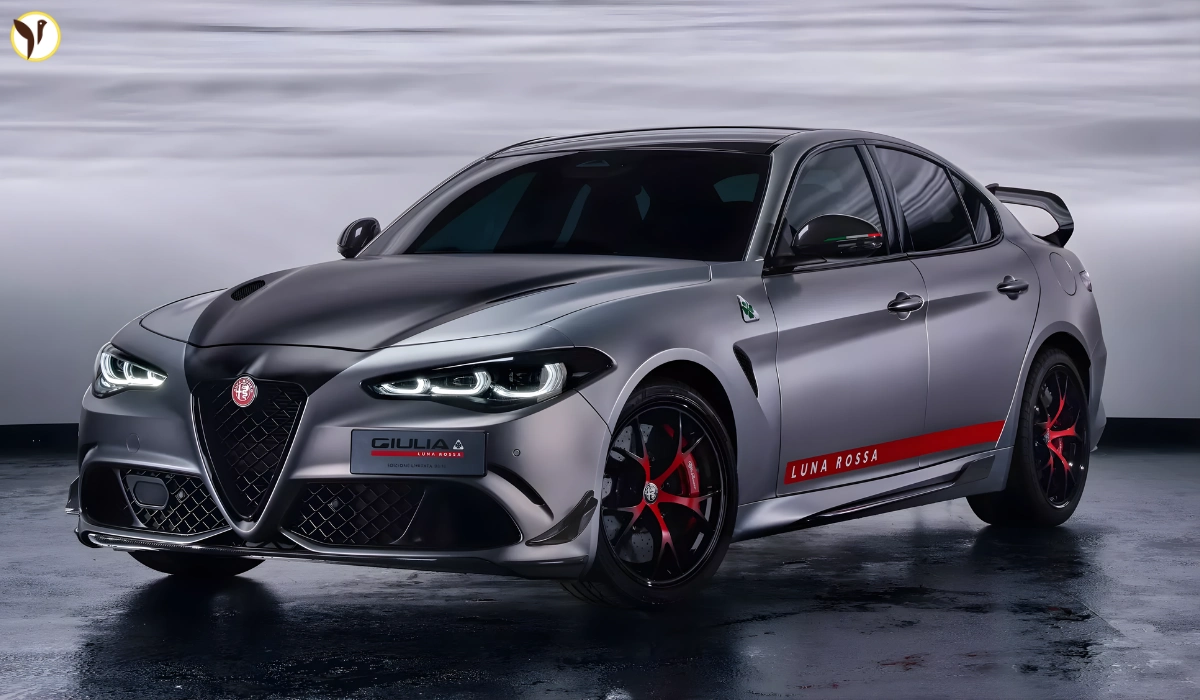
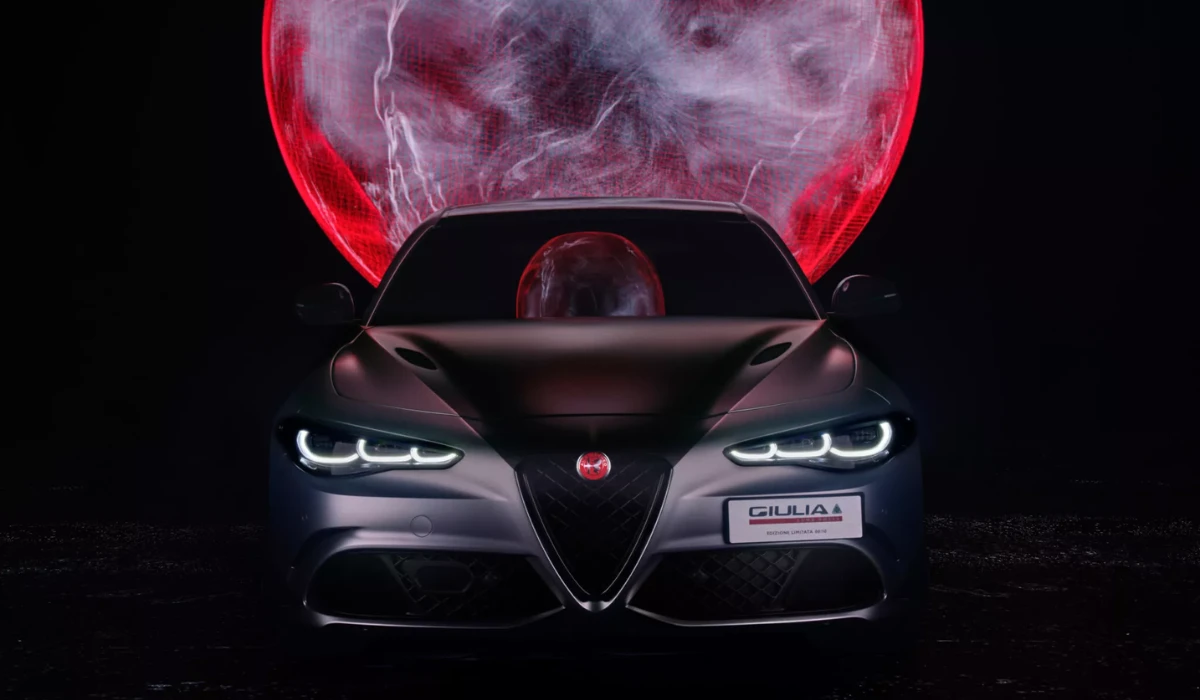
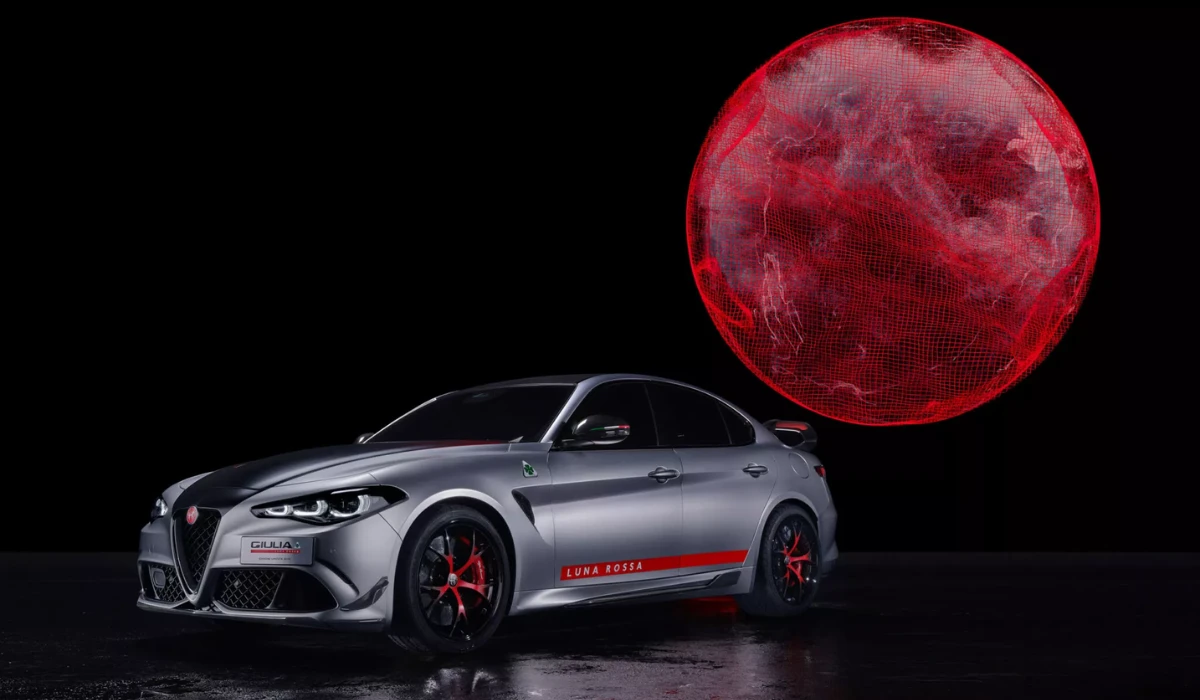
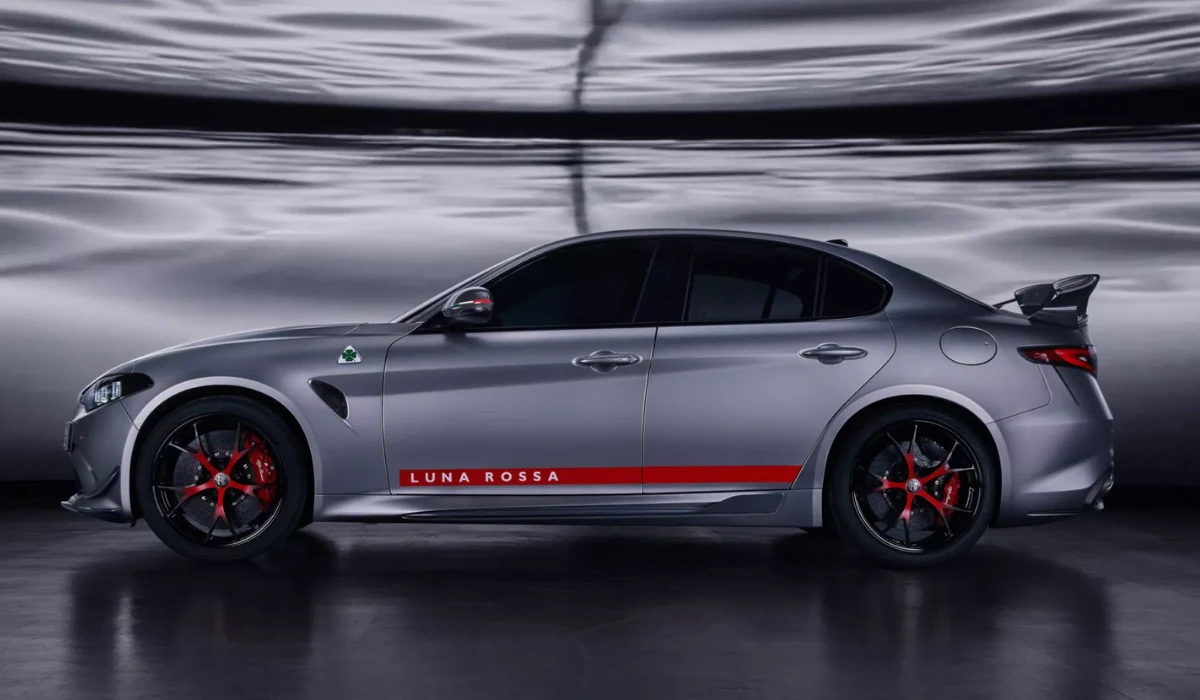
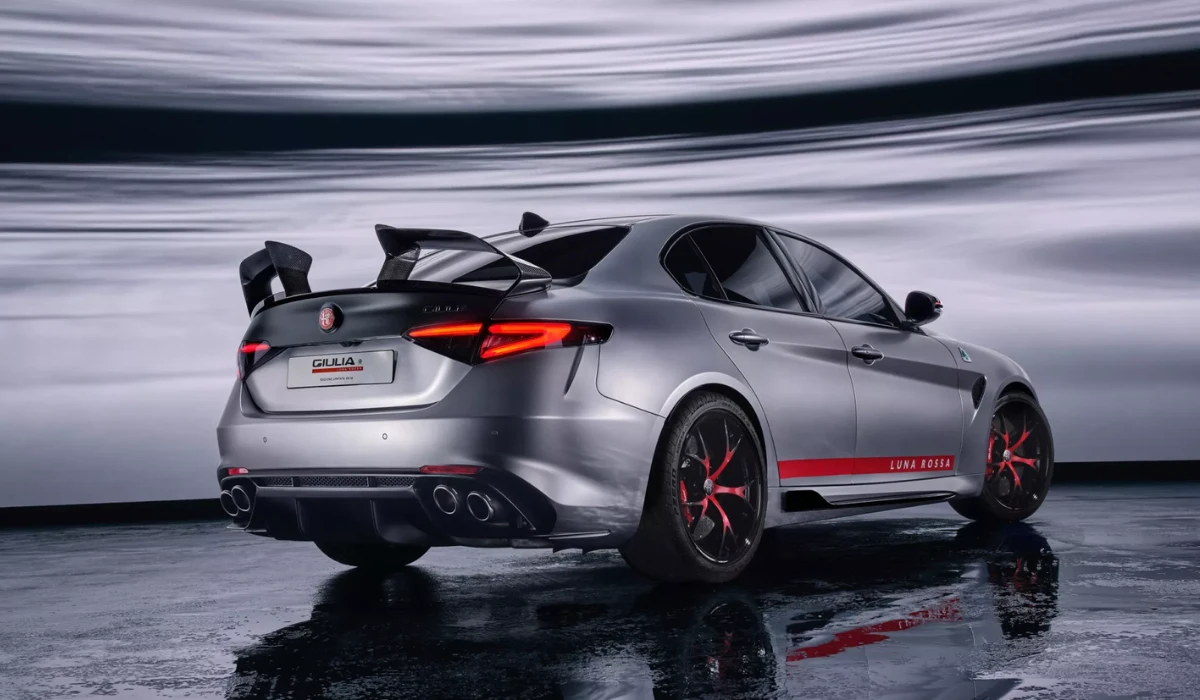
The Giulia Quadrifoglio Luna Rossa exterior is where things get serious. The first thing anyone notices is the massive rear wing. It’s not subtle and it’s not trying to be pretty. It’s there to push the car down onto the road at high speed. Alfa Romeo also added a deeper front splitter, revised side skirts, and extra aero elements that manage airflow better than the standard car.
Look closely at the nose and the wheels, and you’ll spot something Alfa Romeo has never done before. For the first time in the brand’s history, the iconic Alfa Romeo badge sits on a red background instead of the usual blue. This red-backed emblem is a direct nod to the “Luna Rossa” name, which means Red Moon. It’s a small visual change, but for Alfa fans, it’s massive. One glance and you know this isn’t a regular Quadrifoglio.
These parts work together to create more downforce, which helps the tires grip harder in corners. This is the kind of setup you usually see on track cars, not road sedans. Alfa clearly expects this car to be driven hard, not just parked. The design also borrows colors and details inspired by the Luna Rossa racing yacht, which gives it a unique identity without looking flashy.
Giulia Quadrifoglio Luna Rossa Interior Takes a Sailing Twist
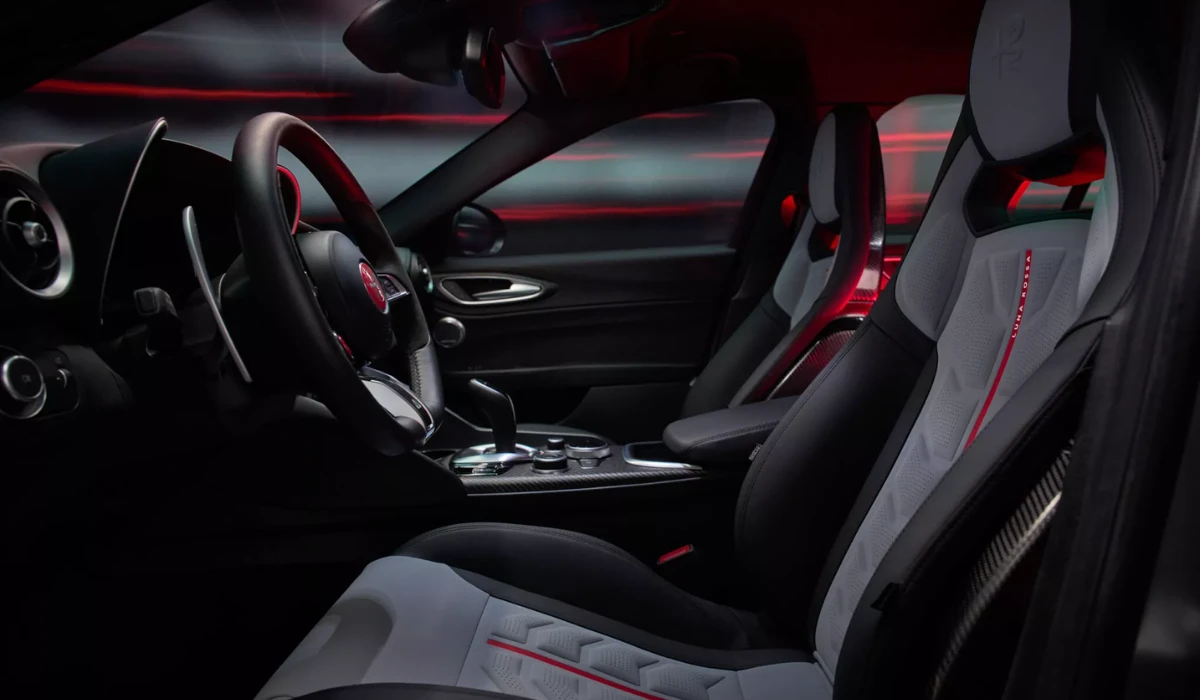
Inside, the Giulia Quadrifoglio Luna Rossa interior feels different in a good way. Alfa worked with Sparco to create special seats inspired by the flotation vests worn by the Luna Rossa sailing crew. Sounds strange at first, but once you sit in them, it makes sense. They hold you tight, feel supportive, and still stay comfortable for longer drives.
Perhaps the most special detail inside the cabin isn’t a screen or a logo — it’s something much deeper. Alfa Romeo has confirmed that part of the dashboard trim actually contains a thin film made from the carbon-fiber fabric used in the Luna Rossa America’s Cup racing sail. This material has been carefully machined and embedded into the dash, turning a real piece of racing history into a design element. It’s a small touch, but emotionally powerful. You’re not just sitting in a fast sedan — you’re sitting inside a car that literally carries a piece of a championship sailing yacht.
The materials feel more purposeful than luxurious. There’s a focus on grip, texture, and function. You’ll notice sporty accents, special stitching, and subtle yellow highlights that remind you this isn’t a normal Giulia. Alfa didn’t overload the cabin with screens or gimmicks. Instead, the layout stays clean and driver-focused, which many enthusiasts will honestly appreciate.
Giulia Quadrifoglio Luna Rossa Performance Is About Control
The Giulia Quadrifoglio Luna Rossa Performance story isn’t about adding more horsepower. Alfa kept the same powerful setup that already makes the Quadrifoglio special. What changed is how the car behaves when pushed. Thanks to the new aero package and suspension tuning, the car feels more planted and predictable at high speed.
There is, however, a small trade-off. Because of the massive rear wing and high-downforce aero setup, the Luna Rossa’s top speed is slightly lower than the standard Quadrifoglio. While the regular car can reach about 307 km/h, the Luna Rossa is capped at 300 km/h (186 mph). Alfa Romeo clearly chose cornering confidence over outright top speed. For most drivers, that’s a fair deal. You lose a few km/h at the very top, but gain far more control and grip where it actually matters.
This matters on fast roads and race tracks where confidence is everything. You don’t fight the car. It feels calm even when things get intense. Alfa learned a lot from racing and applied that knowledge here. The result is a sedan that feels sharper without becoming scary or uncomfortable for normal driving.
Giulia Quadrifoglio Luna Rossa Engine Is Familiar but Still Special
Under the hood, the Giulia Quadrifoglio Luna Rossa engine stays true to what has made the Quadrifoglio name famous. It uses the same twin-turbo 2.9-liter V6 that Alfa Romeo fans already trust and love. The Luna Rossa edition also carries over the updated mechanical limited-slip differential introduced with the 2024 facelift, which plays a key role in managing the extra aero load through tight corners.
In standard form, this engine delivers around 513 hp (520 PS), which is more than enough for fast road driving and track fun. What many enthusiasts also know is that this V6 has extra potential. With a simple aftermarket tune, it can comfortably push past 600 hp (608 PS) without major changes. Even without tuning, the Luna Rossa’s added downforce, sharper suspension, and improved stability make the power feel more confident and better controlled, especially through corners and under braking.
Alfa Romeo Giulia Quadrifoglio Luna Rossa Specifications
|
|
|
|
|
|
|
|
|
|
|
|
|
|
|
|
|
|
|
|
|
|
|
|
|
|
|
|
|
|
|
|
|
|
|
|
|
|
|
|
|
|
Conclusion
This limited edition feels different, and that’s what makes it special. Alfa Romeo didn’t just add a new color or a badge and call it a day. The Luna Rossa version exists for a reason. It brings real ideas from the world of racing and sailing into a road car, and you can feel that intent in the way it’s designed and set up.
The partnership with the Luna Rossa team isn’t just for show either. From the aero focus to the interior details, everything tells a clear story. That kind of honesty is rare in special editions. And for collectors, that matters. Cars with real purpose and a strong story usually age better than those built only for attention. This one feels like it was made to be remembered, not just noticed.
ALSO READ:
- SAIC Z7 EV Looks Like Porsche Taycan, But It’s Not One
- 2026 Hyundai Elexio Enters Model Y Fight With 546km Range
- Toyota Neo86 Solves a Problem Modern Sports Cars Forgot
- Renault Filante High-End Crossover Set to Debut in South Korea
- BMW Alpina Becomes a Brand — Is This the End of Alpina?
- 2027 Ram Power Wagon Fixes Its Biggest Problem With Diesel
- 2027 Ram 1500 SRT TRX Is Back With 777 HP and Zero Apologies
- 2026 Jeep Gladiator Shadow Ops Steals the Off-Road King Crown
- 2027 Chevy Silverado Leak—Is V8 Power Striking Back?
Source(Image / Thumbnail): www.topgear.com