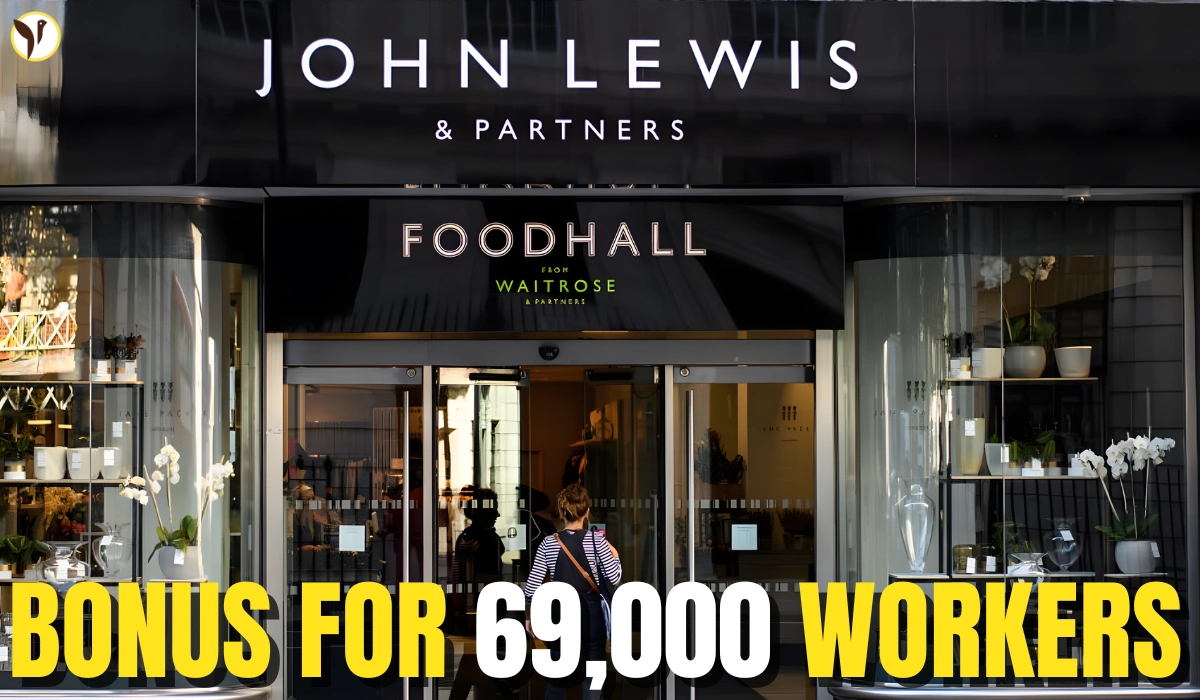


After several difficult years for Britain’s retail sector, John Lewis Partnership has brought back one of its most famous traditions. The employee-owned retailer has announced a 2% staff bonus worth around £35 million, rewarding nearly 69,000 employees, known internally as partners. The decision follows a stronger financial year in which the partnership reported £13.4 billion in sales and £134 million in profit before the bonus. For the workers behind John Lewis and Waitrose & Partners, the return of the bonus marks a symbolic recovery moment.
A Long-Awaited Reward for 69,000 Employee-Owners
Inside the partnership, the annual bonus is more than a financial perk. It represents the unique ownership structure that has defined the company for decades.
Unlike most retail chains where shareholders receive profits, John Lewis Partnership shares part of its earnings directly with employees. Every partner receives the same percentage of salary regardless of job role.
That means
- Store assistants
- Warehouse teams
- Office staff
- Senior managers
All receive the same bonus rate.
The tradition was paused during recent challenging years when the retailer focused on stabilizing finances after the pandemic and rising operating costs. Its return now signals renewed confidence inside the business.
For many employees, the 2% payout is roughly equal to about one week’s extra pay.
The Unusual Retail Model Behind John Lewis
The partnership operates very differently from most global retailers.
The business was shaped by John Spedan Lewis, who believed companies should share profits with the people who help create them.
Today the partnership includes:
- 35 John Lewis department stores
- 275 Waitrose supermarkets
- About 69,000 employee partners
Rather than traditional shareholders, the company is held in trust on behalf of its workforce. Employees can also influence company decisions through an internal council structure.
This model has long been considered one of the most distinctive examples of employee ownership in the UK economy.
Financial Results That Made the Bonus Possible
The decision to restore the bonus followed a year of steady sales growth across the partnership’s businesses.
|
|
|
|
|
|
|
|
|
|
|
|
|
|
|
|
|
|
|
|
Sales growth came from both grocery and department store operations, although performance varied across different product categories.
Interestingly, despite the improved underlying profit, the partnership still recorded a pre-tax loss due to exceptional costs including technology investments and accounting write-downs.
John Lewis to pay first staff bonus for four years https://t.co/kOmq2ocoMT
— BBC News (UK) (@BBCNews) March 12, 2026
Waitrose Grocery Business Provides Stability
Waitrose and Partners have been one of the single greatest contributors to improving the level of performance for the partnership. Their loyalty base has helped to build an up-scale and brand driven business through providing premium quality food products and building a premium brand through the products they sell.
Several areas helped drive growth
- Expansion of convenience-format stores
- Strong online grocery demand
- Premium own-brand product sales
- Reliable delivery services
Even during periods of economic pressure, higher-income households often remain loyal to trusted grocery brands, helping stabilize revenue.
Department Stores Show Strength in Key Categories
At the same time, John Lewis has been focusing on areas where demand remains strong.
Some of the best-performing categories include:
- Electronics and home appliances
- Beauty and skincare products
- Home furniture and interior décor
The retailer has also invested in store refurbishments and omnichannel shopping, allowing customers to move easily between online browsing and in-store pickup.
Services such as click-and-collect continue to bring shoppers back into physical stores.
Other Articles to Read:
- Stryker Cyberattack: How Handala’s Wiper Attack Disrupted Global Hospitals
- What Happened During Hardik Pandya's Celebration With His Girlfriend Is Now a Legal Issue
- Is Age Just a Number? Why Nick Viall Carded Natalie on Their First Date
- Love Is Blind Reunion: Devonta Reveals Pregnant Fiancée
- Priyanka Chopra Opens Up: The Real Reason She Stepped Away from Bollywood
- Streaming Now: Where to Find Every Episode of ‘Mormon Wives’ Season 4
Cost Pressures Still Affect the Retail Sector
Even with improved sales, the partnership faces growing financial pressure from rising operating costs.
Retail leaders highlight several challenges affecting the entire UK sector:
- Higher employer National Insurance contributions
- New environmental packaging rules
- Rising wages and logistics costs
- Technology investment needed to modernize retail systems
These factors explain why the company is maintaining a cautious tone despite celebrating the return of the staff bonus.
Major Investment Plans Continue Across Stores
To stay competitive in a rapidly evolving retail market, the partnership is continuing a significant investment program.
Key plans include:
- Refurbishing multiple John Lewis department stores
- Expanding smaller Waitrose convenience locations
- Upgrading digital platforms and customer data systems
- Modernizing supply chain and IT infrastructure
The retailer has committed hundreds of millions of pounds in long-term investments to strengthen both its physical stores and online services.
A Symbolic Moment for Britain’s Retail High Street
For many employees, the bonus announcement represents a powerful sign that the partnership’s strategy is beginning to work.
After years of uncertainty across the retail industry, the return of profit-sharing demonstrates how the employee-ownership model can still deliver results when performance improves.
At the same time, leadership continues to stress that consumer spending remains unpredictable.
The coming months will reveal whether the momentum continues.
But for now, thousands of employee-owners across John Lewis Partnership have a reason to celebrate a milestone that once again connects their work directly to the success of the business.