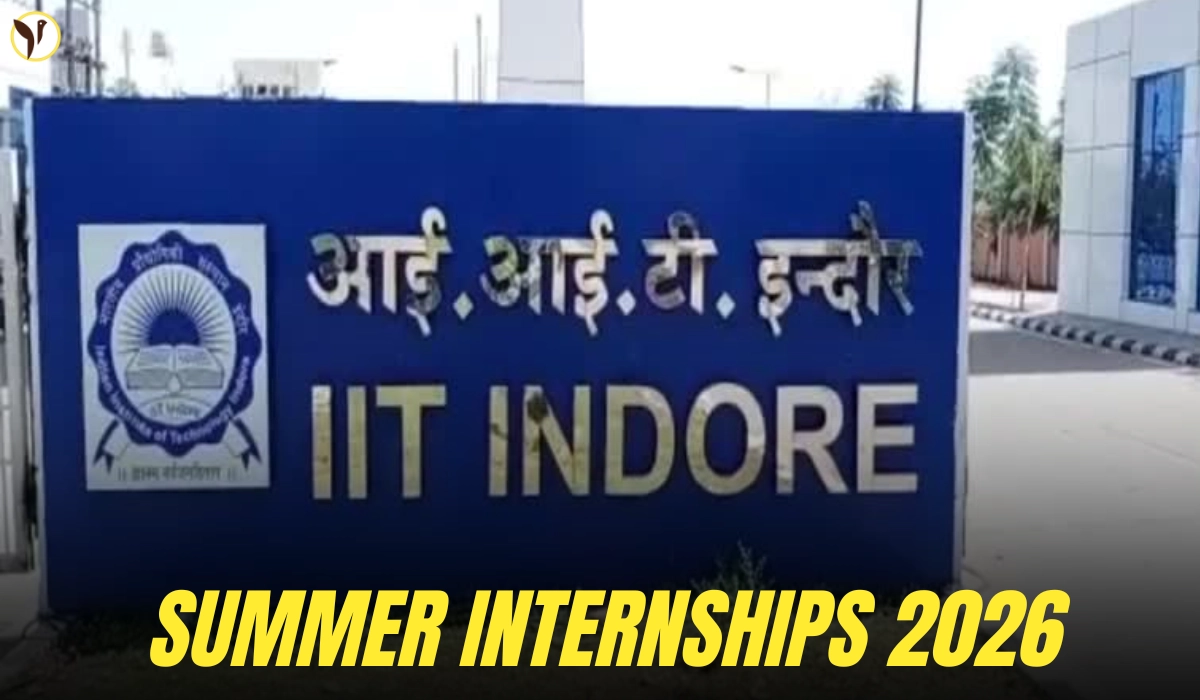


The Summer Internship 2026 program for undergraduate students at Indian Institute of Technology Indore is now officially open, with the institute setting April 20, 2026, as the final application deadline. The program will run between May 16 and July 19, 2026, offering selected students a chance to work directly under IIT Indore faculty on research-driven projects.
Unlike short‑term campus‑specific projects, this is an institute‑level, hostel‑based summer research programme that lets UG students work directly with IIT Indore faculty across high‑growth domains like AI/ML, robotics, energy, materials, and sustainability.
Internship Overview: Dates, Duration and Structure
|
|
|
|
|
|
|
|
|
|
|
|
|
|
|
|
|
|
|
|
|
|
|
|
|
|
|
Eligibility Criteria: Who Can Apply
To apply for the Summer Internship 2026 for UG students, candidates must:
- Be a bona‑fide undergraduate student enrolled in a recognised college/institute/university with a relevant UG programme (B.Tech, B.Sc, B.Arch, etc.).
- Have secured at least 60% marks or first division in 10+2 (Class XII).
- Have a current CGPA equivalent to first division up to the last completed semester.
This focuses the selection on academically strong UG students who can handle research‑oriented workloads, rather than offering an open‑access summer camp.
Fees Instead of Stipend: What Students Should Know
Officially, the internship fee is Rs 3,000 per month, collected online in April 2026. Selected students receive a payment link, the amount is non‑refundable and must be paid before the internship begins.
Additional costs typically include:
- Hostel accommodation based on availability and hostel rules.
- Food charges billed as per actuals to the hostel mess.
The “hidden” benefits are often more valuable than the stipend:
- A certificate from IIT Indore upon successful completion, which can improve CVs for MTech, MSc, or PhD applications.
- Direct exposure to IIT‑level research culture, networking with faculty and doctoral students, and potential references for later applications.
Research Areas and Faculty-Led Projects
Students must choose a faculty mentor aligned with their interests. The available research areas span multiple disciplines, including:
- The exact list of research areas is released in a “Faculty Mentor and Areas of Summer Internship 2026 for UG Students” PDF, but external summaries and past patterns indicate that projects span:
- Astronomy, Astrophysics & Space Engineering
- AI/ML for space and atmospheric science.
- Satellite image analysis and UAV‑related control systems.
- Chemical Engineering & Energy
- Fluid mechanics and digital‑twin‑based process modelling.
- AI‑driven sustainability and energy‑system optimisation.
- Civil Engineering & Environment
- Climate‑change‑related water‑resource management.
- AI‑based pollution monitoring and structural‑health monitoring.
- Computer Science & Electrical/Electronics Engineering
- 6G‑related wireless communication, VLSI design for AI chips.
- AI in power systems, wireless‑energy‑harvesting, and image/signal processing.
- Mechanical Engineering & Materials
- Heat transfer, CFD, soft robotics, and battery technology.
- Additive manufacturing and energy‑storage materials.
- Mathematics, Physics & Biosciences
- Neural‑network‑based solutions for wave equations and quantum/spectroscopy‑related work.
- Medical‑image processing, wearable sensors, and infection‑related bioengineering.
- Humanities, Innovation & Sustainability
- Interdisciplinary work on philosophy of AI, economics of innovation, and climate‑impact studies.
Students are not assigned randomly; they must choose a mentor and project that aligns with their background and interests.
Important Dates and Timelines
|
|
|
|
|
|
|
|
|
|
|
|
|
|
|
|
|
|
How the Selection Process Works
The selection process is distinct and requires proactive effort from applicants:
- Identify a relevant faculty mentor
- Contact the professor and obtain written email consent
- Fill out the official application form
- Submit before the deadline
Only candidates with faculty approval are considered, making early outreach critical.
Unlike centralized selection models, this approach gives faculty direct control over intern selection, increasing the importance of a strong academic pitch.
Documents Required for Application
While the page does not list documents explicitly, the underlying application practice (as inferred from guidelines and similar IIT‑style forms) usually requires:
- Updated CV highlighting academic performance, projects, and technical skills.
- Academic transcripts / mark sheets for 10+2 and all completed UG semesters.
- Proof of current UG enrolment (college ID, bonafide certificate, or institute‑issued letter).
- Statement of purpose or brief motivation note explaining why the student wants to work with a specific mentor/project.
These documents are typically uploaded or cited in the Google Form or in follow‑up emails with the faculty mentor
Certification and Academic Value
All selected interns who successfully complete the program will receive an official certificate from IIT Indore.
While the program does not guarantee publications or placements, it provides:
- Exposure to real research methodologies
- Opportunity to build academic relationships
- Potential for future recommendations
These outcomes are especially valuable for students targeting higher studies or research careers.
Why This Internship Matters Right Now
In 2026, the importance of research internships has grown significantly. Universities and employers are increasingly evaluating candidates based on practical experience and problem-solving ability, not just academic scores.
IIT Indore’s internship fits directly into this shift by offering:
- Hands-on research exposure
- Direct mentorship from IIT faculty
- Access to advanced labs and academic resources
For many students, this can be the first step toward PhD programs, international education, or R&D careers.
What Students Should Do Next
With the deadline set for April 20, 2026, students have a limited window to act. The most critical step is reaching out to faculty mentors early, as delays can reduce chances of securing approval.
Applicants should:
- Research faculty profiles carefully
- Write clear, personalized emails
- Align their interests with specific research areas
- Prepare documents in advance