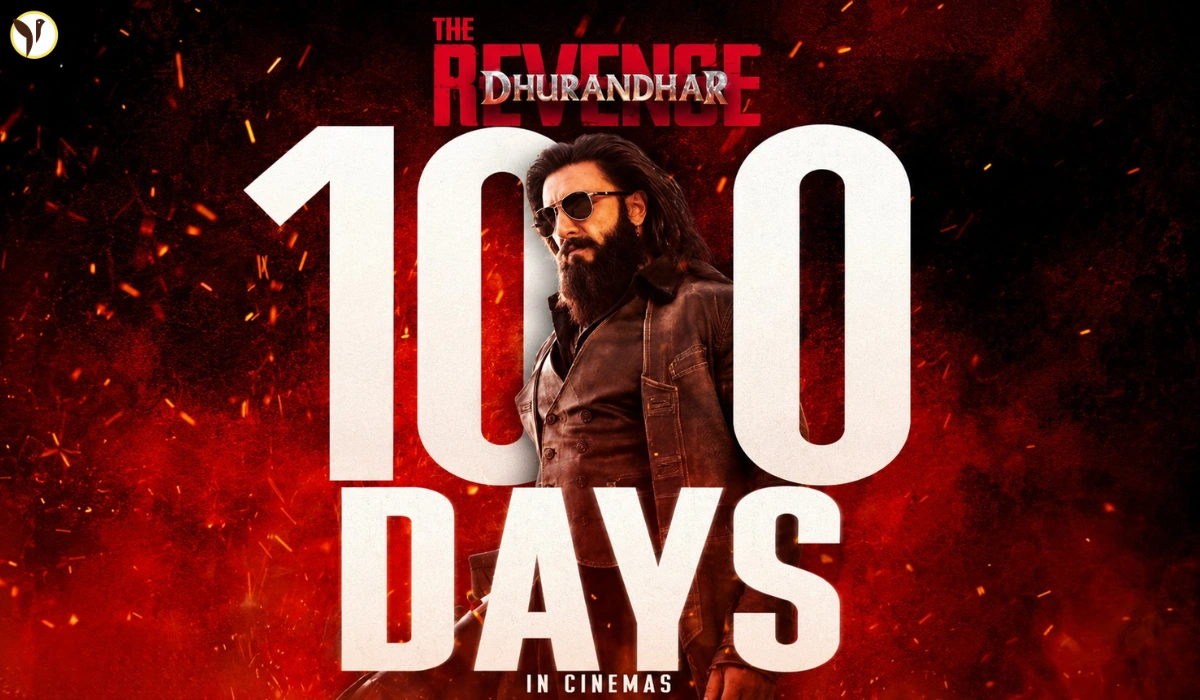


Three words. A crore-counting journey that began on Gudi Padwa and refused to stop. Here's what the 100-day theatrical run of Dhurandhar: The Revenge actually means — beyond the numbers.
There is a particular kind of cinema that does not merely carry a tagline — it becomes it. Dhurandhar: The Revenge, Aditya Dhar's sprawling conclusion to his spy-action duology, released on 19 March 2026 under the war-cry of three Urdu-Hindi words: Honsla. Eendhan. Badla. Courage. Fuel. Revenge. A hundred days later, those three words read less like marketing copy and more like an exact documentary record of what the film did to Indian cinema.
What Honsla Eendhan Badla Actually Means — And Why It Matters
Most Bollywood sequels arrive with a tagline the marketing department manufactures in week three of post-production. Dhurandhar 2's three-word philosophy was different: it was a direct thematic pivot from the first film's identity.
The original Dhurandhar (2025) operated under the ethos of Nazar Aur Sabr — watch, and wait. It was a film of accumulation, of patience, of an undercover agent building a decade inside enemy territory. Its sequel announced, from the first trailer frame, that the waiting was over. "Honsla" — the courage and belief to act. "Eendhan" — the fuel, the burning patriotic fire that keeps you going when the mission turns personal. "Badla" — the reckoning that arrives when the first two have done their work.
Audiences, as it turned out, were ready for exactly that shift. The film's advance booking alone — over 2.4 million tickets sold before release day, the biggest in Hindi cinema history at the time — suggested that Dhurandhar had not just built a fanbase; it had built a waiting audience, primed on the cliffhanger ending of Part 1, and hungry for resolution.
The numbers are, by any reasonable standard, staggering. But numbers alone do not explain why a 229-minute, A-certificate spy thriller — banned in the Gulf, divisive among critics, and built on the polarising legacy of its predecessor — spent three and a half months holding screens across the country. That story is more interesting, and worth telling properly.
- ₹1,851crWorldwide Gross
- ₹1,400crIndia Gross
- ₹451crOverseas Gross
- 427%Return on Investment
- 229 minRuntime
- #2All-Time Indian Film
Day 1 to Day 100: A Box Office Timeline
The opening day numbers reset several benchmarks. Dhurandhar 2 collected ₹43 crore in paid previews alone on Day 0, followed by ₹102.55 crore net on Day 1 — numbers that placed it, immediately, in the conversation about the biggest Hindi openings in history. The first weekend consolidated that position: Day 3 (₹113 crore) and Day 4 (₹114.85 crore) demonstrated that the film was not front-loaded on hype alone.
"The film had more gore, more violence and brazen propaganda... but it lacked the finesse that Dhurandhar at least could boast of." — Agnivo Niyogi,The Telegraph
Critics were divided — as they had been with the original. Taran Adarsh of Bollywood Hungama awarded it 4 out of 5, Rishabh Suri of Hindustan Times gave it 4 out of 5 praising Ranveer Singh's performance and the gripping second half, while Sakshi Salil Chavan of Outlook gave it 2 out of 5, citing heavy-handed messaging. That critical split did not dent the commercial run. By Day 19, the film had crossed ₹1,000 crore worldwide — becoming the fastest Hindi film to do so. By Day 50, it had earned ₹1,177.82 crore net in India alone, with a worldwide gross of ₹1,829.82 crore.
|
|
|
|
|
|
|
|
|
|
|
|
|
|
|
|
|
|
|
|
|
|
|
|
The South India Breakthrough: Bollywood's Most Significant New Audience
Perhaps no single data point in Dhurandhar 2's run is more consequential than its South India performance. The original was a Hindi-only release that somehow generated ₹153.83 crore gross in Southern states — already an outlier. The sequel, released simultaneously in Telugu, Tamil, Kannada, and Malayalam for the first time, pushed that number to over ₹300 crore in the South, becoming the first non-South Indian film to cross that threshold in the region.
Karnataka alone contributed ₹141.54 crore; Telangana followed with ₹72.24 crore. These are not the numbers of a Bollywood film performing respectably in hostile territory — they represent a genuine, earned crossover. The 95% improvement over Part 1's Southern collections signals something larger: that a Bollywood franchise, if built with sufficient craft and scale, can now compete pan-India in a way that was largely considered the exclusive domain of Telugu or Tamil productions in the post-pandemic era.
The Duology That Made History
Taken together, the Dhurandhar franchise has become the first Indian film series to collectively gross over ₹3,000 crore globally — Part 1 contributing ₹1,350.83 crore and Part 2 closing at ₹1,850.85 crore. That combined number, achieved across two films released just three months apart (both shot simultaneously between July 2024 and October 2025), represents one of the most efficiently produced and commercially lucrative franchise bets in Indian film history.
|
|
|
|
|
|
|
|
|
|
|
|
|
|
|
|
|
|
|
|
|
|
|
|
|
|
|
|
Ranveer Singh and Aditya Dhar: A Collaboration That Delivered
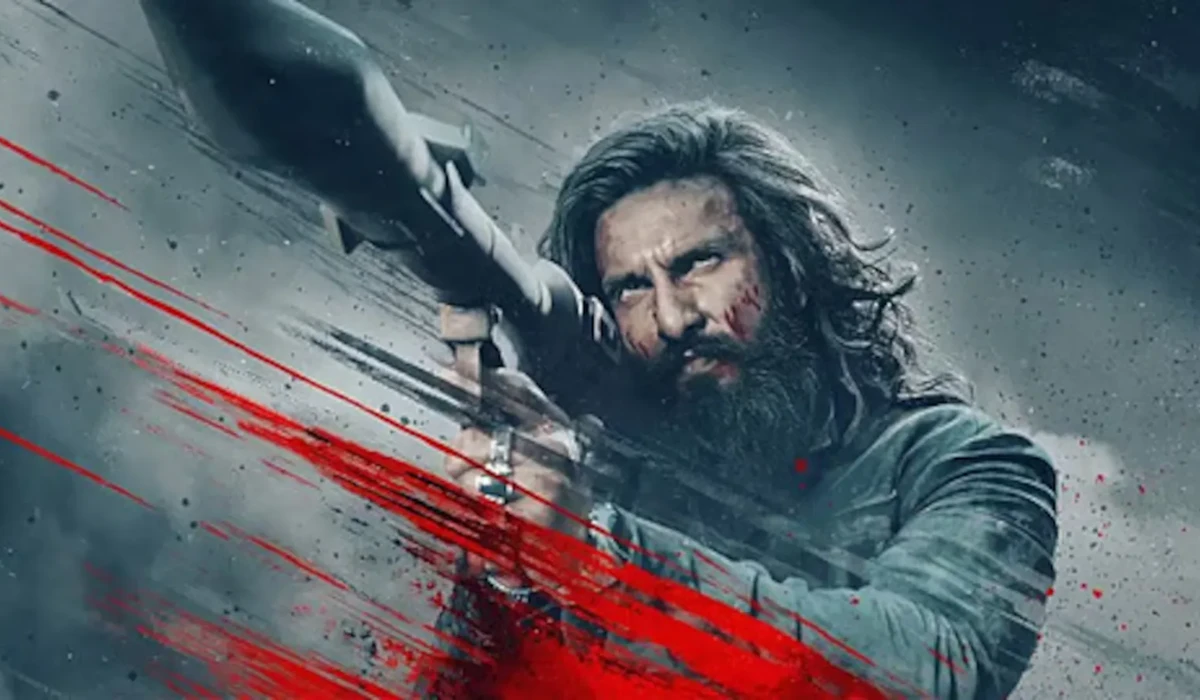
For Ranveer Singh, Dhurandhar 2 represents not just a commercial peak but a career recalibration. The actor, who spent years synonymous with flamboyant, high-energy roles, has now anchored two of the longest and most structurally complex spy-thrillers in Hindi cinema — in a register that critics have variously described as "subdued yet scorching" and "driven by screen presence." His character, Hamza Ali Mazari, the undercover agent whose real identity is Jaskirat Singh Rangi, required a kind of sustained, contained intensity across nearly eight hours of combined runtime. That he carried both films on his back — while surrounded by an ensemble that includes Akshaye Khanna, Sanjay Dutt, R. Madhavan, and Arjun Rampal — is a performance achievement worth separating from the box office conversation.
Aditya Dhar, whose debut Uri: The Surgical Strike (2019) inaugurated a specific strain of nationalist action cinema in India, has now followed it with a duology that is simultaneously more ambitious in scope and more contested in politics. Both Part 1 and Part 2 attracted criticism for blending real historical events — the IC-814 hijacking, the 2001 Parliament attack, 26/11 — with fictional narrative in ways some commentators found propagandistic. Yet the films found massive, sustained audiences. The tension between those two facts — critical discomfort and popular resonance — will be the subject of film scholarship for some time.
"Dhurandhar: The Revenge is a roller-coaster thriller that may not match the first film's precision but is elevated by Ranveer Singh's powerful performance and a gripping second half." — Rishabh Suri,
The OTT Second Life: Streaming Dominance After the Multiplex
The theatrical story, for all its enormity, is only half of what Dhurandhar 2 achieved. JioHotstar acquired the digital rights for ₹150 crore — and the film's OTT premiere triggered a rare simultaneous chart phenomenon: Part 2 at No. 1 and Part 1 at No. 4 on JioHotstar's India charts, running concurrently on the same platform. New viewers came to Part 1 after hearing about the sequel's dominance; existing fans revisited it to relive the full arc. The satellite rights, acquired by Star Gold for ₹50 crore, extended the film's reach into non-metropolitan homes through its World Television Premiere on 30 May 2026.
What Happens Next: The Franchise That Could
The Dhurandhar duology was conceived as a complete story — Aditya Dhar and his team built both films simultaneously, with the division into two parts decided in post-production based on narrative scale and runtime. Part 2's title, The Revenge, suggests a closed chapter. Yet the commercial logic of a ₹3,200 crore franchise, with pan-India reach, overseas performance, and demonstrated OTT value, makes any conversation about a third instalment inevitable.
No official announcement has been made. Dhar has historically been deliberate about timelines — Uri (2019) and Dhurandhar (2025) were separated by six years. What is certain is that the template he has established — long-form, operatically violent, geopolitically loaded spy cinema — has proved both commercially viable and culturally generative in ways that will shape how Hindi studios greenlight projects for the next several years.
One hundred days is, in the calendar of a film's life, a somewhat arbitrary marker. But in the case of Dhurandhar: The Revenge, it lands with real weight. The film promised Honsla, Eendhan, and Badla — and then spent a hundred days delivering exactly that: the courage to be long, loud, and uncompromising; the fuel of an audience that had been waiting; and the revenge of a Hindi film industry that had spent much of the post-pandemic decade questioning whether it still knew how to make event cinema. It does. The evidence runs to ₹1,850 crore.
Other Articles to Read: