

More than four decades after the bombing of Air India Flight 182, Canada's intelligence agency has, for the first time, explicitly identified Canada-based Khalistani extremists as being responsible for the country's deadliest terrorist attack.
The acknowledgement, made by the Canadian Security Intelligence Service (CSIS) while commemorating the anniversary of the June 23, 1985 tragedy, marks an important change in Canada's official language surrounding the attack. While investigations over the years had linked individuals associated with Khalistani extremist groups to the bombing, this is the first time Canada's premier intelligence agency has publicly and directly used the term in an official statement.
The development is significant not only because it revisits one of the world's worst aviation terror attacks, but also because it comes during a period when India and Canada are attempting to stabilize diplomatic relations after years of tensions.
What Happened?
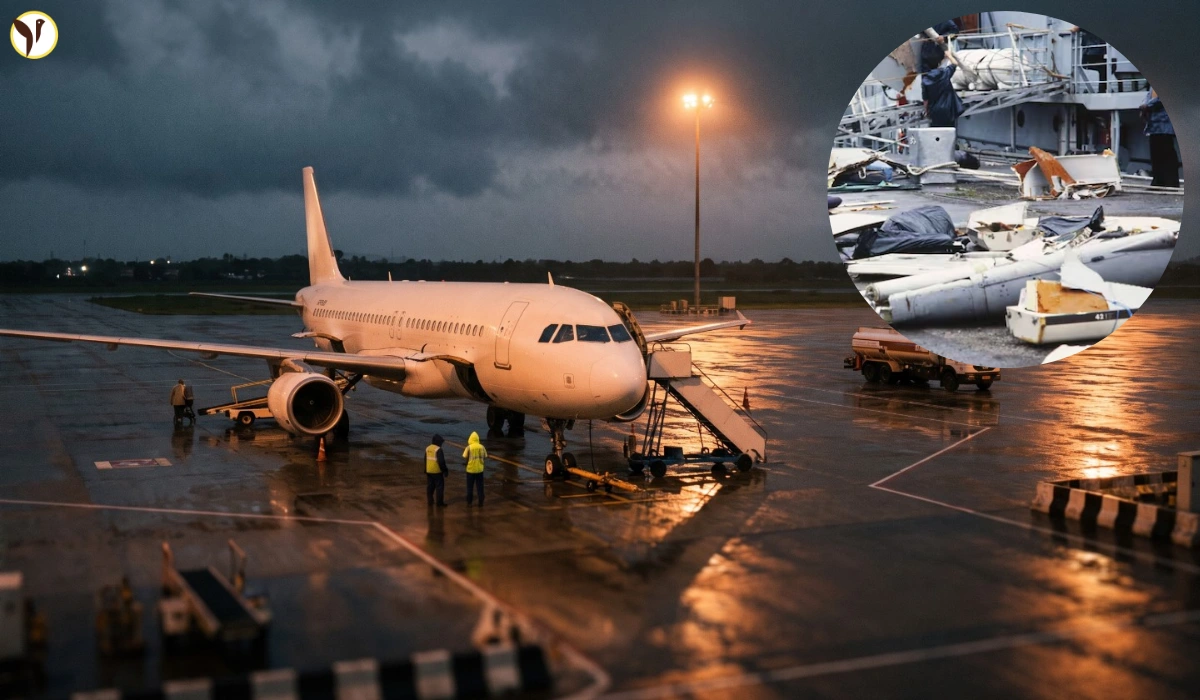
On June 23, 1985, Air India Flight 182, popularly known as Kanishka, exploded over the Atlantic Ocean off the coast of Ireland after a bomb detonated onboard.
All 329 passengers and crew members were killed.
|
|
|
|
|
|
|
|
|
|
|
|
|
|
|
The bombing remains:
- Canada's deadliest terrorist attack
- One of the worst acts of aviation terrorism in history
- The deadliest attack involving Air India
Investigations later connected the conspiracy to extremists linked with the banned militant outfit Babbar Khalsa, although Canada's official public messaging generally avoided explicitly naming "Khalistani extremists" in recent years.
What Exactly Did Canada Say?
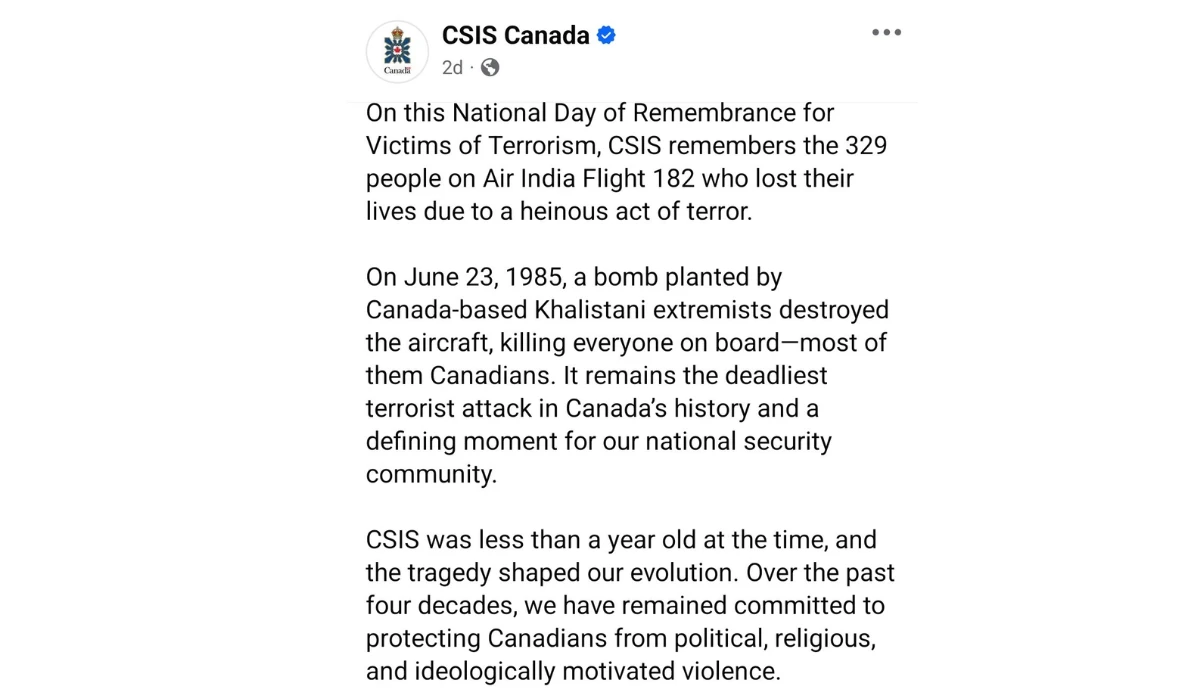
In its anniversary statement, CSIS said:
A bomb planted by Canada-based Khalistani extremists destroyed Air India Flight 182, killing everyone on board.
Although the agency has previously investigated the attack extensively, observers note that this wording represents the clearest official acknowledgement by Canada's intelligence establishment linking the bombing directly to Khalistani extremism.
Why This Statement Is Different
The importance of the statement lies less in discovering new evidence and more in the language Canada has chosen to use publicly.
For decades:
- Court proceedings identified individuals connected to extremist groups.
- Public inquiries examined intelligence and policing failures.
- Victims' families repeatedly criticized Canadian authorities for not treating the bombing as a national tragedy equal to other major terrorist attacks.
However, official commemorations generally referred to the perpetrators using broader descriptions such as "extremists" or "terrorists."
This week's CSIS statement departs from that approach by specifically naming Canada-based Khalistani extremists, something India has long maintained regarding the attack.
Why It Matters Today
The acknowledgement carries implications beyond historical record.
Diplomatic Significance
Relations between India and Canada have been strained in recent years over allegations surrounding Khalistani extremism operating from Canadian soil.
India has repeatedly argued that extremist networks using Canadian territory pose security concerns.
Canada's latest statement may not resolve those disagreements overnight, but it narrows one longstanding area of dispute regarding the historical record of Flight 182.
Recognition for Victims
Many victims' families spent decades arguing that Canada failed to recognize the bombing as primarily a Canadian tragedy because most victims were Canadian citizens.
The clearer language is being viewed by many observers as overdue recognition of what happened.
Counter-Terrorism Messaging
CSIS also continues to distinguish between:
- peaceful political advocacy
- violent extremist activity
The agency has consistently stated that only a small number of extremists are involved in promoting or supporting violence, while peaceful expression remains protected under Canadian law.
Timeline of Key Events
|
|
|
|
|
|
|
|
|
|
|
|
|
|
|
|
|
|
On June 23, 1985, a bomb planted by Canada‑based Khalistani extremists destroyed the aircraft, killing everyone on board, most of them Canadians: Canadian intel agency CSIS admits for the first time that Khalistanis bombed Air India plane Kanishka in 1985.https://t.co/9ioRMGJ0l4
— Selvam 🚩 (@tisaiyan) June 26, 2026
Expert Perspective: Why Words Matter in National Security
Government language often reflects policy priorities.
Security agencies rarely change official terminology without careful review.
By explicitly naming Canada-based Khalistani extremists in relation to Flight 182, CSIS has created a clearer historical record that future government documents, diplomatic discussions and academic research are likely to reference.
It also signals Canada's willingness to publicly acknowledge a connection that had long been asserted by investigators and successive Indian governments.
What Happens Next?
Several questions remain.
- Whether this acknowledgement leads to broader India-Canada counter-terrorism cooperation.
- Whether Canada adopts similarly explicit language in future official reports.
- Whether victims' families receive further recognition through memorial and educational initiatives.
- Whether the statement influences wider discussions about violent extremism operating within Canada.
While the announcement does not reopen criminal investigations, it is likely to influence diplomatic conversations and public understanding of one of aviation's darkest chapters.
Other Articles to Read: