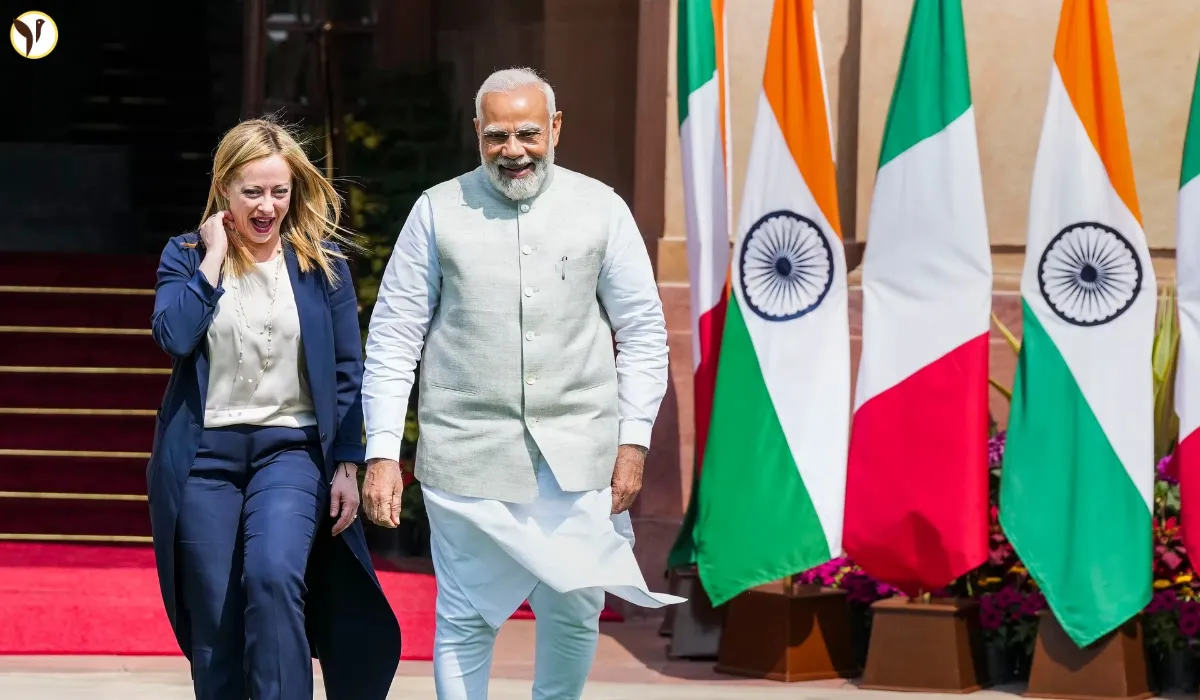
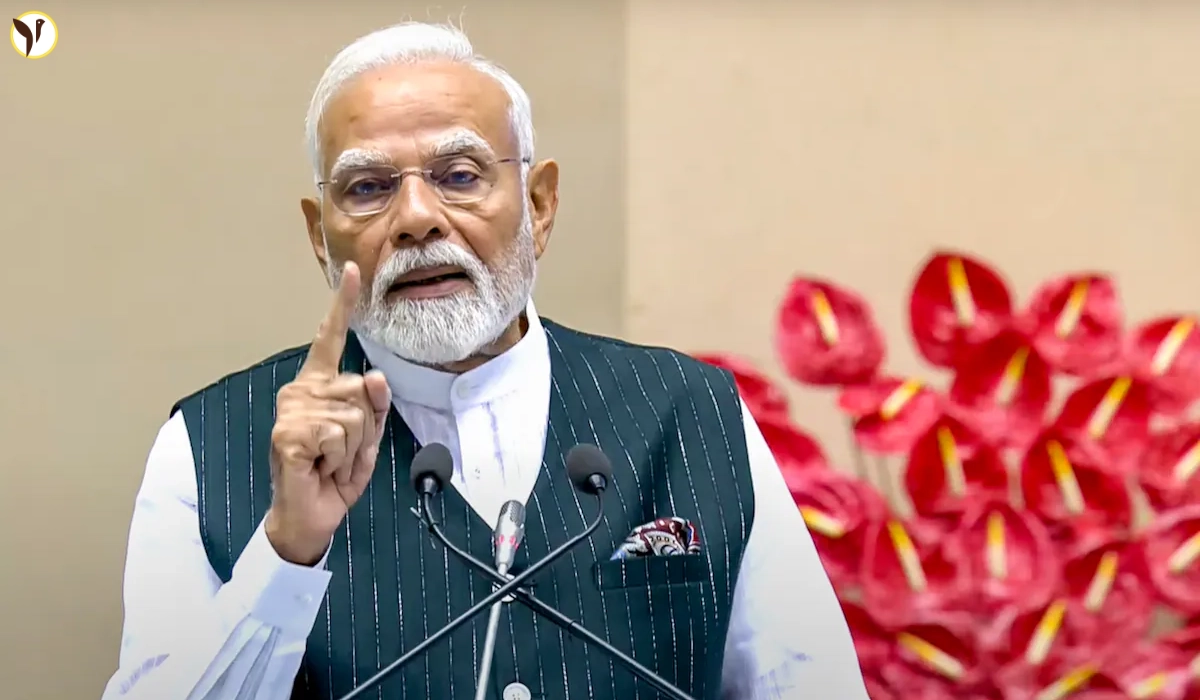


Bratislava Castle has hosted Habsburg royalty, Napoleonic envoys and Cold War-era summits — but until June 15, 2026, it had never received an Indian Prime Minister. Narendra Modi's two-day State visit to Slovakia, the first ever by an Indian premier since the country's 1993 independence, produced a moment few EU watchers had circled on their calendars. Slovak Prime Minister Robert Fico — a leader whose recent years have been defined by friction with Brussels over Russia, Ukraine and EU sanctions — emerged from the Bratislava Castle talks as one of India's most enthusiastic backers inside the 27-nation European Union. The two leaders agreed to elevate India-Slovakia ties to a Comprehensive Partnership, but the more interesting story is what Fico's warmth toward New Delhi says about India's expanding room for manoeuvre across a divided Europe.
What Happened in Bratislava: Inside the Modi-Fico Meeting
The bilateral engagement took place at the historic Bratislava Castle on Monday, where Modi and Fico held delegation-level talks. The Indian delegation included External Affairs Minister S. Jaishankar, National Security Advisor Ajit Doval, Foreign Secretary Vikram Misri, and senior officials from the Ministry of External Affairs — a lineup that signalled New Delhi treated this as far more than a ceremonial stop on Modi's broader European itinerary, which began in Nice, France, and continues onward to the G7 Summit.
Before the formal discussions, the two leaders viewed an exhibition of paintings created by Slovak schoolchildren inspired by India's Panchatantra and Jataka tales — a modest but deliberate cultural gesture that the MEA described as reflecting the countries' deepening cultural bonds.
In the talks themselves, the two governments covered an unusually wide canvas: trade and investment, defence and security, technology and innovation, space and nuclear energy, education, talent mobility, and people-to-people exchanges. They also exchanged views on regional and global issues, including reform of the United Nations. Two MoUs were signed on the spot — one on digital technology cooperation and one on labour migration — with a third, on social security, expected to follow shortly. Modi went out of his way to thank Fico for Slovakia's role in finalising the India-EU Free Trade Agreement, describing him as "an experienced leader and also a true friend of India."
|
|
|
|
|
|
|
|
|
|
|
|
|
|
|
|
|
|
|
|
|
|
|
|
|
|
|
|
|
|
|
|
|
|
|
|
Who Is Robert Fico — and Why Is He an "Unexpected" Ally for India?
To understand why this matters, it helps to know who Robert Fico actually is within the EU's internal politics. Now serving his fourth stint as Slovak Prime Minister, Fico has built his current term around what analysts describe as a "Slovakia First" approach — one that keeps the country formally inside the EU and NATO while regularly clashing with both. His government ended Slovakia's military aid to Ukraine, has been openly critical of EU sanctions on Russia, opposes Ukraine's NATO membership bid, and Fico travelled to Moscow in December 2025 for talks with Vladimir Putin — a visit that drew large protests in Bratislava. His foreign policy positions are frequently grouped alongside Hungary's Viktor Orbán as among the loudest dissenting voices inside the bloc.
Against that backdrop, Fico's consistent warmth toward India stands out. The relationship predates his current term — a defence cooperation MoU between India and Slovakia has existed since 1995, and ties deepened further during President Droupadi Murmu's State visit in April 2025. When Fico survived an assassination attempt in May 2024, Modi was among the first world leaders to publicly express solidarity, calling the attack on him "cowardly and dastardly" and saying India stood with the Slovak people. That gesture appears to have left a mark. At a moment when several EU governments remain cautious about deepening ties with non-Western powers amid the ongoing Ukraine conflict, Fico has positioned Slovakia as an early and vocal supporter of one of the EU's most consequential trade agreements in years — the India-EU FTA.
Why It Matters: The India-EU FTA Connection
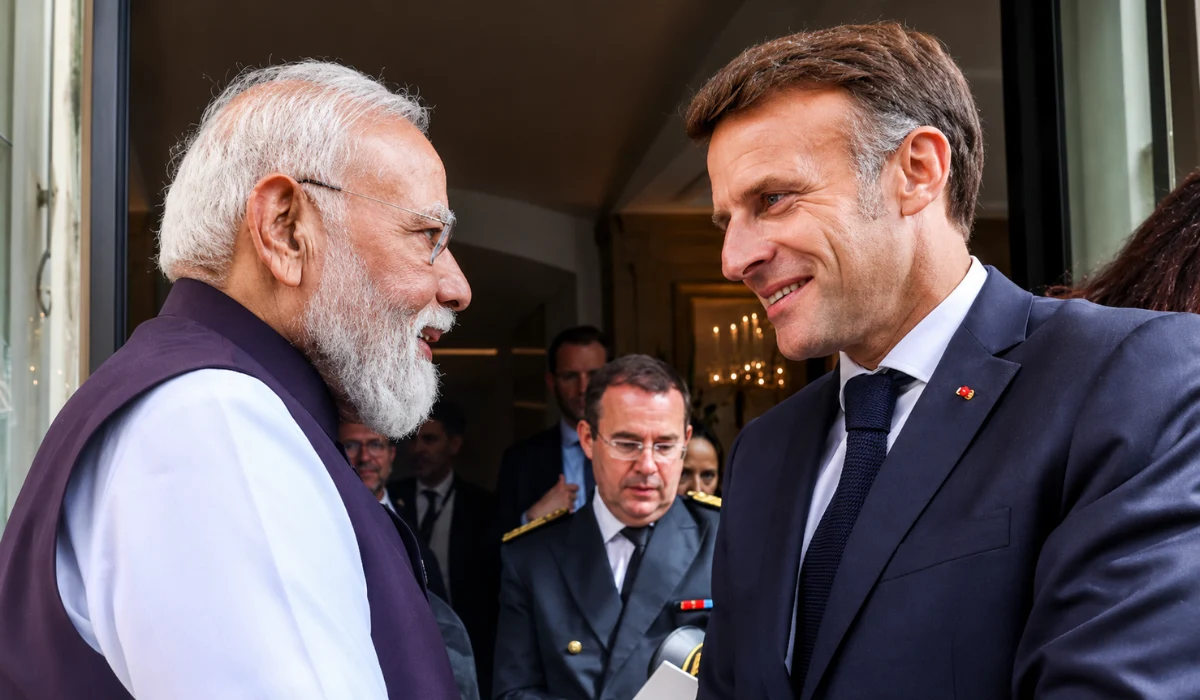
The India-EU Free Trade Agreement is the backdrop against which Fico's support carries real weight. Negotiations — first launched in 2007, suspended in 2013, and relaunched in 2022 — concluded on January 27, 2026, when the deal was signed at Hyderabad House in New Delhi by Modi, European Council President António Costa, and European Commission President Ursula von der Leyen. Officials on both sides have dubbed it "the mother of all deals," and the scale backs that up: it is the largest free trade agreement either side has ever concluded, covering a market of 1.45 billion people and eliminating or reducing tariffs on more than 96% of EU goods exports to India.
But concluding negotiations is only step one. The agreement still needs approval from the Council of the European Union, consent from the European Parliament, and ratification by India's Union Council of Ministers before it legally takes effect — a process EU trade analysts expect to take roughly a year, putting actual implementation around early 2027. This is where the EU's internal political weather matters. The bloc's other major recent deal, with the Mercosur bloc, has been stuck since the European Parliament voted in January 2026 to refer it to the European Court of Justice over environmental concerns, a step that could delay it by up to two years.
Having a government like Fico's — one that is frequently at odds with Brussels on other issues — publicly and repeatedly backing the India deal sends a signal that the FTA enjoys political support spanning the EU's ideological spectrum in a way the Mercosur agreement has struggled to demonstrate. For India, that reduces one source of ratification uncertainty on a deal that, according to the European Commission, could double EU goods exports to India by 2032 and save EU exporters an estimated €4 billion annually in duties.
|
|
|
|
|
|
|
|
|
|
|
|
|
|
|
|
|
|
|
|
|
|
|
|
|
|
|
A Quick Timeline: How India-Slovakia Ties Got Here
|
|
|
|
|
|
|
|
|
|
|
|
|
|
|
|
|
|
|
|
|
|
|
|
A ceremonial welcome for PM Modi in Bratislava, marking another important step in strengthening India–Slovakia relations and advancing international cooperation. 🇮🇳🇸🇰
— BJP (@BJP4India) June 15, 2026
Watch. ⬇️ pic.twitter.com/FY5ypljmWF
What Happens Next
Three threads are worth watching in the coming months. First, ratification: the India-EU FTA now enters its institutional phase at both the EU Council and the European Parliament, alongside approval by India's Union Council of Ministers. Continued vocal support from governments like Fico's — which are otherwise critical of Brussels — will be one indicator of how smoothly this proceeds compared with the stalled Mercosur agreement.
Second, defence manufacturing: the Bratislava talks build on momentum from the April 2025 MoUs covering joint development of light tanks, Future Ready Combat Vehicles, Infantry Combat Vehicles, turret systems, remote-controlled weapon stations and active protection systems under the Make in India framework. Slovak firearms manufacturer Grand Power is reportedly setting up a subsidiary near Coimbatore — a project worth tracking as a real-world test of how quickly these government-level MoUs translate into factory output.
Third, mobility and digital cooperation: the labour migration MoU signed in Bratislava is expected to create easier pathways for skilled Indian professionals heading to Slovakia, while the digital technology MoU — which Modi called a key pillar of the future partnership — should lead to follow-up agreements between India's electronics and IT ministry and its Slovak counterpart, alongside a parallel cybersecurity and post-quantum technology track between C-DOT and Slovakia's Critical Infrastructure Association.
For now, Modi's next stop is the G7 Summit in Évian-les-Bains on June 16-17 — India's eighth consecutive invitation to the gathering of major advanced economies. Whether Fico's enthusiasm in Bratislava is echoed by other EU capitals during the FTA's ratification process will be one of the more interesting subplots of India's European diplomacy through the rest of 2026.
Other Articles to Read: