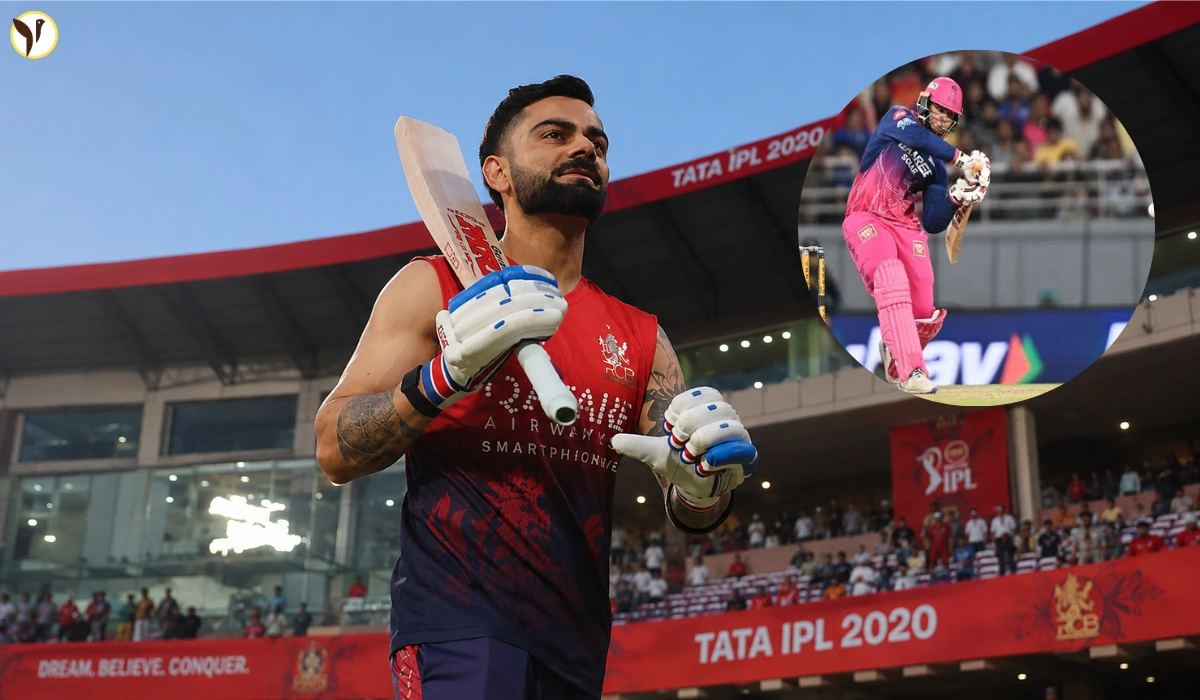


When Rajkumar Sharma — the man who shaped a nine-year-old Virat Kohli — calls a fifteen-year-old "once in a generation," it is not sentiment. It is a scout's verdict. And it lands with the full weight of a 30-year track record.
There is a very specific kind of credibility that only comes from having been right before. Rajkumar Sharma has been right before — enormously, historically right. In the early 1990s, he took in a restless boy from Uttam Nagar in West Delhi, a child who had lost his father and found in cricket a language for everything he could not say. That boy was Virat Kohli. What Sharma patiently shaped over the next decade became one of the most decorated batting careers in the sport's history.
So when Sharma, now 60, looks at 15-year-old Vaibhav Sooryavanshi — the Bihar left-hander who turned IPL 2026 into a personal highlight reel — and says the teenager "truly deserves" his India debut and is a talent "born only once in a generation," you would be wise to pay attention.
The Endorsement That Stands Apart
On Thursday, with India preparing for their opening T20I against Ireland at Belfast's Stormont ground, Sharma spoke to ANI and left no room for ambiguity.
"It's a magnificent achievement, I'd say, for Vaibhav. He possesses exceptional talent — he's shown it by the way he's taken on all the world's best bowlers. So, he truly deserves this debut, and I'm looking forward to it."— Rajkumar Sharma, speaking to ANI, June 26, 2026
These words matter for a reason that goes beyond polite encouragement. Sharma is not a television panellist paid to generate enthusiasm, nor a franchise administrator protecting a commercial asset. He is a cricket coach of four decades who has seen talent arrive and fade in equal measure. His vocabulary — "born only once in a generation" — is specific and deliberately chosen. He uses it knowing its weight.
Sharma also addressed the cultural ripple that Sooryavanshi's rise has created at the grassroots level. Parents are reportedly arriving at his Academy with children as young as five, convinced that early enrollment is the formula for producing the next Vaibhav. Sharma's response was characteristically measured: he turned away a five-year-old recently, advising the parents to wait until the child is eight. "Such players are born only once in a generation," he said. The compliment and the caution arrived in the same breath — the mark of a man who understands both the scale of what he is witnessing and the folly of expecting it to repeat.
The Numbers That Made the Argument Unanswerable
In any other summer, selecting a 15-year-old for the senior India squad would have been a conversation about risk management, developmental timelines, and protecting young shoulders from premature pressure. IPL 2026 made that conversation irrelevant.
- 776 IPL 2026 Runs
- 237.30 Strike Rate
- 72 Sixes (World Record)
- 5 IPL Awards Swept
- 15 Age at India Call-Up
Sooryavanshi scored 776 runs across 16 matches for Rajasthan Royals at a strike rate of 237.30 — a number that reads like a misprint but was verified across an entire season. He hit a world-record 72 sixes, erasing Chris Gayle's 2012 benchmark of 59 that many had assumed permanent. He swept every major seasonal honour — Orange Cap, Most Valuable Player, Emerging Player, Super Striker, and Super Sixes — the first cricketer in IPL history to claim all five in one edition.
|
|
|
|
|
|
|
|
|
|
|
|
|
|
|
|
|
|
|
|
|
|
|
|
|
|
|
|
|
|
A Record That Has Stood Since Sachin Was a Teenager
The record Sooryavanshi now stands to shatter is not a peripheral one. In November 1989, a 16-year-old Sachin Tendulkar walked out to face Imran Khan's Pakistan in Karachi and became India's youngest men's international cricketer. That record — tied to perhaps the most beloved player in India's sporting history — stood for 36 years. Sooryavanshi, at 15 years and 87 days when named in the squad, has already broken the selection record. A debut against Ireland at Stormont would complete the chapter.
|
|
|
|
|
|
|
|
|
|
|
|
|
|
|
The Parallel Sharma Did Not Spell Out — But Did Not Need To
There is a parallel sitting quietly in this story that Rajkumar Sharma did not explicitly draw but which hangs over every word he said. When Kohli arrived at Sharma's West Delhi Cricket Academy as a boy, he was also a prodigy — talented, intense, with something slightly electric in the way he moved to the ball. Sharma saw it, nurtured it, and did not rush it. He has spoken publicly about how Kohli's father Prem Kohli's death in 2006 — on the very night young Virat was batting in a Ranji match — produced in his student a quality of focus that bordered on the ferocious.
Now the same man watches Sooryavanshi — a boy from Tajpur in Samastipur, Bihar, who has been training since he was four years old, who cleared the BCCI's bone density tests, who played Ranji Trophy at 12, T20 cricket at 13, and dominated grown men at 14 — and reaches for the same phrase he might have once applied to a boy from Uttam Nagar. "Once in a generation." Two children. Thirty years apart. The same eye, arriving at the same conclusion.
Hey @grok Remove the most overhyped debutant from this picture😭 pic.twitter.com/RGBdtXyVAR
— Akshat (@Akshatgoel1408) June 26, 2026
What Comes Next — and What Could Go Wrong
India play two T20Is against Ireland at Stormont on June 26 and 28, followed by a five-match T20I series in England, before the Asian Games. Sooryavanshi has been named in all three squads. Whether he plays — and where he bats in a line-up that already contains destructive openers — will be a management decision as much as a cricketing one.
The BCCI Secretary has already weighed in, noting the board is mindful of managing the challenges a 15-year-old faces on his maiden international tour. There are genuine questions worth asking: how does a teenager psychologically absorb the difference between IPL spotlight and international pressure? How does a boy still in school cope with a global media cycle built around his every innings?
Sharma's caution about grassroots over-enthusiasm is instructive here. He is not a man given to hype for its own sake. His praise for Sooryavanshi is thus all the more meaningful precisely because it comes paired with an awareness that generational talent is not a guarantee of a generational career. The career still has to be built, one match at a time, with the same discipline that took Virat Kohli from a boy in West Delhi to thirty international centuries.
The Coach Who Knows What a Generation Looks Like
When Rajkumar Sharma says Vaibhav Sooryavanshi deserves to be here, he is saying something very specific: that the talent he sees is not manufactured by a franchise or a media cycle. It is the real thing. He has held that standard in his hands once before. He knows the texture of it.
India cricket is entering a transition — Virat Kohli has retired from Tests, Rohit Sharma has stepped back from T20Is, and the selectors are under pressure to identify the next generation of match-winners. The name that arrives at this particular moment — endorsed by the man who built the era now ending — carries a symbolic weight that no amount of IPL statistics alone could manufacture.
The coach believed in one child from Delhi. Thirty years later, he believes in a child from Bihar. If the first belief produced what it did, the rest of us might want to start paying very close attention.
Other Articles to Read: